Adults: One Maxiliv tablet (500 mg) once or twice daily.
4.3 Contraindications
Patients who show hypersensitivity to reduced glutathione.
4.4 Special warnings and precautions for use
Administer Maxiliv tablet under the supervision of a doctor.
Keep out of reach of children.
If unusual symptoms such as eruption, pale face, blood pressure drop, or difficulty in breathing occur during therapy, discontinue the drug immediately.
4.5 Drugs interactions
Vitamin K, Vitamin B12, Calcium pantothenate and antihistamines can affect the bioavailability of glutathione.
4.6 Use in special populations
Pregnancy and Lactation
Maxiliv tablet should not be administered to a pregnant and lactating woman unless clinical benefit outweighs the risks.
Geriatric
Appropriate dose reduction is required during therapy.
4.7 Effects on ability to drive and use machines
It is not known whether Maxiliv Tablet alters the ability to drive. Do not drive if you experience any symptoms that affect your ability to concentrate and react.
4.8 Undesirable Effects
According to the scientific literature, there are no risks or side effects of oral administration glutathione. However, there have been anecdotal reports of transitory increase in flatulence, gastrointestinal irritation which diminishes after several days of consistent use.
Reporting of suspected adverse reactions
Reporting suspected adverse reactions after authorization of the medicinal product is important. It allows continued monitoring of the benefit/risk balance of the medicinal product. Healthcare professionals are asked to report any suspected adverse reactions via email to: medico@zuventus.com
By reporting side effects, you can help provide more information on the safety of this medicine.
4.9 Overdose
No specific antidote is available for the treatment of glutathione overdosage. Symptomatic treatment should be provided.
5.0 Pharmacological properties
5.1 Mechanism of Action/ Pharmacodynamic properties
Glutathione is an extremely important cell protectant which directly quenches reactive hydroxyl free radicals, other oxygen-centered free radicals, and radical centers on DNA and other biomolecules. It is an essential cofactor for many enzymes which require thiol-reducing equivalents, and helps to keep redox-sensitive active sites on enzymes in the necessary reduced state. Higher-order thiol cell systems like metallothioneins, thioredoxins, and other redox regulator proteins are ultimately regulated by reduced form of glutathione (GSH) levels and the ratio of GSH/GSSG (oxidized GSH).
GSH/GSSG balance is crucial for homeostasis, stabilizing the cellular biomolecular spectrum, and facilitating cellular performance and survival. GSH and its metabolites also interface with energetics and neurotransmitter syntheses, through several prominent metabolic pathways. GSH availability down-regulates the pro-inflammatory potential of leukotrienes and other eicosanoids. Recently discovered S-nitroso metabolites, generated in-vivo from GSH and NO (nitric oxide) further diversify GSH’s impact on metabolism.
5.2 Pharmacokinetic properties
A 6-month randomized, double-blinded, placebo-controlled trial of oral GSH (250 or 1,000 mg/day) on GSH levels in blood, erythrocytes, plasma, lymphocytes and exfoliated buccal mucosal cells was conducted in 54 non-smoking adults.
GSH levels in blood increased after 1, 3 and 6 months versus baseline at both doses. At 6 months, mean GSH levels increased 30-35 % in erythrocytes, plasma and lymphocytes and 260 % in buccal cells in the high-dose group (P < 0.05). GSH levels increased 17 and 29 % in blood and erythrocytes, respectively, in the low-dose group (P < 0.05). In most cases, the increases were dose and time dependent, and levels returned to baseline after a 1-month washout period. A reduction in oxidative stress in both GSH dose groups was indicated by decreases in the oxidized to reduced glutathione ratio in whole blood after 6 months.
6.0 Nonclinical properties
6.1 Animal Toxicology or Pharmacology
No known animal toxicology data
7.0 Description
Glutathione (GSH) is a physiological tripeptide- a chain of three amino acid- cysteine, glycine and glutamic acid. It is used for the detoxification of electrophilic metabolites. It is a very efficient free radical scavenger, preventing damage to important cellular components caused by reactive oxygen species such as free radicals and peroxides.
Chemical Name: (2S)-2-Amino-4-[1-(carboxymethyl)carbamoyl-(2R)-2- sulfanylethylcarbamoyl] butanoic acid.
Molecular Formula: C10H17N3O6S
Molecular Weight: 307.32 g/mol
8.0 Pharmaceutical particulars
8.1 List of excipients
8.2 Incompatibilities
8.3 Shelf life
8.4 Special precautions for storage
9.0 Patient counselling information
Inform your doctor if you have past or current history of asthma.
Seek immediate medical attention if you have difficulty in breathing after taking the drug.
Tell your doctor if you are or planning to become pregnant or are breastfeeding.
Do not take if allergic to glutathione, milk protein or any of its ingredients.
Do not take if patients had organ transplantation.
Avoid if suffering from asthma.
Do not take if patient is Pregnant and breastfeeding women.
12.0 Date of revision
28.11.2024
About leaflet
Please read this leaflet carefully before you start using this medicine because it contains important information for you.
Keep this leaflet. You may need to read it again.
If you have any further questions, ask your doctor or pharmacist.
This medicine has been prescribed for you. Do not pass it on to others. It may harm them, even if their signs of illness are the same as yours.
If you get any side effects, talk to your doctor or pharmacist. This includes any possible side effects not listed in this leaflet.
What is in this leaflet
What Maxiliv Tablet is and what it is used for
What you need to know before you take Maxiliv Tablet
How to take Maxiliv Tablet
Possible side effects
How to store Maxiliv Tablet
Contents of the pack and other information
1. What Maxiliv Tablet is and what it is used for
Maxiliv Tablet contains the active substance glutathione. It is used for the treatment of:
Alcoholic fatty liver
Alcoholic liver fibrosis
Alcoholic liver cirrhosis
Hepatitis
2. What you need to know before you take Maxiliv Tablet
Do not take Maxiliv Tablet if you:
Are allergic to glutathione or any of the other ingredients of this medicine.
Have had an organ transplantation.
Are pregnant or breastfeeding.
Warnings and precautions:
Administer Maxiliv Tablet under the supervision of a doctor.
Keep out of reach of children.
If you experience unusual symptoms such as rash, pale face, drop in blood pressure, or difficulty in breathing, stop taking the medicine and seek medical attention immediately.
Other medicines and Maxiliv Tablet:
Vitamin K, Vitamin B12, Calcium pantothenate, and antihistamines can affect the bioavailability of glutathione.
Pregnancy and breastfeeding:
Maxiliv Tablet should not be used during pregnancy and breastfeeding unless the potential benefit outweighs the risks.
Driving and using machines:
It is not known whether Maxiliv Tablet affects your ability to drive. Do not drive if you experience symptoms that affect your ability to concentrate and react.
3. How to take Maxiliv Tablet
Always take this medicine exactly as your doctor or pharmacist has told you. Check with your doctor or pharmacist if you are not sure.
Adults:
Take one Maxiliv Tablet (500 mg) once or twice daily.
If you use more Maxiliv Tablet than you should
Tell your doctor if you accidentally use more than you were told.
If you forget to use Maxiliv Tablet
If you forget to take at the right time, use it as soon as you remember, then carry on as before. Do not take a double dose to make up for a forgotten dose.
If you stop using Maxiliv Tablet
Do not stop your treatment even if you feel better unless told to do so by your doctor.
If you have any further questions on the use of this product, ask your doctor or pharmacist.
4. Possible side effects
There are no known risks or side effects of oral administration of glutathione. However, there have been anecdotal reports of transient increases in flatulence and gastrointestinal irritation, which diminish after several days of consistent use.
Reporting of side effects
If you get any side effects, talk to your doctor, pharmacist or nurse. This includes any possible side effects not listed in this leaflet. You can also report side effects directly: Website: www.zuventus.com and click the tab “Safety Reporting” located on the top end of the home page. Website link: https://www.zuventus.com/drug-safety-reporting.
By reporting side effects, you can help provide more information on the safety of this medicine. You can also report the side effect with the help of your treating physician.
5. How to store Maxiliv Tablet
Keep this medicine out of the sight and reach of children.
Store in a cool, dry place away from direct sunlight.
Do not use this medicine after the expiry date which is stated on the label and carton after EXP. The expiry date refers to the last day of that month.
Do not throw away any medicines via wastewater or household waste. Ask your pharmacist how to throw away medicines you no longer use. These measures will help protect the environment.
6. Contents of the pack and other information
What Maxiliv Tablet contains:
The active substance is glutathione (500 mg per tablet).
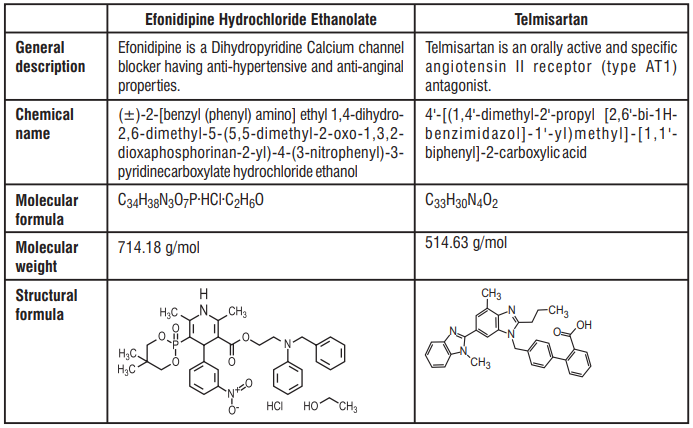
Efonidipine Hydrochloride Ethanolate and Telmisartan Tablets
2.0 Quantitative and qualitative composition
Efnocar T 20/40
Each uncoated bilayered tablet contains :
Efonidipine Hydrochloride Ethanolate 20 mg
Telmisartan IP 40 mg
Excipients q.s.
Efnocar T 40/40
Each uncoated bilayered tablet contains :
Efonidipine Hydrochloride Ethanolate 40 mg
Telmisartan IP 40 mg
Excipients q.s.
3.0 Dosage form and strength
Tablet Efonidipine Hydrochloride [20/40 mg] and Telmisartan [40/40 mg]
4.0 Clinical particulars
4.1 Therapeutic indication
For the management of stage II hypertension.
4.2 Posology and method of administration
Adult
The usual recommended dose is 1 tablet daily. It may be increased to 2 tablets per day depending upon the blood pressure control or as directed by the Physician.
Efonidipine
Essential hypertension : 20 - 40 mg orally once daily. A dose of up to 80 mg/day has been reported to be safe and effective in clinical trials.
Telmisartan
Essential hypertension : The usually effective dose is 40 mg once daily. In cases where the target blood pressure is not achieved, the dose of Telmisartan can be increased to a maximum of 80 mg once daily.
Use in special populations
Pediatric
The combination of Efonidipine and Telmisartan is not recommended in infants and children.
Geriatric
Efonidipine should be started at low dose (20 mg/day) in elderly. Patient should be carefully observed for development of hypotension. Dose may be halved if there is intolerance to the 20 mg/day dosage regimen. The pharmacokinetics of Telmisartan does not differ in young and elderly patients.
Hepatic impairment
Pharmacokinetic studies in patients with hepatic impairment showed an increase in absolute bioavailability of Telmisartan up to nearly 100%. Patients with hepatic impairment should be carefully monitored and dose should be slowly up titrated. Hence, caution should be exercised while administering FDC of Efonidipine and Telmisartan in patients with mild to moderate hepatic impairment.
Renal impairment
In Telmisartan limited experience is available in patients with severe renal impairment or haemodialysis. A lower starting dose of 20 mg is recommended in these patients. No dose adjustment is required for patients with mild to moderate renal impairment. Hence, caution should be exercised while administering FDC of Efonidipine and Telmisartan in patients with severe renal impairment or haemodialysis.
4.3 Contraindications
The combination of Efonidipine and Telmisartan is contraindicated in the following situations :
Known hypersensitivity to the active substance Efonidipine and Telmisartan or any other component of the formulation.
In pregnant women
Severe hepatic impairment.
Concomitant use of ACE inhibitors
4.4 Warning and precautions
Should be administered with caution in patients with hepatic impairment.
The drug may worsen clinical condition in patients with sinus bradycardia, sinus arrest or sinus node dysfunction.
Should not be taken with grapefruit juice as there may be excessive lowering of blood pressure.
Administration of the drug may cause hypotension. Under such circumstance appropriate measures should be taken to either reduce the dose or withdraw the drug
Dizziness may occur while taking the antihypertensive agents. Hence, working on aerial platform, working with machinery and/or driving should be avoided.
4.5 Drug interactions
Efonidipine
Concomitant administration of other antihypertensive agent/s may enhance the antihypertensive effect of Efonidipine.
Administration of Calcium channel blockers (CCBs) with cimetidine may cause elevated levels of CCBs.
Increased levels of CCBs observed when taken concomitantly with grapefruit juice which may result in excessive lowering of blood pressure.
Efonidipine when taken along with Tacrolimus may cause increased blood levels of Tacrolimus.
Telmisartan
Concomitant administration of Digoxin may increase peak plasma concentration of Digoxin. When initiating, adjusting, and discontinuing Telmisartan, monitor Digoxin levels in order to maintain levels within the therapeutic range.
Telmisartan may cause hyperkalaemia with other medicinal products acting on the renin-angiotensin-aldosterone system.
Angiotensin II receptor antagonists such as Telmisartan, attenuate diuretic induced potassium loss.
NSAIDs (i.e. Acetylsalicylic Acid at anti-inflammatory dosage regimens, COX-2 inhibitors and non-selective NSAIDs) may reduce the antihypertensive effect of angiotensin II receptor antagonists and increase risk of renal impairment.
Co-administration of Telmisartan and Ramipril led to an increase of up to 2.5 fold in the AUC0-24 and Cmax of Ramipril and Ramiprilat.
Prior treatment with high dose diuretics such as Furosemide (loop diuretic) and Hydrochlorothiazide (Thiazide diuretic) may result in volume depletion, and there is a risk of hypotension when initiating therapy with Telmisartan.
The blood pressure lowering effect of Telmisartan can be increased by concomitant use of other antihypertensive medicinal products.
Based on their pharmacological properties it can be expected that the following medicinal products may potentiate the hypotensive effects of all antihypertensives including Telmisartan : Baclofen, Amifostine. Furthermore, orthostatic hypotension may be aggravated by Alcohol, Barbiturates, Narcotics, or Antidepressants.
4.6 Special populations
Pregnancy
Efonidipine should not be administered to pregnant women and women suspected of being pregnant. Clinical experience with ACE inhibitors has shown increased risk of fetal and neonatal toxicity and death (“ACE inhibitor fetopathy”) when women are exposed to RAAS-active drugs during the last two trimesters of pregnancy. Since this may be a class effect of drugs acting on the RAAS, Telmisartan is contraindicated during pregnancy.
Lactation
Administration to lactating women should be avoided unless benefit significantly surpasses the risk to the child. Mothers on Efonidipine treatment should avoid breast feeding. It is not known whether Telmisartan is excreted in human milk, but Telmisartan was shown to be present in the milk of lactating rats. Because of the potential for adverse effects on the nursing infant, decide either drug or nursing should be discontinued, taking into account the importance of the drug to the mother.
4.7 Effects on ability to drive and use machines
Efonidipine / Telmisartan can have influence on the ability to drive and use machines. Dizziness or drowsiness may occasionally occur when taking Efonidipine/Telmisartan.
4.8 Undesirable effects
Efonidipine
Common side effects
The common side effects are hot flushes, palpitations, facial flushing and headache. In addition, elevation in serum total cholesterol, ALT (SGPT), AST (SGOT) and BUN may occur.
Uncommon side effects
Hepatobiliary disorders : LDH and alkaline phosphatase, Increase in bilirubin.
Reporting suspected adverse reactions after authorisation of the medicinal product is
important. It allows continued monitoring of the benefit/risk balance of the medicinal product. Healthcare professionals are asked to report any suspected adverse reactions via email to : medico@zuventus.com
By reporting side effects, you can help provide more information on the safety of this medicine.
4.9 Overdose
In humans, experience with intentional overdose is limited. Dizziness, nausea, somnolence, hypovolaemia, hypotension and electrolyte disturbances associated with cardiac arrhythmias and muscle spasms are some of the signs and symptoms associated with drug overdose. Gastric lavage, emesis or activated charcoal should be employed to reduce absorption. Blood pressure and fluid and electrolyte balance should be monitored and appropriate corrective measures taken. Intravenous fluid and electrolyte replacement may be indicated. Clinically significant hypotension due to drug over dosage calls for active cardiovascular support including frequent monitoring of cardiac and respiratory function, elevation of extremities, and attention to circulating fluid volume and urine output. A vasoconstrictor may be helpful in restoring vascular tone and blood pressure, provided that there is no contraindication to its use. Intravenous Calcium Gluconate may be beneficial in reversing the effects of Calcium channel blockade.
5.0 Pharmacological properties
5.1 Mechanism of action
Efonidipine, a new generation Dihydropyridine (DHP) Calcium channel blocker, inhibits both L-type and T-type Calcium channels.
Telmisartan blocks the vasoconstriction and aldosterone-secreting effects of angiotensin II by selectively blocking the binding of angiotensin II to the AT1 receptor.
5.2 Pharmacodynamic properties
Efonidipine
Efonidipine exhibits antihypertensive effect through vasodilatation by blocking L-type and T-type Calcium channels.
Efonidipine has a negative chronotropic effect. Working on sino atrial node cells by inhibiting T-type Calcium channel activation, Efonidipine prolongs the late phase-4 depolarization of the sino atrial node action potential and suppresses an elevated HR. The negative chronotropic effect of Efonidipine decreases heart rate, myocardial oxygen demand and increases coronary blood flow.
Efonidipine increases coronary blood flow by blocking L & T-type Calcium channels and attenuates myocardial ischemia.
By reducing synthesis and secretion of aldosterone, Efonidipine prevents hypertrophy and remodeling of cardiac myocytes.
Efonidipine increases glomerular filtration rate without increasing intra-glomerular pressure and filtration fraction. This prevents hypertension induced renal damage
Efonidipine prevents Rho-kinase and NF B induced renal parenchymal fibrosis and provides long term renal protection.
Efonidipine suppresses renin secretion from the juxta glomerular apparatus in the kidneys.
Efonidipine enhances sodium excretion from the kidneys by suppressing aldosterone synthesis and secretion from the adrenal glands. Aldosterone induced renal parenchymal fibrosis is suppressed by Efonidipine.
Efonidipine prevents NF B induced hypertrophy and inflammation in the renal vasculature and protects the kidneys.
Efonidipine protects against endothelial dysfunction due to its anti-oxidant activity and by restoring NO bioavailability.
Efonidipine has anti-atherogenic activity and protects the blood vessels from atherosclerosis.
Efonidipine lowers blood pressure in cerebral resistance vessels and prevents hypertension induced brain damage.
Telmisartan
Telmisartan is an orally active and specific angiotensin II receptor (type AT1) antagonist. Telmisartan displaces angiotensin II with very high affinity from its binding site at the AT1 receptor subtype, which is responsible for the known actions of angiotensin II.
Telmisartan does not exhibit any partial agonist activity at the AT1 receptor. Telmisartan selectively binds the AT1 receptor. The binding is long-lasting.
Telmisartan does not show affinity for other receptors, including AT2 and other less characterized AT receptors. The functional role of these receptors is not known, nor is the effect of their possible overstimulation by angiotensin II, whose levels are increased by Telmisartan. Plasma aldosterone levels are decreased by Telmisartan
Telmisartan does not inhibit human plasma renin or block ion channels. Telmisartan does not inhibit angiotensin converting enzyme (kininase II), the enzyme which also degrades bradykinin. Therefore, it is not expected to potentiate bradykinin-mediated adverse effects.
5.3 Pharmacokinetic properties
Efonidipine
Peak plasma concentration is achieved in about 1.5 to 3.67 hours after administration. The bioavailability of Efonidipine is ~25% and half-life is approximately 4 hours. Efonidipine is primarily metabolized in liver. The important metabolites are N-dephenylated Efonidipine (DPH), deaminated Efonidipine (AL) and N-debenzylated Efonidipine (DBZ). DBZ and DPH exhibit activity as Calcium antagonists. The vasodilating properties of DBZ and DPH are about two-third and one-third respectively than that of parent compound. Biliary route is the main route of excretion. No significant amount of unchanged drug is excreted in urine. In the urine collected for 24 hours after an oral dosing, 1.1% of the dose was excreted as deaminated Efonidipine and 0.5% as a pyridine analogue of deaminated.
Telmisartan
Absorption of Telmisartan is rapid although the amount absorbed varies. The mean absolute bioavailability for Telmisartan is about 50%. When Telmisartan is taken with food, the reduction in the area under the plasma concentration-time curve of Telmisartan varies from approximately 6% (40 mg dose) to approximately 19% (160 mg dose). By 3 hours after administration, plasma concentrations are similar whether Telmisartan is taken fasting or with food. Telmisartan is largely bound to plasma protein (>99.5%), mainly albumin and alpha-1 acid glycoprotein. The mean steady state apparent volume of distribution (Vdss) is approximately 500 L. Telmisartan is metabolised by conjugation to the glucuronide of the parent compound. No pharmacological activity has been shown for the conjugate. Telmisartan is characterised by biexponential decay pharmacokinetics with a terminal elimination half-life of 24 hours.
6.0 Nonclinical properties
6.1 Animal toxicology or pharmacology
No known animal toxicology data
7.0 Description
8.0 Pharmaceutical particulars
8.1 Incompatibilities
Not applicable
8.2 Shelf life
24 Months
8.3 Packaging information
Efnocar T 20/40 : Alu-Alu blister strip of 10 tablets
Efnocar T 40/40 : Alu-Alu blister strip of 10 tablets.
8.4 Storage and handing Instructions
Store protected from moisture at a temperature not exceeding 30°C
Keep out of reach of children.
9.0 Patient counselling information
Who should not take Efnocar T ?
You should not take Efnocar T tablets if you are allergic (hypersensitive) to the active ingredients (Telmisartan or Efonidipine).
For patients with diabetes, if you are taking Efnocar T you should not take aliskiren
What should I tell my doctor before taking Efnocar T tablets ?
Before you take Efnocar T tablets, tell your doctor if you :
Have liver problems.
Have kidney problems.
Have heart problems.
Have any other medical conditions.
Are pregnant or are planning to become pregnant.
Are breast-feeding or plan to breast-feed. It is not known if Efnocar T passes into your breast milk.
You and your doctor should decide if you will take Efnocar T tablets or breast-feed. You should not do both. Talk with your doctor about the best way to feed your baby if you take Efnocar T tablets. Tell your doctor about all the medicines you take, including prescription and non-prescription medicines, vitamins and herbal supplements.
Efnocar T may affect the way other medicines work, and other medicines may affect how Efnocar Tworks. Especially tell your doctor if you take :
Aliskiren
Digoxin
Lithium
Medicines used to treat pain and arthritis, called non-steroidal anti-inflammatory drugs (NSAIDs), including COX2 inhibitors.
Ramipril or other medicines that may be used to treat high blood pressure or a heart problem.
Simvastatin
Water pills (diuretics)
Know the medicines you take. Keep a list of them and show it to your doctor or pharmacist when you get a new medicine. How should I take Efnocar T tablets ?
Take Efnocar T tablets exactly as your doctor tells you to take it.
Your doctor will tell you how much Efnocar T to take and when to take it. Your doctor may change your dose if needed.
Take Efnocar T one time each day at the same time.
Take Efnocar T tablets with or without food.
If you miss a dose, take it as soon as you remember. If it is close to your next dose, do not take the missed dose. Take the next dose at your regular time.
If you take too much Efnocar T, call your doctor or go to the nearest hospital emergency room right away.
What are possible side effects of Efnocar T tablets ?
Efnocar T tablets may cause serious side effects, including :
Injury or death to your unborn baby.
Low blood pressure (hypotension) is most likely to happen if you also :
Take water pills. (diuretics)
Are on a low-salt diet.
Get dialysis treatments
Have heart problems.
Get sick with vomiting or diarrhea
If you feel faint or dizzy, lie down and call your doctor right away.
Kidney problems. Kidney problems may get worse if you already have kidney disease. You may have changes in your kidney test results, and you may need a lower dose of Efnocar T tablets. Call your doctor if you get :
Swelling in your feet, ankles, or hands
Unexplained weight gain
Call your doctor right away if you get any of the symptoms listed above.
Heart problems or heart attack. Heart problems may get worse in people that already have heart disease. This may happen when you start Efnocar T tablets or when there is an increase in your dose of Efnocar T. Get emergency help if you get worse chest pain or chest pain that does not go away.
High potassium in the blood (hyperkalemia). Your doctor may check your potassium levels as needed.
Muscle rigidity, tremor and/or abnormal muscle movement
Rare, serious allergic reactions may happen. Tell your doctor right away if you get any of these symptoms :
Swelling of face, tongue, throat.
Difficulty breathing.
Skin rash.
The most common side effects of Efnocar T tablets include :
Swelling in your hands, ankles, or feet.
Feeling like your heart is pounding or racing
Flushing or sudden redness of the face and neck.
Dizziness
Back pain.
Feeling tired or sleepy
Abdominal pain, nausea, or diarrhea.
Low blood pressure or a sudden drop in blood pressure with fainting.
These are not all the possible side effects of Efnocar T tablets. Tell your doctor if you have any other side effects.
12.0 Date of issue
03 January 2022
About leaflet
The name of your medicine is EFNOCAR-T 20/40 and 40/40 Tablets. We refer to them as EFNOCAR-T Tablets or EFNOCAR-T throughout this leaflet.
Read all of this leaflet carefully before you start taking this medicine because it contains important information for you.
Keep this leaflet. You may need to read it again.
If you have any more questions, please ask your doctor or your pharmacist.
This medicine has been prescribed for you personally and you should not pass it on to anyone else. It may harm them, even if their symptoms are the same as yours.
If any of the side effects get serious, or if you notice any side effects that are not listed in the leaflet, please tell your doctor or pharmacist.
In this leaflet:
What EFNOCAR-T Tablets are and what they are used for
What you need to know before you take EFNOCAR-T Tablets
How to take EFNOCAR-T Tablets
Possible side effects
How to store EFNOCAR-T Tablets
Contents of the pack and other information
1. What EFNOCAR-T tablets are and what they are used for
EFNOCAR-T Tablets contain the active substance Efonidipine and Telmisartan. Both of these substances help to control high blood pressure.
Efonidipine belongs to a group of substances called “calcium channel blockers”. Efonidipine stops calcium from moving into the blood vessel wall which stops the blood vessels from tightening resulting in dilatation of vessel.
Telmisartan belongs to a group of substances called “angiotensin-II receptor antagonists”. Angiotensin II is produced by the body and makes the blood vessels tighten, thus increasing blood pressure. Telmisartan works by blocking the effect of angiotensin II which helps to reduce the blood pressure.
This means that both of these substances help to stop the blood vessels tightening/constricting. As a result, the blood vessels relax and blood pressure is lowered.
EFNOCAR-T Tablets are used to treat High blood pressure (stage II hypertension)
2. What you need to know before you take EFNOCAR-T Tablets
Do not take EFNOCAR-T Tablets if you:
Have ever had an allergic reaction to efonidipine or any of the ingredients in the tablet. An allergic reaction may include a rash, itching, difficulty breathing, or swelling of the face, lips, throat, or tongue;
If you are pregnant
Have severe liver problems or bile problems such as biliary cirrhosis or cholestasis.
Have severe low blood pressure (hypotension).
Have narrowing of the aortic valve (aortic stenosis) or cardiogenic shock (a condition where your heart is unable to supply enough blood to the body).
Suffer from heart failure after a heart attack.
Have diabetes or impaired kidney function and you are treated with a blood pressure-lowering medicine containing aliskiren.
If any of the above applies to you, do not take EFNOCAR-T and talk to your doctor.
Take special care with EFNOCAR-T Tablets
You should inform you doctor if you have or have had any of the following conditions:
Liver disease;
Recent heart attack;
Heart failure;
Severe increase in blood pressure (Hypertensive crisis).
Kidney disease or kidney transplant.
Renal artery stenosis (narrowing of the blood vessels to one or both kidneys).
Raised aldosterone levels (water and salt retention in the body along with imbalance of various blood minerals).
Low blood pressure (hypotension), likely to occur if you are dehydrated (excessive loss of body water) or have salt deficiency due to diuretic therapy ('water tablets'), low-salt diet, diarrhoea, or vomiting.
Elevated potassium levels in your blood.
Diabetes
Use in children and adolescents
EFNOCAR-T is not recommended in infants and children as safety is not established in this group of patients.
For more information, talk to your doctor.
Taking other medicines and EFNOCAR-T
Please tell your doctor or pharmacist if you are taking or have recently taken other medicines, including medicines obtained without a prescription.
EFNOCAR-T may affect or be affected by other medicines, such as:
Other antihypertensive agent/s (BP lowering drugs) such as ACE-inhibitor (for example enalapril, lisinopril, ramipril)
Cimetidine (stomach acid reducer)
Tacrolimus (a drug to suppress immunity)
Digoxin
EFNOCAR-T may lower your blood pressure even more if you are already taking other medicines to treat your high blood pressure.
If you see another doctor or go into hospital for any reason, tell them that you are taking EFNOCAR-T Tablets.
Taking EFNOCAR-T Tablets with food and drink
You should not drink grapefruit juice or eat grapefruit while taking this medicine. Grapefruit and grapefruit juice can lead to an increase in the blood levels of efonidipine, which can cause an unpredictable increase in its blood pressure-lowering effect.
Pregnancy
The safety of efonidipine in human pregnancy has not been established. You must tell your doctor if you think you are (or might become) pregnant. Your doctor will normally advise you to stop taking EFNOCAR-T Tablets before you become pregnant or as soon as you know you are pregnant and will advise you to take another medicine instead of EFNOCAR-T Tablets. EFNOCAR-T Tablets is not recommended in early pregnancy, and must not be taken when more than 3 months pregnant, as it may cause serious harm to your baby if used after the third month of pregnancy.
Therefore, EFNOCAR-T should not be administered in pregnant women.
Breast-feeding
Tell your doctor if you are breast-feeding or about to start breast-feeding. EFNOCAR-T is not recommended for mothers who are breast-feeding, and your doctor may choose another treatment for you if you wish to breast-feed, especially if your baby is new-born, or was born prematurely.
EFNOCAR-T should not be administered in breastfeeding women.
Driving and using machines
Dizziness may occur while taking antihypertensive agents. Hence, working on aerial platform, working with dangerous machinery and/or driving should be avoided.
3. How to take Efnocar-T tablets
Swallow these tablets with a glass of water at the same time each day. You can take the tablets after meals.
Follow your doctor’s instructions. Check the pharmacy label to see how many tablets to take and how often to take them. If you are still not sure, ask your pharmacist or doctor. The usual doses are described below.
Adults
The usual recommended dose is 1 tablet daily. It may be increased to 2 tablets per day depending upon the blood pressure control or as directed by the Physician.
Efonidipine
Essential hypertension: 20 - 40 mg orally once daily. A dose of up to 80 mg/day has been reported to be safe and effective in clinical trials.
Telmisartan
Essential hypertension: The usually effective dose is 40 mg once daily. In cases where the target blood pressure is not achieved, the dose of Telmisartan can be increased to a maximum of 80 mg once daily.
Children
EFNOCAR-T is not recommended in infants and children as safety is not established in this group of patients.
Elderly
EFNOCAR-T should be started with a low dose. Your doctor will closely monitor your response to any decrease in the dose.
Patients with liver/kidney disease
Your doctor may give you a different dose than normal.
If you take more EFNOCAR-T Tablets than you should
If you (or someone else) swallow a lot of tablets all together, or if you think a child has swallowed any of the tablets, contact your nearest hospital casualty department or your doctor immediately. Take your medication and the packaging with you to the doctor or casualty department. If you have taken an overdose, you may you may appear flushed (your skin will look red), or you may feel dizzy or faint. If blood pressure drop is severe enough shock can occur.
If you forget to take EFNOCAR-T Tablets
If you forget to take a tablet, take one as soon as you remember, unless it is nearly time to take the next one. Never take two doses together. Take the remaining doses at the correct time.
If you stop taking EFNOCAR-T Tablets
Take this medicine for as long as your doctor tells you to, as you may become unwell if you stop.
4. Possible side-effects
Like all medicines, this medicine can cause side effects, although not everybody gets them.
Efonidipine
The common side effects are hot flushes, palpitations, facial flushing and headache. In addition, elevation in bad cholesterol, liver enzymes may occur.
Other known side effects are as follows. Tell your doctor if you notice or are worried by any of the side effects listed.
Frequency 0.1 to < 5%
Increased liver enzymes
Blood Urea Nitrogen rise, blood creatinine rise, proteins in urine
Frequent urination, swelling, increased bad cholesterol
Frequency unknown
Heart failure
Diarrhea, Gum hypertrophy
Tell your doctor or pharmacist if you notice any other effects not listed.
Telmisartan
You should see your doctor immediately if you experience any of the following symptoms:
Sepsis* (often called "blood poisoning", is a severe infection with whole-body inflammatory response), rapid swelling of the skin and mucosa (angioedema); these side effects are rare but are extremely serious and patients should stop taking the product and see their doctor immediately. If these effects are not treated they could be fatal.
Possible side effects of Telmisartan:
Common side effects (may affect up to 1 in 10 people):
Low blood pressure (hypotension) in users treated for reduction of cardiovascular events.
Uncommon side effects (may affect up to 1 to 100 people):
Urinary tract infections, upper respiratory tract infections (e.g. sore throat, inflamed sinuses, common cold), deficiency in red blood cells (anemia), high potassium levels, difficulty falling asleep, feeling sad (depression), fainting (syncope), feeling of spinning (vertigo), slow heart rate (bradycardia), low blood pressure (hypotension), in users treated for high blood pressure, dizziness on standing up (orthostatic hypotension), shortness of breath, cough, abdominal pain, diarrhea, discomfort in the abdomen, bloating, vomiting, itching, increased sweating, drug rash, back pain, muscle cramps, muscle pain (myalgia), kidney impairment including acute kidney failure, pain in the chest, the feeling of weakness, and increased level of creatinine in the blood.
Rare side effects (may affect up to 1 in 1,000 people):
Sepsis* (often called "blood poisoning", is a severe infection with whole-body inflammatory response which can lead to death), increase in certain white blood cells (eosinophilia), low platelet count (thrombocytopenia), severe allergic reaction (anaphylactic reaction), allergic reaction (e.g. rash, itching, difficulty breathing, wheezing, swelling of the face or low bl ood pressure), low blood sugar levels (in diabetic patients), feeling anxious, somnolence, impaired vision, fast heart beat (tachycardia), upset stomach, dry mouth, taste disturbance (dysgeusia), abnormal liver function(Japanese patients are more likely to experience these side effect), rapid swelling of the skin and mucosa which can also lead to death (angioedema also with fatal outcome), eczema (a skin disorder), redness of skin, hives (urticaria), severe drug rash, joint pain (arthralgia), pain in extremity, tendon pain, flu-like-illness, decreased haemoglobin (a blood protein), increased levels of uric acid, increased hepatic enzymes or creatine phosphokinase in the blood.
Very rare side effects (may affect up to 1 in 10,000 people):
Progressive scarring of lung tissue (interstitial lung disease) **
*The event may have happened by chance or could be related to a mechanism currently not known.
**Cases of progressive scarring of lung tissue have been reported during intake of telmisartan. However, it is not known whether telmisartan was the cause.
If you get any side effects, talk to your doctor or pharmacist. This includes any possible side effects not listed in this leaflet.
Reporting of side effects
If you get any side effects, talk to your doctor, pharmacist or nurse. This includes any possible side effects not listed in this leaflet. You can also report side effects directly: Website: www.zuventus.com and click the “Safety Reporting” located on the top of the home page.
By reporting side effects, you can help provide more information on the safety of this medicine.
You can also report the side effect with the help of your treating physician.
5. How to store Efnocar-T tablets
Do not use the tablets after the end of the expiry month (use-by date) shown on the product packaging.
Store below 25°C. Protected from light & moisture.
Keep this medicine out of the sight and reach of children
Medicines should not be disposed of via wastewater or household waste. Ask your pharmacist/doctor how to dispose of medicines no longer required. These measures will help to protect the environment.
6. Contents of the pack and other information
What EFNOCAR-T Tablets contain
The active substance is Efonidipine and Telmisartan.
Efnocar T 20/40
Each tablet contains: Efonidipine Hydrochloride Ethanolate…20 mg
Telmisartan IP…40 mg
Efnocar T 40/40
Each uncoated bilayered tablet contains: Efonidipine Hydrochloride
Ethanolate 40 mg Telmisartan IP 40 mg
Packaging information
Efnocar T 20/40: An Alu-Alu blister strip of 10 tablets.
Efnocar T 40/40: An Alu-Alu blister strip of 10 tablets.
S (-) Metoprolol Succinate Prolonged-Release Tablets
2.0 Qualitative and quantitative composition
KIMET XL®-12.5
Each prolonged-release film-coated tablet contains:
S (-) Metoprolol Succinate 11.875 mg
equivalent to S (-) Metoprolol Tartrate 12.50 mg
Colour: Titanium Dioxide IP
KIMET XL®-25
Each prolonged-release film-coated tablet contains:
S (-) Metoprolol Succinate 23.75 mg
equivalent to S (-) Metoprolol Tartrate 25 mg
Colour: Titanium Dioxide IP
KIMET XL®-50
Each prolonged-release film-coated tablet contains
S (-) Metoprolol Succinate 47.50 mg
equivalent to S (-) Metoprolol Tartrate 50 mg
Colour: Titanium Dioxide IP
3.0 Dosage form and strength
Tablets, 12.5 mg, 25 mg, 50 mg
4.0 Clinical particulars
4.1 Therapeutic indication
KIMET XL® tablets are indicated for the treatment of hypertension and angina pectoris.
KIMET XL® tablets are also used for the treatment of functional heart disorders, migraine prophylaxis, cardiac arrhythmias, prevention of cardiac death and re-infarction after the acute phase of myocardial infarction stable symptomatic CHF.
4.2 Posology and method of administration
One KIMET XL® tablet daily treatment is preferably taken in the morning. The dosage of KIMET XL® tablets should be individualized.
Hypertension: The usual initial dosage of KIMET XL® is 12.5 to 50 mg daily in a single dose alone or combined with other antihypertensive agents. A further reduction in blood pressure may be achieved if S (-) Metoprolol is used in conjunction with an antihypertensive diuretic or other hypotensive agent.
Angina Pectoris: KIMET XL® 25-50 mg twice or three times daily. In general, a significant improvement in exercise tolerance and reduction of anginal attacks may be expected with a dose of 25-50 mg twice daily.
Cardiac Arrhythmias: KIMET XL® dosage of 25 mg two or three times daily is usually sufficient. If necessary, the dose can be increased up to 150 mg per day and administered in divided doses.
Myocardial infarction: Early intervention: 25 mg every 6 hours for 48 hours, preferably within 12 hours of the onset of chest pain. Maintenance: The usual maintenance dose of KIMET XL® is 100 mg daily given in divided doses. The treatment should be continued for at least 3 months.
Prophylaxis of migraine: KIMET XL® dosage of 50-100 mg daily, given in divided doses (morning and evening).
Stable heart failure, function class II and III: A recommended initial dosage of KIMET XL® for the first two weeks is 12.5 mg once daily. In patients with more severe heart failure, the starting dose is 6.25mg once daily. After two weeks, the dosage can be doubled every second week upto the dosage tolerated by the patient. The target dose for long-term treatment is 100 mg once daily.
4.3 Contraindications
Hypersensitivity to the active substances, to related derivatives or to any of the excipients. KIMET XL® is contraindicated in
Severe asthma or history of severe bronchospasm.
Atrioventricular block of second or third degree.
Uncontrolled heart failure.
Clinically relevant sinus bradycardia.
Sick-sinus syndrome.
Severe peripheral arterial disease.
Cardiogenic shock.
Hypotension.
Untreated phaeochromocytoma.
Metabolic acidosis.
KIMET XL® is also contraindicated when myocardial infarction is complicated by significant bradycardia, first-degree heart block, systolic hypotension (less than 100 mmHg) and/or severe heart failure.
4.4 Special warnings and precautions for use
Special warnings
Cardiac Failure: In hypertensive and angina patients who have congestive heart failure controlled by digitalis and diuretics, KIMET XL® should be administered cautiously as β blockade carries the potential hazard of further depressing myocardial contractility and precipitating more severe failure.
In Patients without a History of Cardiac Failure: Continued depression of the myocardium with β-blocking agents over a period of time can, in some cases, lead to cardiac failure.
Ischemic Heart Disease: Following abrupt cessation of therapy with certain β-blocking agents, exacerbations of angina pectoris and, in some cases, myocardial infarction has occurred. When discontinuing chronically administered KIMET XL®, particularly in patients with ischemic heart disease, the dosage should be gradually reduced over a period of 1-2 weeks and the patient should be carefully monitored.
Bronchospastic Diseases: Patients with bronchospastic diseases should, in general, not receive β blockers, including KIMET XL®. Because of its relative β1 selectivity, however, KIMET XL may be used with caution in patients with bronchospastic disease who do not respond to, or cannot tolerate, other antihypertensive treatment. Since β1 selectivity is not absolute, a β2-stimulating agent should be administered concomitantly, and the lowest possible dose of KIMET XL® should be used. In these circumstances it would be prudent initially to administer KIMET XL® in smaller doses three times daily, instead of larger doses two times daily, to avoid the higher plasma levels associated with the longer dosing interval.
Major Surgery: Chronically administered β-blocking therapy should not be routinely withdrawn prior to major surgery.
Diabetes and Hypoglycemia: β blockers may mask tachycardia occurring with hypoglycemia.
Pheochromocytoma: If KIMET XL® is used in the setting of pheochromocytoma, it should be given in combination with an alpha blocker, and only after the alpha blocker has been initiated. Administration of β blockers alone in the setting of pheochromocytoma has been associated with a paradoxical increase in blood pressure due to the attenuation of β-mediated vasodilatation in skeletal muscle.
Thyrotoxicosis: β-adrenergic blockade may mask certain clinical signs (e.g., tachycardia) of hyperthyroidism. Patients suspected of developing thyrotoxicosis should be managed carefully to avoid abrupt withdrawal of β blockade, which might precipitate a thyroid storm.
Bradycardia: KIMET XL® produces a decrease in sinus heart rate in most patients. Acute myocardial infarction (particularly inferior infarction) may in itself produce significant lowering of the sinus rate. If the sinus rate decreases to <40 beats/min, particularly if associated with evidence of lowered cardiac output, atropine (0.25-0.5 mg) should be administered intravenously.
AV Block: KIMET XL® slows AV conduction and may produce significant first- (P-R interval≥0.26 sec), second-, or third-degree heart block. If heart block occurs, KIMET XL® should be discontinued and atropine (0.25-0.5 mg) should be administered intravenously.
Hypotension: If hypotension (systolic blood pressure ≤90 mmHg) occurs, KIMET XL® should be discontinued, and the hemodynamic status of the patient and the extent of myocardial damage carefully assessed.
Bronchospastic Diseases: Patients with bronchospastic diseases should, in general, not receive β blockers, including KIMET XL. Because of its relative β1 selectivity, KIMET XL® may be used with extreme caution in patients with bronchospastic disease.
Precautions
KIMET XL® should be used with caution in patients with impaired hepatic function.
KIMET XL® should be taken regularly and continuously as directed. It should not be discontinued without consulting the physician. Abrupt interruption of the medication is to be avoided. Sudden withdrawal of β blockade is hazardous, especially in high risk patients, and may aggravate chronic heart failure as well as increase the risk of myocardial infarction and sudden death. Any withdrawal of the product should therefore, if possible, be made gradually over at least two weeks where the dose is reduced by half in each step, down to the final dose when a 25 mg tablet is reduced to half a tablet. The final dose should be given for at least four days before discontinuation.
It is advisable (1) to avoid operating automobiles and machinery or engaging in other tasks requiring alertness until the patient’s response to therapy with KIMET XL® has been determined; (2) to contact the physician if any difficulty in breathing occurs; (3) to inform the physician or dentist before any type of surgery that he or she is taking KIMET XL®.
Concomitant use of KIMET XL® with catecholamine-depleting drugs or digitalis glycosides can increase the risk of bradycardia and hypotension.
Risk of Anaphylactic Reaction: While taking β blockers, patients with a history of severe anaphylactic reactions to a variety of allergens may be more reactive to repeated challenges, either accidental, diagnostic, or therapeutic. Such patients may be unresponsive to the usual doses of epinephrine used to treat allergic reaction.
General Anesthetics: Some inhalation anesthetics may enhance the cardio-depressant effect of β blockers.
CYP2D6 Inhibitors: Potent inhibitors of the CYP2D6 enzyme may increase the plasma concentration of KIMET XL®. Caution should therefore be exercised when co-administering potent CYP2D6 inhibitors with KIMET XL®.
Clonidine: If a patient is treated with clonidine and KIMET XL® concurrently, and clonidine treatment is to be discontinued, KIMET XL® should be stopped several days before clonidine is withdrawn.
4.5 Drugs interactions
The effects of S (-) Metoprolol and other antihypertensive drugs on blood pressure are usually additive, and care should be taken to avoid hypotension. However, combinations of antihypertensive drugs may often be used with the benefit to improve the control of hypertension.
As beta-blockers may affect peripheral circulation, care should be exercised when drugs with similar activity, e.g. ergotamine are given concurrently.
Care should also be exercised when beta-blockers are given in combination with sympathetic ganglion-blocking agents, other beta-blockers (also in the form of eye drops), or MAO inhibitors.
Prazosin
The acute postural hypotension that can follow the first dose of prazosin may be increased in patients already taking a beta-blocker.
Clonidine
If combination treatment with clonidine is to be discontinued S (-) Metoprolol should be withdrawn several days before clonidine. This is because the hypertension that can follow withdrawal of clonidine may be increased in patients receiving concurrent beta-blocker treatment.
Calcium channel blockers
Calcium channel blockers such as verapamil and diltiazem may potentiate the depressant effects of beta-blockers on blood pressure, heart rate, cardiac contractility and atrioventricular conduction. A calcium channel blocker of the verapamil (phenylalkylamine) type should not be given intravenously to patients receiving S (-) Metoprolol because there is a risk of cardiac arrest in this situation. Patients taking an oral calcium channel blocker of the verapamil type in combination with S (-) Metoprolol should be closely monitored.
CYP2D6 inhibitors
Potent inhibitors of this enzyme may increase the plasma concentration of S (-) Metoprolol (see section 5.2). Caution should therefore be exercised when co-administering potent CYP2D6 inhibitors with metoprolol. Known clinically significant potent inhibitors of CYP2D6 are antidepressants such as fluoxetine, paroxetine or bupropion, antipsychotics such as thioridazine, antiarrhythmics such as propafenone, antiretrovirals such as ritonavir, antihistamines such as diphenhydramine, antimalarials such as hydroxychloroquine or quinidine, antifungals such as terbinafine and medications for stomach ulcers such as cimetidine.
Class I anti-arrhythmic drugs and amiodarone
Amiodarone, propafenone, and other class I anti-arrhythmic agents such as quinidine and disopyramide may potentiate the effects of beta-blockers on heart rate and atrioventricular conduction.
Nitroglycerin
Nitroglycerin may enhance the hypotensive effect of metoprolol.
Digitalis glycosides
Concurrent use of digitalis glycosides may result in excessive bradycardia and/or increase in atrioventricular conduction time.
Sympathomimetics
S (-) Metoprolol will antagonise the beta1 effects of sympathomimetic agents but should have little influence on the bronchodilator effects of beta2-agonists at normal therapeutic doses.
Insulin and oral hypoglycaemic drugs
In diabetic patients who use insulin, beta-blocker treatment may be associated with increased or prolonged hypoglycaemia. Beta-blockers may also antagonize the hypoglycaemic effects of sulfonylureas. The risk of either effect is less with a beta1-selective drug such as S (-) Metoprolol than with a non-selective beta-blocker. However, diabetic patients receiving S (-) Metoprolol should be monitored to ensure that diabetes control is maintained.
Non-steroidal anti-inflammatory drugs
Concurrent treatment with non-steroidal anti-inflammatory drugs such as indomethacin may decrease the antihypertensive effect of metoprolol.
Lignocaine
S (-) Metoprolol may impair the elimination of lignocaine.
General anaesthetics
Some inhalation anaesthetics may enhance the cardio-depressant effect of beta-blockers.
Hepatic enzyme inducers/inhibitors
Enzyme-inducing agents (e.g. rifampicin) may reduce plasma concentrations of metoprolol, whereas enzyme inhibitors (e.g. cimetidine) may increase plasma concentrations.
Alcohol
During concomitant ingestion of alcohol and metoprolol, the concentration of blood alcohol may reach higher levels and may decrease more slowly.
4.6 Use in special populations
S(-)Metoprolol should not be used in pregnancy or lactation unless it is considered that the benefit outweighs the possible risk to the fetus/infant.
If S(-)Metoprolol is used during pregnancy and lactation special attention should be paid to the fetus, neonate and breastfed infant for undesirable effects of the drug's beta-blocking action (e.g. bradycardia, hypoglycemia). The lowest possible dose should be used, and treatment should be discontinued at least 2 to 3 days before delivery to avoid increased uterine contractility and the effects of beta-blockade in the newborn baby.
Pregnancy
Beta-blockers reduce placental perfusion which may result in intrauterine fetal death, and immature and premature deliveries.
S(-)Metoprolol has, however, been used in pregnancy-associated hypertension under close supervision after 20 weeks gestation. Although the drug crosses the placental barrier and is present in cord blood no evidence of fetal abnormalities has been reported. Animal experiments have shown neither teratogenic potential nor other adverse events on the embryo and/or fetus relevant to the safety assessment of the product.
Breast-feeding
The amount of S(-)Metoprolol ingested via breast milk seems to be negligible with regard to its beta-blocking effects if the mother is treated in doses within the therapeutic range.
4.7 Effects on ability to drive and use machines
As with all beta-blockers, S(-)Metoprolol may affect patients' ability to drive and operate machinery. Patients should be warned accordingly.
4.8 Undesirable effects
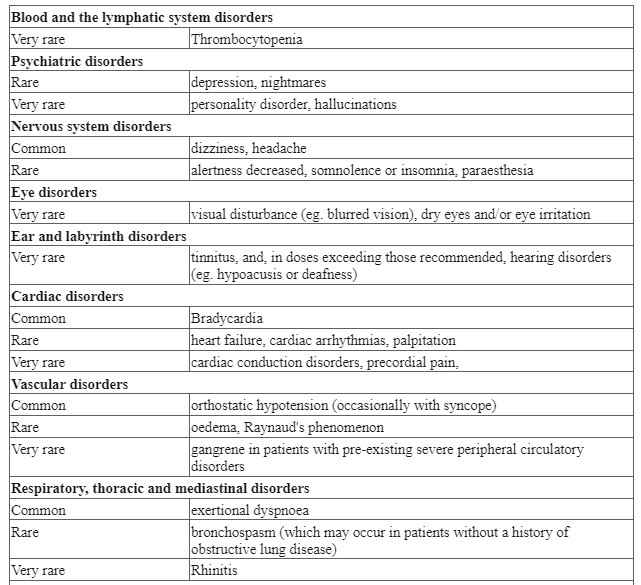
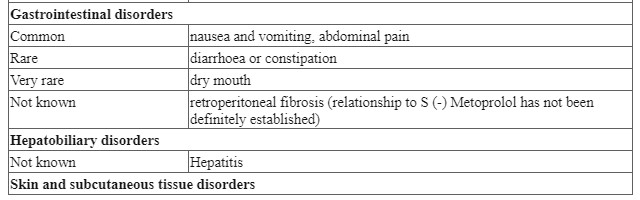
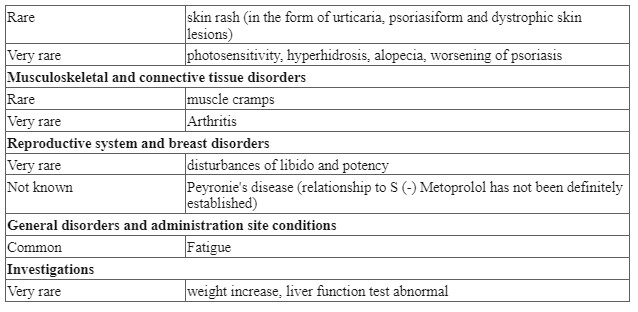
Adverse reactions have been ranked under headings of frequency using the following convention: very common (≥ 1/10); common (≥ 1/100 to <1/10); uncommon (≥ 1/1,000 to < 1/100); rare (≥ 1/10,000 to < 1/1,000); very rare (< 1/10,000); not known.
Post-marketing experience
The following adverse reactions have been reported during post-approval use of S(-)Metoprolol: a confusional state, an increase in blood triglycerides and a decrease in high-density lipoprotein (HDL). Because these reports are from a population of uncertain size and are subject to confounding factors, it is not possible to reliably estimate their frequency.
Reporting of suspected adverse reactions
Reporting suspected adverse reactions after authorisation of the medicinal product is important. It allows continued monitoring of the benefit/risk balance of the medicinal product.
Healthcare professionals are asked to report any suspected adverse reactions via email to: medico@zuventus.com
4.9 Overdose
Symptoms
In more severe cases an overdosage of S(-)Metoprolol may lead to severe hypotension, sinus bradycardia, atrioventricular block, heart failure, cardiogenic shock, cardiac arrest, bronchospasm, impairment of consciousness, coma, convulsions, nausea, vomiting, cyanosis, hypoglycaemia and occasionally hyperkalaemia.
Management
Patients should be admitted to hospital and, generally, should be managed in an intensive care setting, with continuous monitoring of cardiac function, blood gases, and blood biochemistry. Emergency supportive measures such as artificial ventilation or cardiac pacing should be instituted if appropriate. Even apparently well patients who have taken a small overdose should be closely observed for signs of poisoning for at least 4 hours. In the event of a potentially life-threatening oral overdose, use induction of vomiting or gastric lavage (if within 4 hours after ingestion of metoprolol) and/or activated charcoal to remove the drug from the gastrointestinal tract. S (-) Metoprolol cannot be effectively removed by haemodialysis.
Atropine may be given intravenously to control significant bradycardia. Intravenous beta-agonists such as prenalterol or isoprenaline should be used to treat bradycardia and hypotension; very high doses may be needed to overcome the beta blockade. Dopamine, dobutamine or noradrenaline may be given to maintain blood pressure. Glucagon has positive inotropic and chronotropic effects on the heart that are independent of beta-adrenergic receptors and has proved effective in the treatment of resistant hypotension and heart failure associated with beta-blocker overdose.
5.0 Pharmacological properties
5.1 Mechanism of Action
S(-)Metoprolol has a relatively greater blocking effect on beta1-receptors (i.e. those mediating adrenergic stimulation of heart rate and contractility and release of free fatty acids from fat stores) than on beta2-receptors which are chiefly involved in broncho and vasodilation. It has no membrane-stabilizing effect nor partial agonist (intrinsic sympathomimetic) activity.
The stimulant effect of catecholamines on the heart is reduced or inhibited by S(-)Metoprolol. This leads to a decrease in heart rate, cardiac contractility, and cardiac output.
5.2 Pharmacodynamic properties
S (-) Metoprolol is a selective β1 adrenergic receptor blocker. It has a preferential effect on β1 receptors, chiefly located in the cardiac muscle. This preferential effect is however not absolute, and at higher doses, S (-) Metoprolol also inhibits β2 receptors which are abundantly present in the bronchial and vascular musculature. S (-) Metoprolol has no intrinsic sympathomimetic activity and membrane-stabilizing activity is detectable only at plasma concentrations much greater than required for β-blockade.
The antihypertensive effects of β blocking agents may be attributed to
i) Competitive antagonism of catecholamines at peripheral (cardiac) adrenergic neuron sites, leading to decreased cardiac output; ii) A central effect leading to reduced sympathetic outflow to the periphery; and iii) Suppression of renin activity.
S (-) Metoprolol has been shown to be an effective antihypertensive agent when used alone or as concomitant therapy with thiazide-type diuretics, at doses of 100-400 mg daily.
In addition, S (-) Metoprolol reduces the oxygen requirements of the heart at any given level of effort by blocking catecholamine-induced increases in heart rate, velocity and extent of myocardial contraction, and in blood pressure, thus making it useful in the long-term management of angina pectoris.
S (-) Metoprolol administered two or four times daily, has been shown to be an effective anti-anginal agent, reducing the number of angina attacks and increasing exercise tolerance.
5.3 Pharmacokinetic properties
Absorption
S (-) Metoprolol is well absorbed after oral administration, peak plasma concentrations occurring 1.5 - 2 hours after dosing. The bioavailability of a single dose is approximately 50%, increasing to approximately 70% during repeated administration. The bioavailability also increases if S (-) Metoprolol is given with food.
Distribution
Approximately 10% of S (-) Metoprolol in plasma is protein bound. S (-) Metoprolol crosses the placenta and is found in breast milk.
S (-) Metoprolol is extensively metabolized by enzymes of the cytochrome P450 system in the liver. The oxidative metabolism of S (-) Metoprolol is under genetic control with a major contribution of the polymorphic cytochrome P450 isoform 2D6 (CYP2D6). There are marked ethnic differences in the prevalence of the poor metabolizers (PM) phenotype. Approximately 7% of Caucasians and less than 1% of Orientals are PMs.
CYP2D6 poor metabolizers exhibit several-fold higher plasma concentrations of S (-) Metoprolol than extensive metabolizers with normal CYP2D6 activity. None of the metabolites of S (-) Metoprolol contribute significantly to its beta-blocking effect.
Elimination
Elimination is mainly by hepatic metabolism and the average elimination half-life is 3.5 hours (range 1 to 9 hours). Rates of metabolism vary between individuals, with poor metabolizers (approximately 10%) showing higher plasma concentrations and slower elimination than extensive metabolizers. Within individuals, however, plasma concentrations are stable and reproducible.
6.0 Nonclinical properties
6.1 Animal Toxicology or Pharmacology
Long-term studies in animals have been conducted to evaluate the carcinogenic potential of metoprolol tartrate. In 2-year studies in rats at three oral dosage levels of up to 800 mg/kg/day (41 times, on a mg/m2 basis, the daily dose of 200 mg for a 60 kg patient), there was no increase in the development of spontaneously occurring benign or malignant neoplasms of any type. The only histologic changes that appeared to be drug-related were an increased incidence of generally mild focal accumulation of foamy macrophages in pulmonary alveoli and a slight increase in biliary hyperplasia. In a 21-month study in Swiss albino mice at three oral dosage levels of up to 750 mg/kg/day (18 times, on a mg/m2 basis, the daily dose of 200 mg for a 60-kg patient), benign lung tumors (small adenomas) occurred more frequently in female mice receiving the highest dose than in untreated control animals. There was no increase in malignant or total (benign plus malignant) lung tumors, nor in the overall incidence of tumors or malignant tumors. This 21month study was repeated in CD-1 mice, and no statistically or biologically significant differences were observed between treated and control mice of either sex for any type of tumor. All genotoxicity tests performed on metoprolol tartrate (a dominant lethal study in mice, chromosome studies in somatic cells, a Salmonella/mammalian-microsome mutagenicity test, and a nucleus anomaly test in somatic interphase nuclei) and metoprolol succinate (a Salmonella/mammalian-microsome mutagenicity test) were negative. No evidence of impaired fertility due to metoprolol tartrate was observed in a study performed in rats at doses up to 22 times, on a mg/m2 basis, the daily dose of 200 mg in a 60-kg patient.
7.0 Description
S(-)Metoprolol, is a beta 1-selective (cardioselective) adrenoceptor-blocking agent, for oral administration, available as prolonged-release tablets. Metoprolol succinate prolonged-release tablet has been formulated to provide a controlled and predictable release of S(-)Metoprolol for once-daily administration.
The tablets contain 11.875, 23.75, and 47.5 mg of S(-)Metoprolol succinate equivalent to 12.5, 25, and 50 mg of S(-)Metoprolol tartrate respectively. Its chemical name is (2S)-1-[4-(2-methoxyethyl)phenoxy]-3-(propan-2-ylamino)propan-2-ol. Its structural formula is: C15H25NO3
8.0 Pharmaceutical particulars
8.1 Incompatibilities
None
8.2 Shelf-life
24 Months
8.3 Packaging information
Strip of 10 tablets
8.4 Storage and handing instructions
The medical product does not require any special storage conditions
9.0 Patient counselling information
Heart failure patients should be advised if they experience signs or symptoms of worsening heart failure such as weight gain or increasing shortness of breath.
Advise patients if a dose is missed, the patient should take only the next scheduled dose (without doubling it). Patients should not interrupt or discontinue metoprolol succinate extended-release capsules without consulting the physician.
Advise patients
(1) to avoid operating automobiles and machinery or engaging in other tasks requiring alertness until the patient’s response to therapy with metoprolol succinate extended-release capsules has been determined;
(2) to contact the physician if any difficulty in breathing occurs;
(3) to inform the physician or dentist before any type of surgery that he or she is taking metoprolol succinate extended-release capsules.
Advise patients who are breastfeeding to monitor the infant for bradycardia, dry mouth, skin or eyes, and diarrhea or constipation.
About leaflet
Read all of this leaflet carefully before you start taking this medicine because it contains important information for you:
Keep this leaflet. You may need to read it again.
If you have any further questions, ask your doctor or pharmacist.
This medicine has been prescribed for you only. Do not pass it on to others. It may harm them, even if their signs of illness are the same as yours.
If you get any side effects, talk to your doctor or pharmacist. This includes any possible side effects not listed in this leaflet. See section 4.
What is in this leaflet
What KIMET XL® is and what it is used for
What you need to know before you take KIMET XL®
How to take KIMET XL®
Possible side effects
How to store KIMET XL®
Contents of the pack and other information
1. What KIMET XL® is and what it is used for
KIMET XL® tablets contain S(-)Metoprolol.
S(-)Metoprolol succinate tablets contain S(-)Metoprolol tartrate and is one of a group of medicines called beta-blockers. Beta-blockers slow the heartbeat, lessen the force with which the heart muscle contracts and reduce blood vessel contraction in the heart, brain, and throughout the body.
S(-)Metoprolol tablets are used to treat a number of different conditions including:
High blood pressure
Angina (chest pain)
Some heart disorders, for example, heart attack or irregular heartbeats.
They can also be used as part of the treatment for an overactive thyroid gland.
S(-)Metoprolol tablets can be taken to help prevent migraine attacks.
2. What you need to know before you take KIMET XL®
Do not take KIMET XL®:
Do not take S(-)Metoprolol tablets if:
you are allergic to S(-)Metoprolol, any other beta-blocker drugs or any of the other ingredients of this medicine. If you think you may be allergic, talk to your doctor before taking this medicine.
you are allergic to any other beta-blocker drugs,
you have severe asthma or severe attacks of wheezing,
you have certain serious heart or blood vessel disorders that shouldn’t be treated with beta-blockers (your doctor should be aware of these),
you have low blood pressure,
you have been told that you have high blood pressure due to a tumor near your kidney (phaeochromocytoma),
you have been told that your blood is more acidic than normal (a condition called metabolic acidosis).
If any of the above applies to you, do not take KIMET XL® and talk to your doctor.
Warnings and precautions
Talk to your doctor before taking KIMET XL® Tablets if you:
suffer from asthma, bronchitis or any similar lung disorder
have problems with your heart (such as slow heart rate) or circulation (taking this medicine may make these worse)
have diabetes
suffer from any serious liver disease
have had a severe allergic reaction to anything
suffer from a rare form of angina called Prinzmetal's angina
will be having an operation that requires a general anesthetic
have psoriasis
If any of these apply to you, discuss your treatment with your doctor or pharmacist because this medicine might not be the right medicine for you.
If you are going to have a general anesthetic, tell the doctor or dentist in charge that you are taking S(-)Metoprolol tablets. If you are diabetic, take particular care with your blood sugar control since S(-)Metoprolol tablets may make you less aware of low blood sugar levels.
The doctor will want to keep an eye on your heart and thyroid function while you are taking this medicine. You might also need regular eye examinations
Children and adolescents
S(-)Metoprolol tablets are not recommended for the treatment of children or adolescents.
Other medicines and KIMET XL® Tablets
Tell your doctor or pharmacist if you are taking, have taken or might take any other medicines. This includes medicines you can buy without a prescription, including herbal medicines. This is because S(-)Metoprolol can affect the way some medicines work. Also, some medicines can affect the way S(-)Metoprolol works.
In particular, tell your doctor or pharmacist if you are taking any of the following:
Medicines for high blood pressure (including prazosin, clonidine and drugs called calcium channel blockers such as verapamil or diltiazem)
Other beta-blockers (including those used in the form of eye drops)
Drugs which affect the peripheral circulation (fingers and toes) such as ergotamine which can be used to treat migraine
Medicines to treat depression
Medicines to treat other mental illnesses
Antiretroviral drugs used to treat AIDS and some other conditions
Antihistamines (including medicines that you can buy without a prescription for hay fever and other allergies, colds and other conditions)
Drugs to prevent malaria
Medicines to treat fungal infections
Medicines which affect liver enzymes, such as cimetidine used to treat stomach ulcers and rifampicin used to treat tuberculosis
Medicines for heart problems including angina, such as amiodarone, digoxin, nitrates and anti-arrhythmic drugs
Insulin and other drugs to treat diabetes
Drugs called NSAIDs used to treat pain and inflammation
A local anaesthetic called lidocaine.
S(-)Metoprolol tablets with alcohol
Be careful when drinking alcohol - it may affect you more than usual.
Pregnancy and breast-feeding
S(-)Metoprolol is not recommended during pregnancy or breastfeeding. If you are pregnant or breast-feeding, think you may be pregnant or are planning to have a baby, ask your doctor or pharmacist for advice before taking this medicine.
Driving and using machines
If you feel dizzy or sleepy, or if you have problems with your eyes when you start to take these tablets, do not drive or use machinery until these effects have worn off.
3. How to take KIMET XL® Tablets
Always take this medicine exactly as your doctor has told you. Check with your doctor or pharmacist if you are not sure. The doctor will tell you how many S(-)Metoprolol tablets to take and when to take them. The dose you are prescribed will depend on the condition you have and how severe it is. The dose will be on the pharmacist’s label. Check the label carefully. If you are not sure, ask your doctor or pharmacist. Keep taking your tablets for as long as you have been told unless you have any problems. In that case, check with your doctor. Swallow your tablets with a drink of water.
The recommended doses are:
High blood pressure: The usual starting dose is 12.5 to 50 mg a day. This can be increased by your doctor if necessary.
Angina (Chest pain): The usual dose is 25-50 mg taken two or three times a day.
For other conditions, the usual total daily dose is between 50 and 100 mg. Your doctor will choose a suitable starting dose and monitor your progress. Your doctor may also recommend that you take a lower dose of 12.5 mg based on your condition.
If you take more KIMET XL® than you should
If you have taken too many tablets of KIMET XL®, tell your doctor at once or contact your nearest hospital casualty department. Take your medicine with you so that people can see what you have taken.
If you forget to take or give KIMET XL®
If you forget to take a dose, take it when you remember, and then take your next dose at the usual time. Do not take a double dose to make up for a forgotten tablet.
If you stop taking KIMET XL®
Do not stop taking your tablets suddenly as this may cause your condition to get worse. Ask your doctor first. When discontinuing the treatment, the dose should be withdrawn gradually over a period of 10 days, the doses diminishing to 12.5 mg for the last 6 days.
4. Possible side effects
Like all medicines, this medicine can cause side effects, although not everybody gets them. The side effects listed below have been reported. Common: may affect up to 1 in 10 people
Headache, dizziness, or unusual tiredness.
Slow heartbeat.
Low blood pressure which might make you faint or dizzy.
Feeling short of breath when exercising.
Feeling or being sick, stomach ache.
Rare: may affect up to 1 in 1,000 people
Sleep disorders such as sleepiness, sleeplessness or nightmares.
Feeling less alert.
Coldness, numbness or tingling in your hands and feet.
Depression.
Muscle cramps Heart failure or irregular heartbeat.
Water retention (oedema).
Breathlessness or wheeziness (bronchospasm).
Diarrhoea or constipation.
Skin rash and/or itching.
Very rare: may affect up to 1 in 10,000 people
Weight gain.
Hallucinations or personality disorders.
Dry or sore eyes or problems with vision.
Tinnitus or hearing problems.
Gangrene.
Runny nose, dry mouth.
Changes in the results of liver function tests.
Bruising or increased sensitivity of the skin to sunlight, worsening of psoriasis. Increased sweating, loss of hair. Impotence or loss of libido.
Painful joints.
Chest pain.
The following have also been reported:
Confusion
Abnormal levels of certain types of fats such as cholesterol or triglycerides in the blood.
Abnormal curvature of the penis with painful erections (known as Peyronie’s disease)
Retroperitoneal fibrosis where abnormal scar tissue occurs behind the membrane that lines the cavity of the abdomen.
This may present with pain in the back, groin or the lower abdomen.
Hepatitis
Do not be alarmed by this list - most people take S(-)Metoprolol without any problems. If any of the symptoms become troublesome, or if you notice anything else not mentioned here, please go and see your doctor as they may want to give you a different medicine.
Reporting of side effects
If you get any side effects, talk to your doctor, pharmacist or nurse. This includes any possible side effects not listed in this leaflet. You can also report side effects directly: Website: www.zuventus.com and click the “Safety Reporting” located on the top of the home page.
By reporting side effects, you can help provide more information on the safety of this medicine.
You can also report the side effect with the help of your treating physician.
5. How to store KIMET XL®
Keep out of the sight and reach of children.
Do not use this medicine after the expiry date which is stated on the label and carton.
The expiry date refers to the last day of that month. This medicinal product does not require any special storage conditions.
Do not throw away any medicines via wastewater or household waste.
Ask your pharmacist how to throw away medicines you no longer use.
These measures will help protect the environment.
6. Contents of the pack and other information
What KIMET XL® tablets contain
KIMET XL®-12.5
Each tablet contains S(-)Metoprolol Succinate 11.875 mg equivalent to S(-)Metoprolol
Tartrate 12.50 mg.
KIMET XL®-25
Each tablet contains S(-)Metoprolol Succinate 23.75 mg equivalent to S(-)Metoprolol
Tartrate 25 mg.
KIMET XL®-50
Each tablet contains S(-)Metoprolol Succinate 47.50 mg equivalent to S(-)Metoprolol
Tartrate 50 mg.
KIMET XL®-50
Each tablet contains S(-)Metoprolol Succinate 47.50 mg equivalent to S(-)Metoprolol
Tartrate 50 mg.
What KIMET XL® looks like and contents of the pack
S (-) Metoprolol Succinate Prolonged-Release Tablets
2.0 Qualitative and quantitative composition
KIMET XL®-12.5
Each prolonged-release film-coated tablet contains:
S (-) Metoprolol Succinate 11.875 mg
equivalent to S (-) Metoprolol Tartrate 12.50 mg
Colour: Titanium Dioxide IP
KIMET XL®-25
Each prolonged-release film-coated tablet contains:
S (-) Metoprolol Succinate 23.75 mg
equivalent to S (-) Metoprolol Tartrate 25 mg
Colour: Titanium Dioxide IP
KIMET XL®-50
Each prolonged-release film-coated tablet contains
S (-) Metoprolol Succinate 47.50 mg
equivalent to S (-) Metoprolol Tartrate 50 mg
Colour: Titanium Dioxide IP
3.0 Dosage form and strength
Tablets, 12.5 mg, 25 mg, 50 mg
4.0 Clinical particulars
4.1 Therapeutic indication
KIMET XL® tablets are indicated for the treatment of hypertension and angina pectoris.
KIMET XL® tablets are also used for the treatment of functional heart disorders, migraine prophylaxis, cardiac arrhythmias, prevention of cardiac death and re-infarction after the acute phase of myocardial infarction stable symptomatic CHF.
4.2 Posology and method of administration
One KIMET XL® tablet daily treatment is preferably taken in the morning. The dosage of KIMET XL® tablets should be individualized.
Hypertension: The usual initial dosage of KIMET XL® is 12.5 to 50 mg daily in a single dose alone or combined with other antihypertensive agents. A further reduction in blood pressure may be achieved if S (-) Metoprolol is used in conjunction with an antihypertensive diuretic or other hypotensive agent.
Angina Pectoris: KIMET XL® 25-50 mg twice or three times daily. In general, a significant improvement in exercise tolerance and reduction of anginal attacks may be expected with a dose of 25-50 mg twice daily.
Cardiac Arrhythmias: KIMET XL® dosage of 25 mg two or three times daily is usually sufficient. If necessary, the dose can be increased up to 150 mg per day and administered in divided doses.
Myocardial infarction: Early intervention: 25 mg every 6 hours for 48 hours, preferably within 12 hours of the onset of chest pain. Maintenance: The usual maintenance dose of KIMET XL® is 100 mg daily given in divided doses. The treatment should be continued for at least 3 months.
Prophylaxis of migraine: KIMET XL® dosage of 50-100 mg daily, given in divided doses (morning and evening).
Stable heart failure, function class II and III: A recommended initial dosage of KIMET XL® for the first two weeks is 12.5 mg once daily. In patients with more severe heart failure, the starting dose is 6.25mg once daily. After two weeks, the dosage can be doubled every second week upto the dosage tolerated by the patient. The target dose for long-term treatment is 100 mg once daily.
4.3 Contraindications
Hypersensitivity to the active substances, to related derivatives or to any of the excipients. KIMET XL® is contraindicated in
Severe asthma or history of severe bronchospasm.
Atrioventricular block of second or third degree.
Uncontrolled heart failure.
Clinically relevant sinus bradycardia.
Sick-sinus syndrome.
Severe peripheral arterial disease.
Cardiogenic shock.
Hypotension.
Untreated phaeochromocytoma.
Metabolic acidosis.
KIMET XL® is also contraindicated when myocardial infarction is complicated by significant bradycardia, first-degree heart block, systolic hypotension (less than 100 mmHg) and/or severe heart failure.
4.4 Special warnings and precautions for use
Special warnings
Cardiac Failure: In hypertensive and angina patients who have congestive heart failure controlled by digitalis and diuretics, KIMET XL® should be administered cautiously as β blockade carries the potential hazard of further depressing myocardial contractility and precipitating more severe failure.
In Patients without a History of Cardiac Failure: Continued depression of the myocardium with β-blocking agents over a period of time can, in some cases, lead to cardiac failure.
Ischemic Heart Disease: Following abrupt cessation of therapy with certain β-blocking agents, exacerbations of angina pectoris and, in some cases, myocardial infarction has occurred. When discontinuing chronically administered KIMET XL®, particularly in patients with ischemic heart disease, the dosage should be gradually reduced over a period of 1-2 weeks and the patient should be carefully monitored.
Bronchospastic Diseases: Patients with bronchospastic diseases should, in general, not receive β blockers, including KIMET XL®. Because of its relative β1 selectivity, however, KIMET XL may be used with caution in patients with bronchospastic disease who do not respond to, or cannot tolerate, other antihypertensive treatment. Since β1 selectivity is not absolute, a β2-stimulating agent should be administered concomitantly, and the lowest possible dose of KIMET XL® should be used. In these circumstances it would be prudent initially to administer KIMET XL® in smaller doses three times daily, instead of larger doses two times daily, to avoid the higher plasma levels associated with the longer dosing interval.
Major Surgery: Chronically administered β-blocking therapy should not be routinely withdrawn prior to major surgery.
Diabetes and Hypoglycemia: β blockers may mask tachycardia occurring with hypoglycemia.
Pheochromocytoma: If KIMET XL® is used in the setting of pheochromocytoma, it should be given in combination with an alpha blocker, and only after the alpha blocker has been initiated. Administration of β blockers alone in the setting of pheochromocytoma has been associated with a paradoxical increase in blood pressure due to the attenuation of β-mediated vasodilatation in skeletal muscle.
Thyrotoxicosis: β-adrenergic blockade may mask certain clinical signs (e.g., tachycardia) of hyperthyroidism. Patients suspected of developing thyrotoxicosis should be managed carefully to avoid abrupt withdrawal of β blockade, which might precipitate a thyroid storm.
Bradycardia: KIMET XL® produces a decrease in sinus heart rate in most patients. Acute myocardial infarction (particularly inferior infarction) may in itself produce significant lowering of the sinus rate. If the sinus rate decreases to <40 beats/min, particularly if associated with evidence of lowered cardiac output, atropine (0.25-0.5 mg) should be administered intravenously.
AV Block: KIMET XL® slows AV conduction and may produce significant first- (P-R interval≥0.26 sec), second-, or third-degree heart block. If heart block occurs, KIMET XL® should be discontinued and atropine (0.25-0.5 mg) should be administered intravenously.
Hypotension: If hypotension (systolic blood pressure ≤90 mmHg) occurs, KIMET XL® should be discontinued, and the hemodynamic status of the patient and the extent of myocardial damage carefully assessed.
Bronchospastic Diseases: Patients with bronchospastic diseases should, in general, not receive β blockers, including KIMET XL. Because of its relative β1 selectivity, KIMET XL® may be used with extreme caution in patients with bronchospastic disease.
Precautions
KIMET XL® should be used with caution in patients with impaired hepatic function.
KIMET XL® should be taken regularly and continuously as directed. It should not be discontinued without consulting the physician. Abrupt interruption of the medication is to be avoided. Sudden withdrawal of β blockade is hazardous, especially in high risk patients, and may aggravate chronic heart failure as well as increase the risk of myocardial infarction and sudden death. Any withdrawal of the product should therefore, if possible, be made gradually over at least two weeks where the dose is reduced by half in each step, down to the final dose when a 25 mg tablet is reduced to half a tablet. The final dose should be given for at least four days before discontinuation.
It is advisable (1) to avoid operating automobiles and machinery or engaging in other tasks requiring alertness until the patient’s response to therapy with KIMET XL® has been determined; (2) to contact the physician if any difficulty in breathing occurs; (3) to inform the physician or dentist before any type of surgery that he or she is taking KIMET XL®.
Concomitant use of KIMET XL® with catecholamine-depleting drugs or digitalis glycosides can increase the risk of bradycardia and hypotension.
Risk of Anaphylactic Reaction: While taking β blockers, patients with a history of severe anaphylactic reactions to a variety of allergens may be more reactive to repeated challenges, either accidental, diagnostic, or therapeutic. Such patients may be unresponsive to the usual doses of epinephrine used to treat allergic reaction.
General Anesthetics: Some inhalation anesthetics may enhance the cardio-depressant effect of β blockers.
CYP2D6 Inhibitors: Potent inhibitors of the CYP2D6 enzyme may increase the plasma concentration of KIMET XL®. Caution should therefore be exercised when co-administering potent CYP2D6 inhibitors with KIMET XL®.
Clonidine: If a patient is treated with clonidine and KIMET XL® concurrently, and clonidine treatment is to be discontinued, KIMET XL® should be stopped several days before clonidine is withdrawn.
4.5 Drugs interactions
The effects of S (-) Metoprolol and other antihypertensive drugs on blood pressure are usually additive, and care should be taken to avoid hypotension. However, combinations of antihypertensive drugs may often be used with the benefit to improve the control of hypertension.
As beta-blockers may affect peripheral circulation, care should be exercised when drugs with similar activity, e.g. ergotamine are given concurrently.
Care should also be exercised when beta-blockers are given in combination with sympathetic ganglion-blocking agents, other beta-blockers (also in the form of eye drops), or MAO inhibitors.
Prazosin
The acute postural hypotension that can follow the first dose of prazosin may be increased in patients already taking a beta-blocker.
Clonidine
If combination treatment with clonidine is to be discontinued S (-) Metoprolol should be withdrawn several days before clonidine. This is because the hypertension that can follow withdrawal of clonidine may be increased in patients receiving concurrent beta-blocker treatment.
Calcium channel blockers
Calcium channel blockers such as verapamil and diltiazem may potentiate the depressant effects of beta-blockers on blood pressure, heart rate, cardiac contractility and atrioventricular conduction. A calcium channel blocker of the verapamil (phenylalkylamine) type should not be given intravenously to patients receiving S (-) Metoprolol because there is a risk of cardiac arrest in this situation. Patients taking an oral calcium channel blocker of the verapamil type in combination with S (-) Metoprolol should be closely monitored.
CYP2D6 inhibitors
Potent inhibitors of this enzyme may increase the plasma concentration of S (-) Metoprolol (see section 5.2). Caution should therefore be exercised when co-administering potent CYP2D6 inhibitors with metoprolol. Known clinically significant potent inhibitors of CYP2D6 are antidepressants such as fluoxetine, paroxetine or bupropion, antipsychotics such as thioridazine, antiarrhythmics such as propafenone, antiretrovirals such as ritonavir, antihistamines such as diphenhydramine, antimalarials such as hydroxychloroquine or quinidine, antifungals such as terbinafine and medications for stomach ulcers such as cimetidine.
Class I anti-arrhythmic drugs and amiodarone
Amiodarone, propafenone, and other class I anti-arrhythmic agents such as quinidine and disopyramide may potentiate the effects of beta-blockers on heart rate and atrioventricular conduction.
Nitroglycerin
Nitroglycerin may enhance the hypotensive effect of metoprolol.
Digitalis glycosides
Concurrent use of digitalis glycosides may result in excessive bradycardia and/or increase in atrioventricular conduction time.
Sympathomimetics
S (-) Metoprolol will antagonise the beta1 effects of sympathomimetic agents but should have little influence on the bronchodilator effects of beta2-agonists at normal therapeutic doses.
Insulin and oral hypoglycaemic drugs
In diabetic patients who use insulin, beta-blocker treatment may be associated with increased or prolonged hypoglycaemia. Beta-blockers may also antagonize the hypoglycaemic effects of sulfonylureas. The risk of either effect is less with a beta1-selective drug such as S (-) Metoprolol than with a non-selective beta-blocker. However, diabetic patients receiving S (-) Metoprolol should be monitored to ensure that diabetes control is maintained.
Non-steroidal anti-inflammatory drugs
Concurrent treatment with non-steroidal anti-inflammatory drugs such as indomethacin may decrease the antihypertensive effect of metoprolol.
Lignocaine
S (-) Metoprolol may impair the elimination of lignocaine.
General anaesthetics
Some inhalation anaesthetics may enhance the cardio-depressant effect of beta-blockers.
Hepatic enzyme inducers/inhibitors
Enzyme-inducing agents (e.g. rifampicin) may reduce plasma concentrations of metoprolol, whereas enzyme inhibitors (e.g. cimetidine) may increase plasma concentrations.
Alcohol
During concomitant ingestion of alcohol and metoprolol, the concentration of blood alcohol may reach higher levels and may decrease more slowly.
4.6 Use in special populations
S(-)Metoprolol should not be used in pregnancy or lactation unless it is considered that the benefit outweighs the possible risk to the fetus/infant.
If S(-)Metoprolol is used during pregnancy and lactation special attention should be paid to the fetus, neonate and breastfed infant for undesirable effects of the drug's beta-blocking action (e.g. bradycardia, hypoglycemia). The lowest possible dose should be used, and treatment should be discontinued at least 2 to 3 days before delivery to avoid increased uterine contractility and the effects of beta-blockade in the newborn baby.
Pregnancy
Beta-blockers reduce placental perfusion which may result in intrauterine fetal death, and immature and premature deliveries.
S(-)Metoprolol has, however, been used in pregnancy-associated hypertension under close supervision after 20 weeks gestation. Although the drug crosses the placental barrier and is present in cord blood no evidence of fetal abnormalities has been reported. Animal experiments have shown neither teratogenic potential nor other adverse events on the embryo and/or fetus relevant to the safety assessment of the product.
Breast-feeding
The amount of S(-)Metoprolol ingested via breast milk seems to be negligible with regard to its beta-blocking effects if the mother is treated in doses within the therapeutic range.
4.7 Effects on ability to drive and use machines
As with all beta-blockers, S(-)Metoprolol may affect patients' ability to drive and operate machinery. Patients should be warned accordingly.
4.8 Undesirable effects
Adverse reactions have been ranked under headings of frequency using the following convention: very common (≥ 1/10); common (≥ 1/100 to <1/10); uncommon (≥ 1/1,000 to < 1/100); rare (≥ 1/10,000 to < 1/1,000); very rare (< 1/10,000); not known.
Post-marketing experience
The following adverse reactions have been reported during post-approval use of S(-)Metoprolol: a confusional state, an increase in blood triglycerides and a decrease in high-density lipoprotein (HDL). Because these reports are from a population of uncertain size and are subject to confounding factors, it is not possible to reliably estimate their frequency.
Reporting of suspected adverse reactions
Reporting suspected adverse reactions after authorisation of the medicinal product is important. It allows continued monitoring of the benefit/risk balance of the medicinal product.
Healthcare professionals are asked to report any suspected adverse reactions via email to: medico@zuventus.com
4.9 Overdose
Symptoms
In more severe cases an overdosage of S(-)Metoprolol may lead to severe hypotension, sinus bradycardia, atrioventricular block, heart failure, cardiogenic shock, cardiac arrest, bronchospasm, impairment of consciousness, coma, convulsions, nausea, vomiting, cyanosis, hypoglycaemia and occasionally hyperkalaemia.
Management
Patients should be admitted to hospital and, generally, should be managed in an intensive care setting, with continuous monitoring of cardiac function, blood gases, and blood biochemistry. Emergency supportive measures such as artificial ventilation or cardiac pacing should be instituted if appropriate. Even apparently well patients who have taken a small overdose should be closely observed for signs of poisoning for at least 4 hours. In the event of a potentially life-threatening oral overdose, use induction of vomiting or gastric lavage (if within 4 hours after ingestion of metoprolol) and/or activated charcoal to remove the drug from the gastrointestinal tract. S (-) Metoprolol cannot be effectively removed by haemodialysis.
Atropine may be given intravenously to control significant bradycardia. Intravenous beta-agonists such as prenalterol or isoprenaline should be used to treat bradycardia and hypotension; very high doses may be needed to overcome the beta blockade. Dopamine, dobutamine or noradrenaline may be given to maintain blood pressure. Glucagon has positive inotropic and chronotropic effects on the heart that are independent of beta-adrenergic receptors and has proved effective in the treatment of resistant hypotension and heart failure associated with beta-blocker overdose.
5.0 Pharmacological properties
5.1 Mechanism of Action
S(-)Metoprolol has a relatively greater blocking effect on beta1-receptors (i.e. those mediating adrenergic stimulation of heart rate and contractility and release of free fatty acids from fat stores) than on beta2-receptors which are chiefly involved in broncho and vasodilation. It has no membrane-stabilizing effect nor partial agonist (intrinsic sympathomimetic) activity.
The stimulant effect of catecholamines on the heart is reduced or inhibited by S(-)Metoprolol. This leads to a decrease in heart rate, cardiac contractility, and cardiac output.
5.2 Pharmacodynamic properties
S (-) Metoprolol is a selective β1 adrenergic receptor blocker. It has a preferential effect on β1 receptors, chiefly located in the cardiac muscle. This preferential effect is however not absolute, and at higher doses, S (-) Metoprolol also inhibits β2 receptors which are abundantly present in the bronchial and vascular musculature. S (-) Metoprolol has no intrinsic sympathomimetic activity and membrane-stabilizing activity is detectable only at plasma concentrations much greater than required for β-blockade.
The antihypertensive effects of β blocking agents may be attributed to
i) Competitive antagonism of catecholamines at peripheral (cardiac) adrenergic neuron sites, leading to decreased cardiac output; ii) A central effect leading to reduced sympathetic outflow to the periphery; and iii) Suppression of renin activity.
S (-) Metoprolol has been shown to be an effective antihypertensive agent when used alone or as concomitant therapy with thiazide-type diuretics, at doses of 100-400 mg daily.
In addition, S (-) Metoprolol reduces the oxygen requirements of the heart at any given level of effort by blocking catecholamine-induced increases in heart rate, velocity and extent of myocardial contraction, and in blood pressure, thus making it useful in the long-term management of angina pectoris.
S (-) Metoprolol administered two or four times daily, has been shown to be an effective anti-anginal agent, reducing the number of angina attacks and increasing exercise tolerance.
5.3 Pharmacokinetic properties
Absorption
S (-) Metoprolol is well absorbed after oral administration, peak plasma concentrations occurring 1.5 - 2 hours after dosing. The bioavailability of a single dose is approximately 50%, increasing to approximately 70% during repeated administration. The bioavailability also increases if S (-) Metoprolol is given with food.
Distribution
Approximately 10% of S (-) Metoprolol in plasma is protein bound. S (-) Metoprolol crosses the placenta and is found in breast milk.
S (-) Metoprolol is extensively metabolized by enzymes of the cytochrome P450 system in the liver. The oxidative metabolism of S (-) Metoprolol is under genetic control with a major contribution of the polymorphic cytochrome P450 isoform 2D6 (CYP2D6). There are marked ethnic differences in the prevalence of the poor metabolizers (PM) phenotype. Approximately 7% of Caucasians and less than 1% of Orientals are PMs.
CYP2D6 poor metabolizers exhibit several-fold higher plasma concentrations of S (-) Metoprolol than extensive metabolizers with normal CYP2D6 activity. None of the metabolites of S (-) Metoprolol contribute significantly to its beta-blocking effect.
Elimination
Elimination is mainly by hepatic metabolism and the average elimination half-life is 3.5 hours (range 1 to 9 hours). Rates of metabolism vary between individuals, with poor metabolizers (approximately 10%) showing higher plasma concentrations and slower elimination than extensive metabolizers. Within individuals, however, plasma concentrations are stable and reproducible.
6.0 Nonclinical properties
6.1 Animal Toxicology or Pharmacology
Long-term studies in animals have been conducted to evaluate the carcinogenic potential of metoprolol tartrate. In 2-year studies in rats at three oral dosage levels of up to 800 mg/kg/day (41 times, on a mg/m2 basis, the daily dose of 200 mg for a 60 kg patient), there was no increase in the development of spontaneously occurring benign or malignant neoplasms of any type. The only histologic changes that appeared to be drug-related were an increased incidence of generally mild focal accumulation of foamy macrophages in pulmonary alveoli and a slight increase in biliary hyperplasia. In a 21-month study in Swiss albino mice at three oral dosage levels of up to 750 mg/kg/day (18 times, on a mg/m2 basis, the daily dose of 200 mg for a 60-kg patient), benign lung tumors (small adenomas) occurred more frequently in female mice receiving the highest dose than in untreated control animals. There was no increase in malignant or total (benign plus malignant) lung tumors, nor in the overall incidence of tumors or malignant tumors. This 21month study was repeated in CD-1 mice, and no statistically or biologically significant differences were observed between treated and control mice of either sex for any type of tumor. All genotoxicity tests performed on metoprolol tartrate (a dominant lethal study in mice, chromosome studies in somatic cells, a Salmonella/mammalian-microsome mutagenicity test, and a nucleus anomaly test in somatic interphase nuclei) and metoprolol succinate (a Salmonella/mammalian-microsome mutagenicity test) were negative. No evidence of impaired fertility due to metoprolol tartrate was observed in a study performed in rats at doses up to 22 times, on a mg/m2 basis, the daily dose of 200 mg in a 60-kg patient.
7.0 Description
S(-)Metoprolol, is a beta 1-selective (cardioselective) adrenoceptor-blocking agent, for oral administration, available as prolonged-release tablets. Metoprolol succinate prolonged-release tablet has been formulated to provide a controlled and predictable release of S(-)Metoprolol for once-daily administration.
The tablets contain 11.875, 23.75, and 47.5 mg of S(-)Metoprolol succinate equivalent to 12.5, 25, and 50 mg of S(-)Metoprolol tartrate respectively. Its chemical name is (2S)-1-[4-(2-methoxyethyl)phenoxy]-3-(propan-2-ylamino)propan-2-ol. Its structural formula is: C15H25NO3
8.0 Pharmaceutical particulars
8.1 Incompatibilities
None
8.2 Shelf-life
24 Months
8.3 Packaging information
Strip of 10 tablets
8.4 Storage and handing instructions
The medical product does not require any special storage conditions
9.0 Patient counselling information
Heart failure patients should be advised if they experience signs or symptoms of worsening heart failure such as weight gain or increasing shortness of breath.
Advise patients if a dose is missed, the patient should take only the next scheduled dose (without doubling it). Patients should not interrupt or discontinue metoprolol succinate extended-release capsules without consulting the physician.
Advise patients
(1) to avoid operating automobiles and machinery or engaging in other tasks requiring alertness until the patient’s response to therapy with metoprolol succinate extended-release capsules has been determined;
(2) to contact the physician if any difficulty in breathing occurs;
(3) to inform the physician or dentist before any type of surgery that he or she is taking metoprolol succinate extended-release capsules.
Advise patients who are breastfeeding to monitor the infant for bradycardia, dry mouth, skin or eyes, and diarrhea or constipation.
About leaflet
Read all of this leaflet carefully before you start taking this medicine because it contains important information for you:
Keep this leaflet. You may need to read it again.
If you have any further questions, ask your doctor or pharmacist.
This medicine has been prescribed for you only. Do not pass it on to others. It may harm them, even if their signs of illness are the same as yours.
If you get any side effects, talk to your doctor or pharmacist. This includes any possible side effects not listed in this leaflet. See section 4.
What is in this leaflet
What KIMET XL® is and what it is used for
What you need to know before you take KIMET XL®
How to take KIMET XL®
Possible side effects
How to store KIMET XL®
Contents of the pack and other information
1. What KIMET XL® is and what it is used for
KIMET XL® tablets contain S(-)Metoprolol.
S(-)Metoprolol succinate tablets contain S(-)Metoprolol tartrate and is one of a group of medicines called beta-blockers. Beta-blockers slow the heartbeat, lessen the force with which the heart muscle contracts and reduce blood vessel contraction in the heart, brain, and throughout the body.
S(-)Metoprolol tablets are used to treat a number of different conditions including:
High blood pressure
Angina (chest pain)
Some heart disorders, for example, heart attack or irregular heartbeats.
They can also be used as part of the treatment for an overactive thyroid gland.
S(-)Metoprolol tablets can be taken to help prevent migraine attacks.
2. What you need to know before you take KIMET XL®
Do not take KIMET XL®:
Do not take S(-)Metoprolol tablets if:
you are allergic to S(-)Metoprolol, any other beta-blocker drugs or any of the other ingredients of this medicine. If you think you may be allergic, talk to your doctor before taking this medicine.
you are allergic to any other beta-blocker drugs,
you have severe asthma or severe attacks of wheezing,
you have certain serious heart or blood vessel disorders that shouldn’t be treated with beta-blockers (your doctor should be aware of these),
you have low blood pressure,
you have been told that you have high blood pressure due to a tumor near your kidney (phaeochromocytoma),
you have been told that your blood is more acidic than normal (a condition called metabolic acidosis).
If any of the above applies to you, do not take KIMET XL® and talk to your doctor.
Warnings and precautions
Talk to your doctor before taking KIMET XL® Tablets if you:
suffer from asthma, bronchitis or any similar lung disorder
have problems with your heart (such as slow heart rate) or circulation (taking this medicine may make these worse)
have diabetes
suffer from any serious liver disease
have had a severe allergic reaction to anything
suffer from a rare form of angina called Prinzmetal's angina
will be having an operation that requires a general anesthetic
have psoriasis
If any of these apply to you, discuss your treatment with your doctor or pharmacist because this medicine might not be the right medicine for you.
If you are going to have a general anesthetic, tell the doctor or dentist in charge that you are taking S(-)Metoprolol tablets. If you are diabetic, take particular care with your blood sugar control since S(-)Metoprolol tablets may make you less aware of low blood sugar levels.
The doctor will want to keep an eye on your heart and thyroid function while you are taking this medicine. You might also need regular eye examinations
Children and adolescents
S(-)Metoprolol tablets are not recommended for the treatment of children or adolescents.
Other medicines and KIMET XL® Tablets
Tell your doctor or pharmacist if you are taking, have taken or might take any other medicines. This includes medicines you can buy without a prescription, including herbal medicines. This is because S(-)Metoprolol can affect the way some medicines work. Also, some medicines can affect the way S(-)Metoprolol works.
In particular, tell your doctor or pharmacist if you are taking any of the following:
Medicines for high blood pressure (including prazosin, clonidine and drugs called calcium channel blockers such as verapamil or diltiazem)
Other beta-blockers (including those used in the form of eye drops)
Drugs which affect the peripheral circulation (fingers and toes) such as ergotamine which can be used to treat migraine
Medicines to treat depression
Medicines to treat other mental illnesses
Antiretroviral drugs used to treat AIDS and some other conditions
Antihistamines (including medicines that you can buy without a prescription for hay fever and other allergies, colds and other conditions)
Drugs to prevent malaria
Medicines to treat fungal infections
Medicines which affect liver enzymes, such as cimetidine used to treat stomach ulcers and rifampicin used to treat tuberculosis
Medicines for heart problems including angina, such as amiodarone, digoxin, nitrates and anti-arrhythmic drugs
Insulin and other drugs to treat diabetes
Drugs called NSAIDs used to treat pain and inflammation
A local anaesthetic called lidocaine.
S(-)Metoprolol tablets with alcohol
Be careful when drinking alcohol - it may affect you more than usual.
Pregnancy and breast-feeding
S(-)Metoprolol is not recommended during pregnancy or breastfeeding. If you are pregnant or breast-feeding, think you may be pregnant or are planning to have a baby, ask your doctor or pharmacist for advice before taking this medicine.
Driving and using machines
If you feel dizzy or sleepy, or if you have problems with your eyes when you start to take these tablets, do not drive or use machinery until these effects have worn off.
3. How to take KIMET XL® Tablets
Always take this medicine exactly as your doctor has told you. Check with your doctor or pharmacist if you are not sure. The doctor will tell you how many S(-)Metoprolol tablets to take and when to take them. The dose you are prescribed will depend on the condition you have and how severe it is. The dose will be on the pharmacist’s label. Check the label carefully. If you are not sure, ask your doctor or pharmacist. Keep taking your tablets for as long as you have been told unless you have any problems. In that case, check with your doctor. Swallow your tablets with a drink of water.
The recommended doses are:
High blood pressure: The usual starting dose is 12.5 to 50 mg a day. This can be increased by your doctor if necessary.
Angina (Chest pain): The usual dose is 25-50 mg taken two or three times a day.
For other conditions, the usual total daily dose is between 50 and 100 mg. Your doctor will choose a suitable starting dose and monitor your progress. Your doctor may also recommend that you take a lower dose of 12.5 mg based on your condition.
If you take more KIMET XL® than you should
If you have taken too many tablets of KIMET XL®, tell your doctor at once or contact your nearest hospital casualty department. Take your medicine with you so that people can see what you have taken.
If you forget to take or give KIMET XL®
If you forget to take a dose, take it when you remember, and then take your next dose at the usual time. Do not take a double dose to make up for a forgotten tablet.
If you stop taking KIMET XL®
Do not stop taking your tablets suddenly as this may cause your condition to get worse. Ask your doctor first. When discontinuing the treatment, the dose should be withdrawn gradually over a period of 10 days, the doses diminishing to 12.5 mg for the last 6 days.
4. Possible side effects
Like all medicines, this medicine can cause side effects, although not everybody gets them. The side effects listed below have been reported. Common: may affect up to 1 in 10 people
Headache, dizziness, or unusual tiredness.
Slow heartbeat.
Low blood pressure which might make you faint or dizzy.
Feeling short of breath when exercising.
Feeling or being sick, stomach ache.
Rare: may affect up to 1 in 1,000 people
Sleep disorders such as sleepiness, sleeplessness or nightmares.
Feeling less alert.
Coldness, numbness or tingling in your hands and feet.
Depression.
Muscle cramps Heart failure or irregular heartbeat.
Water retention (oedema).
Breathlessness or wheeziness (bronchospasm).
Diarrhoea or constipation.
Skin rash and/or itching.
Very rare: may affect up to 1 in 10,000 people
Weight gain.
Hallucinations or personality disorders.
Dry or sore eyes or problems with vision.
Tinnitus or hearing problems.
Gangrene.
Runny nose, dry mouth.
Changes in the results of liver function tests.
Bruising or increased sensitivity of the skin to sunlight, worsening of psoriasis. Increased sweating, loss of hair. Impotence or loss of libido.
Painful joints.
Chest pain.
The following have also been reported:
Confusion
Abnormal levels of certain types of fats such as cholesterol or triglycerides in the blood.
Abnormal curvature of the penis with painful erections (known as Peyronie’s disease)
Retroperitoneal fibrosis where abnormal scar tissue occurs behind the membrane that lines the cavity of the abdomen.
This may present with pain in the back, groin or the lower abdomen.
Hepatitis
Do not be alarmed by this list - most people take S(-)Metoprolol without any problems. If any of the symptoms become troublesome, or if you notice anything else not mentioned here, please go and see your doctor as they may want to give you a different medicine.
Reporting of side effects
If you get any side effects, talk to your doctor, pharmacist or nurse. This includes any possible side effects not listed in this leaflet. You can also report side effects directly: Website: www.zuventus.com and click the “Safety Reporting” located on the top of the home page.
By reporting side effects, you can help provide more information on the safety of this medicine.
You can also report the side effect with the help of your treating physician.
5. How to store KIMET XL®
Keep out of the sight and reach of children.
Do not use this medicine after the expiry date which is stated on the label and carton.
The expiry date refers to the last day of that month. This medicinal product does not require any special storage conditions.
Do not throw away any medicines via wastewater or household waste.
Ask your pharmacist how to throw away medicines you no longer use.
These measures will help protect the environment.
6. Contents of the pack and other information
What KIMET XL® tablets contain
KIMET XL®-12.5
Each tablet contains S(-)Metoprolol Succinate 11.875 mg equivalent to S(-)Metoprolol
Tartrate 12.50 mg.
KIMET XL®-25
Each tablet contains S(-)Metoprolol Succinate 23.75 mg equivalent to S(-)Metoprolol
Tartrate 25 mg.
KIMET XL®-50
Each tablet contains S(-)Metoprolol Succinate 47.50 mg equivalent to S(-)Metoprolol
Tartrate 50 mg.
KIMET XL®-50
Each tablet contains S(-)Metoprolol Succinate 47.50 mg equivalent to S(-)Metoprolol
Tartrate 50 mg.
What KIMET XL® looks like and contents of the pack
Colours : Yellow Oxide of Iron & Titanium Dioxide IP
Vil GM 1000
Each film coated tablet contains :
Vildagliptin IP 50 mg
Metformin Hydrochloride IP 1000 mg
Excipients
Colours : Yellow Oxide of Iron & Titanium Dioxide IP
3.0 Dosage form and strength
Tablet, 50 mg / 500 mg and 50 mg / 1000 mg
4.0 Clinical particulars
4.1 Therapeutic indication
For the treatment of type-II diabetes mellitus when single drug therapy along with diet, exercise do not result in adequate glycemic control.
4.2 Posology and method of administration
Adults with normal renal function (GFR ≥ 90 ml/min) The dose of antihyperglycaemic therapy with Vil GM should be individualised on the basis of the patient's current regimen, effectiveness and tolerability while not exceeding the maximum recommended daily dose of 100 mg Vildagliptin.
Vil GM may be initiated at either the 50 mg / 500 mg or 50 mg / 1000 mg tablet strength twice daily, one tablet in the morning and the other in the evening. For patients inadequately controlled at their maximal tolerated dose of Metformin monotherapy :
The starting dose of Vil GM should provide Vildagliptin as 50 mg twice daily (100 mg total daily dose) plus the dose of Metformin already being taken. For patients switching from co-administration of Vildagliptin and Metformin as separate tablets :
Vil GM should be initiated at the dose of Vildagliptin and Metformin already being taken. For patients inadequately controlled on dual combination with Metformin and a Sulphonylurea :
The doses of Vil GM should provide Vildagliptin as 50 mg twice daily (100 mg total daily dose) and a dose of Metformin similar to the dose already being taken. When Vil GM is used in combination with a Sulphonylurea, a lower dose of the Sulphonylurea may be considered to reduce the risk of hypoglycaemia. For patients inadequately controlled on dual combination therapy with insulin and the maximal tolerated dose of Metformin :
The dose of Vil GM should provide Vildagliptin dosed as 50 mg twice daily (100 mg total daily dose) and a dose of Metformin similar to the dose already being taken. The safety and efficacy of Vildagliptin and Metformin as triple oral therapy in combination with a Thiazolidinedione have not been established.
Special populations
Elderly (≥ 65 years)
As Metformin is excreted via the kidney, and elderly patients have a tendency to decreased renal function, elderly patients taking Vil GM should have their renal function monitored regularly.
Renal impairment
A GFR should be assessed before initiation of treatment with Metformin-containing products and at least annually thereafter. In patients at increased risk of further progression of renal impairment and in the elderly, renal function should be assessed more frequently, e.g. every 3 - 6 months. The maximum daily dose of Metformin should preferably be divided into 2 - 3 daily doses. Factors that may increase the risk of lactic acidosis should be reviewed before considering initiation of Metformin in patients with GFR < 60 ml/min.
If no adequate strength of Vil GM is available, individual monocomponents should be used instead of the fixed dose combination.
Hepatic impairment
Vil GM should not be used in patients with hepatic impairment, including those with pre-treatment alanine aminotransferase (ALT) or aspartate aminotransferase (AST) > 3 times the upper limit of normal (ULN).
Paediatric population
Vil GM is not recommended for use in children and adolescents (< 18 years). The safety and efficacy of Vil GM in children and adolescents (< 18 years) have not been established. No data are available.
Method of administration
Oral use
Taking Vil GM with or just after food may reduce gastrointestinal symptoms associated with Metformin
4.3 Contraindications
Hypersensitivity to the active substances or to any of the excipients.
Any type of acute metabolic acidosis. (such as lactic acidosis, diabetic ketoacidosis.)
Diabetic pre-coma
Severe renal failure (GFR < 30 ml/min)
Acute conditions with the potential to alter renal function, such as
Dehydration
Severe infection
Shock
Intravascular administration of iodinated contrast agents
Acute or chronic disease which may cause tissue hypoxia, such as
Cardiac or respiratory failure
Recent myocardial infarction
Shock
Hepatic impairment
Acute alcohol intoxication, alcoholism
Breast-feeding
4.4 Special warnings and precautions for use
General
Vil GM is not a substitute for insulin in insulin-requiring patients and should not be used in patients with type 1 diabetes
Lactic acidosis
Lactic acidosis, a very rare but serious metabolic complication, most often occurs at acute worsening of renal function, or cardiorespiratory illness or sepsis. Metformin accumulation occurs at acute worsening of renal function and increases the risk of lactic acidosis.
In case of dehydration (severe diarrhoea or vomiting, fever or reduced fluid intake), Metformin should be temporarily discontinued and contact with a health care professional is recommended.
Medicinal products that can acutely impair renal function (such as antihypertensives, diuretics and NSAIDs) should be initiated with caution in Metformin-treated patients. Other risk factors for lactic acidosis are excessive Alcohol intake, hepatic insufficiency, inadequately controlled diabetes, ketosis, prolonged fasting and any conditions associated with hypoxia, as well as concomitant use of medicinal products that may cause lactic acidosis. Patients and/or care-givers should be informed of the risk of lactic acidosis. Lactic acidosis is characterised by acidotic dyspnoea, abdominal pain, muscle cramps, asthenia and hypothermia followed by coma. In case of suspected symptoms, the patient should stop taking Metformin and seek immediate medical attention. Diagnostic laboratory findings are decreased blood pH (< 7.35), increased plasma lactate levels (> 5 mmol/l) and an increased anion gap and lactate/pyruvate ratio.
Administration of iodinated contrast agents
Intravascular administration of iodinated contrast agents may lead to contrast-induced nephropathy, resulting in Metformin accumulation and increased risk of lactic acidosis. Metformin should be discontinued prior to or at the time of the imaging procedure and not restarted until at least 48 hours after, provided that renal function has been reevaluated and found to be stable
Renal function
GFR should be assessed before treatment initiation and regularly thereafter. Metformin is contraindicated in patients with GFR < 30 ml/min and should be temporarily discontinued in the presence of conditions that alter renal function.
Hepatic impairment
Patients with hepatic impairment, including those with pre-treatment ALT or AST > 3x ULN, should not be treated with Vil GM
Liver enzyme monitoring
Rare cases of hepatic dysfunction (including hepatitis) have been reported with Vildagliptin. In these cases, the patients were generally asymptomatic without clinical sequelae and liver function tests (LFTs) returned to normal after discontinuation of treatment. LFTs should be performed prior to the initiation of treatment with Vil GM in order to know the patient's baseline value. Liver function should be monitored during treatment with Vil GM at three-month intervals during the first year and periodically thereafter. Patients who develop increased transaminase levels should be monitored with a second liver function evaluation to confirm the finding and be followed thereafter with frequent LFTs until the abnormality(ies) return(s) to normal. Should an increase in AST or in ALT of 3x ULN or greater persist, withdrawal of Vil GM therapy is recommended. Patients who develop jaundice or other signs suggestive of liver dysfunction should discontinue Vil GM. Following withdrawal of treatment with Vil GM and LFT normalisation, treatment with Vil GM should not be re-initiated.
Skin disorders
Skin lesions, including blistering and ulceration have been reported with Vildagliptin in extremities of monkeys in nonclinical toxicology studies. Although skin lesions were not observed at an increased incidence in clinical trials, there was limited experience in patients with diabetic skin complications. Furthermore, there have been post-marketing reports of bullous and exfoliative skin lesions. Therefore, in keeping with routine care of the diabetic patient, monitoring for skin disorders, such as blistering or ulceration, is recommended.
Acute pancreatitis
Use of Vildagliptin has been associated with a risk of developing acute pancreatitis. Patients should be informed of the characteristic symptom of acute pancreatitis. If pancreatitis is suspected, Vildagliptin should be discontinued; if acute pancreatitis is confirmed, Vildagliptin should not be restarted. Caution should be exercised in patients with a history of acute pancreatitis.
Hypoglycaemia
Sulphonylureas are known to cause hypoglycaemia. Patients receiving Vildagliptin in combination with a Sulphonylurea may be at risk for hypoglycaemia. Therefore, a lower dose of Sulphonylurea may be considered to reduce the risk of hypoglycaemia.
Surgery
Metformin must be discontinued at the time of surgery under general, spinal or epidural anaesthesia. Therapy may be restarted no earlier than 48 hours following surgery or resumption of oral nutrition and provided that renal function has been re-evaluated and found to be stable.
4.5 Drugs interactions
There have been no formal interaction studies for Vil GM. The following statements reflect the information available on the individual active substances.
Vildagliptin
Vildagliptin has a low potential for interactions with co-administered medicinal products. Since Vildagliptin is not a cytochrome P (CYP) 450 enzyme substrate and does not inhibit or induce CYP 450 enzymes, it is not likely to interact with active substances that are substrates, inhibitors or inducers of these enzymes.
Results from clinical trials conducted with the oral antidiabetics Pioglitazone, Metformin and Glyburide in combination with Vildagliptin have shown no clinically relevant pharmacokinetic interactions in the target population.
Drug-drug interaction studies with Digoxin (P-glycoprotein substrate) and Warfarin (CYP2C9 substrate) in healthy subjects have shown no clinically relevant pharmacokinetic interactions after co-administration with Vildagliptin.
Drug-drug interaction studies in healthy subjects were conducted with Amlodipine, Ramipril, Valsartan and Simvastatin. In these studies, no clinically relevant pharmacokinetic interactions were observed after coadministration with Vildagliptin. However, this has not been established in the target population.
Combination with ACE inhibitors.
There may be an increased risk of angioedema in patients concomitantly taking ACE inhibitors.
As with other oral antidiabetic medicinal products the hypoglycaemic effect of Vildagliptin may be reduced by certain active substances, including Thiazides, Corticosteroids, Thyroid products and Sympathomimetics.
Metformin
Combinations not recommended
Alcohol Alcohol intoxication is associated with an increased risk of lactic acidosis, particularly in cases of fasting, malnutrition or hepatic impairment.
Iodinated contrast agents Metformin must be discontinued prior to or at the time of the imaging procedure and not restarted until at least 48 hours after, provided that renal function has been re-evaluated and found to be stable.
Cationic active substances Cationic active substances that are eliminated by renal tubular secretion (e.g. Cimetidine) may interact with Metformin by competing for common renal tubular transport systems and hence delay the elimination of Metformin, which may increase the risk of lactic acidosis. A study in healthy volunteers showed that Cimetidine, administered as 400 mg twice daily, increased Metformin systemic exposure (AUC) by 50%. Therefore, close monitoring of glycaemic control, dose adjustment within the recommended posology and changes in diabetic treatment should be considered when cationic medicinal products that are eliminated by renal tubular secretion are co-administered.
Combinations requiring precautions for use
Some medicinal products can adversely affect renal function which may increase the risk of lactic acidosis, e.g. NSAIDs, including selective Cyclo-oxygenase (COX) II inhibitors, ACE inhibitors, angiotensin II receptor antagonists and diuretics, especially loop diuretics. When starting or using such products in combination with Metformin, close monitoring of renal function is necessary.
Glucocorticoids, beta-2-agonists and diuretics have intrinsic hyperglycaemic activity. The patient should be informed and more frequent blood glucose monitoring performed, especially at the beginning of treatment. If necessary, the dosage of Vil GM may need to be adjusted during concomitant therapy and on its discontinuation.
Angiotensin converting enzyme (ACE) inhibitors may decrease the blood glucose levels. If necessary, the dosage of the antihyperglycaemic medicinal product should be adjusted during therapy with the other medicinal product and on its discontinuation.
4.6 Use in special populations
Pregnancy
There are no adequate data from the use of Vil GM in pregnant women. For Vildagliptin studies in animals have shown reproductive toxicity at high doses. For Metformin, studies in animals have not shown reproductive toxicity. Studies in animals performed with Vildagliptin and Metformin have not shown evidence of teratogenicity, but foetotoxic effects at maternotoxic doses. The potential risk for humans is unknown. Vil GM should not be used during pregnancy
Nursing mothers Studies in animals have shown excretion of both Metformin and Vildagliptin in milk. It is unknown whether Vildagliptin is excreted in human milk, but Metformin is excreted in human milk in low amounts. Due to both the potential risk of neonate hypoglycaemia related to Metformin and the lack of human data with Vildagliptin, Vil GM should not be used during breast-feeding
Fertility No studies on the effect on human fertility have been conducted for Vil GM.
4.7 Effects on ability to drive and use machines
No studies on the effects on the ability to drive and use machines have been performed. Patients who may experience dizziness as an adverse reaction should avoid driving vehicles or using machines.
4.8 Undesirable effects
Arthralgia is reported with Vildagliptin in recent reports. Adverse reactions reported in patients who received Vildagliptin and Metformin in double-blind studies are listed below by system organ class and absolute frequency. Frequencies are defined as very common (≥ 1/10), common (≥ 1/100 to < 1/10), uncommon (≥ 1/1,000 to < 1/100), rare (≥ 1/10,000 to < 1/1,000), very rare (< 1/10,000), not known (cannot be estimated from the available data). Within each frequency grouping, adverse reactions are presented in order of decreasing seriousness.
Metabolism and nutrition disorders
Common - Hypoglycaemia
Nervous system disorders
Common - Tremor, Headache, Dizziness
Uncommon - Fatigue
Gastrointestinal disorders
Common - Nausea
In controlled clinical trials with the combination of Vildagliptin 100 mg daily plus Metformin, no withdrawal due to adverse reactions was reported in either the Vildagliptin 100 mg daily plus Metformin or the placebo plus Metformin treatment groups. Clinical trials of up to more than 2 years' duration did not show any additional safety signals or unforeseen risks when Vildagliptin was added on to Metformin.
Reporting of suspected adverse reactions
Reporting suspected adverse reactions after authorisation of the medicinal product is important. It allows continued monitoring of the benefit/risk balance of the medicinal product. Healthcare professionals are asked to report any suspected adverse reactions via email to : medico@zuventus.com Website : https://www.zuventus.com/drug-safety-reporting
4.9 Overdose
Symptoms
Vildagliptin
Information regarding overdose with Vildagliptin is limited. Information on the likely symptoms of overdose was taken from a rising dose tolerability study in healthy subjects given Vildagliptin for 10 days. At 400 mg, there were three cases of muscle pain, and individual cases of mild and transient paraesthesia, fever, oedema and a transient increase in lipase levels. At 600 mg, one subject experienced oedema of the feet and hands, and increases in creatine phosphokinase (CPK), aspartate aminotransferase (AST), Creactive protein (CRP) and myoglobin levels. Three other subjects experienced oedema of the feet, with paraesthesia in two cases. All symptoms and laboratory abnormalities resolved without treatment after discontinuation of the study medicinal product.
Metformin
A large overdose of Metformin (or co-existing risk of lactic acidosis) may lead to lactic acidosis, which is a medical emergency and must be treated in hospital.
Management
The most effective method of removing Metformin is haemodialysis. However, Vildagliptin cannot be removed by haemodialysis, although the major hydrolysis metabolite (LAY 151) can. Supportive management is recommended.
5.0 Pharmacological properties
5.1 Mechanism of action
Vil GM combines two antihyperglycaemic agents with complimentary mechanisms of action to improve glycaemic control in patients with type 2 diabetes : Vildagliptin, a member of the islet enhancer class, and Metformin Hydrochloride, a member of the biguanide class. The administration of Vildagliptin results in a rapid and complete inhibition of DPP-4 activity, resulting in increased fasting and postprandial endogenous levels of the incretin hormones GLP-1 (Glucagon-Like Peptide 1) and GIP (Glucose-dependent Insulinotropic Polypeptide). Metformin acts primarily by decreasing endogenous hepatic glucose production.
5.2 Pharmacodynamic properties
Vildagliptin
By increasing the endogenous levels of these incretin hormones, Vildagliptin enhances the sensitivity of beta cells to glucose, resulting in improved glucose-dependent insulin secretion. Treatment with Vildagliptin 50 - 100 mg daily in patients with type 2 diabetes significantly improved markers of beta cell function including HOMA-β (Homeostasis Model Assessment-β), proinsulin to insulin ratio and measures of beta cell responsiveness from the frequentlysampled meal tolerance test. In non-diabetic (normal glycaemic) individuals, Vildagliptin does not stimulate insulin secretion or reduce glucose levels.
By increasing endogenous GLP-1 levels, Vildagliptin also enhances the sensitivity of alpha cells to glucose, resulting in more glucose-appropriate glucagon secretion. The enhanced increase in the insulin/glucagon ratio during hyperglycaemia due to increased incretin hormone levels results in a decrease in fasting and postprandial hepatic glucose production, leading to reduced glycaemia. The known effect of increased GLP-1 levels delaying gastric emptying is not observed with Vildagliptin treatment.
Metformin
Metformin is a biguanide with antihyperglycaemic effects, lowering both basal and postprandial plasma glucose. It does not stimulate insulin secretion and therefore does not produce hypoglycaemia or increased weight gain. Metformin may exert its glucose-lowering effect via three mechanisms :
By reduction of hepatic glucose production through inhibition of gluconeogenesis and glycogenolysis.
In muscle, by modestly increasing insulin sensitivity, improving peripheral glucose uptake and utilisation.
By delaying intestinal glucose absorption.
Metformin stimulates intracellular glycogen synthesis by acting on glycogen synthase and increases the transport capacity of specific types of membrane glucose transporters (GLUT-1 and GLUT-4). In humans, independently of its action on Glycaemia, Metformin has favourable effects on lipid metabolism.
5.3 Pharmacokinetic properties
Vil GM
Bioequivalence has been demonstrated between Vil GM at three dose strengths (50 mg / 500 mg, 50 mg / 850 mg and 50 mg / 1000 mg) versus free combination of Vildagliptin and Metformin Hydrochloride tablets at the corresponding doses. Food does not affect the extent and rate of absorption of Vildagliptin from Vil GM. The rate and extent of absorption of Metformin from Vil GM 50 mg / 1000 mg were decreased when given with food as reflected by the decrease in Cmax by 26%, AUC by 7% and delayed Tmax (2.0 to 4.0 h). The following statements reflect the pharmacokinetic properties of the individual active substances of Vil GM.
Vildagliptin
Absorption
Following oral administration in the fasting state, Vildagliptin is rapidly absorbed, with peak plasma concentrations observed at 1.7 hours. Food slightly delays the time to peak plasma concentration to 2.5 hours, but does not alter the overall exposure (AUC). Administration of Vildagliptin with food resulted in a decreased Cmax (19%). However, the magnitude of change is not clinically significant, so that Vildagliptin can be given with or without food. The absolute bioavailability is 85%.
Distribution
The plasma protein binding of Vildagliptin is low (9.3%) and Vildagliptin distributes equally between plasma and red blood cells. The mean volume of distribution of Vildagliptin at steady-state after intravenous administration (Vss) is 71 litres, suggesting extravascular distribution.
Biotransformation
Metabolism is the major elimination pathway for Vildagliptin in humans, accounting for 69% of the dose. The major metabolite (LAY 151) is pharmacologically inactive and is the hydrolysis product of the cyano moiety, accounting for 57% of the dose, followed by the glucuronide (BQS867) and the amide hydrolysis products (4% of dose). In vitro data in human kidney microsomes suggest that the kidney may be one of the major organs contributing to the hydrolysis of Vildagliptin to its major inactive metabolite, LAY151. DPP-4 contributes partially to the hydrolysis of Vildagliptin based on an in vivo study using DPP-4 deficient rats. Vildagliptin is not metabolised by CYP 450 enzymes to any quantifiable extent. Accordingly, the metabolic clearance of Vildagliptin is not anticipated to be affected by co-medications that are CYP 450 inhibitors and/or inducers. In vitro studies demonstrated that Vildagliptin does not inhibit/induce CYP 450 enzymes. Therefore, Vildagliptin is not likely to affect metabolic clearance of co-medications metabolised by CYP 1A2, CYP 2C8, CYP 2C9, CYP 2C19, CYP 2D6, CYP 2E1 or CYP 3A4/5.
Elimination
Following oral administration of [14C] Vildagliptin, approximately 85% of the dose was excreted into the urine and 15% of the dose is recovered in the faeces. Renal excretion of the unchanged Vildagliptin accounted for 23% of the dose after oral administration. After intravenous administration to healthy subjects, the total plasma and renal clearances of Vildagliptin are 41 and 13 l/h, respectively. The mean elimination half-life after intravenous administration is approximately 2 hours. The elimination half-life after oral administration is approximately 3 hours.
Metformin
Absorption
After an oral dose of Metformin, the maximum plasma concentration (Cmax) is achieved after about 2.5 h. Absolute bioavailability of a 500 mg Metformin tablet is approximately 50 - 60% in healthy subjects. After an oral dose, the nonabsorbed fraction recovered in faeces was 20 - 30%. After oral administration, Metformin absorption is saturable and incomplete. It is assumed that the pharmacokinetics of Metformin absorption are non-linear. At the usual Metformin doses and dosing schedules, steady state plasma concentrations are reached within 24 - 48 h and are generally less than 1 µg/ml. In controlled clinical trials, maximum Metformin plasma levels (Cmax) did not exceed 4 µg/ml, even at maximum doses. Food slightly delays and decreases the extent of the absorption of Metformin. Following administration of a dose of 850 mg, the plasma peak concentration was 40% lower, AUC was decreased by 25% and time to peak plasma concentration was prolonged by 35 minutes. The clinical relevance of this decrease is unknown.
Distribution
Plasma protein binding is negligible. Metformin partitions into erythrocytes. The mean volume of distribution (Vd) ranged between 63 - 276 litres.
Biotransformation
Metformin is excreted unchanged in the urine. No metabolites have been identified in humans
Elimination
Metformin is eliminated by renal excretion. Renal clearance of Metformin is > 400 ml/min, indicating that Metformin is eliminated by glomerular filtration and tubular secretion. Following an oral dose, the apparent terminal elimination half-life is approximately 6.5 h. When renal function is impaired, renal clearance is decreased in proportion to that of creatinine and thus the elimination half-life is prolonged, leading to increased levels of Metformin in plasma.
6.0 Nonclinical properties
6.1 Animal toxicology or pharmacology
Animal studies of up to 13-week duration have been conducted with the combined substances in Vil GM. No new toxicities associated with the combination were identified. The following data are findings from studies per formed with Vildagliptin or Metformin individually.
Vildagliptin
Intra-cardiac impulse conduction delays were observed in dogs with a no-effect dose of 15 mg/kg (7-fold human exposure based on Cmax). Accumulation of foamy alveolar macrophages in the lung was observed in rats and mice. The no-effect dose in rats was 25 mg/kg (5-fold human exposure based on AUC) and in mice 750 mg/kg (142-fold human exposure). Gastrointestinal symptoms, particularly soft faeces, mucoid faeces, diarrhoea and, at higher doses, faecal blood were observed in dogs. A no-effect level was not established. Vildagliptin was not mutagenic in conventional in vitro and in vivo tests for genotoxicity. A fertility and early embryonic development study in rats revealed no evidence of impaired fertility, reproductive performance or early embryonic development due to Vildagliptin. Embryo-foetal toxicity was evaluated in rats and rabbits. An increased incidence of wavy ribs was observed in rats in association with reduced maternal body weight parameters, with a no-effect dose of 75 mg/kg (10-fold human exposure). In rabbits, decreased foetal weight and skeletal variations indicative of developmental delays were noted only in the presence of severe maternal toxicity, with a no-effect dose of 50 mg/kg (9-fold human exposure). A pre- and postnatal development study was performed in rats. Findings were only observed in association with maternal toxicity at ≥ 150 mg/kg and included a transient decrease in body weight and reduced motor activity in the F1 generation. A two-year carcinogenicity study was conducted in rats at oral doses up to 900 mg/kg (approximately 200 times human exposure at the maximum recommended dose). No increases in tumour incidence attributable to Vildagliptin were observed. Another two-year carcinogenicity study was conducted in mice at oral doses up to 1,000 mg/kg. An increased incidence of mammary adenocarcinomas and haemangiosarcomas was observed with a no-effect dose of 500 mg/kg (59-fold human exposure) and 100 mg/kg (16-fold human exposure), respectively. The increased incidence of these tumours in mice is considered not to represent a significant risk to humans based on the lack of genotoxicity of Vildagliptin and its principal metabolite, the occurrence of tumours only in one species and the high systemic exposure ratios at which tumours were observed. In a 13-week toxicology study in cynomolgus monkeys, skin lesions have been recorded at doses ≥ 5 mg/kg/day. These were consistently located on the extremities (hands, feet, ears and tail). At 5 mg/kg/day (approximately equivalent to human AUC exposure at the 100 mg dose), only blisters were observed. They were reversible despite continued treatment and were not associated with histopathological abnormalities. Flaking skin, peeling skin, scabs and tail sores with correlating histopathological changes were noted at doses ≥ 20 mg/kg/day (approximately 3 times human AUC exposure at the 100 mg dose). Necrotic lesions of the tail were observed at ≥ 80 mg/kg/day. Skin lesions were not reversible in the monkeys treated at 160 mg/kg/day during a 4-week recovery period.
Metformin
Non-clinical data on Metformin reveal no special hazard for humans based on conventional studies of safety pharmacology, repeated dose toxicity, genotoxicity, carcinogenic potential and toxicity to reproduction
7.0 Description
Vil GM tablet combines two antihyperglycaemic agents with complimentary mechanisms of action to improve glycaemic control in patients with type 2 diabetes : Vildagliptin, a member of the islet enhancer class, and Metformin Hydrochloride, a member of the biguanide class.
8.0 Pharmaceutical particulars
8.1 Incompatibilities
Not applicable
8.2 Shelf-life
Refer on the pack.
8.3 Packaging information
Vil GM 500 : Alu-Alu blister strip of 10 tablets.
Vil GM 1000 : Alu-Alu blister strip of 10 tablets.
8.4 Storage and handing instructions
Store protected from moisture at a temperature not exceeding 30°C.
Keep out of reach of children.
9.0 Patient counselling information
Do not take Vil GM
If you are allergic to Vildagliptin, Metformin or any of the other ingredients of this medicine. If you think you may be allergic to any of these, talk to your doctor before taking Vil GM.
If you have uncontrolled diabetes, with, for example, severe hyperglycaemia (high blood glucose), nausea, vomiting, diarrhoea, rapid weight loss, lactic acidosis or ketoacidosis. Ketoacidosis is a condition in which substances called Ketone bodies accumulate in the blood and which can lead to diabetic pre-coma. Symptoms include stomach pain, fast and deep breathing, sleepiness or your breath developing an unusual fruity smell.
If you have recently had a heart attack or if you have heart failure or serious problems with your blood circulation or difficulties in breathing which could be a sign of heart problems.
If you have severely reduced kidney function.
If you have a severe infection or are seriously dehydrated (have lost a lot of water from your body).
If you are going to have a contrast x-ray (a specific type of x-ray involving an injectable dye).
If you have liver problems.
If you drink alcohol excessively (whether every day or only from time to time).
If you are breast-feeding.
Warnings and precautions
Risk of lactic acidosis
Vil GM may cause a very rare, but very serious side effect called lactic acidosis, particularly if your kidneys are not working properly. The risk of developing lactic acidosis is also increased with uncontrolled diabetes, serious infections, prolonged fasting or alcohol intake, dehydration, liver problems and any medical conditions in which a part of the body has a reduced supply of oxygen (such as acute severe heart disease). If any of the above apply to you, talk to your doctor for further instructions.
Stop taking Vil GM for a short time
If you have a condition that may be associated with dehydration (significant loss of body fluids) such as severe vomiting, diarrhoea, fever, exposure to heat or if you drink less fluid than normal. Talk to your doctor for further instructions. Stop taking Vil GM and contact a doctor or the nearest hospital immediately if you experience some of the symptoms of lactic acidosis, as this condition may lead to coma. Symptoms of lactic acidosis include :
Vomiting
Stomach ache (abdominal pain)
Muscle cramps
A general feeling of not being well with severe tiredness
Difficulty in breathing
Reduced body temperature and heartbeat
Lactic acidosis is a medical emergency and must be treated in a hospital. Vil GM is not a substitute for insulin. Therefore, you should not receive Vil GM for the treatment of type 1 diabetes. Talk to your doctor, pharmacist or nurse before taking Vil GM if you have or have had a disease of the pancreas. Talk to your doctor, pharmacist or nurse before taking Vil GM if you are taking an anti-diabetic medicine known as a sulphonylurea. Your doctor may want to reduce your dose of the sulphonylurea when you take it together with Vil GM in order to avoid low blood glucose (hypoglycaemia). If you have previously taken vildagliptin but had to stop taking it because of liver disease, you should not take this medicine.
Diabetic skin lesions are a common complication of diabetes. You are advised to follow the recommendations for skin and foot care that you are given by your doctor or nurse. You are also advised to pay particular attention to new onset of blisters or ulcers while taking Vil GM. Should these occur, you should promptly consult your doctor. If you need to have major surgery you must stop taking Vil GM during and for some time after the procedure. Your doctor will decide when you must stop and when to restart your treatment with Vil GM. A test to determine your liver function will be performed before the start of Vil GM treatment, at three-month intervals for the first year and periodically thereafter. This is so that signs of increased liver enzymes can be detected as early as possible
During treatment with Vil GM, your doctor will check your kidney function at least once a year or more frequently if you are elderly and/or have worsening renal function. Your doctor will test your blood and urine for sugar regularly.
Children and adolescents
The use of Vil GM in children and adolescents up to 18 years of age is not recommended.
Other medicines and Vil GM
If you need to have an injection of a contrast medium that contains iodine into your bloodstream, for example in the context of an X-ray or scan, you must stop taking Vil GM before or at the time of the injection. Your doctor will decide when you must stop and when to restart your treatment with Vil GM. Tell your doctor if you are taking, have recently taken or might take any other medicines. You may need more frequent blood glucose and kidney function tests, or your doctor may need to adjust the dosage of Vil GM. It is especially important to mention the following :
Glucocorticoids generally used to treat inflammation.
Beta-2 agonists generally used to treat respiratory disorders.
Other medicines used to treat diabetes.
Medicines which increase urine production (diuretics).
Medicines used to treat pain and inflammation (NSAID and COX-2-inhibitors, such as Ibuprofen and Celecoxib).
Certain medicines for the treatment of high blood pressure (ACE inhibitors and angiotensin II receptor antagonists).
Certain medicines affecting the thyroid.
Certain medicines affecting the nervous system.
Certain medicines used to treat angina (e.g. Ranolazine).
Certain medicines used to treat HIV infection (e.g. Dolutegravir).
Certain medicines used to treat a specific type of thyroid cancer (medullary thyroid cancer) (e.g. Vandetanib).
Certain medicines used to treat heartburn and peptic ulcers (e.g Cimetidine).
Vil GM with alcohol
Avoid excessive alcohol intake while taking Vil GM since this may increase the risk of lactic acidosis.
Pregnancy and breast-feeding
If you are pregnant, think you may be pregnant or are planning to have a baby, ask your doctor for advice before taking this medicine. Your doctor will discuss with you the potential risk of taking Vil GM during pregnancy. Do not use Vil GM if you are pregnant or breast-feeding. Ask your doctor or pharmacist for advice before taking any medicine.
Driving and using machines
If you feel dizzy while taking Vil GM, do not drive or use any tools or machines.
When and how to take Vil GM
Swallow the tablets whole with a glass of water. Take one tablet in the morning and the other in the evening with or just after food. Taking the tablet just after food will lower the risk of an upset stomach. Continue to follow any advice about diet that your doctor has given you. In particular, if you are following a diabetic weight control diet, continue with this while you are taking Vil GM.
If you take more Vil GM than you should
If you take too many Vil GM tablets, or if someone else takes your tablets, talk to a doctor or pharmacist immediately. Medical attention may be necessary. If you have to go to a doctor or hospital, take the pack and this leaflet with you.
If you forget to take Vil GM
If you forget to take a tablet, take it with your next meal unless you are due to take one then anyway. Do not take a double dose (two tablets at once) to make up for a forgotten tablet.
If you stop taking Vil GM
Continue to take this medicine as long as your doctor prescribes it so that it can continue to control your blood sugar. Do not stop taking Vil GM unless your doctor tells you to. If you have any questions about how long to take this medicine, talk to your doctor.
12.0 Date of revision
10 November 2022
About leaflet
Read all of this leaflet carefully before you start taking this medicine because it contains important information for you.
Keep this leaflet. You may need to read it again.
If you have any further questions, ask your doctor, pharmacist or nurse.
This medicine has been prescribed for you only. Do not pass it on to others. It may harm them, even if their signs of illness are the same as yours.
If you get any side effects, talk to your doctor, pharmacist or nurse. This includes any possible side effects not listed in this leaflet. See section 4.
What is in this leaflet
What VIL GM is and what it is used for
What you need to know before you take VIL GM
How to take VIL GM
Possible side effects
How to store VIL GM
Contents of the pack and other information
1. What Vil Gm is and What It is Used for
The active substances of VIL GM, vildagliptin and metformin, belong to a group of medicines called “oral antidiabetics”. VIL GM is used to treat adult patients with type 2 diabetes. This type of diabetes is also known as noninsulin-dependent diabetes mellitus. Type 2 diabetes develops if the body does not make enough insulin or if the insulin that the body makes does not work as well as it should. It can also develop if the body produces too much glucagon. Both insulin and glucagon are made in the pancreas. Insulin helps to lower the level of sugar in the blood, especially after meals. Glucagon triggers the liver to make sugar, causing the blood sugar level to rise.
How VIL GM works
Both active substances, vildagliptin and metformin, help to control the level of sugar in the blood. The substance vildagliptin works by making the pancreas produce more insulin and less glucagon. The substance metformin works by helping the body to make better use of insulin. This medicine has been shown to reduce blood sugar, which may help to prevent complications from your diabetes.
Even though you are now starting a medicine for your diabetes, it is important that you continue to follow the diet and/or exercise which has been recommended for you.
2. What You Need to Know Before You Take Vil Gm
Do not use VIL GM
if you are allergic to vildagliptin, metformin or any of the other ingredients of this medicine.
If you think you may be allergic to any of these, talk to your doctor before taking VIL GM.
if you have uncontrolled diabetes, with, for example, severe hyperglycaemia (high blood glucose), nausea, vomiting, diarrhoea, rapid weight loss, lactic acidosis or ketoacidosis. Ketoacidosis is a condition in which substances called ketone bodies accumulate in the blood and which can lead to diabetic pre-coma. Symptoms include stomach pain, fast and deep breathing, sleepiness or your breath developing an unusual fruity smell.
if you have recently had a heart attack or if you have heart failure or serious problems with your blood circulation or difficulties in breathing which could be a sign of heart problems.
if you have severely reduced kidney function. if you have a severe infection or are seriously dehydrated (have lost a lot of water from your body).
if you are going to have a contrast x-ray (a specific type of x-ray involving an injectable dye). Please also see information about this in section “Warnings and precautions”.
if you have liver problems. if you drink alcohol excessively (whether every day or only from time to time).
if you are breast-feeding (see also “Pregnancy and breast-feeding”).
Warnings and precautions
Risk of lactic acidosis
VIL GM may cause a very rare, but very serious side effect called lactic acidosis, particularly if your kidneys are not working properly. The risk of developing lactic acidosis is also increased with uncontrolled diabetes, serious infections, prolonged fasting or alcohol intake, dehydration (see further information below), liver problems and any medical conditions in which a part of the body has a reduced supply of oxygen (such as acute severe heart disease). If any of the above apply to you, talk to your doctor for further instructions.
Stop taking VIL GM for a short time if you have a condition that may be associated with dehydration (significant loss of body fluids) such as severe vomiting, diarrhoea, fever, exposure to heat or if you drink less fluid than normal. Talk to your doctor for further instructions.
Stop taking VIL GM and contact a doctor or the nearest hospital immediately if you experience some of the symptoms of lactic acidosis, as this condition may lead to coma. Symptoms of lactic acidosis include:
vomiting
stomach ache (abdominal pain)
muscle cramps
a general feeling of not being well with severe tiredness
difficulty in breathing
reduced body temperature and heartbeat
Lactic acidosis is a medical emergency and must be treated in a hospital.
VIL GM is not a substitute for insulin. Therefore, you should not receive VIL GM for the treatment of type 1 diabetes. Talk to your doctor, pharmacist or nurse before taking VIL GM if you have or have had a disease of the pancreas. Talk to your doctor, pharmacist or nurse before taking VIL GM if you are taking an anti-diabetic medicine known as a sulphonylurea. Your doctor may want to reduce your dose of the sulphonylurea when you take it together with VIL GM in order to avoid low blood glucose (hypoglycaemia). If you have previously taken vildagliptin but had to stop taking it because of liver disease, you should not take this medicine. Diabetic skin lesions are a common complication of diabetes. You are advised to follow the recommendations for skin and foot care that you are given by your doctor or nurse. You are also advised to pay particular attention to new onset of blisters or ulcers while taking VIL GM. Should these occur, you should promptly consult your doctor. If you need to have major surgery you must stop taking VIL GM during and for some time after the procedure. Your doctor will decide when you must stop and when to restart your treatment with VIL GM. A test to determine your liver function will be performed before the start of VIL GM treatment, at three-month intervals for the first year and periodically thereafter. This is so that signs of increased liver enzymes can be detected as early as possible. During treatment with VIL GM, your doctor will check your kidney function at least once a year or more frequently if you are elderly and/or have worsening renal function. Your doctor will test your blood and urine for sugar regularly
Children and adolescents
The use of VIL GM in children and adolescents up to 18 years of age is not recommended.
Other medicines and VIL GM
If you need to have an injection of a contrast medium that contains iodine into your bloodstream, for example in the context of an X-ray or scan, you must stop taking VIL GM before or at the time of the injection. Your doctor will decide when you must stop and when to restart your treatment with VIL GM.
Tell your doctor if you are taking, have recently taken or might take any other medicines. You may need more frequent blood glucose and kidney function tests, or your doctor may need to adjust the dosage of VIL GM. It is especially important to mention the following:
glucocorticoids generally used to treat inflammation
beta-2 agonists generally used to treat respiratory disorders
other medicines used to treat diabetes
medicines which increase urine production (diuretics)
medicines used to treat pain and inflammation (NSAID and COX-2-inhibitors, such as ibuprofen and celecoxib)
certain medicines for the treatment of high blood pressure (ACE inhibitors and angiotensin II receptor antagonists)
certain medicines affecting the thyroid, or
certain medicines affecting the nervous system.
VIL GM with alcohol
Avoid excessive alcohol intake while taking VIL GM since this may increase the risk of lactic acidosis (please see section “Warnings and precautions”).
Pregnancy and breast-feeding
If you are pregnant, think you may be pregnant or are planning to have a baby, ask your doctor for advice before taking this medicine. Your doctor will discuss with you the potential risk of taking VIL GM during pregnancy. Do not use VIL GM if you are pregnant or breast-feeding (see also “Do not take VIL GM”). Ask your doctor or pharmacist for advice before taking any medicine.
Driving and using machines
If you feel dizzy while taking VIL GM, do not drive or use any tools or machines.
3. How to Use Vil Gm
The amount of VIL GM that people have to take varies depending on their condition. Your doctor will tell you exactly the dose of VIL GM to take.
Always take this medicine exactly as your doctor has told you. Check with your doctor or pharmacist if you are not sure. The recommended dose is one film-coated tablet of either 50 mg/5000 mg or 50 mg/1000 mg taken twice a day If you have reduced kidney function, your doctor may prescribe a lower dose. Also if you are taking an anti-diabetic medicine known as a sulphonylurea your doctor may prescribe a lower dose. Your doctor may prescribe this medicine alone or with certain other medicines that lower the level of sugar in your blood. When and how to take VIL GM
Swallow the tablets whole with a glass of water,
Take one tablet in the morning and the other in the evening with or just after food. Taking the tablet just after food will lower the risk of an upset stomach.
Continue to follow any advice about diet that your doctor has given you. In particular, if you are following a diabetic weight control diet, continue with this while you are taking VIL GM.
If you take more VIL GM than you should
If you take too many VIL GM tablets, or if someone else takes your tablets, talk to a doctor or pharmacist immediately. Medical attention may be necessary. If you have to go to a doctor or hospital, take the pack and this leaflet with you.
If you forget to take VIL GM
If you forget to take a tablet, take it with your next meal unless you are due to take one then anyway.
Do not take a double dose (two tablets at once) to make up for a forgotten tablet.
If you stop taking VIL GM
Continue to take this medicine as long as your doctor prescribes it so that it can continue to control your blood sugar. Do not stop taking VIL GM unless your doctor tells you to. If you have any questions about how long to take this medicine, talk to your doctor. If you have any further questions on the use of this medicine, ask your doctor, pharmacist or nurse.
4. Possible Side Effects
Like all medicines, this medicine can cause side effects, although not everybody gets them.
You should stop taking VIL GM and see your doctor immediately if you experience the following side effects:
Lactic acidosis (very rare: may affect up to 1 user in 10,000): VIL GM may cause a very rare, but very serious side effect called lactic acidosis (see section “Warnings and precautions”). If this happens you must stop taking VIL GM and contact a doctor or the nearest hospital immediately, as lactic acidosis may lead to coma.
Angioedema (rare: may affect up to 1 in 1,000 people): Symptoms include swollen face, tongue or throat, difficulty swallowing, difficulty breathing, sudden onset of rash or hives, which may indicate a reaction called “angioedema”.
Liver disease (hepatitis) (rare): Symptoms include yellow skin and eyes, nausea, loss of appetite or dark-coloured urine, which may indicate liver disease (hepatitis).
Inflammation of the pancreas (pancreatitis) (frequency not known): Symptoms include severe and persistent pain in the abdomen (stomach area), which might reach through to your back, as well as nausea and vomiting.
Reporting of side effects
If you get any side effects, talk to your doctor, pharmacist or nurse. This includes any possible side effects not listed in this leaflet. You can also report side effects directly: Website: www.zuventus.com and click the tab “Safety Reporting” located on the top right end of the home page. By reporting side effects, you can help provide more information on the safety of this medicine. You can also report the side effect with the help of your treating physician.
5. How to Store Vil Gm
Store protect from moisture, at a temperature not exceeding 30°C.
Keep out of reach of children.
Do not use this medicine after the expiry date which is stated on the blister and the carton after “EXP”. The expiry date refers to the last day of that month.
6. Contents of the Pack and Other Information
What VIL GM contains
Vil GM 500
Each film coated tablet contains
Vildagliptin 50 mg
Metformin hydrochloride 500 mg
Excipients q.s.
Colours : Yellow Oxide of Iron and Titanium Dioxide IP
Vil GM 1000
Each film coated tablet contains Vildagliptin 50 mg
Metformin hydrochloride 1000 mg
Excipients q.s.
Colours : Yellow Oxide of Iron and Titanium Dioxide IP
2.0 Qualitative and quantitative formula of active ingredients
Dapafor-V 5/100 mg
Each bilayered tablet contains :
Dapagliflozin Propanediol Monohydrate
equivalent to Dapagliflozin 5 mg
Vildagliptin IP 100 mg
(As Sustained Release)
Excipients q.s.
Colour : Ferric Oxide Red USP-NF
Dapafor-V 10/100 mg
Each bilayered tablet contains :
Dapagliflozin Propanediol Monohydrate
equivalent to Dapagliflozin 10 mg
Vildagliptin IP 100 mg
(As Sustained Release)
Colour : Ferric Oxide Yellow USP-NF
Excipients q.s.
3.0 Dosage form and strength
Bilayer tablets, 5 mg / 100 mg and 10 mg / 100 mg
4.0 Clinical particulars
4.1 Therapeutic indication
Dapagliflozin and Vildagliptin Sustained Release tablets are indicated for the treatment of type 2 diabetes mellitus who are inadequately controlled on metformin monotherapy.
4.2 Posology and method of administration
Posology
The recommended dose is one tablet daily. Each tablet contains a fixed dose of dapagliflozin and Vildagliptin (As sustained Release)
Special populations
Renal impairment
No dose adjustment is required in patients with mild renal impairment (creatinine clearance ≥ 50 ml/min). In patients with moderate or severe renal impairment or with end-stage renal disease (ESRD), Dapagliflozin and Vildagliptin SR tablet is not recommended.
Hepatic impairment
This medicinal product must not be used in patients with hepatic impairment
Elderly (≥ 65 years)
This medicinal product should be used with caution as age increases.
Paediatric population
The safety and efficacy of Dapagliflozin and Vildagliptin SR tablets have not yet been established. No data are available.
Method of administration
Dapagliflozin and Vildagliptin SR tablets should be given once daily with meals to reduce the gastrointestinal adverse reactions.
4.3 Contraindications
Dapagliflozin and Vildagliptin SR tablets is contraindicated in patients with: hypersensitivity to the active substances or to any of the excipients used in the manufacturing of the finished product, any type of acute metabolic acidosis, diabetic pre-coma, severe renal failure, dehydration, severe infection, shock, cardiac or respiratory failure, acute alcohol intoxication and alcoholism.
4.4 Special warnings and precautions for use
Dapagliflozin
Volume depletion : Before initiating Dapagliflozin, assess volume status and renal function in the elderly, patients with renal impairment or low systolic blood pressure, and in patients on diuretics. Monitor for signs and symptoms during therapy.
Ketoacidosis in Patients with Diabetes Mellitus : Assess patients who present with signs and symptoms of metabolic acidosis for ketoacidosis regardless of blood glucose level. If suspected, discontinue Dapagliflozin, evaluate and treat promptly. Before initiating Dapagliflozin, consider risk factors for ketoacidosis. Patients on Dapagliflozin may require monitoring and temporary discontinuation of therapy in clinical situations known to predispose to ketoacidosis.
Urosepsis and Pyelonephritis : Evaluate for signs and symptoms of urinary tract infections and treat promptly, if indicated.
Hypoglycemia : Consider a lower dose of insulin or the insulin secretagogue to reduce the risk of hypoglycemia when used in combination with Dapagliflozin.
Necrotizing Fasciitis of the Perineum (Fournier's Gangrene) : Serious, life-threatening cases have occurred in patients with diabetes, both females and males. Assess patients presenting with pain or tenderness, erythema, or swelling in the genital or perineal area, along with fever or malaise. If suspected, institute prompt treatment.
Genital Mycotic Infections : Monitor and treat if indicated.
Elderly (≥ 65 years)
Elderly patients may be at a greater risk for volume depletion and are more likely to be treated with diuretics. Elderly patients are more likely to have impaired renal function, and/or to be treated with anti-hypertensive medicinal products that may cause changes in renal function such as angiotensin-converting enzyme inhibitors (ACE-I) and angiotensin II type 1 receptor blockers (ARB). The same recommendations for renal function apply to elderly patients as to all patients.
Lower limb amputations
An increase in cases of lower limb amputation (primarily of the toe) has been observed in long-term, clinical studies in type 2 diabetes mellitus with SGLT2 inhibitors. It is unknown whether this constitutes a class effect. It is important to counsel patients with diabetes on routine preventative foot care.
Vildagliptin
General
Vildagliptin is not a substitute for insulin in insulin-requiring patients. Vildagliptin should not be used in patients with type 1 diabetes or for the treatment of diabetic ketoacidosis.
Renal impairment
There is limited experience in patients with ESRD on haemodialysis. Therefore Vildagliptin should be used with caution in these patients (see also sections 4.2, 5.1 and 5.2).
Hepatic impairment
Vildagliptin should not be used in patients with hepatic impairment, including patients with pre-treatment ALT or AST > 3x ULN (see also sections 4.2 and 5.2).
Liver enzyme monitoring
Rare cases of hepatic dysfunction (including hepatitis) have been reported. In these cases, the patients were generally asymptomatic without clinical sequelae and liver function test results returned to normal after discontinuation of treatment. Liver function tests should be performed prior to the initiation of treatment with Vildagliptin in order to know the patient's baseline value. Liver function should be monitored during treatment with Vildagliptin at three-month intervals during the first year and periodically thereafter. Patients who develop increased transaminase levels should be monitored with a second liver function evaluation to confirm the finding and be followed thereafter with frequent liver function tests until the abnormality(ies) return(s) to normal. Should an increase in AST or ALT of 3x ULN or greater persist, withdrawal of Vildagliptin therapy is recommended. Patients who develop jaundice or other signs suggestive of liver dysfunction should discontinue Vildagliptin. Following withdrawal of treatment with Vildagliptin and LFT normalisation, treatment with Vildagliptin should not be reinitiated.
Cardiac failure
A clinical trial of vildagliptin in patients with New York Heart Association (NYHA) functional class I-III showed that treatment with vildagliptin was not associated with a change in left-ventricular function or worsening of pre-existing congestive heart failure (CHF) versus placebo. Clinical experience in patients with NYHA functional class III treated with vildagliptin is still limited and results are inconclusive (see section 5.1). There is no experience of vildagliptin use in clinical trials in patients with NYHA functional class IV and therefore use is not recommended in these patients.
Skin disorders
Skin lesions, including blistering and ulceration have been reported in extremities of monkeys in non-clinical toxicology studies (see section 5.3). Although skin lesions were not observed at an increased incidence in clinical trials, there was limited experience in patients with diabetic skin complications. Furthermore, there have been post-marketing reports of bullous and exfoliative skin lesions. Therefore, in keeping with routine care of the diabetic patient, monitoring for skin disorders, such as blistering or ulceration, is recommended.
Acute pancreatitis
Use of vildagliptin has been associated with a risk of developing acute pancreatitis. Patients should be informed of the characteristic symptom of acute pancreatitis.
If pancreatitis is suspected, vildagliptin should be discontinued; if acute pancreatitis is confirmed, vildagliptin should not be restarted. Caution should be exercised in patients with a history of acute pancreatitis.
Hypoglycaemia
Sulphonylureas are known to cause hypoglycaemia. Patients receiving vildagliptin in combination with a sulphonylurea may be at risk for hypoglycaemia. Therefore, a lower dose of sulphonylurea may be considered to reduce the risk of hypoglycaemia.
Arthralgia :
We identified cases of severe joint pain associated with the use of DPP-4 inhibitors. Patients started having symptoms from 1 day to years after they started taking a DPP-4 inhibitor. After the patients discontinued the DPP-4 inhibitor medicine, their symptoms were relieved, usually in less than a month. Some patients developed severe joint pain again when they restarted the same medicine or another DPP-4 inhibitor. In such case, Patients should not stop taking their DPP-4 inhibitor medicine, but should contact their health care professional right away if they experience severe and persistent joint pain.
4.5 Interaction with other medicinal products and other forms of interaction
No interaction studies have been performed for Dapagliflozin and Vildaglitpin SR tablets. The following statements reflect the information available on the individual active substances.
Dapagliflozin
Pharmacodynamic interactions
Diuretics
Dapagliflozin may add to the diuretic effect of thiazide and loop diuretics and may increase the risk of dehydration and hypotension.
Insulin and insulin secretagogues
Insulin and insulin secretagogues, such as sulphonylureas, cause hypoglycaemia. Therefore, a lower dose of insulin or an insulin secretagogue may be required to reduce the risk of hypoglycaemia when used in combination with Dapagliflozin in patients with type 2 diabetes mellitus. In patients with type 1 diabetes mellitus and a known risk of frequent or severe hypoglycaemia, it may be necessary to reduce the insulin dose at the time of initiating treatment with Dapagliflozin to decrease the risk of hypoglycaemia. When needed, insulin dose reduction should be done cautiously to avoid ketosis and DKA.
Pharmacokinetic interactions
The metabolism of Dapagliflozin is primarily via glucuronide conjugation mediated by UDP glucuronosyltransferase 1A9 (UGT1A9). In in vitro studies, Dapagliflozin neither inhibited cytochrome P450 (CYP) 1A2, CYP2A6, CYP2B6, CYP2C8, CYP2C9, CYP2C19, CYP2D6, CYP3A4, nor induced CYP1A2, CYP2B6 or CYP3A4. Therefore, Dapagliflozin is not expected to alter the metabolic clearance of co administered medicinal products that are metabolised by these enzymes.
Vildagliptin
Vildagliptin has a low potential for interactions with co-administered medicinal products. Since vildagliptin is not a cytochrome P (CYP) 450 enzyme substrate and does not inhibit or induce CYP 450 enzymes, it is not likely to interact with active substances that are substrates, inhibitors or inducers of these enzymes.
Clinical studies performed with healthy subjects have shown no clinically relevant pharmacokinetic interactions. However, this has not been established in the target population.
Combination with amlodipine, ramipril, valsartan or simvastatin
Drug-drug interaction studies in healthy subjects were conducted with amlodipine, ramipril, valsartan and simvastatin. In these studies, no clinically relevant pharmacokinetic interactions were observed after co-administration with vildagliptin.
Combination with ACE-inhibitors
There may be an increased risk of angioedema in patients concomitantly taking ACE-inhibitors. As with other oral antidiabetic medicinal products the hypoglycaemic effect of vildagliptin may be reduced by certain active substances, including thiazides, corticosteroids, thyroid products and sympathomimetics.
4.6 Fertility, pregnancy and lactation
Pregnancy
There are no data from the use of Dapagliflozin and Vildagliptin SR tablets or Dapagliflozin in pregnant women. There are no adequate data from the use of vildagliptin in pregnant women. Studies in animals have shown reproductive toxicity at high doses (see section 5.3). The potential risk for humans is unknown. Due to lack of human data, Vildagliptin should not be used during pregnancy.
Breast-feeding
It is unknown whether this medicinal product or dapagliflozin (and / or its metabolites) are excreted in human milk. Available pharmacodynamic / toxicological data in animals have shown excretion of dapagliflozin/metabolites in milk, as well as pharmacologically-mediated effects in nursing offspring. It is unknown whether vildagliptin is excreted in human milk. Animal studies have shown excretion of vildagliptin in milk. Vildagliptin should not be used during breast-feeding.
Fertility
The effect of this medicinal product or Dapagliflozin & Vildagliptin on fertility in humans has not been studied.
4.7 Effects on ability to drive and use machines
Dapagliflozin and Vildagliptin SR tablets have no or negligible influence on the ability to drive and use machines.
4.8 Undesirable effects
Dapagliflozin and Vildagliptin SR tablets have been demonstrated to be bioequivalent with co administered Dapagliflozin and Vildagliptin. There have been no therapeutic clinical trials conducted with Dapagliflozin and Vildagliptin SR tablets. As per reported evidences, following adverse reactions have been identified in the placebo-controlled clinical studies. None were found to be dose-related. Adverse reactions listed below are classified according to frequency and system organ class (SOC). Frequency categories are defined according to the following convention : very common (≥ 1/10), common (≥ 1/100 to < 1/10), uncommon (≥ 1/1,000 to < 1/100), rare (≥ 1/10,000 to < 1/1,000), very rare (< 1/10,000), and not known (cannot be estimated from the available data).
Dapagliflozin
Very common : Hypoglycaemia (when used with SU or insulin)
Common : Vulvovaginitis, balanitis and related genital infections, Urinary tract infection
Dizziness
Rash
Back pain
Dysuria, Polyuria
Dyslipidaemia
Haematocrit increased, Creatinine renal clearance decreased during initial treatment
Uncommon : Fungal infection
Volume depletion, Thirst
Constipation, Dry mouth
Nocturia
Vulvovaginal pruritus, Pruritus genital
Blood creatinine increased during initial treatment, Blood urea increased
Weight decreased
Rare : Diabetic ketoacidosis (when used in type 2 diabetes mellitus)
Very rare : Necrotising fasciitis of the perineum (Fournier's gangrene)
Angioedema
Vildagliptin
Adverse reactions reported in patients who received vildagliptin as monotherapy
Reporting of suspected adverse reactions
Reporting suspected adverse reactions after authorisation of the medicinal product is important. It allows continued monitoring of the benefit/risk balance of the medicinal product. Healthcare professionals are asked to report any suspected adverse reactions via email to : medico@zuventus.com
4.9 Overdose
Dapagliflozin
Dapagliflozin did not show any toxicity in healthy subjects at single oral doses up to 500 mg (50 times the maximum recommended human dose).
Vildagliptin
Information on the likely symptoms of overdose was taken from a rising dose tolerability study in healthy subjects given Vildagliptin for 10 days. At 400 mg, there were three cases of muscle pain, and individual cases of mild and transient paraesthesia, fever, oedema and a transient increase in lipase levels. At 600 mg, one subject experienced oedema of the feet and hands, and increases in creatine phosphokinase (CPK), aspartate aminotransferase (AST), C-reactive protein (CRP) and myoglobin levels. Three other subjects experienced oedema of the feet, with paraesthesia in two cases. All symptoms and laboratory abnormalities resolved without treatment after discontinuation of the study medicinal product.
5.0 Pharmacological properties
5.1 Pharmacodynamic properties
Pharmacotherapeutic group : Drugs used in diabetes, Combinations of oral blood glucose-lowering drugs.
Mechanism of action
Dapagliflozin is a reversible inhibitor of sodium-glucose co-transporter 2 (SGLT2) that improves glycemic control in patients with type 2 diabetes mellitus by reducing renal glucose reabsorption leading to urinary excretion of excess glucose (glucuresis). SGLT2 is selectively expressed in the kidney. SGLT2 is the predominant transporter responsible for reabsorption of glucose from the glomerular filtrate back into the circulation. Dapagliflozin improves both fasting and post-prandial plasma glucose levels by reducing renal glucose reabsorption leading to urinary excretion of excess glucose. The amount of glucose removed by the kidney through this mechanism is dependent upon the blood glucose concentration and GFR. Dapagliflozin does not impair normal endogenous glucose production in response to hypoglycemia. Dapagliflozin acts independently of insulin secretion and insulin action.
Urinary glucose excretion (glucuresis) induced by Dapagliflozin is associated with caloric loss and reduction in weight. Inhibition of glucose and sodium co-transport by Dapagliflozin is also associated with mild diuresis and transient natriuresis. The effect of vildagliptin layer results in a rapid and complete inhibition of DPP-4 activity, resulting in increased fasting and postprandial endogenous levels of the incretin hormones GLP-1 (glucagon-like peptide 1) and GIP (glucose-dependent insulinotropic polypeptide).
Vildagliptin
The administration of vildagliptin results in a rapid and complete inhibition of DPP-4 activity, resulting in increased fasting and postprandial endogenous levels of the incretin hormones GLP-1 (glucagon-like peptide 1) and GIP (glucose-dependent insulinotropic polypeptide).
Pharmacodynamic effects
Dapagliflozin
Increases in the amount of glucose excreted in the urine were observed in healthy subjects and in subjects with type 2diabetes mellitus following the administration of dapagliflozin.
Vildagliptin
By increasing the endogenous levels of these incretin hormones, vildagliptin enhances the sensitivity of beta cells to glucose, resulting in improved glucosedependent insulin secretion. Treatment with vildagliptin sustained release tablets 100 mg daily in patients with type 2 diabetes significantly improved markers of beta cell function including HOMA-β (Homeostasis Model Assessment-β), proinsulin to insulin ratio and measures of beta cell responsiveness from the frequentlysampled meal tolerance test. In non-diabetic (normal glycaemic) individuals, vildagliptin does not stimulate insulin secretion or reduce glucose levels. By increasing endogenous GLP-1 levels, vildagliptin also enhances the sensitivity of alpha cells to glucose, resulting in more glucose-appropriate glucagon secretion.
The enhanced increase in the insulin/glucagon ratio during hyperglycaemia due to increased incretin hormone levels results in a decrease in fasting and postprandial hepatic glucose production, leading to reduced glycaemia. The known effect of increased GLP-1 levels delaying gastric emptying is not observed with vildagliptin treatment.
5.2 Pharmacokinetic properties
Dapagliflozin
Absorption : Dapagliflozin was rapidly and well absorbed after oral administration and can be administered with or without food. Geometric mean steady-state Dapagliflozin Cmax and AUCτ values following once daily 10 mg doses of Dapagliflozin were 158 ng/mL and 628 ng.h/mL, respectively. Maximum Dapagliflozin plasma concentrations (Cmax) were usually attained within 2 hours after administration in the fasted state. The Cmax and AUC values increased proportionally to the increment in Dapagliflozin dose. The absolute oral bioavailability of Dapagliflozin following the administration of a 10 mg dose is 78%. Food had relatively modest effects on the pharmacokinetics of Dapagliflozin in healthy subjects. Administration with a high-fat meal decreased Dapagliflozin Cmax by up to 50% and prolonged Tmax by approximately 1 hour, but did not alter AUC as compared with the fasted state. These changes are not considered to be clinically meaningful. Distribution : Dapagliflozin is approximately 91% protein bound. Protein binding was not altered in various disease states (e.g. renal or hepatic impairment). Metabolism : Dapagliflozin is a C-linked glucoside, meaning the aglycone component is attached to glucose by a carbon-carbon bond, thereby conferring stability against glucosidase enzymes. The mean plasma terminal half-life (t1/2) for Dapagliflozin was 12.9 hours following a single oral dose of Dapagliflozin 10 mg to healthy subjects. Dapagliflozin is extensively metabolized, primarily to yield Dapagliflozin 3-O-glucuronide, which is an inactive metabolite. Dapagliflozin 3-O-glucuronide accounted for 61% of a 50 mg [14C]-Dapagliflozin dose and was the predominant drug-related component in human plasma, accounting for 42% (based on AUC [0-12 h]) of total plasma radioactivity, similar to the 39% contribution by parent drug. Based on AUC, no other metabolite accounted for >5% of the total plasma radioactivity at any time point measured. Dapagliflozin 3-O-glucuronide or other metabolites do not contribute to the glucose-lowering effects. The formation of Dapagliflozin 3-O-glucuronide is mediated by UGT1A9, an enzyme present in the liver and kidney, and CYP-mediated metabolism was a minor clearance pathway in humans. Excretion : Dapagliflozin and related metabolites are primarily eliminated via urinary excretion, of which less than 2% is unchanged Dapagliflozin. After administration of 50 mg [14C]-Dapagliflozin dose, 96% was recovered, 75% in urine and 21% in feces. In feces, approximately 15% of the dose was excreted as parent drug
Vildagliptin
Absorption
Following oral administration in the fasting state, Vildagliptin is rapidly absorbed, with peak plasma concentrations observed at 1.7 hours. Food slightly delays the time to peak plasma concentration to 2.5 hours, but does not alter the overall exposure (AUC). Administration of Vildagliptin with food resulted in a decreased Cmax (19%). However, the magnitude of change is not clinically significant, so that Vildagliptin can be given with or without food. The absolute bioavailability is 85%.
Distribution
The plasma protein binding of Vildagliptin is low (9.3%) and Vildagliptin distributes equally between plasma and red blood cells. The mean volume of distribution of Vildagliptin at steady-state after intravenous administration (Vss) is 71 litres, suggesting extravascular distribution.
Biotransformation
Metabolism is the major elimination pathway for Vildagliptin in humans, accounting for 69% of the dose. The major metabolite (LAY 151) is pharmacologically inactive and is the hydrolysis product of the cyano moiety, accounting for 57% of the dose, followed by the glucuronide (BQS867) and the amide hydrolysis products (4% of dose). In vitro data in human kidney microsomes suggest that the kidney may be one of the major organs contributing to the hydrolysis of Vildagliptin to its major inactive metabolite, LAY151. DPP-4 contributes partially to the hydrolysis of Vildagliptin based on an in vivo study using DPP-4 deficient rats. Vildagliptin is not metabolised by CYP 450 enzymes to any quantifiable extent. Accordingly, the metabolic clearance of Vildagliptin is not anticipated to be affected by co-medications that are CYP 450 inhibitors and/or inducers. In vitro studies demonstrated that Vildagliptin does not inhibit/induce CYP 450 enzymes. Therefore, Vildagliptin is not likely to affect metabolic clearance of co-medications metabolised by CYP 1A2, CYP 2C8, CYP 2C9, CYP 2C19, CYP 2D6, CYP 2E1 or CYP 3A4/5.
Elimination
Following oral administration of [14C] Vildagliptin, approximately 85% of the dose was excreted into the urine and 15% of the dose is recovered in the faeces. Renal excretion of the unchanged Vildagliptin accounted for 23% of the dose after oral administration. After intravenous administration to healthy subjects, the total plasma and renal clearances of Vildagliptin are 41 and 13 l/h, respectively. The mean elimination half-life after intravenous administration is approximately 2 hours. The elimination half-life after oral administration is approximately 3 hours.
5.3 Preclinical safety data
Preclinical Pharmacology
Dapagliflozin :
In vivo primary pharmacodynamic studies with Dapagliflozin were carried out in single-dose, dose ranging studies in non-diabetic and diabetic rats or mice in order to evaluate the potency, SGLT2-specificity and duration of action in stimulating urinary glucose excretion, and to describe the secondary consequences of urinary glucose excretion, such as changes in urine volume or blood or plasma glucose effects. Subsequently a multiple-dose study was carried out to evaluate the ability of Dapagliflozin to have sustained effects on urinary glucose excretion, urine volume, and fasting plasma glucose in diabetic rats over a two-week dosing period. Dapagliflozin increased renal glucose excretion in (healthy, non-diabetic) experimental animals. This was accompanied, by osmotic diuresis as measured by increased urine flow. An oral glucose tolerance test was also performed showing that Dapagliflozin was able to significantly reduce glucose area under the curve (AUC), compared to vehicle treatment. A study in knock-out mice lacking the gene for SGLT2 revealed that SGLT2 is indeed the main target for Dapagliflozin at least at lower doses. This study also demonstrated the reversibility of Dapagliflozin's action towards SGLT2. Vildagliptin is a selective and potent inhibitor of DPP-4. The IC50 value for inhibition of human DPP-4 is about 3 nM and similar activity was observed with the rat enzyme, demonstrating the lack of species selectivity. Vildagliptin showed some activity at the related enzymes DPP-8 and DPP-9 (Ki values of 506 nM and 65 nM respectively). Although these values are 253 and 32 times higher than the Ki for DPP-4, activity at Cmax in humans (2.3 μM) is likely. No assays exist allowing evaluation of DPP-8 / DPP-9 inhibition in vivo. The possibility of activity at one or both of these targets is considered a safety concern in relation to the occurrence of skin lesions in monkeys. No, or minimal, inhibition was seen with other related enzymes. In vivo pharmacodynamic studies were performed in rats and monkeys. These studies demonstrated the in vivo inhibition of DPP-4 and increased plasma levels of GLP-1. Studies in diabetic rats and in insulin-resistant monkeys demonstrated a glucose-lowering effect of Vildagliptin. Chronic effects of Vildagliptin were studied in pre-diabetic and insulin-treated diabetic monkeys. Beneficial effects were observed on HbA1c, fasting insulin, fibrinogen and PAI-1.
6.0 Pharmaceutical particulars
6.1 Incompatibilities
Not applicable
6.2 Special precautions for storage
This medicinal product does not require any special storage conditions.
6.3 Nature and contents of container
Alu-Alu blister. 10 bilayer tablets in non-perforated blisters.
6.4 Special precautions for disposal and other handling
Any unused medicinal product or waste material should be disposed of in accordance with local requirements
7.0 Shelf-life
Refer on the pack
8.0 Packaging information
A blister strip of 10 tablets
9.0 Storage condition
Store below 30°C. Protect from light & moisture.
Keep out of reach of children.
12.0 Date of issue
22 June 2022
About leaflet
Read all of this leaflet carefully before you start taking this medicine because it contains important information for you.
Keep this leaflet. You may need to read it again.
If you have any further questions, ask your doctor, pharmacist or nurse.
This medicine has been prescribed for you only. Do not pass it on to others. It may harm them, even if their signs of illness are the same as yours.
If you get any side effects, talk to your doctor or pharmacist. This includes any possible side effects not listed in this leaflet. See section 4.
What is in this leaflet:
What Dapafor-V is and what it is used for
What you need to know before you take Dapafor-V
How to take Dapafor-V
Possible side effects
How to store Dapafor-V
Contents of the pack and other information
1. What Dapafor-V is and what it is used for
Dapafor-V contains the active substances vildagliptin and dapagliflozin. Each belongs to a group of medicines called “oral anti-diabetics”. These medicines are taken by mouth for diabetes.
Dapafor-V is used for a type of diabetes called “type 2 diabetes mellitus” in adult patients (aged 18 years and older). If you have type 2 diabetes, your pancreas does not make enough insulin or your body is not able to use the insulin it produces properly. This leads to a high level of sugar in your blood. The two active substances in Dapafor-V work in different ways to help control the level of sugar in your blood and remove excess sugar from your body via your urine.
Dapafor-V is used to treat type 2 diabetes when:
vildagliptin or dapagliflozin alone together with metformin and/or sulphonylurea cannot control your diabetes.
you are already being treated with vildagliptin and dapagliflozin as single tablets. Your doctor may ask you to switch to this medicine.
It is important to continue to follow the advice on diet and exercise given to you by your doctor, pharmacist or nurse.
2. What you need to know before you take Dapafor-V
Do not take Dapafor-V:
if you are allergic to vildagliptin, dapagliflozin or any of the other ingredients of this medicine (listed in section 6).
if you have had a serious allergic reaction to any other similar medicines (for example DPP-4 inhibitors like sitagliptin, linagliptin, alogliptin, or SGLT2 inhibitors like canagliflozin, empagliflozin) that you take to control your blood sugar.
Do not take Dapafor-V if any of the above apply to you. If you are not sure, talk to your doctor, pharmacist, or nurse before taking this medicine.
Warnings and precautions
Talk to your doctor, pharmacist or nurse before taking Dapafor-V, and during treatment:
if you have or have had a disease of the pancreas called pancreatitis. Possible signs of pancreatitis are listed in section 4.
if you are on medicines to lower your blood pressure (anti-hypertensives) and have a history of low blood pressure (hypotension). For more information, see section “Other medicines and Dapafor-V” below.
if you have very high levels of sugar in your blood which may make you dehydrated (lose too much body fluid). Possible signs of dehydration are listed at the top of section 4. Tell your doctor before you start taking Dapafor-V if you have any of these signs.
if you have or develop nausea (feeling sick), vomiting or fever or if you are not able to eat or drink. These conditions can cause dehydration. Your doctor may ask you to stop taking Dapafor-V until you recover to prevent dehydration.
if you have moderate or severe liver problem.
if you experience rapid weight loss, feeling sick or being sick, stomach pain, excessive thirst, fast and deep breathing, confusion, unusual sleepiness or tiredness, a sweet smell to your breath, a sweet or metallic taste in your mouth, or a different odour to your urine or sweat, contact a doctor or the nearest hospital straight away. These symptoms could be a sign of “diabetic ketoacidosis” – a rare but serious, sometimes life-threatening problem you can get with diabetes because of increased levels of “ketone bodies” in your urine or blood, seen in tests. The risk of developing diabetic ketoacidosis may be increased with prolonged fasting, excessive alcohol consumption, dehydration, sudden reductions in insulin dose, or a higher need of insulin due to major surgery or serious illness.
if you have “type 1 diabetes” your body does not produce any insulin. Dapafor-V should not be used to treat this condition.
if you have or have had a serious hypersensitivity (allergic) reaction or is suspected. Signs of a serious allergic reaction are listed in section 4.
if you often get infections of the urinary tract.
if you have a history of serious heart disease.
if you suffer from heart failure or you have other risk factors for developing heart failure such as problems with your kidneys. Your doctor will advise you of the signs and symptoms of heart failure. Symptoms can include, but are not limited to, increasing shortness of breath, rapid increase in weight and swelling of the feet (pedal oedema). You should call your doctor, pharmacist or nurse immediately if you experience any of these symptoms.
if you have severe joint pain.
if your body’s ability to fight infections is reduced, for example if you have a disease like AIDS or have undergone an organ transplant.
if you are taking a medicine to lower your blood sugar, such as sulphonylureas (see “Other medicines and Dapafor-V”).
If any of the above apply to you (or you are not sure), talk to your doctor, pharmacist or nurse before taking Dapafor-V.
Diabetic skin lesions (skin damage such as sores or ulcers) are a common complication of diabetes. Rash has been seen with both vildagliptin and dapagliflozin when given separately (see section 4). You are advised to follow the recommendations for skin care that you are given by your doctor or nurse. Contact your doctor if you encounter blistering of the skin, as it may be a sign for a condition called bullous pemphigoid. Your doctor may ask you to stop Dapafor-V.
Like for all diabetic patients it is important to check your feet regularly and adhere to any other advice regarding foot care given by your health care professional.
Talk to your doctor immediately if you develop a combination of symptoms of pain, tenderness, redness, or swelling of the genitals or the area between the genitals and the anus with fever or feeling generally unwell. These symptoms could be a sign of a rare but serious or even life-threatening infection, called necrotising fasciitis of the perineum or Fournier’s gangrene which destroys the tissue under the skin. Fournier’s gangrene has to be treated immediately.
Kidney function
Your kidneys should be checked before you start taking Dapafor-V. During treatment with this medicine, your doctor will check your kidney function once a year or more frequently if you have worsening kidney function.
Urine tests
Because of how Dapafor-V works, your urine will test positive for sugar while you are on this medicine.
Children and adolescents
Dapafor-V is not recommended for children and adolescents under 18 years of age, because it has not been studied in these patients.
Other medicines and Dapafor-V
Tell your doctor, pharmacist or nurse if you are taking, have recently taken or might take any other medicines.
Especially tell your doctor:
if you are taking a medicine used to increase the amount of water you pass out of the body (diuretic). Your doctor may ask you to stop taking Dapafor-V. Possible signs of losing too much fluid from your body are listed at the top of section 4.
if you are taking another medicine that lowers the amount of sugar in your blood such as a sulphonylurea (for example glimepiride). Your doctor may want to lower the dose of this other medicine, to prevent you from getting low blood sugar levels (hypoglycaemia).
if you are using medicines containing any of the following active substances, that might have an effect on the breakdown of Dapafor-V in your body. Your doctor may ask you to check your blood sugar levels more often while taking these medicines.
Carbamazepine, phenobarbital or phenytoin. These may be used to control fits (seizures) or chronic pain.
Dexamethasone – a steroid medicine. This may be used to treat inflammation in different body parts and organs.
Rifampicin. This is an antibiotic used to treat infections such as tuberculosis. Ketoconazole. This may be used to treat fungal infections.
Diltiazem. This is a medicine used to treat angina (chest pain) and lower blood pressure. If any of the above apply to you (or if you are not sure), talk to your doctor before taking Dapafor-V.
Pregnancy and breast-feeding
If you are pregnant or breast-feeding, think you may be pregnant or are planning to have a baby, ask your doctor or pharmacist for advice before taking this medicine. Dapafor-V is not recommended during pregnancy and your doctor will ask you to stop taking this medicine if you become pregnant. Talk to your doctor about the best way to control your blood sugar while you are pregnant.
You should not use Dapafor-V if you are breast-feeding. It is not known if this medicine passes into human breast milk. Talk to your doctor if you would like to or are breast-feeding before taking this medicine.
Driving and using machines
Dapafor-V is not expected to affect you being able to drive a car or use any tools or machines. If you feel dizzy while taking this medicine, do not drive or use any tools or machines. Taking this medicine together with another medicine that lowers your blood sugar, such as a sulphonylurea, can cause too low blood sugar levels (hypoglycaemia). This may cause symptoms such as shaking, sweating and change in vision, and may affect your ability to drive and use machines.
Dapafor-V contains lactose
Dapafor-V contains lactose (milk sugar). If you have been told by your doctor that you have an intolerance to some sugars, contact your doctor before taking this medicine.
Dapafor-V contains sodium
Dapafor-V contains less than 1 mmol sodium (23 mg) per dose, that is to say essentially ‘sodiumfree’.
3. How to take Dapafor-V
Always take this medicine exactly as your doctor has told you. Check with your doctor, pharmacist or nurse if you are not sure.
How much to take
The recommended dose is one tablet a day.
Taking this medicine
Swallow the tablet whole with half a glass of water.
You can take your tablet with or without food.
You can take the tablet at any time of the day. However, try to take it at the same time each day. This will help you to remember to take it.
Your doctor may prescribe other medicines to lower the amount of sugar in your blood. Remember to take other medicine(s) as your doctor has told you. This will help get the best results for your health.
Diet and exercise
To control your diabetes, you still need to keep to diet and exercise, even when you are taking this medicine. So it is important to keep following the advice about diet and exercise from your doctor, pharmacist or nurse. In particular, if you are following a diabetic weight control diet, continue to follow it while you are taking Dapafor-V.
If you take more Dapafor-V than you should
If you take more Dapafor-V tablets than you should, talk to a doctor or go to a hospital straight away. Take the medicine pack with you.
If you forget to take Dapafor-V
What to do if you forget to take a tablet.
If it is less than 12 hours since you should have taken your dose, take a dose of Dapafor-V as soon as you remember. Then take your next dose at the usual time.
If it is more than 12 hours since you should have taken your dose, skip the missed dose. Then take your next dose at the usual time.
Do not take a double dose of Dapafor-V to make up for a forgotten dose.
If you stop taking Dapafor-V
Do not stop taking Dapafor-V without talking to your doctor first. Your blood sugar may increase without this medicine.
If you have any further questions on the use of this medicine, ask your doctor, pharmacist or nurse.
4. Possible side effects
Like all medicines, this medicine can cause side effects, although not everybody gets them.
Stop taking Dapafor-V and see a doctor straight away if you notice any of the following serious side effects:
Symptoms of a serious allergic reaction (anaphylactic reaction, angioedema) seen rarely, (may affect up to 1 in 1 000 people), which may include:
rash,
raised red patches on your skin (hives),
swelling of the face,lips, tongue, and throat that may cause difficulty in breathing or
swallowing.
Your doctor may prescribe a medicine to treat your allergic reaction and a different medicine for your diabetes.
Pancreatitis, seen uncommonly (may affect up to 1 in 100 people): severe and persistent pain in the abdomen (stomach area) which might reach through to your back, as well as nausea and vomiting, as it could be a sign of an inflamed pancreas.
Dehydration, (loss of too much fluid from your body), seen uncommonly. These are signs of dehydration:
very dry or sticky mouth, feeling very thirsty,
feeling very sleepy or tired, - passing little or no water (urine), - fast heart beat.
Urinary tract infection, seen commonly (may affect up to 1 in 10 people). These are signs of a severe infection of the urinary tract:
- fever and/or chills, burning sensation when passing water (urinating),
- pain in your back or side.
Although uncommon, if you see blood in your urine, tell your doctor immediately.
Low blood sugar levels (hypoglycaemia), seen very commonly (may affect more than 1 in 10 people) if used with other diabetes medicines known to cause hypoglycaemia.
These are the signs of low blood sugar:
shaking, sweating, feeling very anxious, fast heart beat, - feeling hungry, headache, change in vision, - a change in your mood or feeling confused.
Your doctor will tell you how to treat low blood sugar levels and what to do if you get any of the signs above.
Diabetic ketoacidosis, seen rarely.
These are the signs of diabetic ketoacidosis (see also section 2 Warnings and precautions): - increased levels of “ketone bodies” in your urine or blood,
rapid weight loss,
feeling sick or being sick,
stomach pain,
excessive thirst,
fast and deep breathing,
confusion,
unusual sleepiness or tiredness,
a sweet smell to your breath,
a sweet or metallic taste in your mouth or a different odour to your urine or sweat.
This may occur regardless of blood glucose level. Your doctor may decide to temporarily or permanently stop your treatment with Dapafor-V.
Necrotising fasciitis of the perineum or Fournier’s gangrene, a serious soft tissue infection of the genitals or the area between the genitals and the anus, seen very rarely (may affect up to 1 in 10 000 people).
Stop taking Dapafor-V and see a doctor or nurse straight away, if you notice any of the serious side effects above.
Other side effects when taking Dapafor-V alone or in combination with metformin: Very common
upper respiratory tract infection including: - infection of the upper chest or lungs,
infection of the sinuses with a feeling of pain and fullness behind your cheeks and eyes (sinusitis),
inflamed nose or throat (nasopharyngitis) (signs of this may include a cold or a sore throat).
Common
genital infection (thrush) of your penis or vagina (signs may include irritation, itching, unusual discharge or odour)
back pain
passing more water (urine) than usual or needing to pass water more often
changes in the amount of cholesterol or fats in your blood (shown in tests)
increases in the amount of red blood cells in your blood (shown in tests)
decreases in creatinine renal clearance (shown in tests) in the beginning of treatment
dizziness
tiredness
severe joint pain (arthralgia)
stomach ache and indigestion (dyspepsia)
nausea
diarrhoea
inflamed stomach or gut usually caused by an infection (gastroenteritis)
headache, muscle pain (myalgia)
vomiting, inflammation of the stomach (gastritis)
rash
Uncommon
thirst
constipation
awakening from sleep at night to pass urine
dry mouth
weight decreased
increases in creatinine (shown in laboratory blood tests) in the beginning of treatment
increases in urea (shown in laboratory blood tests)
skin rash that may include raised bumps, skin irritation, or unpleasant itchiness
difficulties in getting or maintaining an erection (erectile dysfunction)
fungal infection
hypersensitivity reactions
itching in the genital area (pruritus genital or vulvovaginal pruritus) or discomfort while urinating
Not known (frequency cannot be estimated from the available data)
blistering of the skin (bullous pemphigoid)
Reporting of side effects
If you get any side effects, talk to your doctor. This includes any possible side effects not listed in this leaflet. You can also report side effects directly: Website: www.zuventus.com and click the tab “Safety Reporting” located on the top of the home page. By reporting side effects, you can help provide more information on the safety of this medicine.
5. How to store Dapafor-V
Keep this medicine out of the sight and reach of children.
Do not use this medicine after the expiry date, which is stated on the blister and carton after ‘EXP’. The expiry date refers to the last day of that month.
This medicine does not require any special storage conditions. Do not throw away any medicines via wastewater or household waste.
Ask your pharmacist how to throw away medicines you no longer use. These measures will help to protect the environment.
6. Contents of the pack and other information
What Dapafor-V contains
The active substances are vildagliptin and dapagliflozin.
Dapafor-V 5/100 mg
Each bilayer tablet contains:
Dapagliflozin Propanediol Monohydrate
equivalent to Dapagliflozin -5 mg
Vildagliptin IP -100 mg (Sustained Release)
Dapafor-V 10/100 mg
Each bilayer tablet contains:
Dapagliflozin Propanediol Monohydrate
equivalent to Dapagliflozin- 10 mg
Vildagliptin IP 100 mg (Sustained Release)
What Dapafor-V looks like and contents of the pack
Dapafor-V 5/100 mg
Colour : Ferric Oxide Red USP-NF
Dapafor-V 10/100 mg
Colour : Ferric Oxide Yellow USP-NF
Pack contains 10 Blister Strips of 10 tablet each.
Colours : Titanium Dioxide IP & Ferric Oxide Yellow USP-NF
3.0 Dosage form and strength
Film coated tablet
4.0 Clinical particulars
4.1 Therapeutic indication
It is indicated as an adjunct to diet and exercise to improve glycaemic control in adults with type 2 diabetes mellitus when treatment with both Dapagliflozin and Metformin is appropriate.
4.2 Posology and method of administration
Dapagliflozin + Metformin ER tablet once daily in the morning with food or as directed by physician. Swallow Dapagliflozin Metformin ER tablets whole and never crush, cut, or chew
4.3 Contraindications
Severe renal impairment (eGFR below 30 mL/min/1.73 m2 ), end stage renal disease or patients on dialysis
History of a serious hypersensitivity reaction to dapagliflozin or hypersensitivity to metformin hydrochloride
Acute or chronic metabolic acidosis, including diabetic ketoacidosis, with or without coma. Diabetic ketoacidosis should be treated with insulin
4.4 Special warnings and precautions for use
Lactic Acidosis
In Dapagliflozin + Metformin ER tablets a treated patient with a diagnosis or strong suspicion of lactic acidosis, prompt hemodialysis is recommended to correct the acidosis and remove accumulated metformin (metformin hydrochloride is dialyzable, with a clearance of up to 170 mL/min under good hemodynamic conditions). Hemodialysis has often resulted in reversal of symptoms and recovery. The postmarketing metformin-associated lactic acidosis cases primarily occurred in patients with significant renal impairment. The risk of metformin accumulation and metformin-associated lactic acidosis increases with the severity of renal impairment because metformin is substantially excreted by the kidney.
Hypotension
Dapagliflozin 2 causes intravascular volume contraction. Symptomatic hypotension can occur after initiating dapagliflozin, particularly in patients with impaired renal function (eGFR less than 60 mL/min/1.73 m ), elderly patients, or patients on loop diuretics. Before initiating Dapagliflozin + Metformin ER tablets in patients with one or more of these characteristics, volume status should be assessed and corrected. Monitor for signs and symptoms of hypotension after initiating therapy.
Ketoacidosis
Reports of ketoacidosis, a serious life-threatening condition requiring urgent hospitalization have been identified in postmarketing surveillance in patients with type 1 and type 2 diabetes mellitus taking sodium-glucose co transporter 2 (SGLT2) inhibitors, including dapagliflozin. Fatal cases of ketoacidosis have been reported in patients taking dapagliflozin. Dapagliflozin + Metformin ER tablet is not indicated for the treatment of patients with type 1diabetes mellitus
Acute Kidney Injury and Impairment in Renal Function
Dapagliflozin causes intravascular volume contraction and can cause renal impairment. There have been postmarketing reports of acute kidney injury, some requiring hospitalization and dialysis, in patients receiving dapagliflozin : some reports involved patients younger than 65 years of age. Before initiating Dapagliflozin + Metformin ER tablet, consider factors that may predispose patients to acute kidney injury including hypovolemia, chronic renal insufficiency, congestive heart failure, and concomitant medications (diuretics, ACE inhibitors, ARBs, NSAIDs). Consider temporarily discontinuing Dapagliflozin + Metformin ER tablet in any setting of reduced oral intake (such as acute illness or fasting) or fluid losses (gastrointestinal illness or excessive heat exposure); monitor patients for signs and symptoms of acute kidney injury. If acute kidney injury occurs, discontinue Dapagliflozin + Metformin ER tablet promptly and institute treatment.
4.5 Drugs interactions
Coadministration of multiple doses of dapagliflozin and metformin does not meaningfully alter the pharmacokinetics of either dapagliflozin or metformin in healthy subjects
No interaction studies have been performed for Dapaformin. The following statements reflect the information available on the individual active substances.
Dapagliflozin
Pharmacodynamic interactions
Diuretics
This medicinal product may add to the diuretic effect of thiazide and loop diuretics and may increase the risk of dehydration and hypotension.
Insulin and insulin secretagogues
Insulin and insulin secretagogues, such as sulphonylureas, cause hypoglycaemia. Therefore, a lower dose of insulin or an insulin secretagogue may be required to reduce the risk of hypoglycaemia when used in combination with dapagliflozin.
Pharmacokinetic interactions
The metabolism of dapagliflozin is primarily via glucuronide conjugation mediated by UDP-glucuronosyltransferase 1A9 (UGT1A9)
In vitro studies, dapagliflozin neither inhibited cytochrome P450 (CYP) 1A2, CYP2A6, CYP2B6, CYP2C8, CYP2C9, CYP2C19, CYP2D6, CYP3A4, nor induced CYP1A2, CYP2B6 or CYP3A4. Therefore, this medicinal product is not expected to alter the metabolic clearance of coadministered medicinal products that are metabolised by these enzymes.
Effect of other medicinal products on dapagliflozin Interaction studies conducted in healthy subjects, using mainly a single-dose design, suggest that the pharmacokinetics of dapagliflozin are not altered by pioglitazone, sitagliptin, glimepiride, voglibose, hydrochlorothiazide, bumetanide, valsartan, or simvastatin.
Following coadministration of dapagliflozin with rifampicin (an inducer of various active transporters and drug-metabolising enzymes) a 22% decrease in dapagliflozin systemic exposure (AUC) was observed, but with no clinically meaningful effect on 24-hour urinary glucose excretion. No dose adjustment is recommended. A clinically relevant effect with other inducers (e.g. carbamazepine, phenytoin, phenobarbital) is not expected. Following coadministration of dapagliflozin with mefenamic acid (an inhibitor of UGT1A9), a 55% increase in dapagliflozin systemic exposure was seen, but with no clinically meaningful effect on 24-hour urinary glucose excretion. No dose adjustment is recommended.
Effect of dapagliflozin on other medicinal products In interaction studies conducted in healthy subjects, using mainly a single-dose design, dapagliflozin did not alter the pharmacokinetics of pioglitazone, sitagliptin, glimepiride, hydrochlorothiazide, bumetanide, valsartan, digoxin (a P-gp substrate) or warfarin (S-warfarin, a CYP2C9 substrate), or the anti-coagulatory effects of warfarin as measured by INR. Combination of a single dose of dapagliflozin 20 mg and simvastatin (a CYP3A4 substrate) resulted in a 19% increase in AUC of simvastatin and 31% increase in AUC of simvastatin acid. The increase in simvastatin and simvastatin acid exposures are not considered clinically relevant.
Interference with 1,5-anhydroglucitol (1,5-AG) assay Monitoring glycaemic control with 1,5-AG assay is not recommended as measurements of 1,5-AG are unreliable in assessing glycaemic control in patients taking SGLT2 inhibitors. Use of alternative methods to monitor glycaemic control is advised.
Metformin
Concomitant use not recommended Cationic substances that are eliminated by renal tubular secretion (e.g. cimetidine) may interact with metformin by competing for common renal tubular transport systems. A study conducted in seven normal healthy volunteers showed that cimetidine, administered as 400 mg twice daily, increased metformin systemic exposure (AUC) by 50% and Cmax by 81%. Therefore, close monitoring of glycaemic control, dose adjustment within the recommended posology and changes in diabetic treatment should be considered when cationic medicinal products that are eliminated by renal tubular secretion are coadministered.
Alcohol
Alcohol intoxication is associated with an increased risk of lactic acidosis, particularly in the case of fasting, malnutrition or hepatic impairment due to the metformin active substance of this medicinal product. Consumption of alcohol and medicinal products containing alcohol should be avoided.
Iodinated contrast agents
Intravascular administration of iodinated contrast agents may lead to contrast induced nephropathy, resulting in metformin accumulation and increased risk of lactic acidosis. Xigduo must be discontinued prior to, or at the time of the imaging procedure and not restarted until at least 48 hours after, provided that renal function has been re-evaluated and found to be stable.
Combination requiring precautions for use
Glucocorticoids (given by systemic and local routes), beta-2 agonists, and diuretics have intrinsic hyperglycaemic activity. The patient should be informed and more frequent blood glucose monitoring perfomed, especially at the beginning of treatment with such medicinal products. If necessary, the dose of the glucose-lowering medicinal product should be adjusted during therapy with the other medicinal product and on its discontinuation.
Some medicinal products can adversely affect renal function which may increase the risk of lactic acidosis, e.g. NSAIDs, including selective cyclo-oxygenase (COX) II inhibitors, ACE inhibitors, angiotensin II receptor antagonists and diuretics, especially loop diuretics. When starting or using such products in combination with metformin, close monitoring of renal function is necessary
Insulin and insulin secretagogues
Insulin and insulin secretagogues, such as sulphonylureas, cause hypoglycaemia. Therefore, a lower dose of insulin or an insulin secretagogue may be required to reduce the risk of hypoglycaemia when used in combination with metformin
4.6 Use in special populations
Pregnancy
Based on animal data showing adverse renal effects, Dapagliflozin + Metformin ER tablet is not recommended during the second and third trimesters of pregnancy. Limited data with Dapagliflozin + Metformin ER tablet or dapagliflozin in pregnant women are not sufficient to determine drug-associated risk for major birth defects or miscarriage. Published studies with metformin use during pregnancy have not reported a clear association with metformin and major birth defect or miscarriage risk. There are risks to the mother and fetus associated with poorly controlled diabetes in pregnancy
Lactation
There is no information regarding the presence of Dapagliflozin + Metformin ER tablet or dapagliflozin in human milk, the effects on the breastfed infant, or the effects on milk production
Females and Males of Reproductive Potential Discuss the potential for unintended pregnancy with premenopausal women as therapy with metformin may result in ovulation in some anovulatory women.
Pediatric Use
Safety and effectiveness of Dapagliflozin + Metformin ER tablet in pediatric patients under 18 years of age have not been established.
Geriatric Use
No Dapagliflozin + Metformin ER tablet dosage change is recommended based on age. More frequent assessment of renal function is recommended in elderly patients.
Renal Impairment
In clinical studies dapagliflozin was associated with increases in serum creatinine and decreases in eGFR . Use of dapagliflozin is not recommended when eGFR is less than 45 mL/min/1.73 m and is contraindicated in patients with severe renal 2 impairment (eGFR less than 30 mL/min/1.73 m ) or ESRD.
Metformin is substantially excreted by the kidney, and the risk of metformin accumulation and lactic acidosis increases with the degree of renal impairment. Dapagliflozin + Metformin ER tablet is contraindicated in severe renal impairment, patients with 2 an estimated glomerular filtration rate (eGFR) below 30 mL/min/1.73 m
Hepatic Impairment
Use of metformin in patients with hepatic impairment has been associated with some cases of lactic acidosis. Dapagliflozin + Metformin ER tablet is not recommended in patients with hepatic impairment
4.7 Effects on ability to drive and use machines
Dapaformin has no or negligible influence on the ability to drive and use machines. Patients should be alerted to the risk of hypoglycaemia when this medicinal product is used in combination with other glucose-lowering medicinal products known to cause hypoglycaemia.
4.8 Undesirable effects
Dapaformin has been demonstrated to be bioequivalent with coadministered dapagliflozin and metformin. There have been no therapeutic clinical trials conducted with Dapaformin tablets.
Dapagliflozin plus metformin
Summary of the safety profile
In an analysis of 5 placebo-controlled dapagliflozin add-on to metformin studies, the safety results were similar to that of the pre-specified pooled analysis of 13 placebo-controlled dapagliflozin studies (see Dapagliflozin, Summary of the safety profile below). No additional adverse reactions were identified for the dapagliflozin plus metformin group compared with those reported for the individual components. In the separate dapagliflozin add-on to metformin pooled analysis, 623 subjects were treated with dapagliflozin 10 mg as add-on to metformin and 523 were treated with placebo plus metformin.
Dapagliflozin
Summary of the safety profile
In the clinical studies in type 2 diabetes, more than 15,000 patients have been treated with dapagliflozin.
The primary assessment of safety and tolerability was conducted in a pre-specified pooled analysis of 13 short-term (up to 24 weeks) placebo-controlled studies with 2,360 subjects treated with dapagliflozin 10 mg and 2,295 treated with placebo. In the dapagliflozin cardiovascular outcomes study (see section 5.1), 8,574 patients received dapagliflozin 10 mg and 8,569 received placebo for a median exposure time of 48 months. In total, there were 30,623 patient-years of exposure to dapagliflozin.
The most frequently reported adverse reactions across the clinical studies were genital infections.
Tabulated list of adverse reactions
The following adverse reactions have been identified in the placebo-controlled dapagliflozin plus metformin clinical studies, dapagliflozin clinical studies and metformin clinical studies and post-marketing experience. None were found to be doserelated. Adverse reactions listed below are classified according to frequency and system organ class. Frequency categories are defined according to the following convention: very common (≥ 1/10), common (≥ 1/100 to < 1/10), uncommon (≥ 1/1,000 to < 1/100), rare (≥ 1/10,000 to < 1/1,000), very rare (< 1/10,000), and not known (cannot be estimated from the available data).
Table : Adverse reactions in dapagliflozin and metformin immediate-release clinical trial and post-marketing data.
Description of selected adverse reactions
Dapagliflozin plus metformin
Hypoglycaemia
In studies with dapagliflozin in add-on combination with metformin, minor episodes of hypoglycaemia were reported at similar frequencies in the group treated with dapagliflozin 10 mg plus metformin (6.9%) and in the placebo plus metformin group (5.5%). No major events of hypoglycaemia were reported. Similar observations were made for the combination of dapagliflozin with metformin in drug-naive patients. In an add-on to metformin and a sulphonylurea study, up to 24 weeks, minor episodes of hypoglycaemia were reported in 12.8% of subjects who received dapagliflozin 10 mg plus metformin and a sulphonylurea and in 3.7% of subjects who received placebo plus metformin and a sulphonylurea. No major events of hypoglycaemia were reported.
Dapagliflozin
Vulvovaginitis, balanitis and related genital infections
n the 13-study safety pool, vulvovaginitis, balanitis and related genital infections were reported in 5.5% and 0.6% of subjects who received dapagliflozin 10 mg and placebo, respectively. Most infections were mild to moderate, and subjects responded to an initial course of standard treatment and rarely resulted in discontinuation from dapagliflozin treatment. These infections were more frequent in females (8.4% and 1.2% for dapagliflozin and placebo, respectively), and subjects with a prior history were more likely to have a recurrent infection.
In the dapagliflozin cardiovascular outcomes study, the number of patients with serious adverse events of genital infections were few and balanced : 2 patients in each of the dapagliflozin and placebo groups. Necrotising fasciitis of the perineum (Fournier's gangrene) Cases of Fournier's gangrene have been reported postmarketing in patients taking SGLT2 inhibitors, including dapagliflozin.
In the dapagliflozin cardiovascular outcomes study with 17,160 type 2 diabetes mellitus patients and a median exposure time of 48 months, a total of 6 cases of Fournier's gangrene were reported, one in the dapagliflozin-treated group and 5 in the placebo group.
Hypoglycaemia
The frequency of hypoglycaemia depended on the type of background therapy used in each study. For studies of dapagliflozin as add-on to metformin or as add-on to sitagliptin (with or without metformin), the frequency of minor episodes of hypoglycaemia was similar (< 5%) between treatment groups, including placebo up to 102 weeks of treatment. Across all studies, major events of hypoglycaemia were uncommon and comparable between the groups treated with dapagliflozin or placebo. In a study with add-on insulin therapy, higher rates of hypoglycaemia were observed. In an add-on to insulin study up to 104 weeks, episodes of major hypoglycaemia were reported in 0.5% and 1.0% of subjects in dapagliflozin 10 mg plus insulin at Weeks 24 and 104, respectively, and in 0.5% of subjects treated with placebo plus insulin groups at Weeks 24 and 104. At Weeks 24 and 104, minor episodes of hypoglycaemia were reported, respectively, in 40.3% and 53.1% of subjects who received dapagliflozin 10 mg plus insulin and in 34.0% and 41.6% of the subjects who received placebo plus insulin.
In the dapagliflozin cardiovascular outcomes study, no increased risk of major hypoglycaemia was observed with dapagliflozin therapy compared with placebo. Major events of hypoglycaemia were reported in 58 (0.7%) patients treated with dapagliflozin and 83 (1.0%) patients treated with placebo.
Volume depletion
In the 13-study safety pool, reactions suggestive of volume depletion (including, reports of dehydration, hypovolaemia or hypotension) were reported in 1.1% and 0.7% of subjects who received dapagliflozin 10 mg and placebo, respectively; serious reactions occurred in < 0.2% of subjects balanced between dapagliflozin 10 mg and placebo. In the dapagliflozin cardiovascular outcomes study, the numbers of patients with events suggestive of volume depletion were balanced between treatment groups: 213 (2.5%) and 207 (2.4%) in the dapagliflozin and placebo groups, respectively. Serious adverse events were reported in 81 (0.9%) and 70 (0.8%) in the dapagliflozin and placebo group, respectively. Events were generally balanced between treatment groups across subgroups of age, diuretic use, blood pressure and ACE-I/ARB 2 use. In patients with eGFR < 60 mL/min/1.73 m at baseline, there were 19 events of serious adverse events suggestive of volume depletion in the dapagliflozin group and 13 events in the placebo group. Diabetic ketoacidosis
In the dapagliflozin cardiovascular outcomes study, with a median exposure time of 48 months, events of DKA were reported in 27 patients in the dapagliflozin 10 mg group and 12 patients in the placebo group. The events occurred evenly distributed over the study period. Of the 27 patients with DKA events in the dapagliflozin group, 22 had concomitant insulin treatment at the time of the event. Precipitating factors for DKA were as expected in a type 2 diabetes mellitus population. Urinary tract infections
In the 13-study safety pool, urinary tract infections were more frequently reported for dapagliflozin compared with placebo (4.7% versus 3.5%, respectively). Most infections were mild to moderate, and subjects responded to an initial course of standard treatment and rarely resulted in discontinuation from dapagliflozin treatment. These infections were more frequent in females, and subjects with a prior history were more likely to have a recurrent infection. In the dapagliflozin cardiovascular outcomes study, serious events of urinary tract infections were reported less frequently for dapagliflozin 10 mg compared with placebo, 79 (0.9%) events versus 109 (1.3%) events, respectively. Increased creatinine
Adverse reactions related to increased creatinine were grouped (e.g. decreased renal creatinine clearance, renal impairment, increased blood creatinine and decreased glomerular filtration rate). This grouping of reactions was reported in 3.2% and 2 1.8% of patients who received dapagliflozin 10 mg and placebo, respectively. In patients with normal renal function or mild renal impairment (baseline eGFR ≥ 60 mL/min/1.73 m ) this grouping of reactions were reported in 1.3% and 0.8% of patients who 2 received dapagliflozin 10 mg and placebo, respectively. These reactions were more common in patients with baseline eGFR ≥ 30 and < 60 mL/min/1.73 m (18.5% dapagliflozin 10 mg vs 9.3% placebo). Further evaluation of patients who had renal-related adverse events showed that most had serum creatinine changes of ≤ 0.5 mg/dL from baseline. The increases in creatinine were generally transient during continuous treatment or reversible after discontinuation of treatment
In the dapagliflozin cardiovascular outcomes study, including elderly patients and patients with renal impairment (eGFR less than 60 mL/min/1.73 m ), eGFR decreased over time in both treatment groups. At 1 year, mean eGFR was slightly lower, and at 4 years, mean eGFR was slightly higher in the dapagliflozin group compared with the placebo group.
Reporting of suspected adverse reactions
Reporting suspected adverse reactions after authorisation of the medicinal product is important. It allows continued monitoring of the benefit/risk balance of the medicinal product. Healthcare professionals are asked to report any suspected adverse
By reporting side effects, you can help provide more information on the safety of this medicine
4.9 Overdose
Dapagliflozin
There were no reports of overdose during the clinical development program for dapagliflozin. In the event of an overdose, contact the Poison Control Center. It is also reasonable to employ supportive measures as dictated by the patient’s clinical status. The removal of dapagliflozin by hemodialysis has not been studied.
Metformin hydrochloride
Overdose of metformin hydrochloride has occurred, including ingestion of amounts >50 grams. Hypoglycemia was reported in approximately 10% of cases, but no causal association with metformin hydrochloride has been established. Lactic acidosis has been reported in approximately 32% of metformin overdose cases. Metformin is dialyzable with a clearance of up to 170 mL/min under good hemodynamic conditions. Therefore, hemodialysis may be useful for removal of accumulated drug from patients in whom metformin overdosage is suspected.
5.0 Pharmacological properties
5.1 Mechanism of Action
Dapagliflozin + Metformin ER tablet combines two antihyperglycemic agents with complementary mechanisms of action to improve glycemic control in patients with type 2 diabetes: dapagliflozin, a sodiumglucose cotransporter 2 (SGLT2) inhibitor, and metformin hydrochloride, a biguanide. Dapagliflozin Sodium-glucose cotransporter 2 (SGLT2), expressed in the proximal renal tubules, is responsible for the majority of the reabsorption of filtered glucose from the tubular lumen. Dapagliflozin is an inhibitor of SGLT2. By inhibiting SGLT2, dapagliflozin reduces reabsorption of filtered glucose and lowers the renal threshold for glucose, and thereby increases urinary glucose excretion. Metformin hydrochloride Metformin improves glucose tolerance in patients with type 2 diabetes, lowering both basal and postprandial plasma glucose. Metfor min decreases hepatic glucose production, decreases intestinal absorption of glucose, and improves insulin sensitivity by increasing peripheral glucose uptake and utilization. Metformin does not produce hypoglycemia in either patients with type 2 diabetes or in healthy subjects, except in unusual circumstances, and does not cause hyperinsulinemia. With metformin therapy, insulin secretion remains unchanged while fasting insulin levels and day-long plasma insulin response may actually decrease.
5.2 Pharmacodynamic properties
Dapagliflozin
Increases in the amount of glucose excreted in the urine were observed in healthy subjects and in patients with type 2 diabetes mellitus following the administration of dapagliflozin Dapagliflozin doses of 5 or 10 mg per day in patients with type 2 diabetes mellitus for 12 weeks resulted in excretion of approximately 70 grams of glucose in the urine per day. A near maximum glucose excretion was observed at the dapagliflozin daily dose of 20 mg. This urinary glucose excretion with dapagliflozin also results in increases in urinary volume Dapagliflozin was not associated with clinically meaningful prolongation of QTc interval at daily doses up to 150 mg (15 times the recommended dose) in a study of healthy subjects. In addition, no clinically meaningful effect on QTc interval was observed following single doses of up to 500 mg (50 times the recommended dose) dapagliflozin in healthy subjects. Metformin In humans, independently of its action on glycaemia, metformin has favourable effects on lipid metabolism. This has been shown at therapeutic doses in controlled, medium-term or long-term clinical studies: metformin reduces total cholesterol, LDL cholesterol and triglyceride levels. In clinical studies, use of metformin was associated with either a stable body weight or modest weight loss.
5.3 Pharmacokinetic properties
Absorption
Dapagliflozin Following oral administration of dapagliflozin, the maximum plasma concentration (Cmax) is usually attained within 2 hours under fasting state. The Cmax and AUC values increase dose proportionally with increase in dapagliflozin dose in the therapeutic dose range. The absolute oral bioavailability of dapagliflozin following the administration of a 10 mg dose is 78%. Administration of dapagliflozin with a high-fat meal decreases its Cmax by up to 50% and prolongs Tmax by approximately 1 hour, but does not alter AUC as compared with the fasted state. These changes are not considered to be clinically meaningful and dapagliflozin can be administered with or without food. Metformin Hydrochloride The absolute bioavailability of a 500 mg metformin hydrochloride tablet given under fasting conditions is approximately 50 to 60%. Studies using single oral doses of metformin hydrochloride tablets 500 mg to 1,500 mg, and 850 mg to 2,550 mg, indicate that there is a lack of dose proportionality with increasing doses, which is due to decreased absorption rather than an alteration in elimination. Food decreases the extent of and slightly delays the absorption of metformin hydrochloride, as shown by approximately a 40% lower mean peak plasma concentration (Cmax), a 25% lower area under the plasma concentration versus time curve (AUC), and a 35 minute prolongation of the time to peak plasma concentration (Tmax) following administration of a single 850 mg tablet of metformin hydrochloride with food, compared to the same tablet strength administered under fasting conditions. The clinical relevance of these decreases is unknown.
Distribution
Dapagliflozin Dapagliflozin is approximately 91% protein bound. Protein binding is not altered in patients with renal or hepatic impairment. Metformin Hydrochloride The apparent volume of distribution (V/F) of metformin hydrochloride following single oral doses of 850 mg averaged 654 ± 358 litres. Metformin hydrochloride is negligibly bound to plasma proteins, in contrast to sulphonylureas, which are more than 90% protein bound. Metformin hydrochloride partitions into erythrocytes, most likely as a function of time. At usual clinical doses and dosing schedules of metformin hydrochloride, steady state plasma concentrations of metformin hydrochloride are reached within 24 to 48 hours and are generally<1 microgram/mL. During controlled clinical studies of metformin hydrochloride, maximum metformin hydrochloride plasma levels did not exceed 5 micrograms/mL, even at maximum doses
Biotransformation
Dapagliflozin The metabolism of dapagliflozin is primarily mediated by UGT1A9; CYP-mediated metabolism is a minor clearance pathway in humans. Dapagliflozin is extensively metabolized, primarily to yield dapagliflozin 3-O-glucuronide, which is an inactive metabolite. Dapagliflozin 3-O glucuronide accounted for 61% of a 50 mg [14C]-dapagliflozin dose and is the predominant drugrelated component in human plasma. Metformin Hydrochloride Metformin is excreted unchanged in the urine. No metabolites have been identified in humans.
Elimination
Dapagliflozin and related metabolites are primarily eliminated via the renal pathway. Following a single 50 mg dose of [14C]-dapagliflozin, 75% and 21% total radioactivity is excreted in urine and feces, respectively. In urine, less than 2% of the dose is excreted as parent drug. In feces, approximately 15% of the dose is excreted as parent drug. The mean plasma terminal half-life (t½) for dapagliflozin is approximately 12.9 hours following a single oral dose of dapagliflozin 10 mg.
Metformin Hydrochloride
Intravenous single-dose studies in normal subjects demonstrate that metformin hydrochloride is excreted unchanged in the urine and does not undergo hepatic metabolism (no metabolites have been identified in humans) nor biliary excretion. Renal clearance is approximately 3.5 times greater than creatinine clearance, which indicates that tubular secretion is the major route of elimination. Following oral administration, approximately 90% of the absorbed drug is eliminated via the renal route within the first 24 hours, with a plasma elimination half-life of approximately 6.2 hours. In blood, the elimination half-life is approximately 17.6 hours, suggesting that the erythrocyte mass may be a compartment of distribution.
6.0 Nonclinical properties
No known animal toxicology data
7.0 Description
Dapagliflozin, is a medication used to treat type 2 diabetes and, with certain restrictions, type 1 diabetes. It is also used to treat adults with heart failure with reduced ejection fraction to reduce the risk of cardiovascular death and hospitalization for heart failure.
The most common side effect in people with type 2 diabetes is hypoglycaemia, especially when used in combination with a sulphonylurea or insulin. The most common side effect in people with type 1 diabetes is genital infection, especially in women and a common side effect is diabetic ketoacidosis. It is of the gliflozin (SGLT2 inhibitor) class. Metformin, is the first-line medication for the treatment of type 2 diabetes, particularly in people who are overweight. It is also used in the treatment of polycystic ovary syndrome. It is not associated with weight gain. It is taken by mouth.
8.0 Pharmaceutical particulars
8.1 Incompatibilities
No incompatibility study have been found
8.2 Shelf-life
Refer on the pack
8.3 Packaging information
A blister strip of 10 tablets.
8.4 Storage and handing instructions
Store below 30°C. Protect from light.
Keep out of reach of children
9.0 Patient counselling information
Instruct patients to read the Medication Guide before starting treatment with and to reread it each time the prescription is renewed. Inform patients of the potential risks and benefits of Dapaformin and of alternative modes of therapy. Also inform patients about the importance of adherence to dietary instructions, regular physical activity, periodic blood glucose monitoring and HbA1c testing, recognition and management of hypoglycemia and hyperglycemia, and assessment of diabetes complications. Advise patients to seek medical advice promptly during periods of stress such as fever, trauma, infection, or surgery, as medication requirements may change. Inform patients that the incidence of hypoglycemia may be increased when Dapaformin is added to an insulin secretagogue (e.g., sulfonylurea) or insulin. Instruct patient to immediately inform her healthcare provider if she is pregnant or plans to become pregnant. Based on animal data, Dapaformin may cause fetal harm in the second and third trimesters of pregnancy. Instruct patient to immediately inform her healthcare provider if she is breastfeeding or planning to breastfeed. It is not known if Dapaformin is excreted in breast milk; however, based on animal data, Dapaformin may cause harm to nursing infants. Inform patients that the most common adverse reactions associated with use of Dapaformin are female genital mycotic infections, nasopharyngitis, urinary tract infections, diarrhea, headache, nausea, and vomiting. Instruct patients that Dapaformin must be swallowed whole and not crushed or chewed, and that the inactive ingredients may occasionally be eliminated in the feces as a soft mass that may resemble the original tablet. Instruct patients to take Dapaformin only as prescribed. If a dose is missed, advise patients to take it as soon as it is remembered unless it is almost time for the next dose, in which case patients should skip the missed dose and take the medicine at the next regularly scheduled time. Advise patients not to take 2 tablets of Dapaformin at the same time, unless otherwise instructed by their healthcare provider.
12.0 Date of revision
02 June 2022
About leaflet
Read all of this leaflet carefully before you start taking this medicine because it contains important information for you.
Keep this leaflet. You may need to read it again.
If you have any further questions, ask your doctor, pharmacist or nurse.
This medicine has been prescribed for you only. Do not pass it on to others. It may harm them, even if their signs of illness are the same as yours.
If you get any side effects, talk to your doctor or pharmacist. This includes any possible side effects not listed in this leaflet. See section 4.
What is in this leaflet
What DapaFormin 500/1000 is and what it is used for
What you need to know before you take DapaFormin 500/1000
How to take DapaFormin 500/1000 Possible side effects
How to store DapaFormin 500/1000
Contents of the pack and other information
1. What DapaFormin 500/1000 is and what it is used for
This medicine contains two different substances called dapagliflozin and metformin. Both belong to a group of medicines called oral anti-diabetics. These are medicines taken by mouth for diabetes.
DapaFormin 500/1000 is used for a type of diabetes called “type 2 diabetes” in adult patients (aged 18 years and older) and usually occurs when you are older. If you have type 2 diabetes, your pancreas does not make enough insulin or your body is not able to use the insulin it produces properly. This leads to a high level of sugar (glucose) in your blood.
Dapagliflozin works by removing excess sugar from your body via your urine and lowers the amount of sugar in your blood. It can also help prevent heart disease.
Metformin works mainly by inhibiting glucose production in the liver.
To treat diabetes:
This medicine is taken in combination with diet and exercise.
This medicine is used if your diabetes cannot be controlled with other medicines used to treat diabetes.
Your doctor may ask you to take this medicine on its own or together with other medicines to treat diabetes.
This may be another medicine taken by mouth and/or a medicine given by injection, such as insulin or a GLP-1 receptor agonist (helps your body to increase the production of insulin when your blood sugar is high).
If you are already taking both dapagliflozin and metformin as single tablets, your doctor may ask you to switch to this medicine.
To avoid overdose, do not continue taking dapagliflozin and metformin tablets, if you are taking DapaFormin 500/1000.
It is important to continue to follow the advice on diet and exercise given to you by your doctor, pharmacist or nurse.
2. What you need to know before you take DapaFormin 500/1000
Do not take DapaFormin 500/1000
if you are allergic to dapagliflozin, metformin or any of the other ingredients of this medicine (listed in section 6).
if you have ever had a diabetic coma.
if you have uncontrolled diabetes, with, for example severe hyperglycaemia (high blood glucose), nausea, vomiting, diarrhoea, rapid weight loss, lactic acidosis (see “Risk of lactic acidosis” below) or ketoacidosis. Ketoacidosis is a condition in which substances called ‘ketone bodies’ accumulate in the blood and which can lead to a diabetic pre-coma. Symptoms include stomach pain, fast and deep breathing, sleepiness or your breath developing an unusual fruity smell.
if you have severely reduced kidney function.
if you have a severe infection.
if you have lost a lot of water from your body (dehydration), e.g. due to long-lasting or severe diarrhoea, or if you have vomited several times in a row.
if you have recently had a heart attack or if you have heart failure or serious problems with your blood circulation or difficulties in breathing.
if you have problems with your liver.
if you drink large amounts of alcohol, either every day or only from time to time (please see section “DapaFormin 500/1000 with alcohol”).
Do not take this medicine if any of the above apply to you.
Warnings and precautions
Risk of lactic acidosis
DapaFormin 500/1000 may cause a very rare, but very serious side effect called lactic acidosis, particularly if your kidneys are not working properly. The risk of developing lactic acidosis is also increased with uncontrolled diabetes, serious infections, prolonged fasting or alcohol intake, dehydration (see further information below), liver problems and any medical conditions in which a part of the body has a reduced supply of oxygen (such as acute severe heart disease). If any of the above apply to you, talk to your doctor for further instructions.
Stop taking DapaFormin 500/1000 for a short time if you have a condition that may be associated with dehydration (significant loss of body fluids) such as severe vomiting, diarrhoea, fever, exposure to heat or if you drink less fluid than normal. Talk to your doctor for further instructions.
Stop taking DapaFormin 500/1000 and contact a doctor or the nearest hospital immediately if you experience some of the symptoms of lactic acidosis, as this condition may lead to coma. Symptoms of lactic acidosis include:
vomiting
stomach ache (abdominal pain)
muscle cramps
a general feeling of not being well with severe tiredness - difficulty in breathing
reduced body temperature and heartbeat
Lactic acidosis is a medical emergency and must be treated in a hospital.
Talk to your doctor, pharmacist or nurse before taking DapaFormin 500/1000, and during treatment:
if you have “type 1 diabetes” – the type that usually starts when you are young, and your body does not produce any insulin. DapaFormin 500/1000 should not be used to treat this condition.
if you experience rapid weight loss, feeling sick or being sick, stomach pain, excessive thirst, fast and deep breathing, confusion, unusual sleepiness or tiredness, a sweet smell to your breath, a sweet or metallic taste in your mouth, or a different odour to your urine or sweat, contact a doctor or the nearest hospital straight away. These symptoms could be a sign of “diabetic ketoacidosis” – a rare but serious, sometimes life-threatening problem you can get with diabetes because of increased levels of “ketone bodies” in your urine or blood, seen in tests. The risk of developing diabetic ketoacidosis may be increased with prolonged fasting, excessive alcohol consumption, dehydration, sudden reductions in insulin dose, or a higher need of insulin due to major surgery or serious illness.
if you have problems with your kidneys. Your doctor will check your kidney function.
if you have very high levels of glucose in your blood which may make you dehydrated (lose too much body fluid). Possible signs of dehydration are listed at the top of section 4. Tell your doctor before you start taking this medicine if you have any of these signs.
if you are taking medicines to lower blood pressure (anti-hypertensives) and have a history of low blood pressure (hypotension). More information is given below under ‘Other medicines and DapaFormin 500/1000’.
if you often get infections of the urinary tract. This medicine may cause urinary tract infections and your doctor may want to monitor you more closely. Your doctor may consider temporarily changing your treatment if you develop a serious infection.
If you need to have major surgery, you must stop taking DapaFormin 500/1000 during and for some time after the procedure. Your doctor will decide when you must stop and when to restart your treatment with DapaFormin 500/1000.
It is important to check your feet regularly and adhere to any other advice regarding foot care given by your health care professional.
If any of the above applies to you (or you are not sure), talk to your doctor, pharmacist or nurse before taking this medicine.
Talk to your doctor immediately if you develop a combination of symptoms of pain, tenderness, redness, or swelling of the genitals or the area between the genitals and the anus with fever or feeling generally unwell. These symptoms could be a sign of a rare but serious or even life-threatening infection, called necrotising fasciitis of the perineum or Fournier’s gangrene which destroys the tissue under the skin. Fournier’s gangrene has to be treated immediately.
Kidney function
During treatment with DapaFormin 500/1000, your doctor will check your kidney function at least once every year or more frequently if you are elderly and/or if you have worsening kidney function.
Urine glucose
Because of how this medicine works, your urine will test positive for sugar while you are on this medicine.
Children and adolescents
This medicine is not recommended for children and adolescents under 18 years of age, because it has not been studied in these patients.
Other medicines and DapaFormin 500/1000
If you need to have an injection of a contrast medium that contains iodine into your bloodstream, for example in the context of an X-ray or scan, you must stop taking DapaFormin 500/1000 before or at the time of the injection. Your doctor will decide when you must stop and when to restart your treatment with DapaFormin 500/1000.
Tell your doctor if you are taking, have recently taken or might take any other medicines. You may need more frequent blood glucose and kidney function tests, or your doctor may adjust the dosage of DapaFormin 500/1000. It is especially important to mention the following:
if you are taking medicines which increase urine production (diuretics).
Your doctor may ask you to stop taking this medicine. Possible signs of losing too much fluid from your body are listed at the top of section 4.
if you are taking other medicines that lower the amount of sugar in your blood such as insulin or a “sulphonylurea” medicine.
Your doctor may want to lower the dose of these other medicines, to prevent you from getting blood sugar levels that are too low (hypoglycaemia). if you are taking cimetidine, a medicine used to treat stomach problems.
if you are using bronchodilators (beta-2 agonists) which are used to treat asthma.
if you are using corticosteroids (used to treat inflammation in diseases like asthma and arthritis) that are given by mouth, as an injection, or inhaled.
if you are using medicines used to treat pain and inflammation (NSAID and COX-2-inhibitors, such as ibuprofen and celecoxib).
if you are using certain medicines for the treatment of high blood pressure (ACE inhibitors and angiotensin II receptor antagonists).
DapaFormin 500/1000 with alcohol
Avoid excessive alcohol intake while taking DapaFormin 500/1000 since this may increase the risk of lactic acidosis (see “Warnings and precautions”).
Pregnancy and breast-feeding
If you are pregnant or breast-feeding, think you may be pregnant or are planning to have a baby, ask your doctor or pharmacist for advice before taking this medicine. You should stop taking this medicine if you become pregnant, since it is not recommended during the second and third trimesters (the last six months) of pregnancy. Talk to your doctor about the best way to control your blood sugar while you are pregnant.
Talk to your doctor if you would like to or are breast-feeding before taking this medicine. You should not use this medicine if you are breast-feeding. Metformin passes into human milk in small amounts. It is not known if dapagliflozin passes into human breast milk.
Driving and using machines
This medicine has no or negligible influence on the ability to drive and use machines. Taking it with other medicines that lower the amount of sugar in your blood, such as insulin or a “sulphonylurea” medicine, can cause too low blood sugar levels (hypoglycaemia), which may cause symptoms such as weakness, dizziness, increased sweating, fast heart beat, change in vision or difficulties concentrating, and may affect your ability to drive and use machines. Do not drive or use any tools or machines, if you start to feel these symptoms.
Sodium content
This medicine contains less than 1 mmol sodium (23 mg) per dose, that is to say it is essentially ‘sodiumfree’.
3. How to take DapaFormin 500/1000
Always take this medicine exactly as your doctor has told you. Check with your doctor or pharmacist if you are not sure.
How much to take
The amount of this medicine that you will take varies depending on your condition and the doses you currently take of metformin and/or individual tablets of dapagliflozin and metformin. Your doctor will tell you exactly which strength of this medicine to take.
The recommended dose is one tablet twice a day.
Taking this medicine
Swallow the tablet whole with half a glass of water.
Take your tablet with food. This is to reduce the risk of side effects in the stomach.
Take your tablet twice daily, once in the morning (breakfast) and once in the evening (dinner).
Your doctor may prescribe this medicine together with other medicine(s) to lower the amount of sugar in your blood. These may be medicine(s) by mouth or given by injection, such as insulin or a GLP-1 receptor agonist. Remember to take these other medicine(s) as your doctor has told you. This will help get the best results for your health.
Diet and exercise
To control your diabetes, you still need to keep to diet and exercise, even when you are taking this medicine. So it is important to keep following the advice about diet and exercise from your doctor, pharmacist or nurse. In particular, if you are following a diabetic weight control diet, continue to follow it while you are taking this medicine.
If you take more DapaFormin 500/1000 than you should
If you take more DapaFormin 500/1000 tablets than you should, you may experience lactic acidosis. Symptoms of lactic acidosis include feeling or being very sick, vomiting, stomach ache, muscular cramps, severe tiredness or difficulty breathing. If this happens to you, you may need immediate hospital treatment, as lactic acidosis may lead to coma. Stop taking this medicine immediately and contact a doctor or the nearest hospital straight away (see section 2). Take the medicine pack with you.
If you forget to take DapaFormin 500/1000
If you miss a dose, take it as soon as you remember. If you do not remember until it is time for your next dose, skip the missed dose and go back to your regular schedule. Do not take a double dose of this medicine to make up for a forgotten dose.
If you stop taking DapaFormin 500/1000
Do not stop taking this medicine without talking to your doctor first. Your blood sugar may increase without this medicine.
If you have any further questions on the use of this medicine, ask your doctor, pharmacist or nurse.
4. Possible side effects
Like all medicines, this medicine can cause side effects, although not everybody gets them.
Stop taking DapaFormin 500/1000 and see a doctor straight away if you notice any of the following serious or potentially serious side effects:
Lactic acidosis, seen very rarely (may affect up to 1 in 10,000 people) DapaFormin 500/1000 may cause a very rare, but very serious side effect called lactic acidosis (see section “Warnings and precautions”). If this happens you must stop taking DapaFormin
500/1000 and contact a doctor or the nearest hospital immediately, as lactic acidosis may lead to coma
Contact a doctor or the nearest hospital straight away if you have any of the following side effects:
Diabetic ketoacidosis, seen rarely (may affect up to 1 in 1,000 people) These are the signs of diabetic ketoacidosis (see also section 2 Warnings and precautions): - increased levels of “ketone bodies” in your urine or blood
rapid weight loss feeling sick or being sick stomach pain excessive thirst fast and deep breathing confusion unusual sleepiness or tiredness a sweet smell to your breath, a sweet or metallic taste in your mouth or a different odour to your urine or sweat.
This may occur regardless of blood glucose level. Your doctor may decide to temporarily or permanently stop your treatment with DapaFormin 500/1000.
Stop taking DapaFormin 500/1000 and see a doctor as soon as possible if you notice any of the following serious or potentially serious effects:
Dehydration: loss of too much fluid from your body, seen uncommonly (may affect up to 1 in 100 people).
These are signs of dehydration:
very dry or sticky mouth, feeling very thirsty feeling very sleepy or tired - passing little or no water (urine) - fast heartbeat.
Urinary tract infection, seen commonly (may affect up to 1 in 10 people). These are signs of a severe infection of the urinary tract: - fever and/or chills
burning sensation when passing water (urinating) - pain in your back or side. Although uncommon, if you see blood in your urine, tell your doctor immediately.
Contact your doctor as soon as possible if you have any of the following side effects:
Low blood sugar levels (hypoglycaemia), seen very commonly (may affect more than 1 in 10 people) - when taking this medicine with a sulphonylurea or other medicines that lower the amount of sugar in your blood, such as insulin.
These are the signs of low blood sugar:
shaking, sweating, feeling very anxious, fast heart beat - feeling hungry, headache, change in vision
a change in your mood or feeling confused.
Your doctor will tell you how to treat low blood sugar levels and what to do if you get any of the signs above. If you have symptoms of low blood sugar, eat glucose tablets, a high sugar snack or drink fruit juice. Measure your blood sugar if possible and rest.
Other side effects include:
Very common
nausea, vomiting
diarrhoea or stomach ache
loss of appetite
Common
genital infection (thrush) of your penis or vagina (signs may include irritation, itching, unusual discharge or odour)
back pain
discomfort when passing water (urine), passing more water than usual or needing to pass water more often
changes in the amount of cholesterol or fats in your blood (shown in tests)
increases in the amount of red blood cells in your blood (shown in tests)
decreases in creatinine renal clearance (shown in tests) in the beginning of treatment
changes in taste dizziness rash
Uncommon
thirst
constipation
awakening from sleep at night to pass urine
dry mouth
weight decreased
increases in creatinine (shown in laboratory blood tests) in the beginning of treatment
increases in urea (shown in laboratory blood tests)
Very rare
decreased vitamin B12 levels in the blood
abnormalities in liver function tests, inflammation of the liver (hepatitis) • redness of the skin (erythema), itching or an itchy rash (hives)
Reporting of side effects
If you get any side effects, talk to your doctor. This includes any possible side effects not listed in this leaflet. You can also report side effects directly: Website: www.zuventus.com and click the tab “Safety Reporting” located on the top right end of the home page.
By reporting side effects, you can help provide more information on the safety of this medicine.
5. How to store DapaFormin 500/1000
Keep this medicine out of the sight and reach of children.
Do not use this medicine after the expiry date which is stated on the blister or carton after ‘EXP’. The expiry date refers to the last day of that month.
This medicine does not require any special storage conditions.
Do not throw away any medicines via wastewater or household waste. Ask your pharmacist how to throw away medicines you no longer use. These measures will help protect the environment.
6. Contents of the pack and other information
What DapaFormin 500/1000 contains
DapaFormin 500
Each film coated tablet contains :
Monohydrate
equivalent to Dapagliflozin 10 mg
Excipients q.s.
Colours : Titanium Dioxide IP & Ferric Oxide Yellow USP-NF
To reduce the risk of cardiovascular death and hospitalization for heart failure in patients with chronic heart failure (NYHA Class II-IV) and reduced ejection fraction.
4.2 Posology and method of administration
General considerations
Zuvatan is contraindicated with concomitant use of an angiotensin-converting enzyme (ACE) inhibitor. If switching from an ACE inhibitor to Zuvatan allow a washout period of 36 hours between administration of the two drugs
Adult heart failure
The recommended starting dose of Zuvatan is 100 mg orally twice-daily. Double the dose of Zuvatan after 2 to 4 weeks to the target maintenance dose of 200 mg twice daily, as tolerated by the patient.
Dose adjustment for patients not taking an ace inhibitor or arb or previously taking low doses of these agents
In patients not currently taking an ACE inhibitor or an angiotensin II receptor blocker (ARB) and for patients previously taking low doses of these agents, start Zuvatan at half the usually recommended starting dose. After initiation, increase the dose every 2 to 4 weeks in adults and every 2 weeks in paediatric patients to follow the recommended dose escalation thereafter.
Dose adjustment for severe renal impairment
In adults and paediatric patients with severe renal impairment (eGFR < 30 mL/min/1.73 m ), start Zuvatan at half the usually recommended starting dose. After initiation, increase the dose to follow the recommended dose escalation thereafter.
No starting dose adjustment is needed for mild or moderate renal impairment.
Dose adjustment for hepatic impairment
In adults and paediatric patients with moderate hepatic impairment (Child-Pugh B classication), start Zuvatan at half the usually recommended starting dose. After initiation, increase the dose to follow the recommended dose escalation thereafter.
No starting dose adjustment is needed for mild hepatic impairment. Use in patients with severe hepatic impairment is not recommended.
Method of administration
Oral use
Zuvatan may be administered with or without food. The tablets must be swallowed with a glass of water.
4.3 Contraindications
Hypersensitivity to the active substances or to any of the excipients listed in the formulation.
Concomitant use with ACE inhibitors. Zuvatan must not be administered until 36 hours after discontinuing ACE inhibitor therapy.
Known history of angioedema related to previous ACE inhibitor or ARB therapy.
Hereditary or idiopathic angioedema.
Concomitant use with Aliskiren-containing medicinal products in patients with diabetes mellitus or in patients with renal impairment (eGFR <60 ml/min/1.73 m2 ).
Severe hepatic impairment, biliary cirrhosis and cholestasis.
Second and third trimesters of pregnancy.
4.4 Warning and precautions
Dual blockade of the renin-angiotensin-aldosterone system (RAAS)
The combination of Sacubitril / Valsartan with an ACE inhibitor is contraindicated due to the increased risk of angioedema. Sacubitril / Valsartan must not be initiated until 36 hours after taking the last dose of ACE inhibitor therapy. If treatment with Sacubitril / Valsartan is stopped, ACE inhibitor therapy must not be initiated until 36 hours after the last dose of Sacubitril / Valsartan. The combination of Sacubitril / Valsartan with direct renin inhibitors such as Aliskiren is not recommended. The combination of Sacubitril / Valsartan with Aliskiren-containing medicinal products is contraindicated in patients with diabetes mellitus or 2 in patients with renal impairment (eGFR <60 ml/min/1.73 m ). Zuvatan contains valsartan, and therefore should not be co-administered with another ARB containing medicinal product.
Hypotension
Treatment should not be initiated unless SBP is ≥ 100 mmHg. Patients with SBP < 100 mmHg were not studied. Cases of symptomatic hypotension have been reported in patients treated with Sacubitril / Valsartan during clinical studies, especially in patients ≥ 65 years old, patients with renal disease and patients with low SBP (< 112 mmHg). When initiating therapy or during dose titration with Sacubitril / Valsartan, blood pressure should be monitored routinely. If hypotension occurs, temporary down-titration or discontinuation of Sacubitril / Valsartan is recommended. Dose adjustment of diuretics, concomitant antihypertensive and treatment of other causes of hypotension (e.g. hypovolaemia) should be considered. Symptomatic hypotension is more likely to occur if the patient has been volume-depleted, e.g. by diuretic therapy, dietary salt restriction, diarrhoea or vomiting. Sodium and/or volume depletion should be corrected before starting treatment with Sacubitril / Valsartan, however, such corrective action must be carefully weighed against the risk of volume overload.
Impaired renal function
Evaluation of patients with heart failure should always include assessment of renal function. Patients with mild and moderate renal impairment are more at risk of developing hypotension). There is very limited clinical experience 2 in patients with severe renal impairment (estimated GFR < 30 ml/min/1.73 m ) and these patients may be at greatest risk of hypotension. There is no experience in patients with end-stage renal disease and use of Sacubitril / Valsartan is not recommended.
Worsening renal function
Use of Sacubitril / Valsartan may be associated with decreased renal function. The risk may be further increased by dehydration or concomitant use of non-steroidal anti-inammatory agents (NSAIDs). Down-titration should be considered in patients who develop a clinically signicant decrease in renal function.
Hyperkalaemia
Treatment should not be initiated if the serum Potassium level is > 5.4 mmol/l. Use of Sacubitril / Valsartan may be associated with an increased risk of hyperkalaemia, although hypokalaemia may also occur. Monitoring of serum Potassium is recommended, especially in patients who have risk factors such as renal impairment, diabetes mellitus or hypoaldosteronism or who are on a high Potassium diet or on mineralocorticoid antagonists. If patients experience clinically signicant hyperkalaemia adjustment of concomitant medicinal products, or temporary down–titration or discontinuation is recommended. If serum Potassium level is > 5.4 mmol/l discontinuation should be considered.
Angioedema
Angioedema has been reported in patients treated with Sacubitril / Valsartan. If angioedema occurs, Sacubitril / Valsartan should be immediately discontinued and appropriate therapy and monitoring should be provided until complete and sustained resolution of signs and symptoms has occurred. It must not be re-administered. In cases of confirmed angioedema where swelling has been conned to the face and lips, the condition has generally resolved without treatment, although antihistamines have been useful in relieving symptoms. Angioedema associated with laryngeal oedema may be fatal. Where there is involvement of the tongue, glottis or larynx likely to cause airway obstruction, appropriate therapy, e.g. Adrenaline solution 1 mg / 1 ml (0.3 - 0.5 ml), and/or measures necessary to ensure a patent airway, should be promptly administered. Patients with a prior history of angioedema were not studied. As they may be at higher risk for angioedema, caution is recommended if Sacubitril / Valsartan is used in these patients. Sacubitril / Valsartan is contraindicated in patients with a known history of angioedema related to previous ACE inhibitor or ARB therapy or with hereditary or idiopathic angioedema. Black patients have an increased susceptibility to develop angioedema.
Patients with renal artery stenosis
Sacubitril / Valsartan may increase blood urea and serum creatinine levels in patients with bilateral or unilateral renal artery stenosis. Caution is required in patients with renal artery stenosis and monitoring of renal function is recommended.
Patients with NYHA functional classification IV
Caution should be exercised when initiating Sacubitril / Valsartan in patients with NYHA functional classication IV due to limited clinical experience in this population.
B-type natriuretic peptide (BNP)
BNP is not a suitable biomarker of heart failure in patients treated with Sacubitril / Valsartan because it is a Neprilysin substrate.
Patients with hepatic impairment
There is limited clinical experience in patients with moderate hepatic impairment (Child-Pugh B classication) or with AST/ALT values more than twice the upper limit of the normal range. In these patients, exposure may be increased and safety is not established. Caution is therefore recommended when using it in these patients. Sacubitril / Valsartan is contraindicated in patients with severe hepatic impairment, biliary cirrhosis or cholestasis (Child-Pugh C classification).
Psychiatric disorders
Psychiatric events such as hallucinations, paranoia and sleep disorders, in context of psychotic events, have been associated with Sacubitril / Valsartan use. If a patient experiences such events, discontinuation of Sacubitril / Valsartan treatment should be considered
4.5 Drug interactions
Interactions resulting in a contraindication
ACE inhibitors
The concomitant use of Sacubitril / Valsartan with ACE inhibitors is contraindicated, as the concomitant inhibition of Neprilysin (NEP) and ACE may increase the risk of angioedema. Sacubitril / Valsartan must not be started until 36 hours after taking the last dose of ACE inhibitor therapy. ACE inhibitor therapy must not be started until 36 hours after the last dose of Sacubitril / Valsartan.
Aliskiren
The concomitant use of Sacubitril / Valsartan with Aliskiren-containing medicinal products is contraindicated in patients with diabetes mellitus or 2 in patients with renal impairment (eGFR < 60 ml/min/1.73 m ). The combination of Sacubitril / Valsartan with direct renin inhibitors such as Aliskiren is not recommended. Combination of Sacubitril / Valsartan with Aliskiren is potentially associated with a higher frequency of adverse events such as hypotension, hyperkalaemia and decreased renal function (including acute renal failure).
Interactions resulting in concomitant use not being recommended
Sacubitril / Valsartan contains valsartan, and therefore should not be co-administered with another ARB containing medicinal product.
Interactions requiring precautions
OATP1B1 and OATP1B3 substrates, e.g. statins In vitro data indicate that Sacubitril inhibits OATP1B1 and OATP1B3 transporters. Zuvatan may therefore increase the systemic exposure of OATP1B1 and OATP1B3 substrates such as statins. Co-administration of Sacubitril / Valsartan increased the Cmax of atorvastatin and its metabolites by up to 2-fold and AUC by up to 1.3-fold. Caution should be exercised when co-administering Sacubitril / Valsartan with statins. No clinically relevant interaction was observed when simvastatin and Zuvatan were co-administered.
PDE5 inhibitors including Sildenafil
Addition of a single dose of Sildenafil to Sacubitril / Valsartan at steady state in patients with hypertension was associated with a significantly greater blood pressure reduction compared to administration of Sacubitril / Valsartan alone. Therefore, caution should be exercised when Sildenafil or another PDE5 inhibitor is initiated in patients treated with Sacubitril / Valsartan.
Potassium
Concomitant use of Potassium-sparing diuretics (Triamterene, Amiloride), mineralocorticoid antagonists (e.g. Spironolactone, Eplerenone), Potassium supplements, salt substitutes containing Potassium or other agents (such as Heparin) may lead to increases in serum Potassium, and to increases in serum creatinine. Monitoring of serum Potassium is recommended if Sacubitril / Valsartan is co-administered with these agents.
Non-steroidal anti-inflammator y agents (NSAIDs), including selective cyclooxygenase-2 (COX-2) inhibitors
In elderly patients, volume-depleted patients (including those on diuretic therapy), or patients with compromised renal function, concomitant use of Sacubitril / Valsartan and NSAIDs may lead to an increased risk of worsening of renal function. Therefore, monitoring of renal function is recommended when initiating or modifying treatment in patients on Sacubitril / Valsartan who are taking NSAIDs concomitantly.
Lithium
Reversible increases in serum Lithium concentrations and toxicity have been reported during concomitant administration of Lithium with ACE inhibitors or angiotensin II receptor antagonists including Sacubitril / Valsartan. Therefore, this combination is not recommended. If the combination proves necessary, careful monitoring of serum Lithium levels is recommended. If a diuretic is also used, the risk of Lithium toxicity may be increased further.
Furosemide
Co-administration of Sacubitril / Valsartan and Furosemide had no effect on the pharmacokinetics of Sacubitril / Valsartan but reduced Cmax and AUC of Furosemide by 50% and 28%, respectively. While there was no relevant change in urine volume, the urinary excretion of sodium was reduced within 4 hours and 24 hours after coadministration. The average daily dose of Furosemide was unchanged from baseline until the end of the PARADIGM-HF study in patients treated with Sacubitril / Valsartan.
Nitrates, e.g. Nitroglycerine
There was no drug-drug interaction between Sacubitril / Valsartan and intravenously administered Nitroglycerin with regard to blood pressure reduction. Co-administration of Nitroglycerin and Sacubitril / Valsartan was associated with a treatment difference of 5 bpm in heart rate compared to the administration of Nitroglycerin alone. A similar effect on the heart rate may occur when Sacubitril / Valsartan is co-administered with sublingual, oral or transdermal nitrates. In general no dose adjustment is required.
OATP and MRP2 transporters
The active metabolite of Sacubitril (LBQ657) and valsartan are OATP1B1, OATP1B3, OAT1 and OAT3 substrates; Valsartan is also a MRP2 substrate. Therefore, co-administration of Sacubitril / Valsartan with inhibitors of OATP1B1, OATP1B3, OAT3 (e.g. Rifampicin, Ciclosporin), OAT1 (e.g. Tenofovir, Cidofovir) or MRP2 (e.g. Ritonavir) may increase the systemic exposure of LBQ657 or Valsartan. Appropriate care should be exercised when initiating or ending concomitant treatment with such medicinal products.
Metformin
Co-administration of Sacubitril / Valsartan with metformin reduced both Cmax and AUC of Metformin by 23%. The clinical relevance of these findings is unknown. Therefore, when initiating therapy with Sacubitril / Valsartan in patients receiving metformin, the clinical status of the patient should be evaluated.
No significant interaction
No clinically meaningful drug-drug interaction was observed when Sacubitril / Valsartan was co-administered with Digoxin, Warfarin, Hydrochlorothiazide, Amlodipine, Omeprazole, Carvedilol or a combination of Levonorgestrel/Ethinyl Estradiol.
4.6 Special populations
Pregnancy
The use of Sacubitril / Valsartan is not recommended during the rst trimester of pregnancy and is contraindicated during the second and third trimesters of pregnancy. There are no data from the use of Sacubitril / Valsartan in pregnant women. Animal studies with Sacubitril / Valsartan have shown reproductive toxicity.
Breast-feeding
It is not known whether Sacubitril / Valsartan is excreted in human milk. The components Sacubitril and Valsartan, were excreted in the milk of lactating rats. Because of the potential risk for adverse reactions in breast-fed new-borns/infants, it is not recommended during breast-feeding. A decision should be made whether to abstain from breast-feeding or to discontinue Zuvatan while breast-feeding, taking into account the importance of Sacubitril / Valsartan to the mother.
Fertility
There are no available data on the effect of Sacubitril / Valsartan on human fertility. No impairment of fertility was demonstrated in studies with it in male and female rats.
4.7 Effects on ability to drive and use machines
Sacubitril / Valsartan has a minor influence on the ability to drive and use machines. When driving vehicles or operating machines it should be taken into account that occasionally dizziness or fatigue may occur.
4.8 Undesirable Effects
The most commonly reported adverse reactions during treatment with Sacubitril / Valsartan were hypotension, hyperkalaemia and renal impairment. Angioedema was reported in patients treated with Sacubitril / Valsartan.
Reporting of suspected adverse reactions
Reporting suspected adverse reactions after authorisation of the medicinal product is important. It allows continued monitoring of the benefit / risk balance of the medicinal product. Healthcare professionals are asked to report any suspected adverse reactions via email to : medico@zuventus.com
By reporting side effects, you can help provide more information on the safety of this medicine.
4.9 Overdose
Limited data are available with regard to overdose in humans. A single dose of 583 mg Sacubitril / 617 mg Valsartan and multiple doses of 437 mg Sacubitril / 463 mg Valsartan (14 days) were studied in healthy volunteers and were well tolerated. Hypotension is the most likely symptom of overdose due to the blood pressure lowering effects of Sacubitril / Valsartan. Symptomatic treatment should be provided. The medicinal product is unlikely to be removed by haemodialysis due to high protein binding.
5.0 Pharmacological properties
5.1 Mechanism of action
Sacubitril / Valsartan exhibits the mechanism of action of an angiotensin receptor Neprilysin inhibitor by simultaneously inhibiting Neprilysin (neutral endopeptidase; NEP) via LBQ657, the active metabolite of the prodrug Sacubitril, and by blocking the angiotensin II type-1 (AT1) receptor via Valsartan. The complementary cardiovascular benefits of Sacubitril / Valsartan in heart failure patients are attributed to the enhancement of peptides that are degraded by Neprilysin, such as natriuretic peptides (NP), by LBQ657 and the simultaneous inhibition of the effects of angiotensin II by Valsartan. NPs exert their effects by activating membrane-bound guanylyl cyclase-coupled receptors, resulting in increased concentrations of the second messenger cyclic guanosine monophosphate (cGMP), which could result in vasodilation, natriuresis and diuresis, increased glomerular fltration rate and renal blood flow, inhibition of renin and aldosterone release, reduction of sympathetic activity, and anti-hypertrophic and anti-fibrotic effects.
Valsartan inhibits detrimental cardiovascular and renal effects of angiotensin II by selectively blocking the AT1 receptor, and also inhibits angiotensin II-dependent aldosterone release. This prevents sustained activation of the renin-angiotensin-aldosterone system that would result in vasoconstriction, renal sodium and fluid retention, activation of cellular growth and proliferation, and subsequent maladaptive cardiovascular remodelling.
5.2 Pharmacodynamic Properties
The pharmacodynamic effects of Sacubitril / Valsartan were evaluated after single and multiple dose administrations in healthy subjects and in patients with heart failure, and are consistent with simultaneous Neprilysin inhibition and RAAS blockade. In a 7-day valsartan-controlled study in patients with reduced ejection fraction (HFrEF), administration of Sacubitril / Valsartan resulted in an initial increase in natriuresis, increased urine cGMP, and decreased plasma levels of mid-regional pro-atrial natriuretic peptide (MR-proANP) and Nterminal prohormone brain natriuretic peptide (NTproBNP) compared to valsartan. In a 21-day study in HFrEF patients, Sacubitril / Valsartan signicantly increased urine ANP and cGMP and plasma cGMP, and decreased plasma NT-proBNP, aldosterone and endothelin-1 compared to baseline. The AT1-receptor was also blocked as evidenced by increased plasma renin activity and plasma renin concentrations. In the PARADIGM-HF study, Sacubitril / Valsartan decreased plasma NT-proBNP and increased plasma BNP and urine cGMP compared with Enalapril. BNP is not a suitable biomarker of heart failure in patients treated with Sacubitril / Valsartan because BNP is a neprilysin substrate. NT-proBNP is not a Neprilysin substrate and is therefore a more suitable biomarker.
In a thorough QTc clinical study in healthy male subjects, single doses of Sacubitril / Valsartan 194 mg Sacubitril / 206 mg Valsartan and 583 mg Sacubitril / 617 mg Valsartan had no effect on cardiac repolarisation. Neprilysin is one of multiple enzymes involved in the clearance of amyloid- (A ) from the brain and cerebrospinal fluid (CSF). Administration of Sacubitril / Valsartan 194 mg Sacubitril / 206 mg Valsartan once daily for two weeks to healthy subjects was associated with an increase in CSF A 1-38 compared to placebo; there were no changes in concentrations of CSF A 1-40 and 1-42. The clinical relevance of this finding is not known
5.3 Pharmacokinetic properties
Absorption
Following oral administration, Sacubitril / Valsartan dissociates into valsartan and the prodrug Sacubitril. Sacubitril is further metabolised to the active metabolite LBQ657. These reach peak plasma concentrations in 2 hours, 1 hour, and 2 hours, respectively. The oral absolute bioavailability of Sacubitril and Valsartan is estimated to be more than 60% and 23%, respectively.
Following twice daily dosing of Sacubitril / Valsartan, steady-state levels of Sacubitril, LBQ657 and valsartan are reached in three days. At steady state, Sacubitril and Valsartan do not accumulate significantly, while LBQ657 accumulates 1.6-fold. Administration with food has no clinically significant impact on the systemic exposures of Sacubitril, LBQ657 and valsartan. Sacubitril / Valsartan can be administered with or without food
Distribution
Sacubitril, LBQ657 and valsartan are highly bound to plasma proteins (94 - 97%). Based on the comparison of plasma and CSF exposures, LBQ657 crosses the blood brain barrier to a limited extent (0.28%). The average apparent volume of distribution of Valsartan and Sacubitril were 75 litres to 103 litres, respectively.
Biotransformation
Sacubitril is readily converted to LBQ657 by carboxylesterases 1b and 1c; LBQ657 is not further metabolised to a significant extent. Valsartan is minimally metabolised, as only about 20% of the dose is recovered as metabolites. A hydroxyl metabolite of Valsartan has been identified in plasma at low concentrations (< 10%). Since CYP450-enzyme-mediated metabolism of Sacubitril and Valsartan is minimal, co-administration with medicinal products that impact CYP450 enzymes is not expected to impact the pharmacokinetics. In vitro metabolism studies indicate that potential for CYP450 based drug interactions is low since there is limited metabolism of Sacubitril / Valsartan via CYP450 enzymes. Sacubitril / Valsartan does not induce or inhibit CYP450 enzymes.
Elimination
Following oral administration, 52 - 68% of Sacubitril (primarily as LBQ657) and ~13% of Valsartan and its metabolites are excreted in urine; 37 - 48% of Sacubitril (primarily as LBQ657) and 86% of valsar tan and its metabolites are excreted in faeces.
Sacubitril, LBQ657 and Valsartan are eliminated from plasma with a mean elimination half-life (T½) of approximately 1.43 hours, 11.48 hours, and 9.90 hours, respectively.
6.0 Nonclinical properties
6.1 Animal toxicology or pharmacology
Non-clinical data (including studies with Sacubitril and Valsartan components and/or Sacubitril / Valsartan) reveal no special hazard for humans based on conventional studies of safety pharmacology, repeated dose toxicity, genotoxicity, carcinogenic potential and fertility.
7.0 Description
Zuvatan (Sacubitril and Valsartan) is a combination of a Neprilysin inhibitor and an angiotensin II receptor blocker.
Following oral administration, the complex dissociates into Sacubitril (which is further metabolized to LBQ657) and Valsartan. The complex is chemically described as Octadecasodiumhexakis(4-{[(1S,3R)-1-([1,1´- biphenyl]-4-ylmethyl)-4-ethoxy-3- methyl-4-oxobutyl]amino}-4-oxobutanoate)hexakis(N-pentanoyl-N-{[2´- (1H-tetrazol-1-id-5-yl)[1,1´-biphenyl]-4-yl]methyl}-L-valinate)—water (1/15).
Its empirical formula is C48H55N6O8Na3 2.5 H2O. Its molecular mass is 957.99 g/mol and its schematic structural formula is
8.0 Pharmaceutical particulars
8.1 Incompatibilities
Not applicable
8.2 Shelf-life
Refer on the pack.
8.3 Packaging information
Zuvatan 50 : Alu-Alu blister strip of 10 tablets.
Zuvatan 100 : Alu-Alu blister strip of 10 tablets.
Zuvatan 200 : Alu-Alu blister strip of 10 tablets.
8.4 Storage and handing instructions
Store below 30°C. Store in an original package in order to protect from moisture.
Keep out of reach of children.
9.0 Patient counselling information
What is Zuvatan ?
Zuvatan is a prescription medicine used to treat adults with long-lasting (chronic) heart failure to help reduce the risk of death and hospitalization. Zuvatan works better when the heart cannot pump a normal amount of blood to the body.
Pregnancy
Advise female patients of childbearing age about the consequences of exposure to Zuvatan during pregnancy. Discuss treatment options with women planning to become pregnant. Ask patients to report pregnancies to their physicians as soon as possible
Angioedema
Advise patients to discontinue use of their previous ACE inhibitor or ARB. Advise patients to allow a 36 hour wash-out period if switching from or to an ACE inhibitor.
What is the most important information I should know about Zuvatan ?
Zuvatan can harm or cause death to your unborn baby. Talk to your doctor about other ways to treat heart failure if you plan to become pregnant. If you get pregnant during treatment with Zuvatan, tell your doctor right away.
Do not take Zuvatan if you :
Are allergic to any of the ingredients in Zuvatan. See the end of this Patient Information leaflet for a complete list of ingredients in Zuvatan.
Have had an allergic reaction including swelling of your face, lips, tongue, throat, or trouble breathing while taking a type of medicine called an angiotensin-converting enzyme (ACE) inhibitor or angiotensin II receptor blocker (ARB).
Take an ACE inhibitor medicine. Do not take Zuvatan for at least 36 hours before or after you take an ACE inhibitor medicine. Talk with your doctor or pharmacist before taking Zuvatan if you are not sure if you take an ACE inhibitor medicine.
Have diabetes and take a medicine that contains Aliskiren.
Before taking Zuvatan, tell your doctor about all of your medical conditions, including if you :
Have a history of hereditary angioedema.
Have kidney or liver problems.
Are pregnant or plan to become pregnant.
Are breastfeeding or plan to breastfeed. It is not known if Zuvatan passes into your breast milk. You and your doctor should decide if you will take Zuvatan or breastfeed. You should not do both.
Tell your doctor about all the medicines you take, including prescription and over-the-counter medicines, vitamins, and herbal supplements. Using Zuvatan with certain other medicines may affect each other. Using Zuvatan with other medicines can cause serious side effects.
Especially tell your doctor if you take :
Potassium supplements or a salt substitute.
Nonsteroidal anti-inflammatory drugs (NSAIDs).
Lithium
Other medicines for high blood pressure or heart problems such as an ACE inhibitor, ARB, or Aliskiren.
How should I take Zuvatan ?
Take Zuvatan exactly as your doctor tells you to take it.
Take Zuvatan 2 times each day. Your doctor may change your dose of Zuvatan during treatment.
If your child cannot swallow tablets, or if tablets are not available in the prescribed strength, your pharmacist will prepare Zuvatan as a liquid suspension for your child. If your child switches between taking the tablet and the suspension, your doctor will adjust the dose as needed. Shake the bottle of suspension well before measuring the dose of medicine to give to your child.
If you miss a dose, take it as soon as you remember. If it is close to your next dose,
Do not take the missed dose. Take the next dose at your regular time.
If you take too much Zuvatan, call your doctor right away.
12.0 Date of issue
15 February 2023
About leaflet
Read all of this leaflet carefully before you start taking this medicine because it contains important information for you.
Keep this leaflet. You may need to read it again.
If you have any further questions, ask your doctor, pharmacist or nurse.
This medicine has been prescribed for you only. Do not pass it on to others. It may harm them, even if their signs of illness are the same as yours.
If you get any side effects, talk to your doctor or pharmacist. This includes any possible side effects not listed in this leaflet. See section 4.
What is in this leaflet
What Zuvatan is and what it is used for
What you need to know before you take Zuvatan
How to take Zuvatan
Possible side effects
How to store Zuvatan
Contents of the pack and other information
1. What Zuvatan is and what it is used for
Zuvatan is a medicine containing an angiotensin receptor neprilysin inhibitor. It delivers two active substances, sacubitril and valsartan.
Zuvatan is used to treat a type of long-term heart failure in adults.
This type of heart failure occurs when the heart is weak and cannot pump enough blood to the lungs and the rest of the body. The most common symptoms of heart failure are breathlessness, fatigue, tiredness and ankle swelling.
2. What you need to know before you take Zuvatan
Do not take Zuvatan
if you are allergic to sacubitril, valsartan
if you are taking another type of medicine called an angiotensin converting enzyme (ACE) inhibitor (for example enalapril, lisinopril or ramipril). ACE inhibitors are used to treat high blood pressure or heart failure. If you have been taking an ACE inhibitor, wait for 36 hours’ after taking the last dose before you start to take Zuvatan (see “Other medicines and Zuvatan”).
if you or a member of your family have ever had a reaction called angioedema (swelling of the face, lips, tongue and/or throat, difficulties in breathing) when taking an ACE inhibitor or an angiotensin receptor blocker (ARB) (such as valsartan, telmisartan or irbesartan).
if you have diabetes or impaired kidney function and you are being treated with a blood pressure lowering medicine containing aliskiren (see “Other medicines and Zuvatan”).
if you have severe liver disease
if you are more than 3 months pregnant (it is also better to avoid this medicine in early pregnancy, see “Pregnancy and breast-feeding”).
If any of the above applies to you, do not take Zuvatan and talk to your doctor.
Warnings and precautions
Talk to your doctor, pharmacist or nurse before or when taking Zuvatan:
if you are being treated with an angiotensin receptor blocker (ARB) or aliskiren (see “Do not take Zuvatan”).
if you have ever had angioedema (see “Do not take Zuvatan” and section 4 “Possible side effects”).
if you have low blood pressure or are taking any other medicines that reduce your blood pressure (for example, a diuretic) or are suffering from vomiting or diarrhoea, especially if you are aged 65 years or more, or if you have kidney disease and low blood pressure.
if you have severe kidney disease.
if you are suffering from dehydration.
if your kidney artery has narrowed.
if you have liver disease.
if you experience hallucinations, paranoia or changes in sleeping pattern.
Your doctor may check the amount of potassium in your blood at regular intervals during Zuvatan treatment.
If any of the above applies to you, tell your doctor, pharmacist or nurse before you take Zuvatan.
Children and adolescents
Do not give this medicine to children (aged below 18 years) because it has not been studied in this age group.
Other medicines and Zuvatan
Tell your doctor, pharmacist or nurse if you are taking, have recently taken or might take any other medicines. It may be necessary to change the dose, to take other precautions, or even to stop taking one of the medicines. This is particularly important for the following medicines:
ACE inhibitors. Do not take Zuvatan with ACE inhibitors. If you have been taking an ACE inhibitor, wait 36 hours after taking the last dose of the ACE inhibitor before starting to take Zuvatan (see “Do not take Zuvatan”).
If you stop taking Zuvatan, wait 36 hours after taking your last dose of Zuvatan before starting an ACE inhibitor. other medicines used to treat heart failure or lower blood pressure, such as angiotensin receptor blockers or aliskiren (see “Do not take Zuvatan”).
some medicines known as statins that are used to lower high cholesterol levels (for example atorvastatin).
sildenafil, a medicine used to treat erectile dysfunction or lung hypertension. medicines that increase the amount of potassium in the blood.
These include potassium supplements, salt substitutes containing potassium, potassium-sparing medicines and heparin.
painkillers of the type called non-steroidal anti-inflammatory medicines (NSAIDs) or selective cyclooxygenase-2 (Cox-2) inhibitors.
If you are taking one of these, your doctor may want to check your kidney function when starting or adjusting treatment (see “Warnings and precautions”). lithium, a medicine used to treat some types of psychiatric illness.
furosemide, a medicine belonging to the type known as diuretics, which are used to increase the amount of urine you produce.
nitroglycerine, a medicine used to treat angina pectoris.
some types of antibiotics (rifamycin group), ciclosporin (used to prevent rejection of transplanted organs) or antivirals such as ritonavir (used to treat HIV/AIDS). metformin, a medicine used to treat diabetes.
If any of the above applies to you, tell your doctor or pharmacist before you take Zuvatan. Pregnancy and breastfeeding
Pregnancy
You must tell your doctor if you think that you are (or might become) pregnant. Your doctor will normally advise you to stop taking this medicine before you become pregnant or as soon as you know you are pregnant, and will advise you to take another medicine instead of Zuvatan.
This medicine is not recommended in early pregnancy, and must not be taken when more than 3 months pregnant, as it may cause serious harm to your baby if it is used after the third month of pregnancy.
Breast-feeding
Zuvatan is not recommended for mothers who are breast-feeding. Tell your doctor if you are breast-feeding or about to start breast-feeding.
Driving and using machines
Before you drive a vehicle, use tools or operate machines, or carry out other activities that require concentration, make sure you know how Zuvatan affects you. If you feel dizzy or very tired while taking this medicine, do not drive a vehicle, cycle or use any tools or machines.
3. How to take Zuvatan
Always take this medicine exactly as your doctor or pharmacist has told you. Check with your doctor or pharmacist if you are not sure.
You will usually start by taking 24 mg/26 mg or 49 mg/51 mg twice a day (one tablet in the morning and one tablet in the evening). Your doctor will decide your exact starting dose based on which medicines you have been taking previously. Your doctor will then adjust the dose depending on how you respond to the treatment until the best dose for you is found.
The usual recommended target dose is 97 mg/103 mg twice a day (one tablet in the morning and one tablet in the evening).
Patients taking Zuvatan can develop low blood pressure (dizziness, light-headedness), a high level of potassium in the blood (which would be detected when your doctor performed a blood test) or decreased kidney function. If this happens, your doctor may reduce the dose of any other medicine you are taking, temporarily reduce your Zuvatan dose, or stop your Zuvatan treatment completely.
Swallow the tablets with a glass of water. You can take Zuvatan with or without food. Splitting or crushing of the tablets is not recommended.
If you take more Zuvatan than you should
If you have accidentally taken too many Zuvatan tablets, or if someone else has taken your tablets, contact your doctor immediately. If you experience severe dizziness and/or fainting, tell your doctor as
quickly as possible and lie down.
If you forget to take Zuvatan
It is advisable to take your medicine at the same time each day. However, if you forget to take a dose, you should simply take the next one at the scheduled time. Do not take a double dose to make up for a forgotten tablet.
If you stop taking Zuvatan
Stopping your treatment with Zuvatan may cause your condition to get worse. Do not stop taking your medicine unless your doctor tells you to. If you have any further questions on the use of this medicine, ask your doctor or pharmacist.
4. Possible side effects
Like all medicines, this medicine can cause side effects, although not everybody gets them.
Some side effects may be serious.
Stop taking Zuvatan and seek immediate medical attention if you notice any swelling of the face, lips, tongue and/or throat, which may cause difficulties in breathing or swallowing. These may be signs of angioedema (an uncommon side effect which may affect up to 1 in 100 people).
Other possible side effects:
If any of the side effects listed below become severe, tell your doctor or pharmacist.
Very common (may affect more than 1 in 10 people)
low blood pressure (dizziness, light-headedness)
high level of potassium in the blood (shown in a blood test)
decreased renal function (renal impairment)
Common (may affect up to 1 in 10 people)
cough
dizziness
diarrhoea
low level of red blood cells (shown in a blood test)
tiredness
(acute) renal failure (severe kidney disorder)
low level of potassium in the blood (shown in a blood test)
headache
fainting
weakness
feeling sick (nausea)
low blood pressure (dizziness, light-headedness) when switching from sitting or lying to standing position
gastritis (stomach pain, nausea)
spinning sensation
low level of sugar in the blood (shown in a blood test)
Uncommon (may affect up to 1 in 100 people)
allergic reaction with rash and itching
dizziness when switching from sitting to standing position
Rare (may affect up to 1 in 1,000 people)
hallucinations
changes in sleeping pattern
Very rare (may affect up to 1 in 10,000 people)
paranoia
Reporting of side effects
If you get any side effects, talk to your doctor. This includes any possible side effects not listed in this leaflet. You can also report side effects directly: Website: www.zuventus.com and click the tab “Safety Reporting” located on the top right end of the home page.
By reporting side effects, you can help provide more information on the safety of this medicine.
5. How to store Zuvatan
Keep this medicine out of the sight and reach of children.
Do not use this medicine after the expiry date which is stated on the carton and blister after EXP. The expiry date refers to the last day of that month.
This medicine does not require any special temperature storage conditions. Store in the original package in order to protect from moisture. Do not use this medicine if you notice that the pack is damaged or shows signs of tampering. Do not throw away any medicines via wastewater. Ask your pharmacist how to throw away medicines you no longer use. These measures will help protect the environment.
6. Contents of the pack and other information
What Zuvatan contains
The active substances are sacubitril and valsartan.
Zuvatan® 24 mg/26 mg film-coated tablets
Each film-coated tablet contains:
24 mg Sacubitril and 26 mg Valsartan as sodium salt
Excipients. q.s.
Colours:
Iron Oxide Black, Iron Oxide Red and Titanium Dioxide IP
Zuvatan® 49 mg/51 mg film-coated tablets
Each film-coated tablet contains:
49 mg Sacubitril and 51 mg Valsartan as sodium salt Excipients. q.s.
Colours: Iron Oxide Black, Iron Oxide Red and Titanium Dioxide IP Z
To reduce the risk of cardiovascular death and hospitalization for heart failure in patients with chronic heart failure (NYHA Class II-IV) and reduced ejection fraction.
4.2 Posology and method of administration
General considerations
Zuvatan is contraindicated with concomitant use of an angiotensin-converting enzyme (ACE) inhibitor. If switching from an ACE inhibitor to Zuvatan allow a washout period of 36 hours between administration of the two drugs
Adult heart failure
The recommended starting dose of Zuvatan is 100 mg orally twice-daily. Double the dose of Zuvatan after 2 to 4 weeks to the target maintenance dose of 200 mg twice daily, as tolerated by the patient.
Dose adjustment for patients not taking an ace inhibitor or arb or previously taking low doses of these agents
In patients not currently taking an ACE inhibitor or an angiotensin II receptor blocker (ARB) and for patients previously taking low doses of these agents, start Zuvatan at half the usually recommended starting dose. After initiation, increase the dose every 2 to 4 weeks in adults and every 2 weeks in paediatric patients to follow the recommended dose escalation thereafter.
Dose adjustment for severe renal impairment
In adults and paediatric patients with severe renal impairment (eGFR < 30 mL/min/1.73 m ), start Zuvatan at half the usually recommended starting dose. After initiation, increase the dose to follow the recommended dose escalation thereafter.
No starting dose adjustment is needed for mild or moderate renal impairment.
Dose adjustment for hepatic impairment
In adults and paediatric patients with moderate hepatic impairment (Child-Pugh B classication), start Zuvatan at half the usually recommended starting dose. After initiation, increase the dose to follow the recommended dose escalation thereafter.
No starting dose adjustment is needed for mild hepatic impairment. Use in patients with severe hepatic impairment is not recommended.
Method of administration
Oral use
Zuvatan may be administered with or without food. The tablets must be swallowed with a glass of water.
4.3 Contraindications
Hypersensitivity to the active substances or to any of the excipients listed in the formulation.
Concomitant use with ACE inhibitors. Zuvatan must not be administered until 36 hours after discontinuing ACE inhibitor therapy.
Known history of angioedema related to previous ACE inhibitor or ARB therapy.
Hereditary or idiopathic angioedema.
Concomitant use with Aliskiren-containing medicinal products in patients with diabetes mellitus or in patients with renal impairment (eGFR <60 ml/min/1.73 m2 ).
Severe hepatic impairment, biliary cirrhosis and cholestasis.
Second and third trimesters of pregnancy.
4.4 Warning and precautions
Dual blockade of the renin-angiotensin-aldosterone system (RAAS)
The combination of Sacubitril / Valsartan with an ACE inhibitor is contraindicated due to the increased risk of angioedema. Sacubitril / Valsartan must not be initiated until 36 hours after taking the last dose of ACE inhibitor therapy. If treatment with Sacubitril / Valsartan is stopped, ACE inhibitor therapy must not be initiated until 36 hours after the last dose of Sacubitril / Valsartan. The combination of Sacubitril / Valsartan with direct renin inhibitors such as Aliskiren is not recommended. The combination of Sacubitril / Valsartan with Aliskiren-containing medicinal products is contraindicated in patients with diabetes mellitus or 2 in patients with renal impairment (eGFR <60 ml/min/1.73 m ). Zuvatan contains valsartan, and therefore should not be co-administered with another ARB containing medicinal product.
Hypotension
Treatment should not be initiated unless SBP is ≥ 100 mmHg. Patients with SBP < 100 mmHg were not studied. Cases of symptomatic hypotension have been reported in patients treated with Sacubitril / Valsartan during clinical studies, especially in patients ≥ 65 years old, patients with renal disease and patients with low SBP (< 112 mmHg). When initiating therapy or during dose titration with Sacubitril / Valsartan, blood pressure should be monitored routinely. If hypotension occurs, temporary down-titration or discontinuation of Sacubitril / Valsartan is recommended. Dose adjustment of diuretics, concomitant antihypertensive and treatment of other causes of hypotension (e.g. hypovolaemia) should be considered. Symptomatic hypotension is more likely to occur if the patient has been volume-depleted, e.g. by diuretic therapy, dietary salt restriction, diarrhoea or vomiting. Sodium and/or volume depletion should be corrected before starting treatment with Sacubitril / Valsartan, however, such corrective action must be carefully weighed against the risk of volume overload.
Impaired renal function
Evaluation of patients with heart failure should always include assessment of renal function. Patients with mild and moderate renal impairment are more at risk of developing hypotension). There is very limited clinical experience 2 in patients with severe renal impairment (estimated GFR < 30 ml/min/1.73 m ) and these patients may be at greatest risk of hypotension. There is no experience in patients with end-stage renal disease and use of Sacubitril / Valsartan is not recommended.
Worsening renal function
Use of Sacubitril / Valsartan may be associated with decreased renal function. The risk may be further increased by dehydration or concomitant use of non-steroidal anti-inammatory agents (NSAIDs). Down-titration should be considered in patients who develop a clinically signicant decrease in renal function.
Hyperkalaemia
Treatment should not be initiated if the serum Potassium level is > 5.4 mmol/l. Use of Sacubitril / Valsartan may be associated with an increased risk of hyperkalaemia, although hypokalaemia may also occur. Monitoring of serum Potassium is recommended, especially in patients who have risk factors such as renal impairment, diabetes mellitus or hypoaldosteronism or who are on a high Potassium diet or on mineralocorticoid antagonists. If patients experience clinically signicant hyperkalaemia adjustment of concomitant medicinal products, or temporary down–titration or discontinuation is recommended. If serum Potassium level is > 5.4 mmol/l discontinuation should be considered.
Angioedema
Angioedema has been reported in patients treated with Sacubitril / Valsartan. If angioedema occurs, Sacubitril / Valsartan should be immediately discontinued and appropriate therapy and monitoring should be provided until complete and sustained resolution of signs and symptoms has occurred. It must not be re-administered. In cases of confirmed angioedema where swelling has been conned to the face and lips, the condition has generally resolved without treatment, although antihistamines have been useful in relieving symptoms. Angioedema associated with laryngeal oedema may be fatal. Where there is involvement of the tongue, glottis or larynx likely to cause airway obstruction, appropriate therapy, e.g. Adrenaline solution 1 mg / 1 ml (0.3 - 0.5 ml), and/or measures necessary to ensure a patent airway, should be promptly administered. Patients with a prior history of angioedema were not studied. As they may be at higher risk for angioedema, caution is recommended if Sacubitril / Valsartan is used in these patients. Sacubitril / Valsartan is contraindicated in patients with a known history of angioedema related to previous ACE inhibitor or ARB therapy or with hereditary or idiopathic angioedema. Black patients have an increased susceptibility to develop angioedema.
Patients with renal artery stenosis
Sacubitril / Valsartan may increase blood urea and serum creatinine levels in patients with bilateral or unilateral renal artery stenosis. Caution is required in patients with renal artery stenosis and monitoring of renal function is recommended.
Patients with NYHA functional classification IV
Caution should be exercised when initiating Sacubitril / Valsartan in patients with NYHA functional classication IV due to limited clinical experience in this population.
B-type natriuretic peptide (BNP)
BNP is not a suitable biomarker of heart failure in patients treated with Sacubitril / Valsartan because it is a Neprilysin substrate.
Patients with hepatic impairment
There is limited clinical experience in patients with moderate hepatic impairment (Child-Pugh B classication) or with AST/ALT values more than twice the upper limit of the normal range. In these patients, exposure may be increased and safety is not established. Caution is therefore recommended when using it in these patients. Sacubitril / Valsartan is contraindicated in patients with severe hepatic impairment, biliary cirrhosis or cholestasis (Child-Pugh C classification).
Psychiatric disorders
Psychiatric events such as hallucinations, paranoia and sleep disorders, in context of psychotic events, have been associated with Sacubitril / Valsartan use. If a patient experiences such events, discontinuation of Sacubitril / Valsartan treatment should be considered
4.5 Drug interactions
Interactions resulting in a contraindication
ACE inhibitors
The concomitant use of Sacubitril / Valsartan with ACE inhibitors is contraindicated, as the concomitant inhibition of Neprilysin (NEP) and ACE may increase the risk of angioedema. Sacubitril / Valsartan must not be started until 36 hours after taking the last dose of ACE inhibitor therapy. ACE inhibitor therapy must not be started until 36 hours after the last dose of Sacubitril / Valsartan.
Aliskiren
The concomitant use of Sacubitril / Valsartan with Aliskiren-containing medicinal products is contraindicated in patients with diabetes mellitus or 2 in patients with renal impairment (eGFR < 60 ml/min/1.73 m ). The combination of Sacubitril / Valsartan with direct renin inhibitors such as Aliskiren is not recommended. Combination of Sacubitril / Valsartan with Aliskiren is potentially associated with a higher frequency of adverse events such as hypotension, hyperkalaemia and decreased renal function (including acute renal failure).
Interactions resulting in concomitant use not being recommended
Sacubitril / Valsartan contains valsartan, and therefore should not be co-administered with another ARB containing medicinal product.
Interactions requiring precautions
OATP1B1 and OATP1B3 substrates, e.g. statins In vitro data indicate that Sacubitril inhibits OATP1B1 and OATP1B3 transporters. Zuvatan may therefore increase the systemic exposure of OATP1B1 and OATP1B3 substrates such as statins. Co-administration of Sacubitril / Valsartan increased the Cmax of atorvastatin and its metabolites by up to 2-fold and AUC by up to 1.3-fold. Caution should be exercised when co-administering Sacubitril / Valsartan with statins. No clinically relevant interaction was observed when simvastatin and Zuvatan were co-administered.
PDE5 inhibitors including Sildenafil
Addition of a single dose of Sildenafil to Sacubitril / Valsartan at steady state in patients with hypertension was associated with a significantly greater blood pressure reduction compared to administration of Sacubitril / Valsartan alone. Therefore, caution should be exercised when Sildenafil or another PDE5 inhibitor is initiated in patients treated with Sacubitril / Valsartan.
Potassium
Concomitant use of Potassium-sparing diuretics (Triamterene, Amiloride), mineralocorticoid antagonists (e.g. Spironolactone, Eplerenone), Potassium supplements, salt substitutes containing Potassium or other agents (such as Heparin) may lead to increases in serum Potassium, and to increases in serum creatinine. Monitoring of serum Potassium is recommended if Sacubitril / Valsartan is co-administered with these agents.
Non-steroidal anti-inflammator y agents (NSAIDs), including selective cyclooxygenase-2 (COX-2) inhibitors
In elderly patients, volume-depleted patients (including those on diuretic therapy), or patients with compromised renal function, concomitant use of Sacubitril / Valsartan and NSAIDs may lead to an increased risk of worsening of renal function. Therefore, monitoring of renal function is recommended when initiating or modifying treatment in patients on Sacubitril / Valsartan who are taking NSAIDs concomitantly.
Lithium
Reversible increases in serum Lithium concentrations and toxicity have been reported during concomitant administration of Lithium with ACE inhibitors or angiotensin II receptor antagonists including Sacubitril / Valsartan. Therefore, this combination is not recommended. If the combination proves necessary, careful monitoring of serum Lithium levels is recommended. If a diuretic is also used, the risk of Lithium toxicity may be increased further.
Furosemide
Co-administration of Sacubitril / Valsartan and Furosemide had no effect on the pharmacokinetics of Sacubitril / Valsartan but reduced Cmax and AUC of Furosemide by 50% and 28%, respectively. While there was no relevant change in urine volume, the urinary excretion of sodium was reduced within 4 hours and 24 hours after coadministration. The average daily dose of Furosemide was unchanged from baseline until the end of the PARADIGM-HF study in patients treated with Sacubitril / Valsartan.
Nitrates, e.g. Nitroglycerine
There was no drug-drug interaction between Sacubitril / Valsartan and intravenously administered Nitroglycerin with regard to blood pressure reduction. Co-administration of Nitroglycerin and Sacubitril / Valsartan was associated with a treatment difference of 5 bpm in heart rate compared to the administration of Nitroglycerin alone. A similar effect on the heart rate may occur when Sacubitril / Valsartan is co-administered with sublingual, oral or transdermal nitrates. In general no dose adjustment is required.
OATP and MRP2 transporters
The active metabolite of Sacubitril (LBQ657) and valsartan are OATP1B1, OATP1B3, OAT1 and OAT3 substrates; Valsartan is also a MRP2 substrate. Therefore, co-administration of Sacubitril / Valsartan with inhibitors of OATP1B1, OATP1B3, OAT3 (e.g. Rifampicin, Ciclosporin), OAT1 (e.g. Tenofovir, Cidofovir) or MRP2 (e.g. Ritonavir) may increase the systemic exposure of LBQ657 or Valsartan. Appropriate care should be exercised when initiating or ending concomitant treatment with such medicinal products.
Metformin
Co-administration of Sacubitril / Valsartan with metformin reduced both Cmax and AUC of Metformin by 23%. The clinical relevance of these findings is unknown. Therefore, when initiating therapy with Sacubitril / Valsartan in patients receiving metformin, the clinical status of the patient should be evaluated.
No significant interaction
No clinically meaningful drug-drug interaction was observed when Sacubitril / Valsartan was co-administered with Digoxin, Warfarin, Hydrochlorothiazide, Amlodipine, Omeprazole, Carvedilol or a combination of Levonorgestrel/Ethinyl Estradiol.
4.6 Special populations
Pregnancy
The use of Sacubitril / Valsartan is not recommended during the rst trimester of pregnancy and is contraindicated during the second and third trimesters of pregnancy. There are no data from the use of Sacubitril / Valsartan in pregnant women. Animal studies with Sacubitril / Valsartan have shown reproductive toxicity.
Breast-feeding
It is not known whether Sacubitril / Valsartan is excreted in human milk. The components Sacubitril and Valsartan, were excreted in the milk of lactating rats. Because of the potential risk for adverse reactions in breast-fed new-borns/infants, it is not recommended during breast-feeding. A decision should be made whether to abstain from breast-feeding or to discontinue Zuvatan while breast-feeding, taking into account the importance of Sacubitril / Valsartan to the mother.
Fertility
There are no available data on the effect of Sacubitril / Valsartan on human fertility. No impairment of fertility was demonstrated in studies with it in male and female rats.
4.7 Effects on ability to drive and use machines
Sacubitril / Valsartan has a minor influence on the ability to drive and use machines. When driving vehicles or operating machines it should be taken into account that occasionally dizziness or fatigue may occur.
4.8 Undesirable Effects
The most commonly reported adverse reactions during treatment with Sacubitril / Valsartan were hypotension, hyperkalaemia and renal impairment. Angioedema was reported in patients treated with Sacubitril / Valsartan.
Reporting of suspected adverse reactions
Reporting suspected adverse reactions after authorisation of the medicinal product is important. It allows continued monitoring of the benefit / risk balance of the medicinal product. Healthcare professionals are asked to report any suspected adverse reactions via email to : medico@zuventus.com
By reporting side effects, you can help provide more information on the safety of this medicine.
4.9 Overdose
Limited data are available with regard to overdose in humans. A single dose of 583 mg Sacubitril / 617 mg Valsartan and multiple doses of 437 mg Sacubitril / 463 mg Valsartan (14 days) were studied in healthy volunteers and were well tolerated. Hypotension is the most likely symptom of overdose due to the blood pressure lowering effects of Sacubitril / Valsartan. Symptomatic treatment should be provided. The medicinal product is unlikely to be removed by haemodialysis due to high protein binding.
5.0 Pharmacological properties
5.1 Mechanism of action
Sacubitril / Valsartan exhibits the mechanism of action of an angiotensin receptor Neprilysin inhibitor by simultaneously inhibiting Neprilysin (neutral endopeptidase; NEP) via LBQ657, the active metabolite of the prodrug Sacubitril, and by blocking the angiotensin II type-1 (AT1) receptor via Valsartan. The complementary cardiovascular benefits of Sacubitril / Valsartan in heart failure patients are attributed to the enhancement of peptides that are degraded by Neprilysin, such as natriuretic peptides (NP), by LBQ657 and the simultaneous inhibition of the effects of angiotensin II by Valsartan. NPs exert their effects by activating membrane-bound guanylyl cyclase-coupled receptors, resulting in increased concentrations of the second messenger cyclic guanosine monophosphate (cGMP), which could result in vasodilation, natriuresis and diuresis, increased glomerular fltration rate and renal blood flow, inhibition of renin and aldosterone release, reduction of sympathetic activity, and anti-hypertrophic and anti-fibrotic effects.
Valsartan inhibits detrimental cardiovascular and renal effects of angiotensin II by selectively blocking the AT1 receptor, and also inhibits angiotensin II-dependent aldosterone release. This prevents sustained activation of the renin-angiotensin-aldosterone system that would result in vasoconstriction, renal sodium and fluid retention, activation of cellular growth and proliferation, and subsequent maladaptive cardiovascular remodelling.
5.2 Pharmacodynamic Properties
The pharmacodynamic effects of Sacubitril / Valsartan were evaluated after single and multiple dose administrations in healthy subjects and in patients with heart failure, and are consistent with simultaneous Neprilysin inhibition and RAAS blockade. In a 7-day valsartan-controlled study in patients with reduced ejection fraction (HFrEF), administration of Sacubitril / Valsartan resulted in an initial increase in natriuresis, increased urine cGMP, and decreased plasma levels of mid-regional pro-atrial natriuretic peptide (MR-proANP) and Nterminal prohormone brain natriuretic peptide (NTproBNP) compared to valsartan. In a 21-day study in HFrEF patients, Sacubitril / Valsartan signicantly increased urine ANP and cGMP and plasma cGMP, and decreased plasma NT-proBNP, aldosterone and endothelin-1 compared to baseline. The AT1-receptor was also blocked as evidenced by increased plasma renin activity and plasma renin concentrations. In the PARADIGM-HF study, Sacubitril / Valsartan decreased plasma NT-proBNP and increased plasma BNP and urine cGMP compared with Enalapril. BNP is not a suitable biomarker of heart failure in patients treated with Sacubitril / Valsartan because BNP is a neprilysin substrate. NT-proBNP is not a Neprilysin substrate and is therefore a more suitable biomarker.
In a thorough QTc clinical study in healthy male subjects, single doses of Sacubitril / Valsartan 194 mg Sacubitril / 206 mg Valsartan and 583 mg Sacubitril / 617 mg Valsartan had no effect on cardiac repolarisation. Neprilysin is one of multiple enzymes involved in the clearance of amyloid- (A ) from the brain and cerebrospinal fluid (CSF). Administration of Sacubitril / Valsartan 194 mg Sacubitril / 206 mg Valsartan once daily for two weeks to healthy subjects was associated with an increase in CSF A 1-38 compared to placebo; there were no changes in concentrations of CSF A 1-40 and 1-42. The clinical relevance of this finding is not known
5.3 Pharmacokinetic properties
Absorption
Following oral administration, Sacubitril / Valsartan dissociates into valsartan and the prodrug Sacubitril. Sacubitril is further metabolised to the active metabolite LBQ657. These reach peak plasma concentrations in 2 hours, 1 hour, and 2 hours, respectively. The oral absolute bioavailability of Sacubitril and Valsartan is estimated to be more than 60% and 23%, respectively.
Following twice daily dosing of Sacubitril / Valsartan, steady-state levels of Sacubitril, LBQ657 and valsartan are reached in three days. At steady state, Sacubitril and Valsartan do not accumulate significantly, while LBQ657 accumulates 1.6-fold. Administration with food has no clinically significant impact on the systemic exposures of Sacubitril, LBQ657 and valsartan. Sacubitril / Valsartan can be administered with or without food
Distribution
Sacubitril, LBQ657 and valsartan are highly bound to plasma proteins (94 - 97%). Based on the comparison of plasma and CSF exposures, LBQ657 crosses the blood brain barrier to a limited extent (0.28%). The average apparent volume of distribution of Valsartan and Sacubitril were 75 litres to 103 litres, respectively.
Biotransformation
Sacubitril is readily converted to LBQ657 by carboxylesterases 1b and 1c; LBQ657 is not further metabolised to a significant extent. Valsartan is minimally metabolised, as only about 20% of the dose is recovered as metabolites. A hydroxyl metabolite of Valsartan has been identified in plasma at low concentrations (< 10%). Since CYP450-enzyme-mediated metabolism of Sacubitril and Valsartan is minimal, co-administration with medicinal products that impact CYP450 enzymes is not expected to impact the pharmacokinetics. In vitro metabolism studies indicate that potential for CYP450 based drug interactions is low since there is limited metabolism of Sacubitril / Valsartan via CYP450 enzymes. Sacubitril / Valsartan does not induce or inhibit CYP450 enzymes.
Elimination
Following oral administration, 52 - 68% of Sacubitril (primarily as LBQ657) and ~13% of Valsartan and its metabolites are excreted in urine; 37 - 48% of Sacubitril (primarily as LBQ657) and 86% of valsar tan and its metabolites are excreted in faeces.
Sacubitril, LBQ657 and Valsartan are eliminated from plasma with a mean elimination half-life (T½) of approximately 1.43 hours, 11.48 hours, and 9.90 hours, respectively.
6.0 Nonclinical properties
6.1 Animal toxicology or pharmacology
Non-clinical data (including studies with Sacubitril and Valsartan components and/or Sacubitril / Valsartan) reveal no special hazard for humans based on conventional studies of safety pharmacology, repeated dose toxicity, genotoxicity, carcinogenic potential and fertility.
7.0 Description
Zuvatan (Sacubitril and Valsartan) is a combination of a Neprilysin inhibitor and an angiotensin II receptor blocker.
Following oral administration, the complex dissociates into Sacubitril (which is further metabolized to LBQ657) and Valsartan. The complex is chemically described as Octadecasodiumhexakis(4-{[(1S,3R)-1-([1,1´- biphenyl]-4-ylmethyl)-4-ethoxy-3- methyl-4-oxobutyl]amino}-4-oxobutanoate)hexakis(N-pentanoyl-N-{[2´- (1H-tetrazol-1-id-5-yl)[1,1´-biphenyl]-4-yl]methyl}-L-valinate)—water (1/15).
Its empirical formula is C48H55N6O8Na3 2.5 H2O. Its molecular mass is 957.99 g/mol and its schematic structural formula is
8.0 Pharmaceutical particulars
8.1 Incompatibilities
Not applicable
8.2 Shelf-life
Refer on the pack.
8.3 Packaging information
Zuvatan 50 : Alu-Alu blister strip of 10 tablets.
Zuvatan 100 : Alu-Alu blister strip of 10 tablets.
Zuvatan 200 : Alu-Alu blister strip of 10 tablets.
8.4 Storage and handing instructions
Store below 30°C. Store in an original package in order to protect from moisture.
Keep out of reach of children.
9.0 Patient counselling information
What is Zuvatan ?
Zuvatan is a prescription medicine used to treat adults with long-lasting (chronic) heart failure to help reduce the risk of death and hospitalization. Zuvatan works better when the heart cannot pump a normal amount of blood to the body.
Pregnancy
Advise female patients of childbearing age about the consequences of exposure to Zuvatan during pregnancy. Discuss treatment options with women planning to become pregnant. Ask patients to report pregnancies to their physicians as soon as possible
Angioedema
Advise patients to discontinue use of their previous ACE inhibitor or ARB. Advise patients to allow a 36 hour wash-out period if switching from or to an ACE inhibitor.
What is the most important information I should know about Zuvatan ?
Zuvatan can harm or cause death to your unborn baby. Talk to your doctor about other ways to treat heart failure if you plan to become pregnant. If you get pregnant during treatment with Zuvatan, tell your doctor right away.
Do not take Zuvatan if you :
Are allergic to any of the ingredients in Zuvatan. See the end of this Patient Information leaflet for a complete list of ingredients in Zuvatan.
Have had an allergic reaction including swelling of your face, lips, tongue, throat, or trouble breathing while taking a type of medicine called an angiotensin-converting enzyme (ACE) inhibitor or angiotensin II receptor blocker (ARB).
Take an ACE inhibitor medicine. Do not take Zuvatan for at least 36 hours before or after you take an ACE inhibitor medicine. Talk with your doctor or pharmacist before taking Zuvatan if you are not sure if you take an ACE inhibitor medicine.
Have diabetes and take a medicine that contains Aliskiren.
Before taking Zuvatan, tell your doctor about all of your medical conditions, including if you :
Have a history of hereditary angioedema.
Have kidney or liver problems.
Are pregnant or plan to become pregnant.
Are breastfeeding or plan to breastfeed. It is not known if Zuvatan passes into your breast milk. You and your doctor should decide if you will take Zuvatan or breastfeed. You should not do both.
Tell your doctor about all the medicines you take, including prescription and over-the-counter medicines, vitamins, and herbal supplements. Using Zuvatan with certain other medicines may affect each other. Using Zuvatan with other medicines can cause serious side effects.
Especially tell your doctor if you take :
Potassium supplements or a salt substitute.
Nonsteroidal anti-inflammatory drugs (NSAIDs).
Lithium
Other medicines for high blood pressure or heart problems such as an ACE inhibitor, ARB, or Aliskiren.
How should I take Zuvatan ?
Take Zuvatan exactly as your doctor tells you to take it.
Take Zuvatan 2 times each day. Your doctor may change your dose of Zuvatan during treatment.
If your child cannot swallow tablets, or if tablets are not available in the prescribed strength, your pharmacist will prepare Zuvatan as a liquid suspension for your child. If your child switches between taking the tablet and the suspension, your doctor will adjust the dose as needed. Shake the bottle of suspension well before measuring the dose of medicine to give to your child.
If you miss a dose, take it as soon as you remember. If it is close to your next dose,
Do not take the missed dose. Take the next dose at your regular time.
If you take too much Zuvatan, call your doctor right away.
12.0 Date of issue
15 February 2023
About leaflet
Read all of this leaflet carefully before you start taking this medicine because it contains important information for you.
Keep this leaflet. You may need to read it again.
If you have any further questions, ask your doctor, pharmacist or nurse.
This medicine has been prescribed for you only. Do not pass it on to others. It may harm them, even if their signs of illness are the same as yours.
If you get any side effects, talk to your doctor or pharmacist. This includes any possible side effects not listed in this leaflet. See section 4.
What is in this leaflet
What Zuvatan is and what it is used for
What you need to know before you take Zuvatan
How to take Zuvatan
Possible side effects
How to store Zuvatan
Contents of the pack and other information
1. What Zuvatan is and what it is used for
Zuvatan is a medicine containing an angiotensin receptor neprilysin inhibitor. It delivers two active substances, sacubitril and valsartan.
Zuvatan is used to treat a type of long-term heart failure in adults.
This type of heart failure occurs when the heart is weak and cannot pump enough blood to the lungs and the rest of the body. The most common symptoms of heart failure are breathlessness, fatigue, tiredness and ankle swelling.
2. What you need to know before you take Zuvatan
Do not take Zuvatan
if you are allergic to sacubitril, valsartan
if you are taking another type of medicine called an angiotensin converting enzyme (ACE) inhibitor (for example enalapril, lisinopril or ramipril). ACE inhibitors are used to treat high blood pressure or heart failure. If you have been taking an ACE inhibitor, wait for 36 hours’ after taking the last dose before you start to take Zuvatan (see “Other medicines and Zuvatan”).
if you or a member of your family have ever had a reaction called angioedema (swelling of the face, lips, tongue and/or throat, difficulties in breathing) when taking an ACE inhibitor or an angiotensin receptor blocker (ARB) (such as valsartan, telmisartan or irbesartan).
if you have diabetes or impaired kidney function and you are being treated with a blood pressure lowering medicine containing aliskiren (see “Other medicines and Zuvatan”).
if you have severe liver disease
if you are more than 3 months pregnant (it is also better to avoid this medicine in early pregnancy, see “Pregnancy and breast-feeding”).
If any of the above applies to you, do not take Zuvatan and talk to your doctor.
Warnings and precautions
Talk to your doctor, pharmacist or nurse before or when taking Zuvatan:
if you are being treated with an angiotensin receptor blocker (ARB) or aliskiren (see “Do not take Zuvatan”).
if you have ever had angioedema (see “Do not take Zuvatan” and section 4 “Possible side effects”).
if you have low blood pressure or are taking any other medicines that reduce your blood pressure (for example, a diuretic) or are suffering from vomiting or diarrhoea, especially if you are aged 65 years or more, or if you have kidney disease and low blood pressure.
if you have severe kidney disease.
if you are suffering from dehydration.
if your kidney artery has narrowed.
if you have liver disease.
if you experience hallucinations, paranoia or changes in sleeping pattern.
Your doctor may check the amount of potassium in your blood at regular intervals during Zuvatan treatment.
If any of the above applies to you, tell your doctor, pharmacist or nurse before you take Zuvatan.
Children and adolescents
Do not give this medicine to children (aged below 18 years) because it has not been studied in this age group.
Other medicines and Zuvatan
Tell your doctor, pharmacist or nurse if you are taking, have recently taken or might take any other medicines. It may be necessary to change the dose, to take other precautions, or even to stop taking one of the medicines. This is particularly important for the following medicines:
ACE inhibitors. Do not take Zuvatan with ACE inhibitors. If you have been taking an ACE inhibitor, wait 36 hours after taking the last dose of the ACE inhibitor before starting to take Zuvatan (see “Do not take Zuvatan”).
If you stop taking Zuvatan, wait 36 hours after taking your last dose of Zuvatan before starting an ACE inhibitor. other medicines used to treat heart failure or lower blood pressure, such as angiotensin receptor blockers or aliskiren (see “Do not take Zuvatan”).
some medicines known as statins that are used to lower high cholesterol levels (for example atorvastatin).
sildenafil, a medicine used to treat erectile dysfunction or lung hypertension. medicines that increase the amount of potassium in the blood.
These include potassium supplements, salt substitutes containing potassium, potassium-sparing medicines and heparin.
painkillers of the type called non-steroidal anti-inflammatory medicines (NSAIDs) or selective cyclooxygenase-2 (Cox-2) inhibitors.
If you are taking one of these, your doctor may want to check your kidney function when starting or adjusting treatment (see “Warnings and precautions”). lithium, a medicine used to treat some types of psychiatric illness.
furosemide, a medicine belonging to the type known as diuretics, which are used to increase the amount of urine you produce.
nitroglycerine, a medicine used to treat angina pectoris.
some types of antibiotics (rifamycin group), ciclosporin (used to prevent rejection of transplanted organs) or antivirals such as ritonavir (used to treat HIV/AIDS). metformin, a medicine used to treat diabetes.
If any of the above applies to you, tell your doctor or pharmacist before you take Zuvatan. Pregnancy and breastfeeding
Pregnancy
You must tell your doctor if you think that you are (or might become) pregnant. Your doctor will normally advise you to stop taking this medicine before you become pregnant or as soon as you know you are pregnant, and will advise you to take another medicine instead of Zuvatan.
This medicine is not recommended in early pregnancy, and must not be taken when more than 3 months pregnant, as it may cause serious harm to your baby if it is used after the third month of pregnancy.
Breast-feeding
Zuvatan is not recommended for mothers who are breast-feeding. Tell your doctor if you are breast-feeding or about to start breast-feeding.
Driving and using machines
Before you drive a vehicle, use tools or operate machines, or carry out other activities that require concentration, make sure you know how Zuvatan affects you. If you feel dizzy or very tired while taking this medicine, do not drive a vehicle, cycle or use any tools or machines.
3. How to take Zuvatan
Always take this medicine exactly as your doctor or pharmacist has told you. Check with your doctor or pharmacist if you are not sure.
You will usually start by taking 24 mg/26 mg or 49 mg/51 mg twice a day (one tablet in the morning and one tablet in the evening). Your doctor will decide your exact starting dose based on which medicines you have been taking previously. Your doctor will then adjust the dose depending on how you respond to the treatment until the best dose for you is found.
The usual recommended target dose is 97 mg/103 mg twice a day (one tablet in the morning and one tablet in the evening).
Patients taking Zuvatan can develop low blood pressure (dizziness, light-headedness), a high level of potassium in the blood (which would be detected when your doctor performed a blood test) or decreased kidney function. If this happens, your doctor may reduce the dose of any other medicine you are taking, temporarily reduce your Zuvatan dose, or stop your Zuvatan treatment completely.
Swallow the tablets with a glass of water. You can take Zuvatan with or without food. Splitting or crushing of the tablets is not recommended.
If you take more Zuvatan than you should
If you have accidentally taken too many Zuvatan tablets, or if someone else has taken your tablets, contact your doctor immediately. If you experience severe dizziness and/or fainting, tell your doctor as
quickly as possible and lie down.
If you forget to take Zuvatan
It is advisable to take your medicine at the same time each day. However, if you forget to take a dose, you should simply take the next one at the scheduled time. Do not take a double dose to make up for a forgotten tablet.
If you stop taking Zuvatan
Stopping your treatment with Zuvatan may cause your condition to get worse. Do not stop taking your medicine unless your doctor tells you to. If you have any further questions on the use of this medicine, ask your doctor or pharmacist.
4. Possible side effects
Like all medicines, this medicine can cause side effects, although not everybody gets them.
Some side effects may be serious.
Stop taking Zuvatan and seek immediate medical attention if you notice any swelling of the face, lips, tongue and/or throat, which may cause difficulties in breathing or swallowing. These may be signs of angioedema (an uncommon side effect which may affect up to 1 in 100 people).
Other possible side effects:
If any of the side effects listed below become severe, tell your doctor or pharmacist.
Very common (may affect more than 1 in 10 people)
low blood pressure (dizziness, light-headedness)
high level of potassium in the blood (shown in a blood test)
decreased renal function (renal impairment)
Common (may affect up to 1 in 10 people)
cough
dizziness
diarrhoea
low level of red blood cells (shown in a blood test)
tiredness
(acute) renal failure (severe kidney disorder)
low level of potassium in the blood (shown in a blood test)
headache
fainting
weakness
feeling sick (nausea)
low blood pressure (dizziness, light-headedness) when switching from sitting or lying to standing position
gastritis (stomach pain, nausea)
spinning sensation
low level of sugar in the blood (shown in a blood test)
Uncommon (may affect up to 1 in 100 people)
allergic reaction with rash and itching
dizziness when switching from sitting to standing position
Rare (may affect up to 1 in 1,000 people)
hallucinations
changes in sleeping pattern
Very rare (may affect up to 1 in 10,000 people)
paranoia
Reporting of side effects
If you get any side effects, talk to your doctor. This includes any possible side effects not listed in this leaflet. You can also report side effects directly: Website: www.zuventus.com and click the tab “Safety Reporting” located on the top right end of the home page.
By reporting side effects, you can help provide more information on the safety of this medicine.
5. How to store Zuvatan
Keep this medicine out of the sight and reach of children.
Do not use this medicine after the expiry date which is stated on the carton and blister after EXP. The expiry date refers to the last day of that month.
This medicine does not require any special temperature storage conditions. Store in the original package in order to protect from moisture. Do not use this medicine if you notice that the pack is damaged or shows signs of tampering. Do not throw away any medicines via wastewater. Ask your pharmacist how to throw away medicines you no longer use. These measures will help protect the environment.
6. Contents of the pack and other information
What Zuvatan contains
The active substances are sacubitril and valsartan.
Zuvatan® 24 mg/26 mg film-coated tablets
Each film-coated tablet contains:
24 mg Sacubitril and 26 mg Valsartan as sodium salt
Excipients. q.s.
Colours:
Iron Oxide Black, Iron Oxide Red and Titanium Dioxide IP
Zuvatan® 49 mg/51 mg film-coated tablets
Each film-coated tablet contains:
49 mg Sacubitril and 51 mg Valsartan as sodium salt Excipients. q.s.
Colours: Iron Oxide Black, Iron Oxide Red and Titanium Dioxide IP Z
For asthma, rheumatoid arthritis when glucocorticosteriod therapy is warranted.
4.2.Posology and method of administration
Deflazacort is a glucocorticoid derived from prednisolone and 6mg of deflazacort has approximately the same anti-inflammatory potency as 5mg prednisolone or prednisone. Doses vary widely in different diseases and different patients. In more serious and lifethreatening conditions, high doses of deflazacort may need to be given. When deflazacort is used long term in relatively benign chronic diseases, the maintenance dose should be kept as low as possible. Dosage may need to be increased during periods of stress or in exacerbation of illness. The dosage should be individually titrated according to diagnosis, severity of disease and patient response and tolerance. The lowest dose that will produce an acceptable response should be used.
Adults
For acute disorders, up to 120 mg/day deflazacort may need to be given initially. Maintenance doses in most conditions are within the range 3-18 mg/day. The following regimens are for guidance only
Rheumatoid arthritis: The maintenance dose is usually within the range 3 - 18 mg/day. The smallest effective dose should be used and increased if necessary.
Bronchial asthma: In the treatment of an acute attack, high doses of 48-72 mg/day may be needed depending on severity and gradually reduced once the attack has been controlled. For maintenance in chronic asthma, doses should be titrated to the lowest dose that controls symptoms.
Other conditions: The dose of deflazacort depends on clinical need titrated to the lowest effective dose for maintenance. Starting doses may be estimated on the basis of ratio of 5mg prednisone or prednisolone to 6mg deflazacort.
Hepatic Impairment
In patients with hepatic impairment, blood levels of deflazacort may be increased. Therefore, the dose of deflazacort should be carefully monitored and adjusted to the minimum effective dose.
Renal Impairment
In renally impaired patients, no special precautions other than those usually adopted in patients receiving glucocorticoid therapy are necessary.
Elderly
In elderly patients, no special precautions other than those usually adopted in patients receiving glucocorticoid therapy are necessary. The common adverse effects of systemic corticosteroids may be associated with more serious consequences in old age.
Paediatric Population
There has been limited exposure of children to deflazacort in clinical trials. In children, the indications for glucocorticoids are the same as for adults, but it is important that the lowest effective dosage is used. Alternate day administration may be appropriate.
Doses of deflazacort usually lie in the range 0.25 - 1.5 mg/kg/day. The following ranges provide general guidance:
Juvenile chronic arthritis: The usual maintenance dose is between 0.25 - 1.0 mg/kg/day
Nephrotic syndrome: Initial dose of usually 1.5 mg/kg/day followed by down titration according to clinical need.
Bronchial asthma: On the basis of the potency ratio, the initial dose should be between 0.25 - 1.0 mg/kg deflazacort on alternate days.
Deflazacort withdrawal
In patients who have received more than physiological doses of systemic corticosteroids (approximately 9mg per day or equivalent) for greater than 3 weeks, 3 withdrawal should not be abrupt. How dose reduction should be carried out depends largely on whether the disease is likely to relapse as the dose of systemic corticosteroids is reduced. Clinical assessment of disease activity may be needed during withdrawal. If the disease is unlikely to relapse on withdrawal of systemic corticosteroids but there is uncertainty about HPA suppression, the dose of systemic corticosteroids may be reduced rapidly to physiological doses. Once a daily dose equivalent to 9mg deflazacort is reached, dose reduction should be slower to allow the HPA-axis to recover. Abrupt withdrawal of systemic corticosteroid treatment, which has continued up to 3 weeks is appropriate if it is considered that the disease is unlikely to relapse. Abrupt withdrawal of doses up to 48 mg daily of deflazacort, or equivalent for 3 weeks is unlikely to lead to clinically relevant HPA-axis suppression, in the majority of patients. In the following patient groups, gradual withdrawal of systemic corticosteroid therapy should be considered even after courses lasting 3 weeks or less:
Patients who have had repeated courses of systemic corticosteroids, particularly if taken for greater than 3 weeks.
When a short course has been prescribed within one year of cessation of long-term therapy (months or years).
Patients who may have reasons for adrenocortical insufficiency other than exogenous corticosteroid therapy.
Patients receiving doses of systemic corticosteroid greater than 48 mg daily of deflazacort (or equivalent),
Patients repeatedly taking doses in the evening
4.3.Contraindications
Systemic infection unless specific anti-infective therapy is employed. Hypersensitivity to the active substance, deflazacort or any of the excipients. Patients receiving live virus immunisation.
4.4.Special warnings and precautions for use
Patients with rare hereditary problems of galactose intolerance, the Lapp lactose deficiency or glucose-galactose malabsorption should not take this medicine. Undesirable effects may be minimised by using the lowest effective dose for the minimum period, and by administering the daily requirement as a single morning dose or whenever possible as a single morning dose on alternate days. Frequent patient review is required to appropriately titrate the dose against disease activity.
Adrenal suppression
Adrenal cortical atrophy develops during prolonged therapy and may persist for years after stopping treatment. Withdrawal of corticosteroids after prolonged therapy must therefore always be gradual to avoid acute adrenal insufficiency which could be fatal, being tapered off over weeks or months according to the dose and duration of treatment. During prolonged therapy, any intercurrent illness, trauma or surgical procedure will require a temporary increase in dosage; if corticosteroids have been stopped following prolonged therapy, they may need to be temporarily re-introduced. Patients should carry 'Steroid treatment' cards which give clear guidance on the precautions to be taken to minimise risk and which provide details of prescriber, drug, dosage and the duration of treatment.
Anti-inflammatory/immunosuppressive effects and infection
Suppression of the inflammatory response and immune function increases the susceptibility to infections and their severity. The clinical presentation may often be atypical and serious infections such as septicaemia and tuberculosis may be masked and may reach an advanced stage before being recognised. Chickenpox is of particular concern since this normally minor illness may be fatal in immunosuppressed patients. Patients (or parents of children) without a definite history of chicken pox should be advised to avoid close personal contact with chickenpox or herpes zoster and, if exposed, they should seek urgent medical attention. Passive immunisation with varicella zoster immunoglobulin (VZIG) is needed by exposed non-immune patients who are receiving systemic corticosteroids or who have used them within the previous 3 months; this should be given within 10 days of exposure to chickenpox. If a diagnosis of chickenpox is confirmed, the illness warrants specialist care and urgent treatment. Corticosteroids should not be stopped and the dose may need to be increased. Patients should be advised to take particular care to avoid exposure to measles and to seek immediate medical advice if exposure occurs. Prophylaxis with intramuscular normal immunoglobulin may be needed. Live vaccines should not be given to individuals with impaired responsiveness. The antibody response to other vaccines may be diminished.
Visual disturbance
Visual disturbance may be reported with systemic and topical corticosteroid use. If a patient presents with symptoms such as blurred vision or other visual disturbances, the patient should be considered for referral to an ophthalmologist for evaluation of possible causes which may include cataract, glaucoma or rare diseases such as central serous chorioretinopathy (CSCR) which have been reported after use of systemic and topical corticosteroids. Prolonged use of glucocorticoids may produce posterior subcapsular cataracts, glaucoma with possible damage to the optic nerves and may enhance the establishment of secondary ocular infections due to fungi or viruses. Use in active tuberculosis should be restricted to those cases of fulminating and disseminated tuberculosis in which deflazacort is used for management with appropriate antituberculosis regimen. If glucocorticoids are indicated in patients with latent tuberculosis or tuberculin reactivity, close observation is necessary as reactivation of the disease may occur. During prolonged glucocorticoid therapy, these patients should receive chemoprophylaxis. Tendonitis and tendon rupture are known class effect of glucocorticoids. The risk of such reactions may be increased by co-administration of quinolones. Pheochromocytoma crisis, which can be fatal, has been reported after administration of systemic corticosteroids. Corticosteroids should only be administered to patients with suspected or identified pheochromocytoma after an appropriate risk/benefit evaluation.
Special precautions
The following clinical conditions require special caution and frequent patient monitoring is necessary: -
Cardiac disease or congestive heart failure (except in the presence of active rheumatic carditis), hypertension, thromboembolic disorders. Glucocorticoids can cause salt and water retention and increased excretion of potassium. Dietary salt restriction and potassium supplementation may be necessary.
Gastritis or oesophagitis, diverticulitis, ulcerative colitis if there is probability of impending perforation, abscess or pyogenic infections, fresh intestinal anastomosis, active or latent peptic ulcer.
Diabetes mellitus or a family history, osteoporosis, myasthenia gravis, renal insufficiency.
Emotional instability or psychotic tendency, epilepsy.
Previous corticosteroid-induced myopathy.
Liver failure.
Hypothyroidism and cirrhosis, which may increase glucocorticoid effect.
Ocular herpes simplex because of possible corneal perforation.
Patients and/or carers should be warned that potentially severe psychiatric adverse reactions may occur with systemic steroids. Symptoms typically emerge within a few days or weeks of starting the treatment. Risks may be higher with high doses/systemic exposure, although dose levels do not allow prediction of the onset, type, severity or duration of reactions. Most reactions recover after either dose reduction or withdrawal, although specific treatment may be necessary. Patients/carers should be encouraged to seek medical advice if worrying psychological symptoms develop, especially if depressed mood or suicidal ideation is suspected. Patients/carers should also be alert to possible psychiatric disturbances that may occur either during or immediately after dose tapering/withdrawal of systemic steroids, although such reactions have been reported infrequently.
Particular care is required when considering the use of systemic corticosteroids in patients with existing or previous history of severe affective disorders in themselves or in their first degree relatives. These would include depressive or manic-depressive illness and previous steroid psychosis. Glucocorticoids are known to cause irregular menstruation and leukocytosis, care should be taken with deflazacort.
Paediatric population
Corticosteroids cause dose-related growth retardation in infancy, childhood and adolescence which may be irreversible. Hypertrophic cardiomyopathy has been reported after systemic administration of glucocorticosteroids in preterm infants. In infants receiving administration of systemic glucocorticosteroids, echocardiograms should be performed to monitor myocardial structure and function.
Use in Elderly
The common adverse effects of systemic corticosteroids may be associated with more serious consequences in old age, especially osteoporosis, hypertension, hypokalaemia, diabetes, susceptibility to infection and thinning of the skin. Close clinical supervision is required to avoid life-threatening reactions. Since complications of glucocorticoid therapy are dependent on dose and duration of therapy, the lowest possible dose must be given and a risk/benefit decision must be made as to whether intermittent therapy should be used.
4.5.Interaction with other medicinal products and other forms of interaction
The same precautions should be exercised as for other glucocorticoids. Deflazacort is metabolised in the liver. It is recommended to increase the maintenance dose of deflazacort if drugs which are liver enzyme inducers are co-administered, e.g. rifampicin, rifabutin, carbamazepine, phenobarbitone, phenytoin, primidone and aminoglutethimide. For drugs which inhibit liver enzymes, e.g. ketoconazole it may be possible to reduce the maintenance dose of deflazacort.
In patients taking estrogens, corticosteroid requirements may be reduced.
The desired effects of hypoglycaemic agents (including insulin), anti-hypertensives and diuretics are antagonised by corticosteroids and the hypokalaemic effects of acetazolamide, loop diuretics, thiazide diuretics, beta 2-agonists, xanthines and carbenoxolone are enhanced.
The efficacy of coumarin anticoagulants may be enhanced by concurrent corticosteroid therapy and close monitoring of the INR or prothrombin time is required to avoid spontaneous bleeding.
In patients treated with systemic corticosteroids, use of non-depolarising muscle relaxants can result in prolonged relaxation and acute myopathy. Risk factors for this include prolonged and high dose corticosteroid treatment, and prolonged duration of muscle paralysis. This interaction is more likely following prolonged ventilation (such as in the ITU setting).
The renal clearance of salicylates is increased by corticosteroids and steroid withdrawal may result in salicylate intoxication.
As glucocorticoids can suppress the normal responses of the body to attack by micro-organisms, it is important to ensure that any anti-infective therapy is effective and it is recommended to monitor patients closely. Concurrent use of glucocorticoids and oral contraceptives should be closely monitored as plasma levels of glucocorticoids may be increased. This effect may be due to a change in metabolism or binding to serum proteins. Antacids may reduce bioavailability; leave at least 2 hours between administration of deflazacort and antacids. 8
Co-treatment with CYP3A inhibitors, including cobicistat-containing products, is expected to increase the risk of systemic side-effects. The combination should be avoided unless the benefit outweighs the increased risk of systemic corticosteroid side-effects, in which case patients should be monitored for systemic corticosteroid side-effects.
4.6.Fertility, pregnancy and lactation
Pregnancy
The ability of corticosteroids to cross the placenta varies between individual drugs, however, deflazacort does cross the placenta. Administration of corticosteroids to pregnant animals can cause abnormalities of foetal development including cleft palate, intra-uterine growth retardation and effects on brain growth and development. There is no evidence that corticosteroids result in an increased incidence of congenital abnormalities, such as cleft palate/lip in man. However, when administered for prolonged periods or repeatedly during pregnancy, corticosteroids may increase the risk of intra-uterine growth retardation. Hypoadrenalism may, in theory, occur in the neonate following prenatal exposure to corticosteroids but usually resolves spontaneously following birth and is rarely clinically important. As with all drugs, corticosteroids should only be prescribed when the benefits to the mother and child outweigh the risks. When corticosteroids are essential however, patients with normal pregnancies may be treated as though they were in the non-gravid state.
Breast-feeding
Corticosteroids are excreted in breast milk, although no data are available for deflazacort. Doses of up to 50 mg daily of deflazacort are unlikely to cause systemic effects in the infant. Infants of mothers taking higher doses than this may have a degree of adrenal suppression but the benefits of breast feeding are likely to outweigh any theoretical risk.
Fertility
No data is available on Deflazacort and its effects on fertility.
4.7.Effects on ability to drive and use machines
The effect of corticosteroids on the ability to drive or use machinery has not been systematically evaluated. Vertigo is a possible undesirable effect after treatment with deflazacort. If affected, patients should not drive or operate machinery.
4.8.Undesirable effects
The incidence of predictable undesirable effects, including hypothalamic-pituitaryadrenal suppression correlates with the relative potency of the drug, dosage; timing of administration and the duration of treatment. The following CIOMS frequency rating is used: Very common (≥1/10); common (≥1/100 to <1/10); uncommon (≥1/1000 to <1/100); rare (≥1/10000 to <1/1000); very rare (<1/10000), not known (cannot be estimated from the available data).
Endocrine disorders
Uncommon: Suppression of the hypothalamic-pituitary-adrenal axis, amenorrhoea, Cushingoid facies. Not known: Growth suppression in infancy, childhood and adolescence.
Metabolism and nutrition disorders
Common: Weight gain. Uncommon: impaired carbohydrate tolerance with increased requirement for antidiabetic therapy, sodium and water retention with hypertension, potassium loss and hypokalaemic alkalosis when co-administered with beta 2-agonist and xanthines. Not known: Negative protein and calcium balance, increased appetite.
Infections and Infestations
Uncommon: Increased susceptibility and severity of infections with suppression of clinical symptoms and signs, opportunistic infections, recurrence of dormant tuberculosis. Not known: candidiasis.
Musculoskeletal and connective tissue disorders
Uncommon: Osteoporosis, vertebral and long bone fractures. Rare: Muscle wasting. Not known: avascular osteonecrosis, tendonitis and tendon rupture when coadministered with quinolones, myopathy (acute myopathy may be precipitated by nondepolarising muscle relaxants, negative nitrogen balance.
Reproductive system and breast disorders
Not known: Menstrual irregularity.
Cardiac disorders
Not known: Heart failure, hypertrophic cardiomyopathy in preterm infants.
Nervous system disorders
Uncommon: Headache, vertigo.
Not known: restlessness, Increased intra-cranial pressure with papilloedema in children (pseudotumour cerebri), usually after treatment withdrawal, aggravation of epilepsy.
Psychiatric disorders
A wide range of psychiatric reactions including affective disorders such as: Uncommon: depressed and labile mood. Not known: irritable, euphoric, suicidal thoughts. Psychotic reactions including: Not known: mania, delusions, hallucinations, aggravation of schizophrenia Other reactions including: Uncommon: behavioural disturbances. Not known: anxiety, sleep disturbances, and cognitive dysfunction including confusion and amnesia have been reported. Reactions are common and may occur in both adults and children. In adults, the frequency of severe reactions has been estimated to be 5-6%. Psychological effects have been reported on withdrawal of corticosteroids; the frequency is unknown.
Eye disorders
Not known: Vision blurred, increased intra-ocular pressure, glaucoma, papilloedema, posterior subcapsular cataracts especially in children, chorioretinopathy, corneal or scleral thinning, exacerbation of ophthalmic viral or fungal diseases.
Gastrointestinal disorders
Uncommon: Dyspepsia, peptic ulceration, haemorrhage, nausea. Not known: perforation of peptic ulcer, acute pancreatitis (especially in children), candidiasis.
Skin and subcutaneous tissue disorders
Uncommon: hirsutism, striae, acne.
Rare: bruising.
Not known: Skin atrophy, telangiectasia.
General disorders and administration site conditions
Uncommon: Oedema.
Not known: impaired healing.
Immune system disorders
Uncommon: Hypersensitivity including anaphylaxis has been reported.
Blood and lymphatic system disorders
Not known: Leukocytosis.
Vascular disorders
Not known: Thromboembolism in particular in patients with underlying conditions associated with increased thrombotic tendency, rare incidence of benign intracranial hypertension.
Withdrawal symptoms and signs
Not known: Too rapid a reduction of corticosteroid dosage following prolonged treatment can lead to acute adrenal insufficiency, hypotension and death. A 'withdrawal syndrome' may also occur including fever, myalgia, arthralgia, rhinitis, conjunctivitis, painful itchy skin nodules and loss of weight. This may occur in patients even without evidence of adrenal insufficiency.
Class effect
Pheochromocytoma crisis has been reported with other systemic corticosteroids and is a known class effect.
Reporting of suspected adverse reactions
Reporting suspected adverse reactions after authorisation of the medicinal product is important. It allows continued monitoring of the benefit/risk balance of the medicinal product. Healthcare professionals are asked to report any suspected adverse reactions via email to: medico@zuventus.com By reporting side effects, you can help provide more information on the safety of this medicine.
4.9. Overdose
It is unlikely that treatment is needed in cases of acute overdosage. The LD50 for the oral dose is greater than 4000 mg/kg in laboratory animals.
5.0 Pharmacological properties
5.1 Pharmacodynamic properties
Pharmacotherapeutic group: corticosteroids for systemic use; Glucocorticoids. ATC code: H02AB13. Deflazacort is a glucocorticoid. Its anti-inflammatory and immunosuppressive effects are used in treating a variety of diseases and are comparable to other antiinflammatory steroids. Clinical studies have indicated that the average potency ratio of deflazacort to prednisolone is 0.69-0.89.
5.2 Pharmacokinetic properties
Absorption: Orally administered deflazacort appears to be well absorbed.
Distribution: The active metabolite D 21-OH achieves peak plasma concentrations in 1.5 to 2 hours. It is 40% protein-bound and has no affinity for corticosteroid-binding-globulin (transcortin).
Biotransformation: Orally administered deflazacort is immediately converted by plasma esterases to the pharmacologically active metabolite (D 21-OH). Metabolism of D 21-OH is extensive. The metabolite of D 21-OH is deflazacort 6- beta-OH.
Elimination: Its elimination plasma half-life is 1.1 to 1.9 hours. Elimination takes place primarily through the kidneys; 70% of the administered dose is excreted in the urine. The remaining 30% is eliminated in the faeces. Metabolism of D 21-OH is extensive; only 18% of urinary excretion represents D 21-OH. The metabolite of D 21-OH, deflazacort 6-beta-OH, represents one third of the urinary elimination.
6.0 Nonclinical properties
Safety studies have been carried out in the rat, dog, mouse and monkey. The findings are consistent with other glucocorticoids at comparable doses. Teratogenic effects demonstrated in rodents and rabbits are typical of those caused by other glucocorticoids. Deflazacort was not found to be carcinogenic in the mouse, but studies in the rat produced carcinogenic findings consistent with the findings with other glucocorticoids.
7.0 Description
Deflazacort, is an oxaline derivative of Prednisolone.
Keep out of reach of children. Keep out of the sight and reach of children. Store in a dry place at a temperature not exceeding 25°C.
9.0 Patient counselling information
A patient information leaflet is available for this product.
Administration
Warn patients and/or caregivers to not stop taking Cortimax abruptly or without first checking with their healthcare providers as there may be a need for gradual dose reduction to decrease the risk of adrenal insufficiency.
Cortimax may be taken with or without food. Do not take Cortimax with grapefruit juice.
Tablets
Cortimax Tablets may be taken whole or crushed and taken immediately after mixing with applesauce.
Increased Risk of Infection
Tell patients and/or caregivers to inform their healthcare provider if the patient has had recent or ongoing infections or if they have recently received a vaccine. Medical advice should be sought immediately if the patient develops fever or other signs of infection. Patients and/or caregivers should be made aware that some infections can potentially be severe and fatal. Warn patients who are on corticosteroids to avoid exposure to chickenpox or measles and to alert their healthcare provider immediately if they are exposed.
Alterations in Cardiovascular/Renal Function
Inform patients and/or caregivers that Cortimax can cause an increase in blood pressure and water retention. If this occurs, dietary salt restriction and potassium supplementation may be needed.
Behavioral and Mood Disturbances
Advise patients and/or caregivers about the potential for severe behavioral and mood changes with Cortimax and encourage them to seek medical attention if psychiatric symptoms develop.
Decreases in Bone Mineral Density
Advise patients and/or caregivers about the risk of osteoporosis with prolonged use of Cortimax, which can predispose the patient to vertebral and long bone fractures.
Ophthalmic Effects
Inform patients and/or caregivers that Cortimax may cause cataracts or glaucoma and advise monitoring if corticosteroid therapy is continued for more than 6 weeks.
Vaccination
Advise patients and/or caregivers to bring immunizations up-to-date according to immunization guidelines prior to starting therapy with Cortimax. Live-attenuated or live vaccines should be administered at least 4 to 6 weeks prior to starting Cortimax. Inform patients and/or caregivers that they may receive concurrent vaccinations with use of Cortimax, except for live-attenuated or live vaccines.
Serious Skin Rashes
Instruct patients and/or caregivers to seek medical attention at the first sign of a rash.
Drug Interactions
Certain medications can cause an interaction with Cortimax. Advise patients and/or caregivers to inform their healthcare provider of all the medicines the patient is taking, including over-the-counter medicines (such as insulin, aspirin or other NSAIDS), dietary supplements, and herbal products. Inform patients and/or caregivers that alternate therapy, dosage adjustment, and/or special test(s) may be needed during the treatment.
About leaflet
Important things you need to know about Cortimax
Cortimax is a steroid medicine. This can be prescribed for many different
conditions, including serious illnesses.
You need to take it regularly to get the maximum benefit.
Do not stop taking this medicine without talking to your doctor - you may need to lower the dose gradually.
Cortimax can cause side effects in some people (read section 4 for more information). These include problems such as mood changes (feeling depressed, or ‘high’), or stomach problems, which can happen straight away. If you feel unwell in any way, keep taking your tablets, but see your doctor straight away.
Some side effects only happen after weeks or months. These include weakness of arms and legs, or developing a rounder face (read section 4 for more information).
If you take it for more than 3 weeks, you will be given a blue ‘steroid card’:
always keep it with you and show it to any doctor or nurse treating you.
Keep away from people who have chickenpox, measles or shingles, if you have never had them. They could affect you severely. If you do come into contact with chickenpox or shingles, see your doctor straight away.
Now read the rest of this leaflet. It includes other important information on the safe and effective use of this medicine that might be especially important for you.
Read all of this leaflet carefully before you start taking this medicine
Keep this leaflet. You may need to read it again.
If you have any further questions, please ask your doctor or pharmacist.
This medicine has been prescribed for you. Do not give it to others. It may harm them, even if their symptoms are the same as yours.
If any of the side effects gets serious, or if you notice any side effects not listed in this leaflet, please tell your doctor or pharmacist.
Your doctor may have given you this medicine before from another company. It may have looked slightly different. However, either brand will have the same effect.
In this leaflet:
What Cortimax is and what it is used for
Before you take Cortimax
How to take Cortimax
Possible side effects
How to store Cortimax
Further information
1. What Cortimax is and what it is used for
The name of your medicine is Cortimax 6mg/12mg/24mg/30mg Tablets (called Cortimax throughout this leaflet). Cortimax is a steroid medicine. Their full name is glucocorticoids.
How Cortimax works
These corticosteroids occur naturally in the body, and help to maintain health and wellbeing.
Boosting your body with extra corticosteroid (such as Cortimax) is an effective way to treat various illnesses involving inflammation in the body.
Cortimax works by reducing this inflammation, which could otherwise go on making your condition worse.
Cortimax also works by stopping reactions known as autoimmune reactions. These reactions happen when your body’s immune system attacks the body itself and causes damage.
You must take this medicine regularly to get maximum benefit from it.
Cortimax can be used to:
Treat inflammation including asthma, arthritis and allergies.
Treat problems with your skin, kidney, heart, digestive system, eyes or blood.
Suppress the immune system in transplant operations.
2. Before you take Cortimax
Do not take this medicine and tell your doctor if:
You are allergic (hypersensitive) to deflazacort or any of the other ingredients in these tablets (see Section 6: Further information). Signs of an allergic reaction include: a rash, swallowing or breathing problems, swelling of your lips, face, throat or tongue.
You have an infection that affects your whole body (systemic infection), which is not already being treated.
You are having or have recently had any vaccinations with live viruses (see “vaccinations” below).
Do not take this medicine if any of the above apply to you. If you are not sure, talk to your doctor or pharmacist before taking Cortimax.
Take special care and check with your doctor before you take Cortimax if:
You have ever had severe depression or manic-depression (bipolar disorder). This includes having had depression before while taking steroid medicines like Cortimax.
Any of your close family has had these illnesses.
You have or ever had mental problems such as depression or psychoses. If any of the above applies to you, talk to a doctor before taking Cortimax.
Mental problems while taking Cortimax
Mental health problems can happen while taking steroids like Cortimax (see also section 4 Possible Side Effects).
These illnesses can be serious.
Usually they start within a few days or weeks of starting the medicine.
They are more likely to happen at high doses.
Most of these problems go away if the dose is lowered or the medicine is stopped. However, if problems do happen, they might need treatment.
Talk to a doctor if you (or someone taking this medicine), show any signs of mental problems. This is particularly important if you are depressed, or might be thinking about suicide. In a few cases, mental problems have happened when doses are being lowered or stopped
Check with your doctor before taking this medicine if:
You have epilepsy (fits).
You or anyone in your family has diabetes.
You have high blood pressure.
You have kidney, liver or heart problems.
You have brittle or weak bones called osteoporosis.
You have an eye disease that causes detachment of your retina and bulging eyes.
You or anyone in your family has an eye problem called glaucoma.
You have an underactive thyroid gland.
You have problems with your digestive system, including your food pipe (oesophagitis), gut (ulcerative colitis, diverticulitis) or stomach (peptic ulcer).
You have ever had a bad reaction such as muscle weakness to any steroid.
You have or ever had an infection caused by a virus or fungus. This includes infections such as athlete’s foot, thrush and cold sores (that may also affect the eye).
You have or ever had ‘tuberculosis’ (TB).
You have any problems with your blood vessels such as a blood clot.
You have a pheochromocytoma (a tumour of adrenal gland tissue. The adrenal glands are located above the kidneys.).
Cortimax may cause inflammation of tendons and easy tearing especially when given together with antibiotics such as ciprofloxacin.
Irregular periods in women and blood problems such as leukocytosis (increase in white blood cells count) may also occur.
If any of the above apply to you, your doctor may want to see you more often during your treatment. Contact your doctor if you experience blurred vision or other visual disturbances.
Taking other medicines
Please tell your doctor or pharmacist if you are taking or have recently taken any other medicines. This includes medicines you obtain without a prescription, including herbal medicines. This is because Cortimax and other medicines can affect the way some other medicines work.
Some medicines may increase the effects of Cortimax and your doctor may wish to monitor you carefully if you are taking these medicines (including some medicines for HIV: ritonavir, cobicistat). In particular, check with your doctor if you are taking any of the following medicines. Your doctor may want to change the dose of Cortimax, or the other medicine.
Painkillers such as aspirin.
Aminoglutethimide - used for some types of cancer.
Ketoconazole - used to treat infections
Water tablets (diuretics) such as spironolactone, triamterene or amiloride.
Medicines for thinning your blood (such as warfarin).
Medicines for diabetes.
Medicines for epilepsy such as phenobarbitone, primidone, phenytoin, carbamazepine, acetazolamide.
Medicines which contain oestrogens including oral contraceptives.
Medicines for tuberculosis (TB) such as rifampicin or rifabutin.
Medicines for high blood pressure.
Medicines for indigestion and heartburn (antacids). If you are taking an antacid leave at least 2 hours between taking it and Cortimax.
Medicines for asthma such as salbutamol and theophylline.
Vaccinations
If you have just had any injections or vaccinations, tell your doctor before you take Cortimax. If you are going to have any injections or vaccinations, tell your doctor or nurse you are taking Cortimax. This includes those needed for a foreign holiday. Some vaccines should not be given to patients taking Cortimax. This is because Cortimax can affect the way some vaccines work.
Operations
If you are going to have an operation, tell your doctor or nurse you are taking Cortimax. Muscle relaxants are sometimes used during an operation or in intensive care unit. Cortimax and muscle relaxants can affect one another.
Pregnancy and breast-feeding
Talk to your doctor before taking Cortimax if:
You are pregnant, plan to get pregnant, or think you may be pregnant.
You are breast-feeding, or planning to breast-feed.
Driving and using machines
These tablets may make you feel dizzy, feel like everything around you is spinning, or feel disorientated (vertigo). If this happens, do not drive or use any tools or machines. Cortimax and infections Taking Cortimax can mean that you get infections more easily than usual, and these infections can be more serious.
Chickenpox, measles or shingles
If you get chickenpox, measles or shingles while taking Cortimax, you can become seriously ill.
Keep away from people who have chickenpox, measles or shingles, if you have never had them. They could affect you severely. If you do come into contact with chickenpox, measles or shingles, see your doctor straight away. Your doctor may want to give you a vaccination to help you from getting these infections.
If you do catch Chickenpox, measles or shingles, tell your doctor straight away. Your doctor will advise you on how to take Cortimax. You may be told to increase the number of tablets that you use.
3. How to take Cortimax
Always take Cortimax exactly as your doctor has told you. The dose will depend on the illness being treated and any other medicines you are taking. You should check with your doctor or pharmacist if you are not sure.
Taking this medicine
Take this medicine by mouth.
Swallow your tablets whole with a glass of water.
It is important to take your medicine at the right times.
Adults
The usual dose for most conditions, including rheumatoid arthritis is half to three tablets each day.
The dose for severe asthma may be up to 8 or 12 tablets each day. This dose may be gradually reduced once the asthma attack has been controlled.
For some problems up to 20 tablets may be needed each day for several days.
Children
Cortimax may be given every day or every other day.
The doctor will work out the dose based on your child’s age and weight.
Your child will be given the lowest possible dose.
The usual dose for chronic arthritis is between 0.25 mg and 1 mg of the medicine for each kg of your child’s bodyweight, each day. The usual dose for kidney problems (nephrotic syndrome) is 1.5 mg of the medicine for each kg of your child’s bodyweight, each day. Depending on how well the medicine works for your child, this dose may then be slowly lowered.
The usual dose for asthma is between 0.25 mg and 1 mg of the medicine for each kg of your child’s bodyweight, every other day.
In infants, an echocardiogram (ultrasound) should be performed by the doctor to monitor the structure and function of the muscular tissue of the heart.
Elderly
Your doctor may need to check you more carefully for side effects.
If you take more Cortimax than you should
Tell your doctor or go to the nearest hospital casualty department straight away. Remember to take with you any tablets that are left and the pack. This is so the doctor knows what you have taken.
If you forget to take Cortimax
If you forget to take a dose take it as soon as you remember, unless it is time for your next dose. Do not take a double dose to make up for a forgotten dose.
Stopping treatment
You need to take Cortimax regularly to get the maximum benefit.
Do not stop taking this medicine without talking to your doctor – you may need to lower the dose gradually.
Stopping the treatment suddenly can sometimes cause problems such as a high temperature, a runny nose, sore, red, sticky eyes, aching muscles and joints, itchy skin and weight loss. Also, sickness (vomiting), headaches and drowsiness – this is more likely to happen in children.
You may also notice the following symptoms if you stop treatment with Cortimax.
If this happens, tell a doctor straight away as these could be signs of a serious illness:
Sudden, severe pain in the back, stomach and legs.
Being sick (vomiting) and diarrhoea.
Feeling faint or dizzy, this could be a sign of low blood pressure.
4. Possible side effects
Like all medicines, Cortimax can cause side effects, although not everybody gets them.
Stop taking your medicine and see a doctor or go to a hospital straight away if:
Uncommon (affects 1 to 10 users in 1,000)
You get swelling of the hands, feet, ankles, face, lips or throat which may cause difficulty in swallowing or breathing. You could also notice an itchy, lumpy rash (hives) or nettle rash (urticaria). This may mean you are having an allergic reaction to Cortimax.
You pass black tarry stools or notice fresh or clotted blood in your stools (faeces). You may also notice dark bits that look like coffee grounds in your vomit. These could be signs of a stomach ulcer. Not known (frequency cannot be estimated from the available data)
You get severe stomach pain which may reach through to your back. This could be a sign of pancreatitis. Serious effects: Tell a doctor straight away if you notice any of the following side effects: Steroids including Cortimax can cause serious mental health problems. These are common in both adults and children. They can affect about 5 in every 100 people taking medicines like Cortimax.
Serious effects: Tell a doctor straight away if you notice any of the following side effects.
Uncommon (affects 1 to 10 users in 1,000)
Feeling depressed, including thinking about suicide.
Not known (frequency cannot be estimated from the available data)
Feeling high (mania) or moods that go up and down.
Feeling anxious, having problems sleeping, difficulty in thinking or being confused and losing your memory.
Feeling, seeing or hearing things which do not exist. Having strange and frightening thoughts, changing how you act or having feelings of being alone.
Pheochromocytoma crisis (symptoms can include an awareness of your heart beat, increase in heart rate (palpitations), excessive sweating, high blood pressure, severe headaches or have a tremor (feeling shaky)). Other serious side effects include: Not known (frequency cannot be estimated from the available data)
A very sore throat. You may also have difficulty in swallowing and the inside of your mouth may have white areas on the surface.
Headache, which is usually worse in the morning, on coughing or straining, and feeling sick (nausea). Also, fits, fainting, eyesight problems, painful eyes or confusion can occur.
In infants with a low birth weight a heart muscle disease (hypertrophic cardiomyopathy) may occur. If you notice any of these problems talk to a doctor straight away. Other side effects: Please tell your doctor or pharmacist if any of the following side effects gets serious or lasts longer than a few days.
Uncommon (affects 1 to 10 users in 1,000)
Stomach or bowel problems such as feeling full or bloated, indigestion, heartburn or stomach pain.
Increase in appetite and weight gain including around your face. Or, you may lose weight or feel weak.
Hair, including body or facial hair, grows more than normal.
Increased thirst and needing to pass water more often than usual. These could be signs of diabetes. If you are already diabetic, your doctor may prescribe more of your diabetes medicine to balance the effects of deflazacort. You should discuss this with your doctor.
Raised blood pressure and increased water retention.
Tiredness, confusion, muscle weakness or muscle cramps. This may be due to low levels of potassium in your body.
Mood changes, difficulty in sleeping.
If you have had tuberculosis (TB) in the past it may return.
Skin problems such as acne, appearance of stretch marks.
You may get infections more easily than usual. Rare (affects 1 to 10 users in 10,000)
Bleeding under the skin, redness.
General muscle weakness or tiredness. Not known (frequency cannot be estimated from the available data)
Bones and tendons may break or tear more easily than usual. Also tendons may get inflamed and become painful.
Irregular periods in women or they may stop altogether.
Becoming dependent on deflazacort (also called psychological dependence).
If you have schizophrenia your symptoms may get worse.
Fungal infection such as thrush.
Eye disease that causes detachment of the retina and bulging eyes.
Eye problems such as glaucoma and cataracts can happen if you take this medicine for a long time.
Eye infections (viral) may spread or return if you have had them in the past.
Blurred vision.
Increase in the risk of clots forming in your blood.
Blood problems such as leukocytosis.
Wounds and cuts do not heal as quickly as usual.
Noticeable blood vessels, thinning of the skin.
Sudden or severe muscle weakness or tiredness following an operation.
Some of the side effects are more likely to happen if you are elderly. Children and teenagers taking this medicine may grow less than normal. (Not known: frequency cannot be estimated from the available data). If you think this is happening to a child, tell your doctor.
Reporting of side effects
If you get any side effects, talk to your doctor, pharmacist or nurse. This includes any possible side effects not listed in this leaflet. You can also report side effects directly: Website: www.zuventus.com and click the tab “Safety Reporting” located on the top of the home page.
By reporting side effects, you can help provide more information on the safety of this medicine.
You can also report the side effect with the help of your treating physician.
5. How to store Cortimax
Keep out of the sight and reach of children. Store in a dry place at a temperature
not exceeding 25°C.
Do not take this medicine after the expiry date, which is stated on the carton after “EXP”. The expiry date refers to the last day of that month.
Keep it in the pack in which it was given to you. Do not transfer your medicine to another container.
Do not dispose of medicines by flushing down a toilet or a sink or by throwing out with your normal household rubbish. This will help to protect the environment.
6. Further information
What Cortimax contains
10 Strips of 6 tablets in each strips
Each tablet contains Cortimax 6mg/12mg/24mg/30mg of the active substance, Deflazacort.