

Lobetron 0.5 Tablets
1.0 Generic name
Lobeglitazone Sulfate Tablets 0.5 mg
2.0 Qualitative and quantitative composition
Each uncoated tablet contains :
Lobeglitazone Sulfate 0.5 mg
3.0 Dosage form and Strength
Uncoated Tablet, Lobeglitazone Sulfate 0.5 mg
4.0 Clinical particulars
4.1 Therapeutic indication
Indicated for treatment of adult type 2 diabetes mellitus patients:
As monotherapy
- Who are inadequately controlled by diet and exercise for whom metformin is inappropriate because of contraindications or intolerance.
As dual oral therapy in combination with
- Who are inadequately controlled by diet and exercise for whom metformin, despite maximal tolerated dose of metformin monotherapy.
- Who are inadequately controlled by diet and exercise and taking a sulphonyl urea at maximal tolerated dose of sulphonyl urea monotherapy in which metformin is inappropriate because of contraindications or intolerance.
4.2 Posology and method of administration
The recommended oral dosage is 1 tablet once daily or as directed by the Physician.
Patients with hepatic impairment
At the beginning of treatment, if the patient shows clinical evidence of active liver disease or increased serum transaminase levels (more than 2.5 times the upper limit of ALT or AST), therapy with this drug should not be initiated.
Liver enzyme monitoring is recommended in all patients before and on a regular basis after starting Lobeglitazone Tablet 0.5 mg therapy.
Patients with renal impairment
Dosage adjustment is not necessary for patients with mild to moderate renal impairment.
Method of administration: For oral use only.
4.3 Contraindications
- known hypersensitivity to Lobeglitazone or its ingredients
- severe heart failure or with a history of heart failure (New York Heart Association (NYHA) classification 1 to 4 heart conditions)
- Liver disorder patients
- Patients with severe renal impairment
- Diabetic ketoacidosis patients, diabetic coma and pre-coma, type 1 diabetes patient
- Before and after surgery, patients with severe infections, patients with severe trauma
4.4 Special warnings and precautions for use
Thiazolidinedione drugs, including Lobeglitazone, may cause or worsen congestive heart failure in some patients and should be administered with the care of a doctor.
After starting treatment with this drug, the patient should be carefully monitored for symptoms and signs of heart failure (including excessive and rapid weight change, dyspnea, and swelling). If these symptoms and signs appear, tests (e.g., echocardiography, chest x- ray, electrocardiogram, related blood tests (NT-proBNP), etc.) are performed to evaluate them. Heart failure should be managed according to current standard treatment regimens, and discontinuation of this drug should be considered.
Patients with severe heart failure (patients with New York Heart Association (NYHA) Class 1 to 4 heart conditions) should not start treatment with this drug. Lobeglitazone Tablet 0.5 mg is not recommended for patients with symptomatic heart failure.
Heart failure and other actions on the heart: Lobeglitazone, like other thiazolidinediones, can cause fluid retention when administered alone or in combination with other antidiabetic drugs such as insulin. Fluid retention can cause or worsen heart failure. Patients should be observed for signs or symptoms of heart failure. When these symptoms and signs appear, heart failure should be managed according to current standard treatment regimens. In addition, discontinuation of this drug should be considered.
Administer carefully to the following patients
- Patients who are administered in combination with other oral hypoglycemic drugs
- Premenopausal women
- Patients with edema
General caution
Diabetes patients should regularly examine vital signs, physical examinations, clinical laboratory tests (blood tests, serum biochemical tests, urine tests), and ophthalmic tests, and closely monitor them.
Edema
In the 24-week monotherapy clinical trial, the incidence of edema was 3.45% in the placebo group and 6.25% in the Lobeglitazone 0.5mg group. In combination therapy clinical trials, it was reported in 1.60% in the 15 mg administration group of pioglitazone and 3.91% in the 0.5 mg Lobeglitazone administration group. Most of the patients with edema were mild to moderate. Thiazolidinediones drugs, including this drug, can cause fluid retention, which can cause or worsen congestive heart failure, so this drug should be administered with caution in patients with congestive heart failure. Patients receiving this drug should be regularly monitored for symptoms and signs of congestive heart failure.
Weight gain
Lobeglitazone tablet has been reported to increase 0.89kg in 24 weeks of monotherapy and 0.92kg in combination therapy clinical trials. The mechanism of weight gain is not clear, but it is speculated that fluid retention and fat accumulation are the cause. Patients with weight gain should be evaluated for fluid accumulation and reactions associated with symptoms such as excessive swelling and congestive heart failure. In addition, since diet control is a way of treating diabetes, it is necessary to educate yourself to strictly adhere to a diet with controlled calories.
Hematology
The average Hemoglobin and Hematocrit levels tended to decrease in patients who received this drug as monotherapy and metformin combination therapy for 24 weeks. The mean reduction was 0.37 g/dl reduction in Hemoglobin monotherapy, 0.54 g/dl reduction in combination therapy, 0.85% reduction in Hematocrit monotherapy, and 1.32% reduction in combination therapy. The white and red blood cells also decreased slightly.
Ovulation
Other thiazolidinediones (thiazolidinediones) have been reported to cause ovulation in some premenopausal women who take this class of drugs. As a result, these patients may have an increased risk of getting pregnant while taking this drug. Therefore, proper contraception should be recommended for premenopausal women. Since clinical trials have not studied this possible action, the frequency of occurrence for this is not known.
Patients with hepatic impairment
Compared with subjects with normal liver function, no significant changes were observed in the pharmacokinetic properties of lobeglitazone and its metabolites in patients with mild to moderate hepatic impairment (Child-Pugh A/B), Safety and efficacy in patients with hepatic impairment have not been established.
Action on the liver
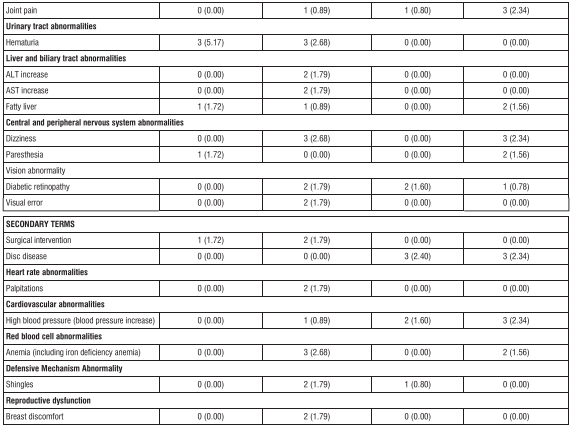
In patients who received Lobeglitazone tablet as monotherapy for 24 weeks, 2 cases of total ALT increase (1.79%) and 2 cases of AST increase (1.79%), including 1 increase in ALT exceeding the upper limit of normal (0.89%) were reported. Fatty liver was reported in two (1.56%) patients in 24-week combination therapy.
Type 2 diabetes patients may have fatty liver or heart disease with congestive heart failure. Both disorders can cause liver test abnormalities and can lead to other forms of liver disease, many of which can be treated or managed. Therefore, it is recommended to evaluate the patient by obtaining liver test levels (serum ALT, AST, alkaline phosphatase, and total bilirubin) before starting treatment with this drug. In patients with liver test abnormalities, caution should be exercised when starting treatment with Lobeglitazone tablet.
Patients who report symptoms that may indicate liver damage, including fatigue, loss of appetite, discomfort in the right upper abdomen, melanuria or jaundice, perform a liver test quickly. In these clinical situations, if the patient shows abnormal liver test values (ALT or AST that is 2.5 times the upper limit of the normal range), repeat liver function tests within 1 week and if the results are the same, it is necessary to decide whether to discontinue this drug. If you have abnormal liver test levels (ALT, which is more than 3 times the upper limit of the normal range), you should stop treatment with this drug and investigate to determine possible causes. If there is no other cause for abnormal liver examination, these patients should not resume taking this drug. Patients with no other etiology, serum ALT levels greater than 3 times the upper limit of the normal range, and total serum bilirubin levels greater than 2 times the upper limit of normal range should not resume taking this drug as they are at risk of severe drug-induced liver damage. In patients with less elevated serum ALT or bilirubin levels and for other reasons, treatment with this drug may be used with caution.
Macular edema
Macular edema has been reported in diabetic patients receiving thiazolidinedione drugs. Some patients had blurred vision or decreased vision, while others were diagnosed at regular eye exams. Most patients developed peripheral edema when macular edema was diagnosed. Some patients improved symptoms of macular edema after stopping the thiazolidinedione drug. People with diabetes should undergo regular eye examinations by an ophthalmologist according to current standard treatment regimens. Diabetes patients who report any type of visual symptoms should see an ophthalmologist promptly, regardless of the patient's medication or other physical findings.
Fracture
In a long-term clinical trial of other thiazolidinedione drugs, especially female patients, the incidence of fractures was increased. Most of the fractures observed in female patients occurred in the upper and distal lower extremities. Fractures have been reported in both men and women in a post marketing investigation of patients taking other thiazolidinedione-based drugs. No statistically significant difference was observed in change from baseline in the bone mineral density measured by DEXA Scan score between placebo and lobeglitazone treatment over a period of 52 weeks in 170 patients with type 2 diabetes mellitus. However, during long-term treatment with this drug, the risk of fractures should be considered, and care should be taken to assess and maintain bone health according to current standard treatment regimens.
Macro vascular complications
Clinical trials have not been conducted to determine whether this drug or other diabetes medications reduce the risk of macro vascular complications.
Laboratory tests
Fasting blood glucose (FPG) and glycated hemoglobin (HbA1C) should be measured on a regular basis to control blood sugar levels and monitor treatment response to this drug. Liver enzyme monitoring is recommended prior to initiating this drug therapy in all patients, after which periodic monitoring is recommended based on the clinical judgment of the physician.
Pediatric population
The safety and efficacy of this drug have not been established in pediatric patients.
Elderly population
In a clinical trial of this drug in patients with type 2 diabetes, 133 of a total of 634 patients for safety analysis were 65 years or older. No significant differences were found in terms of safety between patients over 65 years of age and those under that age. Since physiological functions such as liver and kidney function are generally deteriorated in the elderly, the patient's condition should be observed and this drug should be administered carefully.
Combination use with insulin should be considered with caution in the elderly because of increased risk of serious heart failure. In light of age- related risks (fractures and heart failure), the balance of benefits and risks should be considered carefully both before and during treatment in the elderly.
The application of this drug is effective after sufficient diet and exercise therapy, which are the basics of diabetes treatment, in advance.
4.5 Drugs interactions
This drug did not inhibit the p450 enzyme at clinically relevant doses in the in vitro drug metabolism test, and it was confirmed that it was metabolized by CYP 2C19, 2D6, and 3A4. This drug has been identified as a substrate of CYP2C19, 2D6 enzymes in vitro drug metabolism studies, so that in the presence of CYP2C19 inhibitors such as fluconazole and amiodarone and CYP2D6 inhibitors such as quinidine and paroxetine, blood levels of this drug may be increased.
The results of confirming the interaction of this drug with the following drugs in healthy volunteers are as follows.
Metformin
When 0.5 mg of this drug was administered for 5 days, metformin 1000 mg was administered for 5 days, and the two drugs were administered together for 5 days, the pharmacokinetic properties of the two drugs were randomized and taken sequentially.
Glimepiride
In the results of the drug interaction trial between 0.5 mg and glimepiride 4 mg, this drug did not have a clinically significant effect on the pharmacokinetics of glimepiride.
Amlodipine
When 3 mg of amlodipine, a substrate of CYP4A10, one of the main metabolizing enzymes of this drug, and 0.5 mg of this drug were administered alone or in combination, the two drugs did not significantly affect each other's pharmacokinetic properties.
Ketoconazole
As a result of the administration of ketoconazole 3 mg, an inhibitor of CYP4A200, one of the main metabolic enzymes of this drug, alone or in combination with this drug, the geometric mean ratio of Cmax of co-administration for the administration of this drug alone was 1.0227 (90% CI 0.9710 ~ 1.0771), and AUC 0→48h and AUC0→inf were 1.3345 (90% CI 1.2410 ~ 1.4351) and 1.3320 (90% CI 1.2338 ~ 1.4380), respectively, and the metabolic inhibitor ketoconazole increased the degree of exposure of this drug by about 33%.
Warfarin
When 0.5 mg of this drug was administered in combination with 25 mg of warfarin, the two drugs did not affect each other's pharmacokinetic properties.
Sitagliptin
When 0.5 mg of this drug was administered in combination with 100 mg of sitagliptin, the two drugs did not significantly affect each other's pharmacokinetic properties.
Empagliflozin
When 0.5 mg of this drug was co-administered with 25 mg of empagliozin, the two drugs did not affect each other's pharmacokinetic properties.
Dapagliflozin
When 0.5 mg of this drug was administered in combination with 10 mg of dapagliozin, the two drugs did not significantly affect each other's pharmacokinetic properties.
4.6 Use in special populations
Pregnancy
It is not recommended for use in pregnant women as there are no adequate clinical trial results in pregnant women.
Lactation
It is not known if this drug is secreted in human breast milk. This drug has been reported to be secreted in the milk of rats, so it is not administered to lactating women.
Paediatric patients
The safety and efficacy of this drug have not been established in paediatric patients.
Elderly population
Elderly people generally have reduced physiological functions such as liver and kidney function, so the patient's condition should be observed and administered carefully.
4.7 Effects on ability to drive and use machines
No studies on the effects on the ability to drive and use machines have been performed. However, patients who experience visual disturbance should be cautious when driving or using machines
4.8 Undesirable effects
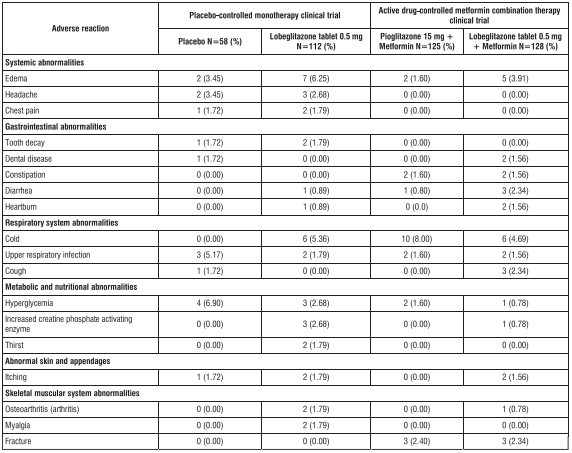
Table 1 shows the incidence rates and types of adverse reactions reported with a frequency of 1% or more in the group administered with 0.5mg of Lobeglitazone tablet in monotherapy and metformin combination therapy in the 24-week placebo-controlled monotherapy clinical trial and 24-week active drug-controlled metformin combination therapy clinical trial for this drug Table 1. Adverse reactions reported in more than 1% of patients in the placebo- controlled monotherapy clinical trials and active drug-controlled metformin combination therapy clinical trials in the group treated with 0.5mg of Lobeglitazone tablet (regardless of the researcher's causal assessment)


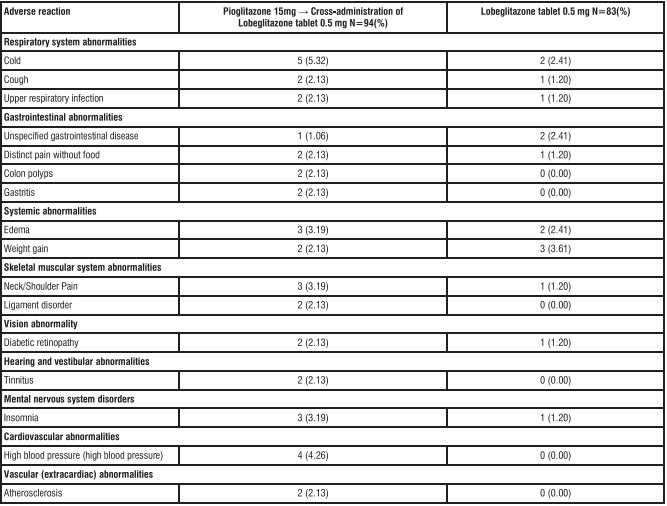
Monotherapy for 52-week extended trial: Among the adverse reactions reported in patients receiving this drug alone for 52 weeks (n=64), regardless of the causal evaluation of the investigator during the extended trial period (24 weeks to 52 weeks), the adverse reactions expressed at a frequency of 2% or more were total reflux esophagitis (2 patients, 3.13%), dental diseases (2 persons, 3.13%), upper respiratory infections (5 persons, 7.81%), dizziness (2 persons, 3.13%), and hyperglycemia (2 persons, 3.13%). Active drug-control metformin combination therapy 52-week extended trial: adverse reactions that occurred in patients who received metformin for 52 weeks in combination with this drug and activity treatment for an extended period (24 weeks to 52 weeks) with an incidence of 2% or more of the reported adverse reactions regardless of the investigator's causal relationship evaluation are shown in Table 2 below.
No clinically significant changes in vital signs or ECG were observed with the administration of Lobeglitazone tablet.
Edema
In the 24-week monotherapy clinical trial, the incidence of edema was 3.45% (2 patients) in the placebo group and 6.25% (7 patients) in the lobeglitazone 0.5mg group, and in the combination therapy clinical trial, 1.60% (2) in the 15mg pioglitazone group Persons), and 3.91% (5 persons) in the group receiving 0.5mg of lobeglitazone. Most of the patients with edema were reported as mild to moderate.
Weight gain
No adverse body weight reactions were reported during the 24-week monotherapy and combination therapy trials. Looking at the overall weight change in the conducted clinical trial, in the 24-week monotherapy clinical trial, the placebo-treated group decreased by about 0.63 kg, and the Lobeglitazone 0.5 mg-administered group increased by about 0.89 kg. In a 24-week combination therapy clinical trial, an increase of about 0.76 kg in the group receiving 15 mg of pioglitazone and about 0.92 kg in the group receiving 0.5 mg of Lobeglitazone was found to increase compared to baseline. In the 24-week combination therapy clinical trial, there was no statistical significance for weight gain between the 15 mg of pioglitazone and the 0.5 mg of Lobeglitazone.
Red blood cells
In the above 24-week monotherapy clinical trial, Lobeglitazone tablet developed anemia in 2 patients (1.79%), iron deficiency anemia in 1 patient (0.89%), and pancytopenia in 1 patient (0.89%). In combination therapy clinical trials, anemia was reported in 2 patients (1.56%). Of these, one patient (0.89%) was evaluated as having a causal relationship with this drug. All erythrocyte-related adverse reactions were mild.
Hypoglycemia
Lobeglitazone tablet did not show hypoglycemia in a 24-week monotherapy trial. In the 24-week combination therapy, it was reported in 1 patient (0.78%) in the Lobeglitazone 0.5mg group and 3 patients (2.4%) in the pioglitazone 15mg group.
Reporting of suspected adverse reactions
Reporting suspected adverse reactions after authorisation of the medicinal product is important. It allows continued monitoring of the benefit/risk balance of the medicinal product. Healthcare professionals are asked to report any suspected adverse reactions via email to: medico@zuventus.com
Website: http://www.zuventus.co.in/safety.aspx
By reporting side effects, you can help provide more information on the safety of this medicine.
4.9 Overdose
Data on overdose in humans are limited. In clinical trials in healthy men, the drug was administered orally up to 7 mg for 4 days and was well tolerated. This drug has been administered in single doses up to 8 mg.
In case of overdose, appropriate adjuvant treatment is given according to the patient's clinical condition. The drug has a high rate of protein binding, so it is not eliminated by hemodialysis.
5.0 Pharmacological properties
5.1 Mechanism of action/ Pharmacodynamic properties
Lobeglitazone is a thiazolidinedione drug that acts on PPAR (Peroxisome proliferator activated receptor gamma), and does not promote insulin secretion in pancreatic cells, but increases insulin-mediated glucose uptake and metabolism in skeletal muscle.
5.2 Pharmacokinetic properties
Single dose and multiple dose pharmacokinetic studies in healthy volunteer demonstrated that lobeglitazone is rapidly and nearly completely absorbed after oral administration reaching peak plasma levels (Tmax) at 1.0 to 3.0 hours It is eliminated mostly by metabolism with negligible urine excretion and has a half-life of 7.8 to 9.8 hours. There was dose proportional increase in plasma concentrations for doses 0.5 mg up to 2 mg. Plasma maximum concentration (Cmax) increase was less than dose proportional for doses more than 2 mg.
Absorption of lobeglitazone may be saturated at doses more than 2 mg. No human studies are available providing data on absorption, distribution, metabolism and excretion (ADME) properties of lobeglitazone. However, ADME information is available from the animal study (Oh ES et al, Clin Ther 2014). In rats, lobeglitazone appeared to be readily absorbed after an oral administration (an absolute bioavailability of ~95%). Following intravenous administration, LB exhibited linear pharmacokinetics in the dose range of 0.5–2 mg/kg. The primary distribution site was the liver but it was also distributed to heart, lungs, and fat tissue. Lobeglitazone, is metabolized primarily by the cytochrome P450 (CYP) 3A4 isoenzyme. The excretion of LB to the urine, bile, feces, and intestine was insignificant (i.e., <10% of the dose) in rats. Lobeglitazone is highly bound to plasma proteins in-vitro by >99%, mostly albumin. This drug is excreted mainly from the kidney as an unchanged drug.
6.0 Nonclinical properties
6.1 Animal toxicology or pharmacology
(1) Carcinogenicity
As a result of the carcinogenicity test for 2 years, there was no carcinogenicity in mice when administered orally up to 6 mg/kg/day (0.5 times the AUC when administered to humans at 65.2 mg/day). No neoplastic lesions were observed in rat males at 0.24 mg/kg/day (3.25 times higher than clinical AUC), but liposarcoma was observed in subcutaneous and abdominal cavity in females 0.12 mg/kg/day (7.5 times higher than clinical dose AUC). In rat females, the tumor-free dose was 0.06 mg/kg/day (3.72 times the clinical dose).
(2) Genotoxicity
Genotoxicity studies such as return mutation test, chromosomal abnormality test, mouse micronucleus test, etc., did not show mutagenicity.
(3) Repeated administration toxicity
Diffuse hypertrophy of the myocardium was observed in rats administered orally for 26 weeks in males 1 mg/kg/day (13.5 times compared to the clinical dose) and in the female 0.06 mg/kg/day group (3.74 times compared to the clinical dose). At all doses, there was fat deposition around the aorta, brown fat hypertrophy and hyperplasia, and myelolipotic atrophy. The non-toxic dose (NOAEL) is 0.12 mg/kg/day for males and 0.03 mg/kg/day for females, which is 1.67 times and 3.74 times less than the clinical dose.
In a 52-week study of monkeys, 0.8 mg/kg/day (7.54 times the clinical dose) increase in cardiac weight in the oral group. Cardiomyocyte hypertrophy appeared. The non-toxic dose (NOAEL) was 0.2 mg/kg/day, which showed a safety range of 2.1 times compared to the clinical dose.
(4) Reproductive development toxicity
There was no teratogenicity when the drug was administered up to 0.8 mg/kg in rats and 90 mg/kg in rabbits during the organogenesis period. (1.0 times and 5 times, respectively , compared to the daily human dose of 35.8 mg) rat embryo toxicity was observed at 57.0 mg / kg (2.0 times AUC when administered to humans at 5.11 mg / day) and rabbit embryo toxicity (fetal weight, number of living fetuses, embryo absorption water, embryo mortality increase) was observed at more than 2 mg / kg (15.0 times AUC when administered to humans 5.10 mg / day). The non-toxic dose (NOAEL) of embryotoxicity in rats is 9.0 mg/kg (05.0 times the AUC when administered to humans at 5.1 mg/day) and the non-toxic dose (NOAEL) of rabbit embryotoxicity is 3.2 mg/kg (5.0 times the AUC when administered to humans at 5.1 mg/day).
In the pre- and post-natal development and maternal function tests of rats, an increase in the number of stillbirths, a decrease in the proportion of survivors among live births and implantation was observed at 0.2 mg/kg (0.5 times the AUC when administered to humans at 11.2 mg/day). In the next-generation test group, weight loss was observed at 0.05 mg/kg (2.62 times human AUC), cardiac weight gain at 0.1 mg/kg (6.18 times human AUC), and delay in morphological differentiation. The non-toxic dose (NOAEL) of mother and nextgeneration animals is less than or equal to 0.05 mg/kg (0.5 times AUC when administered to humans at 2.62 mg/day).
7.0 Description
The chemical name for Lobeglitazone Sulphate is 5-[[4-[2-[[6-(4-methoxyphenoxy) pyrimidin-4-yl]-methylamino] ethoxy] phenyl] methyl]-1, 3-thiazolidine-2, 4-dione; sulfuric acid. Molecular formula of Lobeglitazone Sulphate is C24H26N4O9S2 and a molecular weight of 578.6 g/mol. The structural formula of Lobeglitazone Sulphate is:

8.0 Pharmaceutical particulars
8.1 Incompatibilities
Not applicable.
8.2 Shelf life
Refer on the pack.
8.3 Packaging information
Alu-Alu blister strip of 10 tablets.
8.4 Storage and handling instructions
Store protected from light & moisture at a temperature not exceeding 30°C.
Keep out of reach of children
9.0 Patient counselling information
- It is important to educate patients to follow the diet and to regularly undergo blood glucose tests and glycated hemoglobin and glucosylated hemoglobin tests. During stressful periods such as fever, trauma, infection, or surgery, medical requirements may change, so patients should be reminded to see a doctor promptly.
- Patients who experience unusual, rapid weight gain or swelling during the period of administration of this drug, or who develop other symptoms of shortness of breath or heart failure, should report these symptoms to their physician immediately.
- Before and after the start of treatment, the patient should be informed that blood tests including liver function will be performed according to the doctor's clinical judgment. Patients should be advised to see a doctor immediately for unexplained nausea, vomiting, abdominal pain, fatigue, loss of appetite, dark urine, and dizziness.
- The patient should be told to take this medication once a day. This medication can be taken with or without meals. If you take one dose a day, you shouldn't double the dose the next day.
- When co-administered with insulin or oral hypoglycemic drugs, the risk of hypoglycemia, its symptoms and treatments, and the conditions that are prone to developing such symptoms should be explained to the patient and his or her family members.
- As with other thiazolidinediones, its therapy can cause ovulation in some premenopausal anovulatory women. As a result, these patients may have an increased risk of pregnancy while taking this drug. Therefore, adequate contraception should be recommended for premenopausal women. Since this possible action has not been studied in clinical trials, the frequency of occurrence is unknown.
12.0 Date of issue
14 July 2023

Plot Y2, CTS No : 358/A2, Near Nahur Railway
Station, Nahur (West), Mumbai - 400 078, India.
TM - Trade Mark Owners.
About Leaflet
Read all of this leaflet carefully before you start taking this medicine because it contains important information for you.
- Keep this leaflet. You may need to read it again.
- If you have any further questions, ask your doctor or pharmacist.
- This medicine has been prescribed for you only. Do not pass it on to others. It may harm them, even if their signs of illness are the same as yours.
- If you get any side effects, talk to your doctor or pharmacist. This includes any possible side effects not listed in this leaflet. See section 4.
What is in this leaflet
1. What LobetronTM-0.5 is and what it is used for
2. What you need to know before you take LobetronTM-0.5
3. How to take LobetronTM-0.5
4. Possible side effects
5. How to store LobetronTM-0.5
6. Contents of the pack and other information
1. What LobetronTM-0.5 is and what it is used for
LobetronTM-0.5 tablets contain Lobeglitazone.
- It is an anti-diabetic medicine used to treat type 2 (non-insulin dependent) diabetes mellitus in adults, when metformin is not suitable or has failed to work adequately. This is the diabetes that usually develops in adulthood.
- Lobeglitazone tablets help control the level of sugar in your blood when you have type 2 diabetes by helping your body make better use of the insulin it produces. Your doctor will check whether Lobeglitazone is working 3 to 6 months after you start taking it.
- Lobeglitazone tablets may be used on their own in patients who are unable to take metformin, and where treatment with diet and exercise has failed to control blood sugar or may be added to other therapies (such as insulin, sulphonyl urea) which have failed to provide sufficient control in blood sugar.
2. What you need to know before you take LobetronTM-0.5
Do not take LobetronTM-0.5 if:
- you are allergic to Lobeglitazone or any of the other ingredients of this medicine,
- you have heart failure or have had heart failure in the past,
- you have liver disease,
- you have had diabetic ketoacidosis (a complication of diabetes causing rapid weight loss, nausea or vomiting),
- you have severe kidney disease,
- you have blood in your urine that your doctor has not checked.
- Serious infection or trauma
Warnings and precautions
Talk to your doctor or pharmacist before taking Lobeglitazone:
- If you retain water (fluid retention) or have heart problems in particular if you are over 75 years old. If you take non-steroidal anti-inflammatory medicines which can also cause water (fluid retention) and swelling, including celecoxib or etoricoxib, you must also tell your doctor.
- If you have ever had blood in your urine. If you find blood in your urine or have other problems urinating while taking Lobeglitazone, you should contact your doctor.
- If you smoke (or have smoked in the past), have received chemotherapy or radiotherapy (for cancer treatment).
- If you have a special type of diabetic eye disease called macular oedema (swelling of the back of the eye with worsening of your vision).
- If you have cysts on your ovaries (polycystic ovary syndrome). There may be an increased possibility of becoming pregnant because you may ovulate again when you take Lobeglitazone. If this applies to you, use appropriate contraception to avoid the possibility of an unplanned pregnancy.
- If you have a problem with your liver or heart. Before you start taking Lobeglitazone you will have a blood sample taken to check your liver function. This check may be repeated at intervals. Some patients with long-standing type 2 diabetes mellitus and heart disease or previous stroke who were treated with Lobeglitazone and insulin experienced the development of heart failure. Inform your doctor as soon as possible if you experience signs of heart failure such as unusual shortness of breath or rapid increase in weight or localised swelling (oedema).
- Broken bones, a higher number of bone fractures was seen in patients, particularly women taking Lobeglitazone. Your doctor will take this into account when treating your diabetes.
- If you take Lobeglitazone with other medicines for diabetes, it is more likely that your blood sugar could fall below the normal level (hypoglycaemia).
- You may also experience a reduction in blood count (anaemia).
Pediatric population
Use in children is not recommended.
Other medicines and Lobeglitazone
Tell your doctor or pharmacist if you are taking, have recently taken or might take any other medicines. You can usually continue to take other medicines whilst you are being treated with Lobeglitazone tablets.
Pregnancy and breast-feeding
If you are pregnant or breast-feeding, think you may be pregnant or are planning to have a baby, ask your doctor or pharmacist for advice before taking this medicine.
You should not take Lobeglitazone in pregnancy as it is unsure whether the medicine can affect the growth of your baby.
You should not take Lobeglitazone if you are breast-feeding as it is not known whether it may be present in the milk.
Driving and using machines
Lobeglitazone will not normally affect your ability to drive or use machines but take care if you experience abnormal vision.
3. How to take LobetronTM-0.5
Always take this medicine exactly as your doctor or pharmacist has told you. Check with your doctor or pharmacist if you are not sure.
The usual recommended dose is 1 tablet (0.5 mg) of Lobeglitazone taken once daily. Swallow your tablet with a glass of water with or without food.
If necessary, your doctor may tell you to take a different dose. When Lobeglitazone tablets are taken in combination with other medicines used to treat diabetes (such as insulin, metformin, glibenclamide, gliclazide) your doctor will tell you whether you need to take a smaller dose of your medicines.
Your doctor will ask you to have blood tests periodically during treatment with Lobeglitazone. This is to check that your liver is working normally.
If you are following a diabetic diet, you should continue with this while you are taking Lobeglitazone.
Your weight should be checked at regular intervals; if your weight increases, inform your doctor.
If you take more Lobeglitazone tablets than you should
If you accidentally take too many tablets, or if someone else or a child takes your medicine, contact your doctor or hospital emergency department immediately. Your blood sugar could fall below the normal level and can be increased by taking sugar. It is recommended that you carry some sugar lumps, sweets, biscuits or sugary fruit juice.
If you forget to take Lobeglitazone tablets
Take Lobeglitazone daily as prescribed. However, if you miss a dose, just carry on with the next dose as normal. Do not take a double dose to make up for a forgotten dose.
If you stop taking Lobeglitazone tablets
Lobeglitazone should be used every day to work properly. If you stop using Lobeglitazone, your blood sugar may go up. Talk to your doctor before stopping this treatment.
If you have any further questions on the use of this medicine, ask your doctor or pharmacist.
4. Possible side effects
Like all medicines, this medicine can cause side effects, although not everybody gets them.
If you notice any of the following side effects, stop taking this medicine and contact your doctor or go to the nearest hospital casualty department straight away.
- Heart failure (when taking Lobeglitazone in combination with insulin): symptoms are unusual shortness of breath or rapid increase in weight or localised swelling (oedema).
- Signs and symptoms include blood in your urine.
- Localised swelling (oedema) (when taking Lobeglitazone in combination with insulin).
- Broken bones (this has been reported in both female and male patients).
- Blurred vision due to swelling (or fluid) at the back of the eye. Also, if you already have blurred vision and the symptom gets worse, talk to your doctor as soon as possible.
- Allergic reactions: symptoms of a serious allergic reaction include hives and swelling of the face, lips, tongue, or throat that may cause difficulty in breathing or swallowing.
Other possible side effects:
Common
- abnormal vision
- respiratory infection
- weight gain
- numbness
Uncommon
- inflammation of the sinuses (sinusitis)
- difficulty sleeping (insomnia).
Not known: frequency cannot be estimated from the available data
- increase in liver enzymes
- allergic reactions
The following additional side effects have been experienced by some patients when Lobeglitazone is taken with other antidiabetic medicines.
Very common
- decreased blood sugar (hypoglycaemia)
Common
- headache
- dizziness
- joint pain
- impotence
- back pain
- shortness of breath
- small reduction in red blood cell count (anemia)
- flatulence
- increase in enzyme levels
Uncommon
- sugar in urine, proteins in urine
- spinning sensation (vertigo)
- sweating
- tiredness
- increased appetite
Reporting of side effects
If you get any side effects, talk to your doctor, pharmacist or nurse. This includes any possible side effects not listed in this leaflet. You can also report side effects directly: Website: www.zuventus.co.in and click the tab “Safety Reporting” located on the top end of the home page.
By reporting side effects, you can help provide more information on the safety of this medicine. You can also report the side effects with the help of your treating physician.
5. How to store LobetronTM-0.5
Store protected from light & moisture at a temperature not exceeding 30°C. Keep this medicine out of the sight and reach of children.
Do not use this medicine after the expiry date which is stated on the blister, carton, bottle after EXP. The expiry date refers to the last day of that month.
6. Content of the pack and other information
What LobetronTM-0.5 contains
The active substance is Lobeglitazone. Each tablet contains 0.5 mg of Lobeglitazone (as Sulfate).
What LobetronTM-0.5 looks like and contents of the pack
Alu-Alu blister strip of 10 tablets.
For More Information About This Product
Tosiban 37.5mg Injection
1.0 Generic Name
Atosiban Acetate Solution for Injection (7.5mg/ml)
Atosiban Acetate Concentrate for Solution for Infusion (7.5mg/ml)
2.0 Qualitative and quantitative composition
Tosiban 6.75 mg Solution for Injection
Each 0.9 ml contains:
Atosiban Acetate IP equivalent to Atosiban 6.75 mg
Water for Injections IP q.s.
Tosiban® 37.5 mg concentrate for solution for infusion
Each 5 ml contains:
Atosiban acetate IP equivalent to Atosiban 37.5 mg
Water for injection IP q.s
3.0 Dosage form and strength
Solution for injection and Infusion (For IV Use only).
7.5 mg/ml
4.0 Clinical particulars
4.1. Therapeutic indication
Tosiban® is indicated to delay imminent pre-term birth in pregnant adult women with:
- regular uterine contractions of at least 30 seconds duration at a rate of ≥ 4 per 30 minutes
- a cervical dilation of 1 to 3 cm (0-3 for nulliparas) and effacement of ≥ 50%
- a gestational age from 24 until 33 completed weeks
- a normal foetal heart rate
4.2. Posology and method of administration
Posology
Treatment with Tosiban® should be initiated and maintained by a physician experienced in the treatment of pre-term labour.
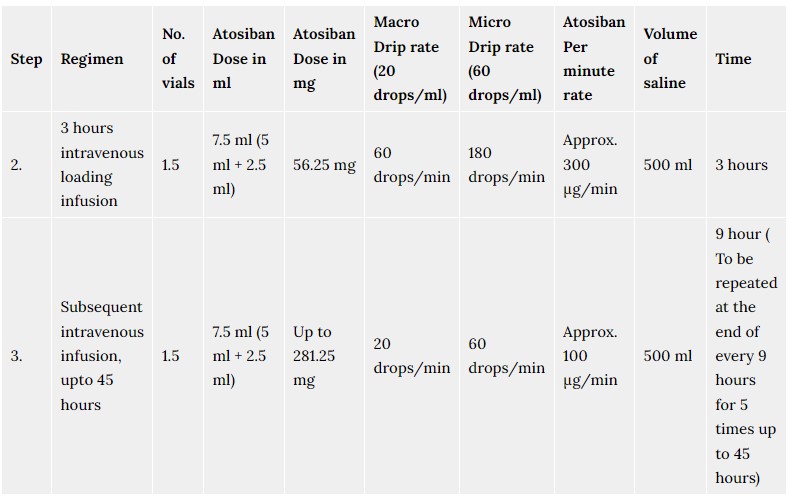
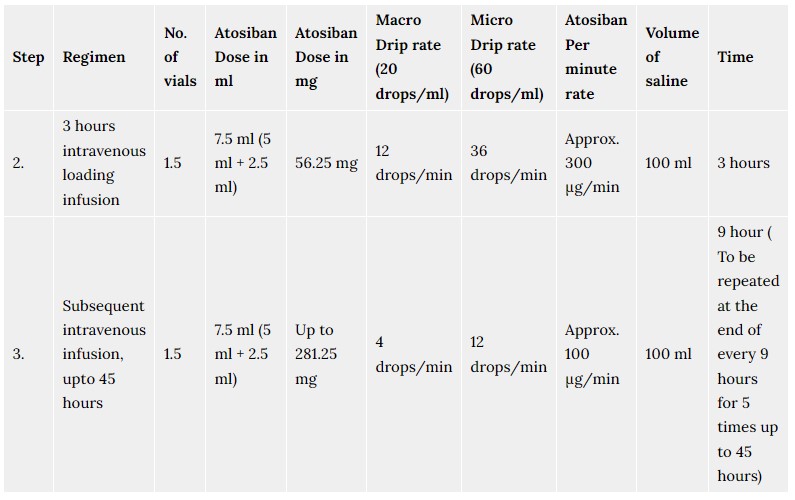
Tosiban® is administered intravenously in three successive stages: an initial bolus dose (6.75 mg), performed with Tosiban® 6.75 mg/0.9 ml solution for injection, immediately followed by a continuous high dose infusion (loading infusion 300 micrograms/min) of Tosiban® 37.5 mg/5 ml concentrate for solution for infusion during three hours, followed by a lower dose of Tosiban® 37.5 mg/5 ml concentrate for solution for infusion (subsequent infusion 100 micrograms/min) up to 45 hours. The duration of the treatment should not exceed 48 hours. The total dose given during a full course of Tosiban® therapy should preferably not exceed 330.75 mg of Tosiban®.
Intravenous therapy using the initial bolus injection should be started as soon as possible after diagnosis of pre-term labour. Once the bolus has been injected, proceed with the infusion. In the case of persistence of uterine contractions during treatment with Tosiban®, alternative therapy should be considered. The following table shows the full posology of the bolus injection followed by the infusion:
Methods of administration
Step 1: Preparation of the initial intravenous injection (Bolus):
Give a bolus dose directly intravenously using 1ml syringe. Withdraw 0.9 ml of Tosiban 6.75 mg Solution for Injection and administer slowly as an intravenous bolus dose over one minute, under adequate medical supervision in an obstetric unit.
Step 2 and 3 Method of administration:
Preparation of the intravenous infusion solution: For intravenous infusion, Tosiban injection 37.5 mg/5 ml, concentrate for solution for infusion should be diluted in one of the following solutions:
- Sodium Chloride 9 mg/ml (0.9%) Solution for Injection
- Ringer's lactate solution
- 5% w/v glucose solution.
A. Using 500 ml infusion bottles:
Preparation of the intravenous infusion solution when given in 500 ml Infusion Bottle: Withdraw 7.5 ml solution from a 500 ml infusion bottle & discard. Replace it with 7.5 ml Tosiban solution for infusion (1.5 x 5 ml vials). Remaining half vial of Tosiban (2.5 ml) to be stored at 2°C to 8°C and used for preparation of subsequent infusion.

B. Using 100ml infusion bottles
Preparation of the intravenous infusion solution when given in 100 ml Infusion Bottle/Bottle: Withdraw 7.5 ml solution from a 100 ml infusion bottle and discard. Replace it by 7.5 ml of Atosiban 37.5 mg/5 ml concentrate for solution for infusion.
Remaining half vial of Tosiban (2.5 ml) to be stored at 2°C to 8°C & used for preparation of subsequent infusion.

Re-treatment:
In case a re-treatment with Tosiban® is needed, it should also commence with a bolus injection of Tosiban® 6.75 mg/0.9 ml, solution for injection followed by infusion with Tosiban® 37.5 mg/5 ml, concentrate for solution for infusion.
Patients with renal or hepatic impairment
There is no experience with Tosiban® treatment in patients with impaired function of the liver or kidneys.
Renal impairment is not likely to warrant a dose adjustment, since only a small extent of Tosiban® is excreted in the urine. In patients with impaired hepatic function, Tosiban® should be used with caution.
Paediatric population
The safety and efficacy of Tosiban® in pregnant women aged less than 18 years have not been established. No data are available.
4.3. Contraindications
Tosiban® must not be used in the following conditions:
- Gestational age below 24 or over 33 completed weeks
- Premature rupture of the membranes >30 weeks of gestation
- Abnormal foetal heart rate
- Antepartum uterine haemorrhage requiring immediate delivery
- Eclampsia and severe pre-eclampsia requiring delivery
- Intrauterine foetal death
- Suspected intrauterine infection
- Placenta praevia
- Abruptio placenta
- Any other conditions of the mother or foetus, in which continuation of pregnancy is hazardous
- Hypersensitivity to the active substance(s) or to any of the excipients
4.4. Special warnings and precautions for use
When Tosiban® is used in patients in whom premature rupture of membranes cannot be excluded, the benefits of delaying delivery should be balanced against the potential risk of chorioamnionitis.
There is no experience with Tosiban® treatment in patients with impaired function of the liver or kidneys.
Renal impairment is not likely to warrant a dose adjustment, since only a small extent of Tosiban® is excreted in the urine. In patients with impaired hepatic function, Tosiban® should be used with caution.
There is only limited clinical experience in the use of Tosiban® in multiple pregnancies or the gestational age group between 24 and 27 weeks, because of the small number of patients treated. The benefit of Tosiban® in these subgroups is therefore uncertain.
Re-treatment with Tosiban® is possible, but there is only limited clinical experience available with multiple re-treatments, up to 3 re-treatments (see section 4.2).
In case of intrauterine growth retardation, the decision to continue or reinitiate the administration of Tosiban® depends on the assessment of fetal maturity.
Monitoring of uterine contractions and fetal heart rate during administration of Tosiban® and in case of persistent uterine contractions should be considered.
As an antagonist of oxytocin, Tosiban® may theoretically facilitate uterine relaxation and postpartum bleeding therefore blood loss after delivery should be monitored. However, inadequate uterus contraction postpartum was not observed during the clinical trials.
Multiple pregnancy and medicinal products with tocolytic activity like calcium channel blockers and betamimetics are known to be associated with increased risk of pulmonary oedema. Therefore, Tosiban® should be used with caution in case of multiple pregnancy and/or concomitant administration of other medicinal products with tocolytic activity.
4.5. Drugs interactions
It is unlikely that atosiban is involved in cytochrome P450 mediated drug-drug interactions as in vitro investigations have shown that atosiban is not a substrate for the cytochrome P450 system, and does not inhibit the drug metabolising cytochrome P450 enzymes.
Interaction studies have been performed with labetalol and betamethasone in healthy, female volunteers. No clinically relevant interaction was found between atosiban and bethamethasone or labetalol.
4.6. Fertility, pregnancy and lactation
Fertility
Embryo-fetal toxicity studies have not shown toxic effects of atosiban. No studies were performed that covered fertility and early embryonic development (see section 5.3).
Pregnancy
Tosiban® should only be used when pre-term labour has been diagnosed between 24 and 33 completed weeks of gestation. If during pregnancy the woman is already breast-feeding an earlier child, then breast-feeding should be discontinued during treatment with Tosiban®, since the release of oxytocin during breast-feeding may augment uterine contractility, and may counteract the effect of tocolytic therapy.
Breastfeeding
In Tosiban® clinical trials, no effects were observed on breast-feeding. Small amounts of Tosiban® have been shown to pass from plasma into the breast milk of breast-feeding women.
4.7. Effects on ability to drive and use machines
Not relevant.
4.8. Undesirable effects
Possible adverse reactions of Tosiban® were described for the mother during the use of Tosiban® in clinical trials. In total 48% of the patients treated with Tosiban® experienced adverse reactions during the clinical trials. The observed adverse reactions were generally of a mild severity. The most commonly reported adverse reaction in the mother is nausea (14%).
For the newborn, the clinical trials did not reveal any specific adverse reactions of Tosiban®. The infant adverse reactions were in the range of normal variation and were comparable with both placebo and beta-mimetic group incidences.
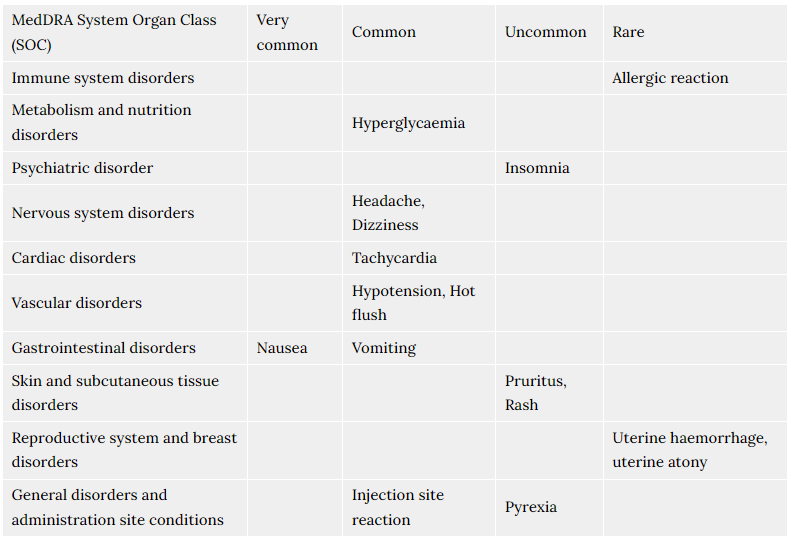
The frequency of adverse reactions listed below is defined using the following convention: Very common (≥1/10); Common (≥1/100 to <1/10); Uncommon (≥1/1,000 to <1/100); Rare (≥1/10,000 to <1/1,000).
Within each frequency grouping, adverse reactions are presented in order of decreasing seriousness.

Post-marketing experience
Respiratory events like dyspnoea and pulmonary oedema, particularly in association with concomitant administration of other medicinal products with tocolytic activity, like calcium antagonists and beta-mimetics, and/or in women with multiple pregnancy, have been reported post-marketing.
Reporting of suspected adverse reactions
Reporting suspected adverse reactions after authorisation of the medicinal product is important. It allows continued monitoring of the benefit/risk balance of the medicinal product.
Healthcare professionals are asked to report any suspected adverse reactions via email to: medico@zuventus.com Website link: https://www.zuventus.co.in/drug-safety-reporting
By reporting side effects, you can help provide more information on the safety of this medicine.
4.9. Overdose
Few cases of Tosiban® overdosing were reported, they occurred without any specific signs or symptoms. There is no known specific treatment in case of an overdose.
5.0 Pharmacological properties
5.1 Pharmacodynamic properties
Mechanism of action
Tosiban® contains Atosiban (INN), a synthetic peptide ([Mpa1,D- Tyr(Et)2,Thr4,Orn8]-oxytocin) which is a competitive antagonist of human oxytocin at receptor level. In rats and guinea pigs, Atosiban was shown to bind to oxytocin receptors, to decrease the frequency of contractions and the tone of the uterine musculature, resulting in a suppression of uterine contractions. Atosiban was also shown to bind to the vasopressin receptor, thus inhibiting the effect of vasopressin. In animals, Atosiban did not exhibit cardiovascular effects.
Pharmacodynamic effects
In human pre-term labour, Atosiban at the recommended dosage antagonises uterine contractions and induces uterine quiescence. The onset of uterus relaxation following Atosiban is rapid, uterine contractions being significantly reduced within 10 minutes to achieve stable uterine quiescence (≤ 4 contractions/hour) for 12 hours.
5.2 Pharmacokinetic properties
Absorption
In healthy non-pregnant subjects receiving atosiban infusions (10 to 300 micrograms/min over 12 hours), the steady state plasma concentrations increased proportionally to the dose.
Distribution
The clearance, volume of distribution and half-life were found to be independent of the dose.
In women in pre-term labour receiving atosiban by infusion (300 micrograms/min for 6 to 12 hours), steady state plasma concentrations were reached within one hour following the start of the infusion (mean 442 ± 73 ng/ml, range 298 to 533 ng/ml). Following completion of the infusion, plasma concentration rapidly declined with an initial (tα) and terminal (tβ) half-life of 0.21 ± 0.01 and 1.7 ± 0.3 hours, respectively. Mean value for clearance was 41.8 ± 8.2 litres/h. Mean value of volume of distribution was 18.3 ± 6.8 litres. Plasma protein binding of atosiban is 46 to 48% in pregnant women. It is not known whether the free fraction in the maternal and fetal compartments differs substantially. Tosiban® does not partition into red blood cells.
Atosiban passes the placenta. Following an infusion of 300 micrograms/min in healthy pregnant women at term, the fetal/maternal Tosiban® concentration ratio was 0.12.
Biotransformation
Two metabolites were identified in the plasma and urine from human subjects. The ratios of the main metabolite M1 (des-(Orn8, Gly-NH29)-[Mpa1, D-Tyr(Et)2, Thr4]-oxytocin) to atosiban concentrations in plasma were 1.4 and 2.8 at the second hour and at the end of the infusion respectively. It is not known whether M1 accumulates in tissues. Atosiban is found in only small quantities in urine, its urinary concentration is about 50 times lower than that of M1. The proportion of atosiban eliminated in faeces is not known. The main metabolite M1 is approximately 10 times less potent than atosiban in inhibiting oxytocin-induced uterine contractions in vitro. Metabolite M1 is excreted in milk (see section 4.6).
Elimination
There is no experience with atosiban treatment in patients with impaired function of the liver or kidneys.
Renal impairment is not likely to warrant a dose adjustment, since only a small extent of atosiban is excreted in the urine. In patients with impaired hepatic function, atosiban should be used with caution (see sections 4.2 and 4.4).
It is unlikely that atosiban inhibits hepatic cytochrome P450 isoforms in humans (see section 4.5).
6.0 Nonclinical properties
No systemic toxic effects were observed during the two-week intravenous toxicity studies (in rats and dogs) at doses which are approximately 10 times higher than the human therapeutic dose, and during the three months toxicity studies in rats and dogs (up to 20 mg/kg/day s.c.). The highest atosiban subcutaneous dose not producing any adverse effects was approximately two times the therapeutic human dose. No studies were performed that covered fertility and early embryonic development. Reproduction toxicity studies, with dosing from implantation up to late stage pregnancy, showed no effects on mothers and fetuses.
The exposure of the rat fetus was approximately four times that received by the human fetus during intravenous infusions in women. Animal studies have shown inhibition of lactation as expected from the inhibition of action of oxytocin.
Atosiban was neither oncogenic nor mutagenic in in vitro and in vivo tests.
7.0 Description
Tosiban® contains atosiban acetate. It is a competitive antagonist of human oxytocin receptors and thus, decreases uterine contractions. Each ml of Tosiban® solution contains 7.5 mg atosiban for solution for injection or infusion.

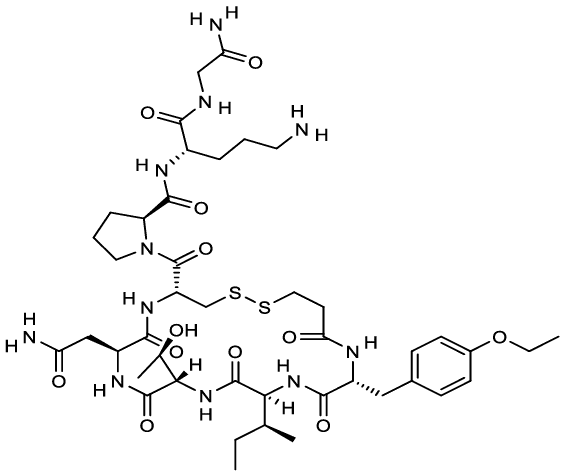
Chemical structure of atosiban.
Molecular Formula: C43H67N11O12S2
Molecular Weight: 994.2 g/mol
8.0 Pharmaceutical particulars
8.1 Incompatibilities
In the absence of compatibility studies, this medicinal product must not be mixed with other medicinal products except mentioned in this section. For intravenous infusion, following the bolus dose, Tosiban® 37.5 mg/5 ml, concentrate for solution for infusion should be diluted in one of the following solutions: - Sodium Chloride (0.9%) solution - Ringer's lactate solution - 5% w/v glucose solution.
8.2 Shelf-life
Refer on pack.
8.3 Packaging information
Tosiban 6.75 mg: A vial of 0.9 ml.
Tosiban 37.5 mg: A vial of 5 ml.
8.4 Storage and handing instructions
Store at 2°C to 8°C. Do not freeze.
Store in the original package in order to protected from light.
Once the vial has been opened, the dilution must be performed immediately. Diluted solution for intravenous administration should be used within 24 hours’ after preparation.
The vial should be inspected visually for particulate matter & discoloration prior to administration.
Keep out of reach of children.
9.0 Patient Counselling Information
Talk to your doctor or nurse before you are given Tosiban®:
- if you think your waters might have broken (premature rupture of your membranes).
- if you have kidney or liver problems.
- if you are pregnant with more than one baby.
- if your contractions start again, treatment with Tosiban® can be repeated up to three more times.
- if your unborn baby is small for the time of your pregnancy.
- Your womb may be less able to contract after your baby has been born. This may cause bleeding.
- if you are pregnant with more than one baby and/or are given medicines that can delay the birth of your baby, such as medicines used for high blood pressure. This may increase the risk of lung oedema (accumulation of fluid in the lungs).
If any of the above apply to you (or you are not sure), talk to your doctor, before you are given Tosiban®.
12.0 Date of revision
27th June 2024
About Leaflet
Read all of this leaflet carefully before you start taking this medicine because it contains important information for you.
- Keep this leaflet. You may need to read it again.
- If you have any further questions, ask your doctor or pharmacist or nurse.
- This medicine has been prescribed for you only. Do not pass it on to others. It may harm them, even if their signs of illness are the same as yours.
- If you get any side effects, talk to your doctor or pharmacist or nurse. This includes any possible side effects not listed in this leaflet. See section 4.
What is in this leaflet:
- What TOSIBAN® is and what it is used for
- What you need to know before you take TOSIBAN®
- How to take TOSIBAN®
- Possible side effects
- How to store TOSIBAN®
- Contents of the pack and other information
1. What TOSIBAN® is and what it is used for
TOSIBAN® solution for injection contains Atosiban. TOSIBAN® can be used to delay the premature birth of your baby. TOSIBAN® is used in pregnant adult women, from week 24 to week 33 of the pregnancy. TOSIBAN® works by making the contractions in your womb (uterus) less strong. It also makes the contractions happen less often. It does this by blocking the effect of a natural hormone in your body called “oxytocin” which causes your womb (uterus) to contract.
2. What you need to know before you take TOSIBAN®
Do not take TOSIBAN®
- If you are less than 24 weeks pregnant.
- If you are more than 33 weeks pregnant.
- If your waters have broken (premature rupture of your membranes) and you have completed 30 weeks of your pregnancy or more. If your unborn baby (foetus) has an abnormal heart rate.
- If you have bleeding from your vagina and your doctor wants your unborn baby to be delivered straight away.
- If you have something called “severe pre-eclampsia” and your doctor wants your unborn baby to be delivered straight away. Severe pre-eclampsia is when you have very high blood pressure, fluid retention and/or protein in your urine.
- If you have something called “eclampsia” which is similar to “severe pre-eclampsia” but you would also have fits (convulsions). This will mean your unborn baby needs to be delivered straight away.
- If your unborn baby has died.
- If you have or could have an infection of your womb (uterus).
- If your placenta is covering the birth canal.
- If your placenta is detaching from the wall of your womb.
- If you or your unborn baby have any other conditions where it would be dangerous to continue with your pregnancy.
- If you are allergic to TOSIBAN® or any of the other ingredients.
Do not use TOSIBAN® if any of the above apply to you. If you are not sure, talk to your doctor, midwife or pharmacist before you are given TOSIBAN®.
Warnings and precautions
Talk to your doctor or pharmacist or nurse before using TOSIBAN®:
- If you think your waters might have broken (premature rupture of your membranes).
- If you have kidney or liver problems.
- If you are between 24 and 27 weeks pregnant.
- If you are pregnant with more than one baby.
- If your contractions start again, treatment with TOSIBAN® can be repeated up to three more times.
- If your unborn baby is small for the time of your pregnancy. Your womb may be less able to contract after your baby has been born. This may cause bleeding.
- If you are pregnant with more than one baby and/or are given medicines that can delay the birth of your baby, such as medicines used for high blood pressure. This may increase the risk of lung oedema (accumulation of fluid in the lungs).
- If any of the above apply to you (or you are not sure), talk to your doctor, midwife or pharmacist before you are given TOSIBAN®.
Children and adolescents
TOSIBAN® has not been studied in pregnant women less than 18 years old.
Other medicines and TOSIBAN®
Tell your doctor or pharmacist if you are using, have recently used or might use any other medicines.
Pregnancy, breast-feeding and fertility
You should only be given this medicine if you are between 24 and 33 weeks of pregnancy. If this does not apply to you, please speak to your doctor. If you are still breast feeding a child from an earlier pregnancy, you should stop during your treatment with TOSIBAN®, as breastfeeding may stimulate uterine contractions.
3. How to use TOSIBAN®
TOSIBAN® will be given to you in a hospital by a doctor, nurse or midwife. They will decide how much you need. They will also make sure the solution is clear and free from particles.
TOSIBAN® will be given into a vein (intravenously) in three stages:
- The first injection of 6.75 mg in 0.9 ml will be slowly injected into your vein over one minute.
- Then a continuous infusion (drip) will be given at a dose of 18 mg per hour for 3 hours.
- Then another continuous infusion (drip) at a dose of 6 mg per hour will be given for up to 45 hours, or until your contractions have stopped.
Treatment should last no longer than 48 hours in total. Further treatment with TOSIBAN® can be used if your contractions start again. Treatment with TOSIBAN® can be repeated up to three more times. During treatment with TOSIBAN®, your contractions and your unborn baby’s heart rate may be monitored. It is recommended that no more than three re-treatments should be used during a pregnancy.
4. Possible side effects
Like all medicines, this medicine can cause side effects, although not everybody gets them. The side effects seen in the mother are generally of a mild severity. There are no known side effects on the unborn or new-born baby.
The following side effects may happen with this medicine:
Very common (affects more than 1 in 10 people)
- Feeling sick (nausea).
Common (affects less than 1 in 10 people)
- Headache.
- Feeling dizzy.
- Hot flushes.
- Being sick (vomiting).
- Fast heart beat.
- Low blood pressure.Signs may include feeling dizzy or light-headed.
- A reaction at the site where the injection was given.
- High blood sugar.
Uncommon (affects less than 1 in 100 people)
- High temperature (fever).
- Difficulty sleeping (insomnia).
- Itching.
- Rash.
Rare (affects less than 1 in 1,000 people)
- Your womb may be less able to contract after your baby has been born. This may cause bleeding.
- Allergic reactions.
You may experience shortness of breath or lung oedema (accumulation of fluid in the lungs), particularly if you are pregnant with more than one baby and/or are given medicines that can delay the birth of your baby, such as medicines used for high blood pressure.
Reporting of side effects
If you get any side effects, talk to your doctor, pharmacist or nurse. This includes any possible side effects not listed in this leaflet. You can also report side effects directly: Website: www.zuventus.co.in and click the tab “Safety Reporting” located on the top right end of the home page. By reporting side effects, you can help provide more information on the safety of this medicine. You can also report the side effect with the help of your treating physician.
5. How to store TOSIBAN®
Keep this medicine out of the sight and reach of children. Do not use TOSIBAN® after the expiry date (EXP:) which is stated on the pack. The expiry date refers to the last day of that month. Store in a refrigerator (2°C - 8°C). Store in the original package in order to protect from light. Once the ampoule has been opened, the product must be used straight away. Do not use this medicine if you notice particulate matter and discoloration prior to administration.
6. Contents of the pack and other information
What TOSIBAN® contains
Tosiban 6.75 mg Solution for Injection
Each 0.9 ml contains
Atosiban Acetate IP equivalent to Atosiban 6.75 mg
Water for Injections IP q.s.
Tosiban 37.5 mg Concentrate for Solution for Infusion
Each 5 ml contains
Atosiban Acetate IP equivalent to Atosiban 37.5 mg
Water for Injections IP q.s.
For More Information About This Product
Netromax 300 mg Injection
1.0 Name of the medicinal product
Netilmicin injection [10mg / 25mg /50mg / 150mg / 300mg]
2.0 Qualitative and quantitative composition
Each ml contains:
Netilmicin Sulfate IP equivalent to Netilmicin 10mg / 25mg /50mg / 75mg / 100mg
Preservatives:
Benzyl alcohol IP 1.0% v/v
Water for injection IP q.s.
Excipients q.s.
3.0 Dosage form and strength
IM and IV
10mg / 25mg / 50mg / 150mg / 300mg of Netilmicin
4.0 Clinical Particulars
4.1 Therapeutic indication
For the treatment of complicated UTIs, bacteremia, septicemia including neonatal sepsis, gonococcal infection, skin and soft tissue infections, intra-abdominal infections (peritonitis/abscess), serious respiratory tract infections (pneumonia, lung abscess, cystic fibrosis), genitourinary tract infections, bone and joint infections, burns, wounds, peri-operative infections, gastrointestinal tract infections, endocarditis, CNS infections (meningitis and ventriculitis), surgical prophylaxis.
4.2 Posology and method of administration
- The recommended dosage for intravenous and intramuscular administration is identical.
- The patient’s pretreatment body weight should be measured for calculation of correct dosage. Aminoglycoside dosage in obese patients should be based on an estimate of lean body mass.
- Netromax Injection should not be physically premixed with other drugs but should be administered separately in accordance with the recommended route of administration and dosage schedule.
- It is desirable to measure peak and trough Netilmicin serum concentrations to assure adequate but not excessive levels. With the administration of Netromax Injection in two or three daily doses, the peak concentration, measured 30 minutes to 1 hour after administration, is expected to be in the range of 4 to 12 mcg/ml: dosage should be adjusted to avoid prolonged peak serum concentrations above 16 mcg/ml. Trough concentrations (just prior to the next dose) above 4 mcg/ml are to be avoided. With once daily administration of Netromax Injection, peak concentrations between 20-30 mcg/ml can be anticipated.
- The usual duration of treatment for all patients is 7 to 14 days.
- In complicated infections, a longer course of therapy may be necessary. Although prolonged courses of Netilmicin have been well tolerated, it is important that patients treated beyond the usual time period be monitored carefully for changes in renal, auditory and vestibular function. Dosage should be reduced if clinically indicated.
Intramuscular (I.M.) Administration:
Patients with Normal Renal Function:
Adults
- The recommended dosage of Netromax Injection for patients with urinary tract or non-life threatening systemic infections with normal renal function is 4.0 – 6.0 mg/kg/day given in three equal doses every eight hours, two equal doses every twelve hours or once daily.
- In general, within this dose range, the lower dosage will be used for urinary tract infections and the higher dosage for systemic infections. For both uses, the dosage should be adjusted depending on severity of infection and patient condition.
- For adults weighing 40-60 kg, a dose of 100 mg may be given every twelve hours. For adults smaller or larger than the above range, dosage should be calculated in mg/kg of lean body weight.
OR
- For adults weighing 50-90kg, 300 mg once a day or 150 mg may be given every twelve hours or 100 mg every eight hours. For adults weighing less or more than the above range, dosage should be calculated in mg/kg of lean body weight.
- For patients with life-threatening infections, dosages upto 7.5 mg/kg/day may be administered in three equal doses every eight hours. This dosage should be reduced to 6 mg/kg/day or less as soon as clinically indicated, usually within 48 hours.
For Pediatric Patients
- Premature or Full-term Neonate One Week of Age or Less: 6 mg/kg/ day or 3 mg/kg/every 12 hourly.
- Neonates over One Week of Age and Infants: 7.5 to 9.0 mg/kg once a day or 2.5 to 3.0 mg/kg administered every eight hours.
- Children: 6.0 to 7.5 mg/kg/once a day or 2.0 to 2.5 mg/kg/8 hourly
Patients with Impaired Renal Function:
- Dosage must be adjusted in patients with impaired renal function. Whenever possible, Netilmicin serum concentrations should be monitored. Dosage schedules are not intended as rigid recommendations, but are provided as guidance for selecting dosage when the measurement of Netilmicin serum levels is not feasible.
- If serum assay determinations are not available and renal function is stable, serum creatinine and creatinine clearance values are the most reliable, readily available indicators of the degree of renal impairment as a guide for dosage adjustment.
- Variable Frequency Regimen: One method of adjustment is to increase the interval between the usual doses administered. Since the serum creatinine concentration has a high correlation with the Netilmicin serum half-life, this laboratory test may provide guidance for adjustment of the interval between doses. The interval between doses (in hours) may be approximated by multiplying the serum creatinine level (mg/ 100ml) by 8. For example, a patient weighing 60 kg with a serum creatinine level of 3.0 mg/100ml could be given 120 mg (2mg/kg) every 24 hours (3.0x8).
- Variable Dosage Regimen: In patients with serious systemic infections and renal impairment, it may be desirable to administer the antibiotic more frequently but in reduced dosage. In such patients, Netilmicin serum concentrations should be measured.
Suggested methods are:
- After the usual initial or loading dose, a rough guide for determining reduced dosage at eight-hour intervals is to divide the normally recommended dose by the serum creatinine level (Table). For example, after an initial dose of 120 mg (2 mg/kg), a patient weighting 60 kg with a serum creatinine level of 3.0 mg/ 100 ml could be given 40 mg every eight hours (120, 3).
- If the rate of creatinine clearance is known, the maintenance dose to be administered every 8 hours may be calculated using the following formula:

The initial or loading dose is the same as that recommended for a patient with normal renal function.
Table 1. Dosage Adjustment Guide for Patients with Renal Impairment
(Dosage at Eight-Hour Intervals after the Usual Initial Dose)
|
Serum Creatinine (mg/100 ml) |
Approximate Creatinine Clearance Rate ml/min/1.73m2 |
Percent of Usual Dose |
|
<1.0 |
>100 |
100 |
|
1.1 - 1.3 |
70 - 100 |
80 |
|
1.4 – 1.6 |
55 -70 |
65 |
|
1.7 – 1.9 |
45 - 55 |
55 |
|
2.0 - 2.2 |
40 - 45 |
50 |
|
2.3 - 2.5 |
35 – 40 |
40 |
|
2.6 – 3.0 |
30 – 35 |
35 |
|
3.1 – 3.5 |
25 – 30 |
30 |
|
3.6 – 4.0 |
20 – 25 |
25 |
|
4.1 – 5.1 |
15 – 20 |
20 |
|
5.2 – 6.6 |
10 - 15 |
15 |
|
6.7 – 8.0 |
< 10 |
10 |
The above dosage schedules are provided as dosage guides when the measurement of Netilmicin serum levels is not feasible.
Deteriorating renal function may require a greater reduction in dosage than that specified in the guidelines for patients with stable renal impairment.
INTRAVENOUS (IV) ADMINISTRATION:
- The intravenous administration of Netilmicin may be particularly useful for treating patients with septicemia or those in shock.
- It may also be the preferred route of administration for some patients with congestive heart failure, hematologic disorders, severe burns or those with reduced muscle mass.
- For intravenous administration in adults, a single dose of Netromax Injection may be diluted in 50 to 200 ml of sterile normal saline or in a sterile solution of dextrose 5% in water; in infants and children the volume of diluent should be dependent on the patient’s fluid requirements. The solution may be infused over a period of one-half to two hours.
- In certain circumstances, a dose may be injected directly into a vein or IV tubing slowly over a period of 3 to 5 minutes.
Netromax Injection is physically compatible with the following parenteral solutions:
- Sterile Water for Injection,
- Normal Saline,
- 5% Dextrose and 0.9% Sodium Chloride,
- Ringer’s Injection
- Lactated Ringer’s Injection with 5% Dextrose.
SPECIFIC DOSAGE REGIMENS:
Gonorrhea in Males and Females:
A single intramuscular injection of 300 mg Netromax Injection is recommended. The injection (100 mg/ml) should be made deep in the upper outer quadrant of the gluteal muscle, with one-half dose in each buttock. Dosage adjustments using lean body weight are recommended for small or large patients.
Urinary Tract Infections (UTI):
Patients with uncomplicated UTI, particularly if chronic and recurrent and without evidence of renal insufficiency may be treated with a single daily dose of 3 mg/kg, for example 150-200 mg, of Netilmicin administered intramuscularly for 7 to 10 days.
Hemodialysis:
In adults with renal failure undergoing hemodialysis, the amount of Netilmicin removed from the blood may vary depending upon several factors, including the dialysis method used. An eight-hour hemodialysis may reduce serum concentrations of Netilmicin by approximately 63%. The recommended dose at the end of each dialysis period is 2 mg/kg. In children, a dose of 2 to 2.5 mg/kg may be administered, depending upon the severity of infection.
4.3 Contraindications
Hypersensitivity or serious toxic reactions to Netromax or other aminoglycosides.
4.4 Special warnings and precautions for use
- Evidence of ototoxicity or nephrotoxicity requires dosage adjustment or discontinuance of the drug. As with other aminoglycosides, on rare occasions changes in renal and eighth cranial nerve function may not manifest until after completion of therapy.
- Aminoglycoside serum concentrations should be monitored when feasible to assure adequate levels and to avoid potentially toxic levels. When monitoring peak concentrations of Netilmicin, adjust dosage so that prolonged levels above 16 mcg/ml are avoided.
- When trough concentrations are monitored (just prior to the next dose), they should be in the range of 0.5 to 2 mcg/ml at the recommended dosage. Trough concentrations above 4 mcg/ml are to be avoided. Excessive peak and/or trough aminoglycoside serum concentrations may increase the risk of renal and eighth cranial nerve toxicities.
- In patients with extensive body surface burns, altered pharmacokinetics may result in reduced serum concentrations of aminoglycosides. Measurement of Netilmicin serum concentrations is particularly important in these patients as a basis for dosage adjustment.
- Concurrent and/or sequential systemic or topical use of other potentially neurotoxic and/or nephrotoxic drugs, such as cisplatin, bacitracin, polymyxin B, colistin, cephaloridine, amphotericin B, kanamycin, acyclovir, gentamicin, amikacin, sisomicin, tobramycin, neomycin, streptomycin, paromomycin, viomycin and vancomycin should be avoided. Advanced age and dehydration may increase patient risk of toxicity.
- Concurrent use of Netilmicin with potent diuretics, such as ethacrynic acid or furosemide, should be avoided since these diuretics by themselves may cause ototoxicity. In addition, when administered intravenously, diuretics may enhance aminoglycoside toxicity by altering the antibiotic concentration in serum and tissue.
- Neurotoxic or nephrotoxic antibiotics may be absorbed in significant quantities from body surfaces after local irrigation or application. The potential toxic effect of antibiotics administered in this fashion should be considered.
- Increased nephrotoxicity has been reported following concomitant administration of aminoglycoside with some cephalosporins.
- Although neuromuscular blockade and respiratory paralysis have not been a problem in clinical trials, they have been reported in animals receiving Netilmicin at doses considerably above those clinically recommended. The possibility of these phenomena occurring in man should be considered, particularly if aminoglycosides are administered to patients receiving neuromuscular blocking agents, such as succinylcholine, tubocurarine or decamethonium; anesthetics or massive transfusions of citrate-anti-coagulated blood. If neuromuscular blockade occurs, calcium salts may reverse it.
- Aminoglycosides should be used with caution in patients with neuromuscular disorders, such as myasthenia gravis, Parkinsonism or infant botulism since these drugs theoretically may aggravate muscle weakness because of their potential curare-like effects on the neuromuscular junction.
- Elderly patients may have reduced renal function which may not be evident in the results of routine screening tests, such as BUN or serum creatinine. A creatinine clearance determination may be more useful. Monitoring of renal function during Netilmicin treatment as with other aminoglycosides is particularly important in these patients.
- A Fanconi-like syndrome, with aminoaciduria and metabolic acidosis, has been reported in some adults and infants treated with Netilmicin sulfate.
- Cross-allergenicity among aminoglycosides has been demonstrated.
- In vitro mixing of an aminoglycoside with beta-lactam-type antibiotics (penicillins or cephalosporins) may result in a significant mutual inactivation. Even when an aminoglycoside and a penicillin-type drug are administered separately by different routes, a reduction in aminoglycoside serum half-life or serum levels has been reported in patients with impaired renal function and in some patients with normal renal function. Usually such inactivation of the aminoglycoside is clinically significant only in patients with severely impaired renal function.
- Treatment with netilmicin sulfate may result in overgrowth of non-susceptible organisms. If this occurs, appropriate therapy is indicated.
4.5 Drug interactions
- Cisplatin
- Bacitracin
- Polymyxin B
- Colistin
- Cephaloridine
- Amphotericin B
- Kanamycin
- Acyclovir
- Gentamicin
- Amikacin
- Sisomicin
- Tobramycin
- Neomycin
- Streptomycin
- Paromomycin
- Viomycin
- Vancomycin
- Potent diuretics (such as ethacrynic acid or furosemide)
- Beta-lactam-type antibiotics (penicillins or cephalosporins)
4.6 Use in special populations
Pregnancy
Aminoglycoside antibiotics cross the placenta and may cause fetal harm when administered to pregnant women. There have been reports of total irreversible bilateral congenital deafness in children whose mothers received aminoglycosides, including Netilmicin during pregnancy. If Netilmicin is used during pregnancy or if the patient becomes pregnant while taking Netilmicin, she should be apprised of the potential hazard to the fetus.
Lactation
Studies in nursing mothers indicate that small amounts of Netilmicin sulfate are excreted in breast milk. Because of the potential for serious adverse reactions, a decision should be made whether to discontinue nursing or to discontinue the drug.
4.7 Effects on the ability to drive and use machines
Netilimicin has moderate influence on the ability to drive and use machines.
4.8 Undesirable effects
Nephrotoxicity: Adverse renal effects, generally mild in nature, have been reported infrequently after Netilmicin administration. They occur more frequently in the elderly, in patients with a history of renal impairment, in patients treated for longer periods or with larger than the recommended dosage, and are most often reversible.
Neurotoxicity: Unlike other aminoglycosides, incidence of vestibular and cochlear toxicity with Netromax Injection is very low. Impairment of vestibular function may be transient due to compensatory mechanisms. The rarely reported cochlear impairment is usually irreversible. These adverse effects occur primarily in patients with renal impairment and in patients treated with high doses and/ or prolonged periods. Other factors may increase the risk of aminoglycoside-induced ototoxicity. Symptoms of aminoglycoside-induced ototoxicity are often transient and may include dizziness, vertigo, and tinnitus, roaring in the ears and hearing loss. The latter is usually manifested by diminution of high-tone acuity.
The risk of toxic reactions is low in patients with normal renal function who do not receive Netromax Injection either at higher doses or for longer periods of time than recommended. Some patients who have had previous neurotoxic reactions to other aminoglycosides have been treated safely with Netromax Injection.
Other rarely reported adverse reactions: Headache, malaise, visual disturbances, disorientation, tachycardia, hypotension, palpitations, thrombocytosis, paresthesia, rash, chills, fever, fluid retention, vomiting and diarrhea. Very rarely, anaphylaxis has been reported.
Laboratory abnormalities: Increased blood sugar; increased alkaline phosphatase; increased AST (SGOT) or ALT (SGPT); bilirubin; increased potassium; other abnormal liver function tests; decreased hemoglobin, WBCs and platelets; eosinophilia, anemia and increase in prothrombin time.
Injection site or local reaction: While local tolerance of Netromax Injection is generally excellent, there has been an occasional report of pain at the injection site or local reaction. In a randomized comparative clinical trial of netilmicin and amikacin, pain associated with intramuscular injections was significantly milder with netilmicin than with amikacin.
Reporting of side effects
Reporting suspected adverse reactions after authorisation of the medicinal product is important. It allows continued monitoring of the benefit/risk balance of the medicinal product. Healthcare professionals are asked to report any suspected adverse reactions via email to: medico@zuventus.com
Website: http://www.zuventus.co.in/safety.aspx
By reporting side effects, you can help provide more information on the safety of this medicine.
4.9 Overdose
In the event of overdose or toxic reaction, hemodialysis or peritoneal dialysis will aid in the removal of Netilmicin sulfate from the blood. However, the rate of removal is considerably less by peritoneal dialysis. These procedures are of particular importance for patients with impaired renal function.
5.0 Pharmacological Properties
5.1 Mechanism of Action
Netilmicin is a rapidly acting bactericidal aminoglycoside antibiotic which acts by inhibiting normal protein synthesis in susceptible organisms. Aminoglycosides are taken up into sensitive bacterial cells by an active transport process which is inhibited in anaerobic, acidic, or hyperosmolar environments. Within the cell they bind to the 30S and to some extent to the 50S, subunits of the bacterial ribosome, inhibiting protein synthesis and generating errors in the transcription of the genetic code. The overall effect is irreversible and lethal for the bacterial cell.
5.2 Pharmacodynamic properties
Table 1 provides MIC breakpoints, separating susceptible from intermediate susceptible organisms, and intermediate from resistant organisms, based on data from EUCAST. The prevalence of resistance may vary geographically and with time for selected species and local information on resistance is desirable, particularly when treating severe infections. As necessary, expert advice should be sought when the local prevalence of resistance is such that the utility of the agent in at least some types of infections is questionable. The following information gives only an approximate guidance on probabilities whether bacteria will be susceptible to netilmicin.
The breakpoint definitions classifying isolates as susceptible or resistant are useful in predicting clinical efficacy of antibiotics that are administered systemically. The frequency of overall aminoglycoside resistance may be up to 50% of all staphylococci in some European countries.
Table 1. Species-Related Clinical MIC Breakpoints (EUCAST 2012)

5.3 Pharmacokinetic properties
After intramuscular injection of Netilmicin, peak plasma concentrations are achieved within 0.5 to 1 hour, and concentrations of about 7 mcg/ml have been reported following doses of 2 mg/kg; similar concentrations are obtained after intravenous infusion of the same dose over 1 hour. Peak concentrations after rapid intravenous injection may transiently be 2 or 3 times higher than those following infusion. Standard, once-daily doses may produce transient peak concentrations of 20 to 30 mcg/ml. In multiple dosing studies, Netilmicin in usual doses every 12 hours produced steady-state concentrations on the second day which were less than 20% of those seen after the first dose. The half-life of Netilmicin is usually 2.0 to 2.5 hours. About 80% of a dose is excreted in the urine within 24 hours.
6.0 Nonclinical Properties
6.1 Animal Toxicology or Pharmacology
The aminoglycosides as a class of antibiotics are known to have the potential to cause significant nephrotoxic and ototoxic effects, some of which may be irreversible. Fertility, teratogenicity and postnatal studies of netilmicin in rats and rabbits have not provided any significant evidence of toxicity of netilmicin, particularly following ocular administration.
7.0 Description
Netromax Injection contains netilmicin sulfate, a semi-synthetic, water-soluble antibiotic of the aminoglycoside group.
Molecular formula: (C21H41N5O7)25H2SO4
Molecular weight : 1441.54
Netilmicin Sulfate structural formula:
8.0 Pharmaceutical particulars
8.1 Incompatibilities
None
8.2 Shelf life
Refer to the pack.
8.3 Packaging Information
Vials of 10mg per ml
Vials of 25mg per ml
Vials of 50mg per ml
Vials of 150mg per 2ml
Vials of 300mg per 3ml
8.4 Storage and handling instructions
Store below 30ºC. Do not freeze.
Keep out of reach of children.
Do not use in case any foreign particulate matter is observed inside the vial.
9.0 Patient Counselling Information
- Patients treated with aminoglycosides should be under close clinical observation because of the potential toxicity associated with their use.
- Monitoring of renal and eighth cranial nerve functions is recommended during therapy, particularly for patients with known or suspected reduced renal function either at onset of therapy or during therapy.
- Urine should be examined for decreased specific gravity, increased protein excretion and the presence of cells or casts.
- Blood urea nitrogen, serum creatinine or creatinine clearance should be determined periodically. When feasible, serial audiograms are recommended, particularly in high-risk patients.
- Aminoglycoside serum concentrations should be monitored when feasible to assure adequate levels and to avoid potentially toxic levels. When monitoring peak concentrations of Netilmicin, adjust dosage so that prolonged levels above 16 mcg/ml are avoided.
- When trough concentrations are monitored (just prior to the next dose), they should be in the range of 0.5 to 2 mcg/ml at the recommended dosage. Trough concentrations above 4 mcg/ml are to be avoided. Excessive peak and/or trough aminoglycoside serum concentrations may increase the risk of renal and eighth cranial nerve toxicities.
- In patients with extensive body surface burns, altered pharmacokinetics may result in reduced serum concentrations of aminoglycosides. Measurement of Netilmicin serum concentrations is particularly important in these patients as a basis for dosage adjustment.
- Advanced age and dehydration may increase patient risk of toxicity.
- Patients should be well hydrated during treatment.
- Netromax Injection contains sodium metabisulfite and sodium sulfite; these may cause allergic-type reactions including anaphylactic symptoms and life-threatening or less severe asthmatic episodes in certain susceptible people. Sulfite sensitivity is observed more frequently in asthmatic than in non-asthmatic people.
11.0 Date of revision of the text
This leaflet was last revised in May 2024.
About Leaflet
The name of your medicine is NetromaxTM-10/25/50/150/300. We refer to them as Netromax or Netromax injection throughout this leaflet.
Read all of this leaflet carefully before you start taking this medicine because it contains important information for you.
- Keep this leaflet. You may need to read it again.
- If you have any further questions, ask your doctor, pharmacist, or nurse.
- This medicine has been prescribed for you only. Do not pass it on to others. It may harm them, even if their signs of illness are the same as yours.
- If you get any side effects, talk to your doctor, pharmacist, or nurse. This includes any possible side effects not listed in this leaflet. See section 4.
What is in this leaflet
1. What Netromax injection is and what they are used for
2. What you need to know before you take Netromax injection
3. How Netromax injection is given
4. Possible side effects
5. How to store Netromax injection
6. Contents of the pack and other information
1. What Netromax injections are and what they are used for
Netromax injections contain Netilmicin sulfate, a semi-synthetic, water-solution antibiotic of the aminoglycoside group. Netilmicin acts by inhibiting normal protein synthesis in susceptible organisms.
Netromax injection is used in the treatment of the following conditions:
- Complicated UTIs, Genitourinary tract infections
- Bacteremia, Septicemia including neonatal sepsis,
- Gonococcal infection
- Skin and soft tissue infections, Burns, wounds
- Intra-abdominal infections (peritonitis/abscess)
- Serious respiratory tract infections (pneumonia, lung abscess, cystic fibrosis)
- Bone and joint infections
- Gastrointestinal tract infections, Endocarditis
- CNS infections (meningitis and ventriculitis)
- Peri-operative infections, Surgical prophylaxis
2. What you need to know before you take Netromax injections
Do not take Netromax injections:
If you are allergic to Netromax or other aminoglycosides antibiotics.
Precautions
Use Netromax injections with caution in-
- Patients treated with aminoglycosides because this drug may cause toxicity
- Patients with known or suspected reduced kidney function either at the start of therapy or during therapy
- Patient with signs of damage to kidney or ear
- In patients with extensive body surface burns
- Patient who is using Concurrently and/or topically other drugs which can cause damage to kidney and inner ear
- Patient taking cephalosporins
- Patient with muscle weakness
- Elderly patient, Dehydrated patient
Other medicines and Netromax Injection
Tell your doctor if you are taking, have recently taken or might take/use any other medicines. Special care is needed if you are taking/using other medicines, as some could interact with Netilmicin for example:
- Diuretics (water tablets) such as furosemide and ethacrynic acid
- Other antibiotics that can affect your kidneys, hearing or balance
- Anaesthetics or muscle-relaxing drugs
- Indomethacin (an anti-inflammatory medicine)
- Other antibiotics called beta-lactamases such as penicillins or cephalosporins
- Platinum compounds used in chemotherapy such as cisplatin
Pregnancy and breast-feeding If you are pregnant or breastfeeding, think you may be pregnant, or are planning to have a baby, ask your doctor or pharmacist for advice before taking this medicine.
Pregnancy: Do not take Netromax injections if you are pregnant or trying to become pregnant as this drug may cause harm to your growing baby in the womb. Tell your doctor, immediately, if you become pregnant during treatment with Netromax injections.
Breast-feeding: Do not take Netromax injections if you are breastfeeding because the active substance of Netromax injections passes into breast milk and could harm your baby.
Driving and using machines
Do not drive or use machines.
3. How Netromax injection is given
Netromax injection is usually given by a doctor or nurse. The recommended dosage for intravenous and intramuscular administration is similar. The usual duration of treatment for all patients is 7 to 14 days. In complicated infections, a longer course of therapy may be necessary. Although prolonged courses of Netilmicin have been well tolerated, it is important that patients treated beyond the usual time period be monitored carefully for changes in renal, auditory and vestibular function. Dosage should be reduced if clinically indicated.
Intramuscular Administration:
Patients with Normal Kidney Function
Adults:
- The recommended dosage of Netromax Injection for patients with urinary tract or non-life threatening infections with normal kidney function is 4.0 – 6.0 mg/kg/day given in three equal doses every eight hours, two equal doses every twelve hours, or once daily.
- The dosage should be adjusted depending on the severity of infection and patient condition.
- For adults weighing 40-60 kg, a dose of 100 mg may be given every twelve hours. For adults smaller or larger than the above range, dosage should be calculated in mg/kg of lean body weight.
For Pediatric Patients
- Premature or Full-term Neonate One Week of Age or Less: 6 mg/kg/ day or 3 mg/kg/every 12 hourly.
- Neonates over One Week of Age and Infants: 7.5 to 9.0 mg/kg once a day or 2.5 to 3.0 mg/kg administered every eight hours.
- Children: 6.0 to 7.5 mg/kg/once a day or 2.0 to 2.5 mg/kg/8 hourly
Patients with Impaired Renal Function:
- Dosage must be adjusted in patients with impaired renal function.
Specific dosage regimens:
- Gonorrhea (Sexually transmitted infection) in Males and Females:
A single intramuscular injection of 300 mg Netromax Injection is recommended.
- Urinary Tract Infections:
For Patients with Urinary tract infection, a single daily dose of 3 mg/kg, for example, 150-200 mg, of Netilmicin is administered intramuscularly for 7 to 10 days.
- Hemodialysis:
The recommended dose at the end of each dialysis period is 2 mg/kg. In children, a dose of 2 to 2.5 mg/kg may be administered, depending upon the severity of the infection.
If you take more Netromax injections than you should
If you accidentally take more Netromax injections, then you should tell your doctor immediately or contact your nearest accident and emergency department. Show any left-over medicines or the empty packet to the doctor.
Intravenous (IV) Administration:
- The intravenous administration of Netilmicin may be particularly useful for treating patients with septicemia or those in shock.
- It may also be the preferred route of administration for some patients with congestive heart failure, hematologic disorders, severe burns or those with reduced muscle mass.
- For intravenous administration in adults, a single dose of Netromax Injection may be diluted in 50 to 200 ml of sterile normal saline or in a sterile solution of dextrose 5% in water; in infants and children the volume of diluent should be dependent on the patient’s fluid requirements. The solution may be infused over a period of one-half to two hours.
- In certain circumstances, a dose may be injected directly into a vein or IV tubing slowly over a period of 3 to 5 minutes.
If you forget to take Netromax injections
If you forget to take a dose, take it as soon as possible, unless it is almost time to take the next dose. Do not take a double dose. Then go on as before.
If you have any further questions about the use of this medicine, ask your doctor, pharmacist, or nurse.
If you are given too much or too little Netromax Injection
This medicine will be given to you in a hospital, under the supervision of a doctor. It is unlikely that you will be given too much or too little, however, tell your doctor or nurse if you have any concerns.
4. Possible side effects
Like all medicines, this medicine can cause side effects, although not everybody gets them.
If you get any of the following effects tell your doctor or pharmacist immediately:
- Effects on kidney: Netromax injection may cause little damage to the kidney.
- Effects on the nervous system: As compared to another aminoglycoside antibiotic, the chances of having damage to the inner ear using Netromax injection are very low.
- Other rarely reported side effects: Headache, weakness, disturbance in vision of eyes, increased heart rate, Low BP, Irregular heartbeat, increase in platelet count, abnormal tingling or pricking sensation, rash, chills, fever, fluid retention, vomiting, and diarrhea.
- Very rarely anaphylaxis has been reported.
- Changes in laboratory reports: Increased blood sugar; increased liver enzyme; increased potassium; other abnormal liver function tests; decreased iron in blood, White Blood Cells, and platelets, anemia, and increase in time taken by your blood to form a clot.
- Injection site or local reaction: Pain at the injection site or local reaction may occur.
Reporting of side effects
If you get any side effects, talk to your doctor. This includes any possible side effects not listed in this leaflet. You can also report side effects directly: Website: www.zuventus.co.in and click the tab “Safety Reporting” located on the top of the home page.
By reporting side effects, you can help provide more information on the safety of this medicine.
5. How to store Netromax Injection
Store below 300C. Do not freeze. Do not use it in case any foreign particulate matter is observed inside the vial. Keep this medicine out of the sight and reach of Children. The color of Netromax injection varies from water white to pale yellow. A dark yellow solution should not be used. Do not throw away any medicines via wastewater or household waste. Ask your pharmacist how to throw away medicines you no longer use. These measures will help protect the environment.
6. Contents of the pack and other information
What Netromax injection contain
The active substance is Netilmicin.
Composition:
Each ml contains:
Netilmicin Sulfate IP equivalent to Netilmicin 10mg / 25mg /50mg / 75mg / 100mg
Preservatives:
Benzyl alcohol IP 1.0% v/v
(As a preservative)
Water for injection IP q.s.
Excipients q.s.
Presentation/pack size
Netromax-10: a vial of 10mg/1ml
Netromax-25: a vial of 25mg/1ml
Netromax-50: a vial of 50mg/1ml
Netromax-150: a vial of 150mg/2ml
Netromax-300: a vial of 300mg/3ml
Marketing Authorisation Holder
Zuventus Healthcare Limited
Zuventus House, Plot Y2, CTS No.: 358/A2,
Near Nahur Railway Station,
Nahur (W), Mumbai, 400078 Maharashtra, India.
This leaflet was last revised in 05/2024.
For More Information About This Product
Netromax 150 mg Injection
1.0 Name of the medicinal product
Netilmicin injection [10mg / 25mg /50mg / 150mg / 300mg]
2.0 Qualitative and quantitative composition
Each ml contains:
Netilmicin Sulfate IP equivalent to Netilmicin 10mg / 25mg /50mg / 75mg / 100mg
Preservatives:
Benzyl alcohol IP 1.0% v/v
Water for injection IP q.s.
Excipients q.s.
3.0 Dosage form and strength
IM and IV
10mg / 25mg / 50mg / 150mg / 300mg of Netilmicin
4.0 Clinical Particulars
4.1 Therapeutic indication
For the treatment of complicated UTIs, bacteremia, septicemia including neonatal sepsis, gonococcal infection, skin and soft tissue infections, intra-abdominal infections (peritonitis/abscess), serious respiratory tract infections (pneumonia, lung abscess, cystic fibrosis), genitourinary tract infections, bone and joint infections, burns, wounds, peri-operative infections, gastrointestinal tract infections, endocarditis, CNS infections (meningitis and ventriculitis), surgical prophylaxis.
4.2 Posology and method of administration
- The recommended dosage for intravenous and intramuscular administration is identical.
- The patient’s pretreatment body weight should be measured for calculation of correct dosage. Aminoglycoside dosage in obese patients should be based on an estimate of lean body mass.
- Netromax Injection should not be physically premixed with other drugs but should be administered separately in accordance with the recommended route of administration and dosage schedule.
- It is desirable to measure peak and trough Netilmicin serum concentrations to assure adequate but not excessive levels. With the administration of Netromax Injection in two or three daily doses, the peak concentration, measured 30 minutes to 1 hour after administration, is expected to be in the range of 4 to 12 mcg/ml: dosage should be adjusted to avoid prolonged peak serum concentrations above 16 mcg/ml. Trough concentrations (just prior to the next dose) above 4 mcg/ml are to be avoided. With once daily administration of Netromax Injection, peak concentrations between 20-30 mcg/ml can be anticipated.
- The usual duration of treatment for all patients is 7 to 14 days.
- In complicated infections, a longer course of therapy may be necessary. Although prolonged courses of Netilmicin have been well tolerated, it is important that patients treated beyond the usual time period be monitored carefully for changes in renal, auditory and vestibular function. Dosage should be reduced if clinically indicated.
Intramuscular (I.M.) Administration:
Patients with Normal Renal Function:
Adults
- The recommended dosage of Netromax Injection for patients with urinary tract or non-life threatening systemic infections with normal renal function is 4.0 – 6.0 mg/kg/day given in three equal doses every eight hours, two equal doses every twelve hours or once daily.
- In general, within this dose range, the lower dosage will be used for urinary tract infections and the higher dosage for systemic infections. For both uses, the dosage should be adjusted depending on severity of infection and patient condition.
- For adults weighing 40-60 kg, a dose of 100 mg may be given every twelve hours. For adults smaller or larger than the above range, dosage should be calculated in mg/kg of lean body weight.
OR
- For adults weighing 50-90kg, 300 mg once a day or 150 mg may be given every twelve hours or 100 mg every eight hours. For adults weighing less or more than the above range, dosage should be calculated in mg/kg of lean body weight.
- For patients with life-threatening infections, dosages upto 7.5 mg/kg/day may be administered in three equal doses every eight hours. This dosage should be reduced to 6 mg/kg/day or less as soon as clinically indicated, usually within 48 hours.
For Pediatric Patients
- Premature or Full-term Neonate One Week of Age or Less: 6 mg/kg/ day or 3 mg/kg/every 12 hourly.
- Neonates over One Week of Age and Infants: 7.5 to 9.0 mg/kg once a day or 2.5 to 3.0 mg/kg administered every eight hours.
- Children: 6.0 to 7.5 mg/kg/once a day or 2.0 to 2.5 mg/kg/8 hourly
Patients with Impaired Renal Function:
- Dosage must be adjusted in patients with impaired renal function. Whenever possible, Netilmicin serum concentrations should be monitored. Dosage schedules are not intended as rigid recommendations, but are provided as guidance for selecting dosage when the measurement of Netilmicin serum levels is not feasible.
- If serum assay determinations are not available and renal function is stable, serum creatinine and creatinine clearance values are the most reliable, readily available indicators of the degree of renal impairment as a guide for dosage adjustment.
- Variable Frequency Regimen: One method of adjustment is to increase the interval between the usual doses administered. Since the serum creatinine concentration has a high correlation with the Netilmicin serum half-life, this laboratory test may provide guidance for adjustment of the interval between doses. The interval between doses (in hours) may be approximated by multiplying the serum creatinine level (mg/ 100ml) by 8. For example, a patient weighing 60 kg with a serum creatinine level of 3.0 mg/100ml could be given 120 mg (2mg/kg) every 24 hours (3.0x8).
- Variable Dosage Regimen: In patients with serious systemic infections and renal impairment, it may be desirable to administer the antibiotic more frequently but in reduced dosage. In such patients, Netilmicin serum concentrations should be measured.
Suggested methods are:
- After the usual initial or loading dose, a rough guide for determining reduced dosage at eight-hour intervals is to divide the normally recommended dose by the serum creatinine level (Table). For example, after an initial dose of 120 mg (2 mg/kg), a patient weighting 60 kg with a serum creatinine level of 3.0 mg/ 100 ml could be given 40 mg every eight hours (120, 3).
- If the rate of creatinine clearance is known, the maintenance dose to be administered every 8 hours may be calculated using the following formula:

The initial or loading dose is the same as that recommended for a patient with normal renal function.
Table 1. Dosage Adjustment Guide for Patients with Renal Impairment
(Dosage at Eight-Hour Intervals after the Usual Initial Dose)
|
Serum Creatinine (mg/100 ml) |
Approximate Creatinine Clearance Rate ml/min/1.73m2 |
Percent of Usual Dose |
|
<1.0 |
>100 |
100 |
|
1.1 - 1.3 |
70 - 100 |
80 |
|
1.4 – 1.6 |
55 -70 |
65 |
|
1.7 – 1.9 |
45 - 55 |
55 |
|
2.0 - 2.2 |
40 - 45 |
50 |
|
2.3 - 2.5 |
35 – 40 |
40 |
|
2.6 – 3.0 |
30 – 35 |
35 |
|
3.1 – 3.5 |
25 – 30 |
30 |
|
3.6 – 4.0 |
20 – 25 |
25 |
|
4.1 – 5.1 |
15 – 20 |
20 |
|
5.2 – 6.6 |
10 - 15 |
15 |
|
6.7 – 8.0 |
< 10 |
10 |
The above dosage schedules are provided as dosage guides when the measurement of Netilmicin serum levels is not feasible.
Deteriorating renal function may require a greater reduction in dosage than that specified in the guidelines for patients with stable renal impairment.
INTRAVENOUS (IV) ADMINISTRATION:
- The intravenous administration of Netilmicin may be particularly useful for treating patients with septicemia or those in shock.
- It may also be the preferred route of administration for some patients with congestive heart failure, hematologic disorders, severe burns or those with reduced muscle mass.
- For intravenous administration in adults, a single dose of Netromax Injection may be diluted in 50 to 200 ml of sterile normal saline or in a sterile solution of dextrose 5% in water; in infants and children the volume of diluent should be dependent on the patient’s fluid requirements. The solution may be infused over a period of one-half to two hours.
- In certain circumstances, a dose may be injected directly into a vein or IV tubing slowly over a period of 3 to 5 minutes.
Netromax Injection is physically compatible with the following parenteral solutions:
- Sterile Water for Injection,
- Normal Saline,
- 5% Dextrose and 0.9% Sodium Chloride,
- Ringer’s Injection
- Lactated Ringer’s Injection with 5% Dextrose.
SPECIFIC DOSAGE REGIMENS:
Gonorrhea in Males and Females:
A single intramuscular injection of 300 mg Netromax Injection is recommended. The injection (100 mg/ml) should be made deep in the upper outer quadrant of the gluteal muscle, with one-half dose in each buttock. Dosage adjustments using lean body weight are recommended for small or large patients.
Urinary Tract Infections (UTI):
Patients with uncomplicated UTI, particularly if chronic and recurrent and without evidence of renal insufficiency may be treated with a single daily dose of 3 mg/kg, for example 150-200 mg, of Netilmicin administered intramuscularly for 7 to 10 days.
Hemodialysis:
In adults with renal failure undergoing hemodialysis, the amount of Netilmicin removed from the blood may vary depending upon several factors, including the dialysis method used. An eight-hour hemodialysis may reduce serum concentrations of Netilmicin by approximately 63%. The recommended dose at the end of each dialysis period is 2 mg/kg. In children, a dose of 2 to 2.5 mg/kg may be administered, depending upon the severity of infection.
4.3 Contraindications
Hypersensitivity or serious toxic reactions to Netromax or other aminoglycosides.
4.4 Special warnings and precautions for use
- Evidence of ototoxicity or nephrotoxicity requires dosage adjustment or discontinuance of the drug. As with other aminoglycosides, on rare occasions changes in renal and eighth cranial nerve function may not manifest until after completion of therapy.
- Aminoglycoside serum concentrations should be monitored when feasible to assure adequate levels and to avoid potentially toxic levels. When monitoring peak concentrations of Netilmicin, adjust dosage so that prolonged levels above 16 mcg/ml are avoided.
- When trough concentrations are monitored (just prior to the next dose), they should be in the range of 0.5 to 2 mcg/ml at the recommended dosage. Trough concentrations above 4 mcg/ml are to be avoided. Excessive peak and/or trough aminoglycoside serum concentrations may increase the risk of renal and eighth cranial nerve toxicities.
- In patients with extensive body surface burns, altered pharmacokinetics may result in reduced serum concentrations of aminoglycosides. Measurement of Netilmicin serum concentrations is particularly important in these patients as a basis for dosage adjustment.
- Concurrent and/or sequential systemic or topical use of other potentially neurotoxic and/or nephrotoxic drugs, such as cisplatin, bacitracin, polymyxin B, colistin, cephaloridine, amphotericin B, kanamycin, acyclovir, gentamicin, amikacin, sisomicin, tobramycin, neomycin, streptomycin, paromomycin, viomycin and vancomycin should be avoided. Advanced age and dehydration may increase patient risk of toxicity.
- Concurrent use of Netilmicin with potent diuretics, such as ethacrynic acid or furosemide, should be avoided since these diuretics by themselves may cause ototoxicity. In addition, when administered intravenously, diuretics may enhance aminoglycoside toxicity by altering the antibiotic concentration in serum and tissue.
- Neurotoxic or nephrotoxic antibiotics may be absorbed in significant quantities from body surfaces after local irrigation or application. The potential toxic effect of antibiotics administered in this fashion should be considered.
- Increased nephrotoxicity has been reported following concomitant administration of aminoglycoside with some cephalosporins.
- Although neuromuscular blockade and respiratory paralysis have not been a problem in clinical trials, they have been reported in animals receiving Netilmicin at doses considerably above those clinically recommended. The possibility of these phenomena occurring in man should be considered, particularly if aminoglycosides are administered to patients receiving neuromuscular blocking agents, such as succinylcholine, tubocurarine or decamethonium; anesthetics or massive transfusions of citrate-anti-coagulated blood. If neuromuscular blockade occurs, calcium salts may reverse it.
- Aminoglycosides should be used with caution in patients with neuromuscular disorders, such as myasthenia gravis, Parkinsonism or infant botulism since these drugs theoretically may aggravate muscle weakness because of their potential curare-like effects on the neuromuscular junction.
- Elderly patients may have reduced renal function which may not be evident in the results of routine screening tests, such as BUN or serum creatinine. A creatinine clearance determination may be more useful. Monitoring of renal function during Netilmicin treatment as with other aminoglycosides is particularly important in these patients.
- A Fanconi-like syndrome, with aminoaciduria and metabolic acidosis, has been reported in some adults and infants treated with Netilmicin sulfate.
- Cross-allergenicity among aminoglycosides has been demonstrated.
- In vitro mixing of an aminoglycoside with beta-lactam-type antibiotics (penicillins or cephalosporins) may result in a significant mutual inactivation. Even when an aminoglycoside and a penicillin-type drug are administered separately by different routes, a reduction in aminoglycoside serum half-life or serum levels has been reported in patients with impaired renal function and in some patients with normal renal function. Usually such inactivation of the aminoglycoside is clinically significant only in patients with severely impaired renal function.
- Treatment with netilmicin sulfate may result in overgrowth of non-susceptible organisms. If this occurs, appropriate therapy is indicated.
4.5 Drug interactions
- Cisplatin
- Bacitracin
- Polymyxin B
- Colistin
- Cephaloridine
- Amphotericin B
- Kanamycin
- Acyclovir
- Gentamicin
- Amikacin
- Sisomicin
- Tobramycin
- Neomycin
- Streptomycin
- Paromomycin
- Viomycin
- Vancomycin
- Potent diuretics (such as ethacrynic acid or furosemide)
- Beta-lactam-type antibiotics (penicillins or cephalosporins)
4.6 Use in special populations
Pregnancy
Aminoglycoside antibiotics cross the placenta and may cause fetal harm when administered to pregnant women. There have been reports of total irreversible bilateral congenital deafness in children whose mothers received aminoglycosides, including Netilmicin during pregnancy. If Netilmicin is used during pregnancy or if the patient becomes pregnant while taking Netilmicin, she should be apprised of the potential hazard to the fetus.
Lactation
Studies in nursing mothers indicate that small amounts of Netilmicin sulfate are excreted in breast milk. Because of the potential for serious adverse reactions, a decision should be made whether to discontinue nursing or to discontinue the drug.
4.7 Effects on the ability to drive and use machines
Netilimicin has moderate influence on the ability to drive and use machines.
4.8 Undesirable effects
Nephrotoxicity: Adverse renal effects, generally mild in nature, have been reported infrequently after Netilmicin administration. They occur more frequently in the elderly, in patients with a history of renal impairment, in patients treated for longer periods or with larger than the recommended dosage, and are most often reversible.
Neurotoxicity: Unlike other aminoglycosides, incidence of vestibular and cochlear toxicity with Netromax Injection is very low. Impairment of vestibular function may be transient due to compensatory mechanisms. The rarely reported cochlear impairment is usually irreversible. These adverse effects occur primarily in patients with renal impairment and in patients treated with high doses and/ or prolonged periods. Other factors may increase the risk of aminoglycoside-induced ototoxicity. Symptoms of aminoglycoside-induced ototoxicity are often transient and may include dizziness, vertigo, and tinnitus, roaring in the ears and hearing loss. The latter is usually manifested by diminution of high-tone acuity.
The risk of toxic reactions is low in patients with normal renal function who do not receive Netromax Injection either at higher doses or for longer periods of time than recommended. Some patients who have had previous neurotoxic reactions to other aminoglycosides have been treated safely with Netromax Injection.
Other rarely reported adverse reactions: Headache, malaise, visual disturbances, disorientation, tachycardia, hypotension, palpitations, thrombocytosis, paresthesia, rash, chills, fever, fluid retention, vomiting and diarrhea. Very rarely, anaphylaxis has been reported.
Laboratory abnormalities: Increased blood sugar; increased alkaline phosphatase; increased AST (SGOT) or ALT (SGPT); bilirubin; increased potassium; other abnormal liver function tests; decreased hemoglobin, WBCs and platelets; eosinophilia, anemia and increase in prothrombin time.
Injection site or local reaction: While local tolerance of Netromax Injection is generally excellent, there has been an occasional report of pain at the injection site or local reaction. In a randomized comparative clinical trial of netilmicin and amikacin, pain associated with intramuscular injections was significantly milder with netilmicin than with amikacin.
Reporting of side effects
Reporting suspected adverse reactions after authorisation of the medicinal product is important. It allows continued monitoring of the benefit/risk balance of the medicinal product. Healthcare professionals are asked to report any suspected adverse reactions via email to: medico@zuventus.com
Website: http://www.zuventus.co.in/safety.aspx
By reporting side effects, you can help provide more information on the safety of this medicine.
4.9 Overdose
In the event of overdose or toxic reaction, hemodialysis or peritoneal dialysis will aid in the removal of Netilmicin sulfate from the blood. However, the rate of removal is considerably less by peritoneal dialysis. These procedures are of particular importance for patients with impaired renal function.
5.0 Pharmacological Properties
5.1 Mechanism of Action
Netilmicin is a rapidly acting bactericidal aminoglycoside antibiotic which acts by inhibiting normal protein synthesis in susceptible organisms. Aminoglycosides are taken up into sensitive bacterial cells by an active transport process which is inhibited in anaerobic, acidic, or hyperosmolar environments. Within the cell they bind to the 30S and to some extent to the 50S, subunits of the bacterial ribosome, inhibiting protein synthesis and generating errors in the transcription of the genetic code. The overall effect is irreversible and lethal for the bacterial cell.
5.2 Pharmacodynamic properties
Table 1 provides MIC breakpoints, separating susceptible from intermediate susceptible organisms, and intermediate from resistant organisms, based on data from EUCAST. The prevalence of resistance may vary geographically and with time for selected species and local information on resistance is desirable, particularly when treating severe infections. As necessary, expert advice should be sought when the local prevalence of resistance is such that the utility of the agent in at least some types of infections is questionable. The following information gives only an approximate guidance on probabilities whether bacteria will be susceptible to netilmicin.
The breakpoint definitions classifying isolates as susceptible or resistant are useful in predicting clinical efficacy of antibiotics that are administered systemically. The frequency of overall aminoglycoside resistance may be up to 50% of all staphylococci in some European countries.
Table 1. Species-Related Clinical MIC Breakpoints (EUCAST 2012)

5.3 Pharmacokinetic properties
After intramuscular injection of Netilmicin, peak plasma concentrations are achieved within 0.5 to 1 hour, and concentrations of about 7 mcg/ml have been reported following doses of 2 mg/kg; similar concentrations are obtained after intravenous infusion of the same dose over 1 hour. Peak concentrations after rapid intravenous injection may transiently be 2 or 3 times higher than those following infusion. Standard, once-daily doses may produce transient peak concentrations of 20 to 30 mcg/ml. In multiple dosing studies, Netilmicin in usual doses every 12 hours produced steady-state concentrations on the second day which were less than 20% of those seen after the first dose. The half-life of Netilmicin is usually 2.0 to 2.5 hours. About 80% of a dose is excreted in the urine within 24 hours.
6.0 Nonclinical Properties
6.1 Animal Toxicology or Pharmacology
The aminoglycosides as a class of antibiotics are known to have the potential to cause significant nephrotoxic and ototoxic effects, some of which may be irreversible. Fertility, teratogenicity and postnatal studies of netilmicin in rats and rabbits have not provided any significant evidence of toxicity of netilmicin, particularly following ocular administration.
7.0 Description
Netromax Injection contains netilmicin sulfate, a semi-synthetic, water-soluble antibiotic of the aminoglycoside group.
Molecular formula: (C21H41N5O7)25H2SO4
Molecular weight : 1441.54
Netilmicin Sulfate structural formula:
8.0 Pharmaceutical particulars
8.1 Incompatibilities
None
8.2 Shelf life
Refer to the pack.
8.3 Packaging Information
Vials of 10mg per ml
Vials of 25mg per ml
Vials of 50mg per ml
Vials of 150mg per 2ml
Vials of 300mg per 3ml
8.4 Storage and handling instructions
Store below 30ºC. Do not freeze.
Keep out of reach of children.
Do not use in case any foreign particulate matter is observed inside the vial.
9.0 Patient Counselling Information
- Patients treated with aminoglycosides should be under close clinical observation because of the potential toxicity associated with their use.
- Monitoring of renal and eighth cranial nerve functions is recommended during therapy, particularly for patients with known or suspected reduced renal function either at onset of therapy or during therapy.
- Urine should be examined for decreased specific gravity, increased protein excretion and the presence of cells or casts.
- Blood urea nitrogen, serum creatinine or creatinine clearance should be determined periodically. When feasible, serial audiograms are recommended, particularly in high-risk patients.
- Aminoglycoside serum concentrations should be monitored when feasible to assure adequate levels and to avoid potentially toxic levels. When monitoring peak concentrations of Netilmicin, adjust dosage so that prolonged levels above 16 mcg/ml are avoided.
- When trough concentrations are monitored (just prior to the next dose), they should be in the range of 0.5 to 2 mcg/ml at the recommended dosage. Trough concentrations above 4 mcg/ml are to be avoided. Excessive peak and/or trough aminoglycoside serum concentrations may increase the risk of renal and eighth cranial nerve toxicities.
- In patients with extensive body surface burns, altered pharmacokinetics may result in reduced serum concentrations of aminoglycosides. Measurement of Netilmicin serum concentrations is particularly important in these patients as a basis for dosage adjustment.
- Advanced age and dehydration may increase patient risk of toxicity.
- Patients should be well hydrated during treatment.
- Netromax Injection contains sodium metabisulfite and sodium sulfite; these may cause allergic-type reactions including anaphylactic symptoms and life-threatening or less severe asthmatic episodes in certain susceptible people. Sulfite sensitivity is observed more frequently in asthmatic than in non-asthmatic people.
11.0 Date of revision of the text
This leaflet was last revised in May 2024.
About Leaflet
The name of your medicine is NetromaxTM-10/25/50/150/300. We refer to them as Netromax or Netromax injection throughout this leaflet.
Read all of this leaflet carefully before you start taking this medicine because it contains important information for you.
- Keep this leaflet. You may need to read it again.
- If you have any further questions, ask your doctor, pharmacist, or nurse.
- This medicine has been prescribed for you only. Do not pass it on to others. It may harm them, even if their signs of illness are the same as yours.
- If you get any side effects, talk to your doctor, pharmacist, or nurse. This includes any possible side effects not listed in this leaflet. See section 4.
What is in this leaflet
1. What Netromax injection is and what they are used for
2. What you need to know before you take Netromax injection
3. How Netromax injection is given
4. Possible side effects
5. How to store Netromax injection
6. Contents of the pack and other information
1. What Netromax injections are and what they are used for
Netromax injections contain Netilmicin sulfate, a semi-synthetic, water-solution antibiotic of the aminoglycoside group. Netilmicin acts by inhibiting normal protein synthesis in susceptible organisms.
Netromax injection is used in the treatment of the following conditions:
- Complicated UTIs, Genitourinary tract infections
- Bacteremia, Septicemia including neonatal sepsis,
- Gonococcal infection
- Skin and soft tissue infections, Burns, wounds
- Intra-abdominal infections (peritonitis/abscess)
- Serious respiratory tract infections (pneumonia, lung abscess, cystic fibrosis)
- Bone and joint infections
- Gastrointestinal tract infections, Endocarditis
- CNS infections (meningitis and ventriculitis)
- Peri-operative infections, Surgical prophylaxis
2. What you need to know before you take Netromax injections
Do not take Netromax injections:
If you are allergic to Netromax or other aminoglycosides antibiotics.
Precautions
Use Netromax injections with caution in-
- Patients treated with aminoglycosides because this drug may cause toxicity
- Patients with known or suspected reduced kidney function either at the start of therapy or during therapy
- Patient with signs of damage to kidney or ear
- In patients with extensive body surface burns
- Patient who is using Concurrently and/or topically other drugs which can cause damage to kidney and inner ear
- Patient taking cephalosporins
- Patient with muscle weakness
- Elderly patient, Dehydrated patient
Other medicines and Netromax Injection
Tell your doctor if you are taking, have recently taken or might take/use any other medicines. Special care is needed if you are taking/using other medicines, as some could interact with Netilmicin for example:
- Diuretics (water tablets) such as furosemide and ethacrynic acid
- Other antibiotics that can affect your kidneys, hearing or balance
- Anaesthetics or muscle-relaxing drugs
- Indomethacin (an anti-inflammatory medicine)
- Other antibiotics called beta-lactamases such as penicillins or cephalosporins
- Platinum compounds used in chemotherapy such as cisplatin
Pregnancy and breast-feeding If you are pregnant or breastfeeding, think you may be pregnant, or are planning to have a baby, ask your doctor or pharmacist for advice before taking this medicine.
Pregnancy: Do not take Netromax injections if you are pregnant or trying to become pregnant as this drug may cause harm to your growing baby in the womb. Tell your doctor, immediately, if you become pregnant during treatment with Netromax injections.
Breast-feeding: Do not take Netromax injections if you are breastfeeding because the active substance of Netromax injections passes into breast milk and could harm your baby.
Driving and using machines
Do not drive or use machines.
3. How Netromax injection is given
Netromax injection is usually given by a doctor or nurse. The recommended dosage for intravenous and intramuscular administration is similar. The usual duration of treatment for all patients is 7 to 14 days. In complicated infections, a longer course of therapy may be necessary. Although prolonged courses of Netilmicin have been well tolerated, it is important that patients treated beyond the usual time period be monitored carefully for changes in renal, auditory and vestibular function. Dosage should be reduced if clinically indicated.
Intramuscular Administration:
Patients with Normal Kidney Function
Adults:
- The recommended dosage of Netromax Injection for patients with urinary tract or non-life threatening infections with normal kidney function is 4.0 – 6.0 mg/kg/day given in three equal doses every eight hours, two equal doses every twelve hours, or once daily.
- The dosage should be adjusted depending on the severity of infection and patient condition.
- For adults weighing 40-60 kg, a dose of 100 mg may be given every twelve hours. For adults smaller or larger than the above range, dosage should be calculated in mg/kg of lean body weight.
For Pediatric Patients
- Premature or Full-term Neonate One Week of Age or Less: 6 mg/kg/ day or 3 mg/kg/every 12 hourly.
- Neonates over One Week of Age and Infants: 7.5 to 9.0 mg/kg once a day or 2.5 to 3.0 mg/kg administered every eight hours.
- Children: 6.0 to 7.5 mg/kg/once a day or 2.0 to 2.5 mg/kg/8 hourly
Patients with Impaired Renal Function:
- Dosage must be adjusted in patients with impaired renal function.
Specific dosage regimens:
- Gonorrhea (Sexually transmitted infection) in Males and Females:
A single intramuscular injection of 300 mg Netromax Injection is recommended.
- Urinary Tract Infections:
For Patients with Urinary tract infection, a single daily dose of 3 mg/kg, for example, 150-200 mg, of Netilmicin is administered intramuscularly for 7 to 10 days.
- Hemodialysis:
The recommended dose at the end of each dialysis period is 2 mg/kg. In children, a dose of 2 to 2.5 mg/kg may be administered, depending upon the severity of the infection.
If you take more Netromax injections than you should
If you accidentally take more Netromax injections, then you should tell your doctor immediately or contact your nearest accident and emergency department. Show any left-over medicines or the empty packet to the doctor.
Intravenous (IV) Administration:
- The intravenous administration of Netilmicin may be particularly useful for treating patients with septicemia or those in shock.
- It may also be the preferred route of administration for some patients with congestive heart failure, hematologic disorders, severe burns or those with reduced muscle mass.
- For intravenous administration in adults, a single dose of Netromax Injection may be diluted in 50 to 200 ml of sterile normal saline or in a sterile solution of dextrose 5% in water; in infants and children the volume of diluent should be dependent on the patient’s fluid requirements. The solution may be infused over a period of one-half to two hours.
- In certain circumstances, a dose may be injected directly into a vein or IV tubing slowly over a period of 3 to 5 minutes.
If you forget to take Netromax injections
If you forget to take a dose, take it as soon as possible, unless it is almost time to take the next dose. Do not take a double dose. Then go on as before.
If you have any further questions about the use of this medicine, ask your doctor, pharmacist, or nurse.
If you are given too much or too little Netromax Injection
This medicine will be given to you in a hospital, under the supervision of a doctor. It is unlikely that you will be given too much or too little, however, tell your doctor or nurse if you have any concerns.
4. Possible side effects
Like all medicines, this medicine can cause side effects, although not everybody gets them.
If you get any of the following effects tell your doctor or pharmacist immediately:
- Effects on kidney: Netromax injection may cause little damage to the kidney.
- Effects on the nervous system: As compared to another aminoglycoside antibiotic, the chances of having damage to the inner ear using Netromax injection are very low.
- Other rarely reported side effects: Headache, weakness, disturbance in vision of eyes, increased heart rate, Low BP, Irregular heartbeat, increase in platelet count, abnormal tingling or pricking sensation, rash, chills, fever, fluid retention, vomiting, and diarrhea.
- Very rarely anaphylaxis has been reported.
- Changes in laboratory reports: Increased blood sugar; increased liver enzyme; increased potassium; other abnormal liver function tests; decreased iron in blood, White Blood Cells, and platelets, anemia, and increase in time taken by your blood to form a clot.
- Injection site or local reaction: Pain at the injection site or local reaction may occur.
Reporting of side effects
If you get any side effects, talk to your doctor. This includes any possible side effects not listed in this leaflet. You can also report side effects directly: Website: www.zuventus.co.in and click the tab “Safety Reporting” located on the top of the home page.
By reporting side effects, you can help provide more information on the safety of this medicine.
5. How to store Netromax Injection
Store below 300C. Do not freeze. Do not use it in case any foreign particulate matter is observed inside the vial. Keep this medicine out of the sight and reach of Children. The color of Netromax injection varies from water white to pale yellow. A dark yellow solution should not be used. Do not throw away any medicines via wastewater or household waste. Ask your pharmacist how to throw away medicines you no longer use. These measures will help protect the environment.
6. Contents of the pack and other information
What Netromax injection contain
The active substance is Netilmicin.
Composition:
Each ml contains:
Netilmicin Sulfate IP equivalent to Netilmicin 10mg / 25mg /50mg / 75mg / 100mg
Preservatives:
Benzyl alcohol IP 1.0% v/v
(As a preservative)
Water for injection IP q.s.
Excipients q.s.
Presentation/pack size
Netromax-10: a vial of 10mg/1ml
Netromax-25: a vial of 25mg/1ml
Netromax-50: a vial of 50mg/1ml
Netromax-150: a vial of 150mg/2ml
Netromax-300: a vial of 300mg/3ml
Marketing Authorisation Holder
Zuventus Healthcare Limited
Zuventus House, Plot Y2, CTS No.: 358/A2,
Near Nahur Railway Station,
Nahur (W), Mumbai, 400078 Maharashtra, India.
This leaflet was last revised in 05/2024.
For More Information About This Product
Netromax 50 mg Injection
1.0 Name of the medicinal product
Netilmicin injection [10mg / 25mg /50mg / 150mg / 300mg]
2.0 Qualitative and quantitative composition
Each ml contains:
Netilmicin Sulfate IP equivalent to Netilmicin 10mg / 25mg /50mg / 75mg / 100mg
Preservatives:
Benzyl alcohol IP 1.0% v/v
Water for injection IP q.s.
Excipients q.s.
3.0 Dosage form and strength
IM and IV
10mg / 25mg / 50mg / 150mg / 300mg of Netilmicin
4.0 Clinical Particulars
4.1 Therapeutic indication
For the treatment of complicated UTIs, bacteremia, septicemia including neonatal sepsis, gonococcal infection, skin and soft tissue infections, intra-abdominal infections (peritonitis/abscess), serious respiratory tract infections (pneumonia, lung abscess, cystic fibrosis), genitourinary tract infections, bone and joint infections, burns, wounds, peri-operative infections, gastrointestinal tract infections, endocarditis, CNS infections (meningitis and ventriculitis), surgical prophylaxis.
4.2 Posology and method of administration
- The recommended dosage for intravenous and intramuscular administration is identical.
- The patient’s pretreatment body weight should be measured for calculation of correct dosage. Aminoglycoside dosage in obese patients should be based on an estimate of lean body mass.
- Netromax Injection should not be physically premixed with other drugs but should be administered separately in accordance with the recommended route of administration and dosage schedule.
- It is desirable to measure peak and trough Netilmicin serum concentrations to assure adequate but not excessive levels. With the administration of Netromax Injection in two or three daily doses, the peak concentration, measured 30 minutes to 1 hour after administration, is expected to be in the range of 4 to 12 mcg/ml: dosage should be adjusted to avoid prolonged peak serum concentrations above 16 mcg/ml. Trough concentrations (just prior to the next dose) above 4 mcg/ml are to be avoided. With once daily administration of Netromax Injection, peak concentrations between 20-30 mcg/ml can be anticipated.
- The usual duration of treatment for all patients is 7 to 14 days.
- In complicated infections, a longer course of therapy may be necessary. Although prolonged courses of Netilmicin have been well tolerated, it is important that patients treated beyond the usual time period be monitored carefully for changes in renal, auditory and vestibular function. Dosage should be reduced if clinically indicated.
Intramuscular (I.M.) Administration:
Patients with Normal Renal Function:
Adults
- The recommended dosage of Netromax Injection for patients with urinary tract or non-life threatening systemic infections with normal renal function is 4.0 – 6.0 mg/kg/day given in three equal doses every eight hours, two equal doses every twelve hours or once daily.
- In general, within this dose range, the lower dosage will be used for urinary tract infections and the higher dosage for systemic infections. For both uses, the dosage should be adjusted depending on severity of infection and patient condition.
- For adults weighing 40-60 kg, a dose of 100 mg may be given every twelve hours. For adults smaller or larger than the above range, dosage should be calculated in mg/kg of lean body weight.
OR
- For adults weighing 50-90kg, 300 mg once a day or 150 mg may be given every twelve hours or 100 mg every eight hours. For adults weighing less or more than the above range, dosage should be calculated in mg/kg of lean body weight.
- For patients with life-threatening infections, dosages upto 7.5 mg/kg/day may be administered in three equal doses every eight hours. This dosage should be reduced to 6 mg/kg/day or less as soon as clinically indicated, usually within 48 hours.
For Pediatric Patients
- Premature or Full-term Neonate One Week of Age or Less: 6 mg/kg/ day or 3 mg/kg/every 12 hourly.
- Neonates over One Week of Age and Infants: 7.5 to 9.0 mg/kg once a day or 2.5 to 3.0 mg/kg administered every eight hours.
- Children: 6.0 to 7.5 mg/kg/once a day or 2.0 to 2.5 mg/kg/8 hourly
Patients with Impaired Renal Function:
- Dosage must be adjusted in patients with impaired renal function. Whenever possible, Netilmicin serum concentrations should be monitored. Dosage schedules are not intended as rigid recommendations, but are provided as guidance for selecting dosage when the measurement of Netilmicin serum levels is not feasible.
- If serum assay determinations are not available and renal function is stable, serum creatinine and creatinine clearance values are the most reliable, readily available indicators of the degree of renal impairment as a guide for dosage adjustment.
- Variable Frequency Regimen: One method of adjustment is to increase the interval between the usual doses administered. Since the serum creatinine concentration has a high correlation with the Netilmicin serum half-life, this laboratory test may provide guidance for adjustment of the interval between doses. The interval between doses (in hours) may be approximated by multiplying the serum creatinine level (mg/ 100ml) by 8. For example, a patient weighing 60 kg with a serum creatinine level of 3.0 mg/100ml could be given 120 mg (2mg/kg) every 24 hours (3.0x8).
- Variable Dosage Regimen: In patients with serious systemic infections and renal impairment, it may be desirable to administer the antibiotic more frequently but in reduced dosage. In such patients, Netilmicin serum concentrations should be measured.
Suggested methods are:
- After the usual initial or loading dose, a rough guide for determining reduced dosage at eight-hour intervals is to divide the normally recommended dose by the serum creatinine level (Table). For example, after an initial dose of 120 mg (2 mg/kg), a patient weighting 60 kg with a serum creatinine level of 3.0 mg/ 100 ml could be given 40 mg every eight hours (120, 3).
- If the rate of creatinine clearance is known, the maintenance dose to be administered every 8 hours may be calculated using the following formula:

The initial or loading dose is the same as that recommended for a patient with normal renal function.
Table 1. Dosage Adjustment Guide for Patients with Renal Impairment
(Dosage at Eight-Hour Intervals after the Usual Initial Dose)
|
Serum Creatinine (mg/100 ml) |
Approximate Creatinine Clearance Rate ml/min/1.73m2 |
Percent of Usual Dose |
|
<1.0 |
>100 |
100 |
|
1.1 - 1.3 |
70 - 100 |
80 |
|
1.4 – 1.6 |
55 -70 |
65 |
|
1.7 – 1.9 |
45 - 55 |
55 |
|
2.0 - 2.2 |
40 - 45 |
50 |
|
2.3 - 2.5 |
35 – 40 |
40 |
|
2.6 – 3.0 |
30 – 35 |
35 |
|
3.1 – 3.5 |
25 – 30 |
30 |
|
3.6 – 4.0 |
20 – 25 |
25 |
|
4.1 – 5.1 |
15 – 20 |
20 |
|
5.2 – 6.6 |
10 - 15 |
15 |
|
6.7 – 8.0 |
< 10 |
10 |
The above dosage schedules are provided as dosage guides when the measurement of Netilmicin serum levels is not feasible.
Deteriorating renal function may require a greater reduction in dosage than that specified in the guidelines for patients with stable renal impairment.
INTRAVENOUS (IV) ADMINISTRATION:
- The intravenous administration of Netilmicin may be particularly useful for treating patients with septicemia or those in shock.
- It may also be the preferred route of administration for some patients with congestive heart failure, hematologic disorders, severe burns or those with reduced muscle mass.
- For intravenous administration in adults, a single dose of Netromax Injection may be diluted in 50 to 200 ml of sterile normal saline or in a sterile solution of dextrose 5% in water; in infants and children the volume of diluent should be dependent on the patient’s fluid requirements. The solution may be infused over a period of one-half to two hours.
- In certain circumstances, a dose may be injected directly into a vein or IV tubing slowly over a period of 3 to 5 minutes.
Netromax Injection is physically compatible with the following parenteral solutions:
- Sterile Water for Injection,
- Normal Saline,
- 5% Dextrose and 0.9% Sodium Chloride,
- Ringer’s Injection
- Lactated Ringer’s Injection with 5% Dextrose.
SPECIFIC DOSAGE REGIMENS:
Gonorrhea in Males and Females:
A single intramuscular injection of 300 mg Netromax Injection is recommended. The injection (100 mg/ml) should be made deep in the upper outer quadrant of the gluteal muscle, with one-half dose in each buttock. Dosage adjustments using lean body weight are recommended for small or large patients.
Urinary Tract Infections (UTI):
Patients with uncomplicated UTI, particularly if chronic and recurrent and without evidence of renal insufficiency may be treated with a single daily dose of 3 mg/kg, for example 150-200 mg, of Netilmicin administered intramuscularly for 7 to 10 days.
Hemodialysis:
In adults with renal failure undergoing hemodialysis, the amount of Netilmicin removed from the blood may vary depending upon several factors, including the dialysis method used. An eight-hour hemodialysis may reduce serum concentrations of Netilmicin by approximately 63%. The recommended dose at the end of each dialysis period is 2 mg/kg. In children, a dose of 2 to 2.5 mg/kg may be administered, depending upon the severity of infection.
4.3 Contraindications
Hypersensitivity or serious toxic reactions to Netromax or other aminoglycosides.
4.4 Special warnings and precautions for use
- Evidence of ototoxicity or nephrotoxicity requires dosage adjustment or discontinuance of the drug. As with other aminoglycosides, on rare occasions changes in renal and eighth cranial nerve function may not manifest until after completion of therapy.
- Aminoglycoside serum concentrations should be monitored when feasible to assure adequate levels and to avoid potentially toxic levels. When monitoring peak concentrations of Netilmicin, adjust dosage so that prolonged levels above 16 mcg/ml are avoided.
- When trough concentrations are monitored (just prior to the next dose), they should be in the range of 0.5 to 2 mcg/ml at the recommended dosage. Trough concentrations above 4 mcg/ml are to be avoided. Excessive peak and/or trough aminoglycoside serum concentrations may increase the risk of renal and eighth cranial nerve toxicities.
- In patients with extensive body surface burns, altered pharmacokinetics may result in reduced serum concentrations of aminoglycosides. Measurement of Netilmicin serum concentrations is particularly important in these patients as a basis for dosage adjustment.
- Concurrent and/or sequential systemic or topical use of other potentially neurotoxic and/or nephrotoxic drugs, such as cisplatin, bacitracin, polymyxin B, colistin, cephaloridine, amphotericin B, kanamycin, acyclovir, gentamicin, amikacin, sisomicin, tobramycin, neomycin, streptomycin, paromomycin, viomycin and vancomycin should be avoided. Advanced age and dehydration may increase patient risk of toxicity.
- Concurrent use of Netilmicin with potent diuretics, such as ethacrynic acid or furosemide, should be avoided since these diuretics by themselves may cause ototoxicity. In addition, when administered intravenously, diuretics may enhance aminoglycoside toxicity by altering the antibiotic concentration in serum and tissue.
- Neurotoxic or nephrotoxic antibiotics may be absorbed in significant quantities from body surfaces after local irrigation or application. The potential toxic effect of antibiotics administered in this fashion should be considered.
- Increased nephrotoxicity has been reported following concomitant administration of aminoglycoside with some cephalosporins.
- Although neuromuscular blockade and respiratory paralysis have not been a problem in clinical trials, they have been reported in animals receiving Netilmicin at doses considerably above those clinically recommended. The possibility of these phenomena occurring in man should be considered, particularly if aminoglycosides are administered to patients receiving neuromuscular blocking agents, such as succinylcholine, tubocurarine or decamethonium; anesthetics or massive transfusions of citrate-anti-coagulated blood. If neuromuscular blockade occurs, calcium salts may reverse it.
- Aminoglycosides should be used with caution in patients with neuromuscular disorders, such as myasthenia gravis, Parkinsonism or infant botulism since these drugs theoretically may aggravate muscle weakness because of their potential curare-like effects on the neuromuscular junction.
- Elderly patients may have reduced renal function which may not be evident in the results of routine screening tests, such as BUN or serum creatinine. A creatinine clearance determination may be more useful. Monitoring of renal function during Netilmicin treatment as with other aminoglycosides is particularly important in these patients.
- A Fanconi-like syndrome, with aminoaciduria and metabolic acidosis, has been reported in some adults and infants treated with Netilmicin sulfate.
- Cross-allergenicity among aminoglycosides has been demonstrated.
- In vitro mixing of an aminoglycoside with beta-lactam-type antibiotics (penicillins or cephalosporins) may result in a significant mutual inactivation. Even when an aminoglycoside and a penicillin-type drug are administered separately by different routes, a reduction in aminoglycoside serum half-life or serum levels has been reported in patients with impaired renal function and in some patients with normal renal function. Usually such inactivation of the aminoglycoside is clinically significant only in patients with severely impaired renal function.
- Treatment with netilmicin sulfate may result in overgrowth of non-susceptible organisms. If this occurs, appropriate therapy is indicated.
4.5 Drug interactions
- Cisplatin
- Bacitracin
- Polymyxin B
- Colistin
- Cephaloridine
- Amphotericin B
- Kanamycin
- Acyclovir
- Gentamicin
- Amikacin
- Sisomicin
- Tobramycin
- Neomycin
- Streptomycin
- Paromomycin
- Viomycin
- Vancomycin
- Potent diuretics (such as ethacrynic acid or furosemide)
- Beta-lactam-type antibiotics (penicillins or cephalosporins)
4.6 Use in special populations
Pregnancy
Aminoglycoside antibiotics cross the placenta and may cause fetal harm when administered to pregnant women. There have been reports of total irreversible bilateral congenital deafness in children whose mothers received aminoglycosides, including Netilmicin during pregnancy. If Netilmicin is used during pregnancy or if the patient becomes pregnant while taking Netilmicin, she should be apprised of the potential hazard to the fetus.
Lactation
Studies in nursing mothers indicate that small amounts of Netilmicin sulfate are excreted in breast milk. Because of the potential for serious adverse reactions, a decision should be made whether to discontinue nursing or to discontinue the drug.
4.7 Effects on the ability to drive and use machines
Netilimicin has moderate influence on the ability to drive and use machines.
4.8 Undesirable effects
Nephrotoxicity: Adverse renal effects, generally mild in nature, have been reported infrequently after Netilmicin administration. They occur more frequently in the elderly, in patients with a history of renal impairment, in patients treated for longer periods or with larger than the recommended dosage, and are most often reversible.
Neurotoxicity: Unlike other aminoglycosides, incidence of vestibular and cochlear toxicity with Netromax Injection is very low. Impairment of vestibular function may be transient due to compensatory mechanisms. The rarely reported cochlear impairment is usually irreversible. These adverse effects occur primarily in patients with renal impairment and in patients treated with high doses and/ or prolonged periods. Other factors may increase the risk of aminoglycoside-induced ototoxicity. Symptoms of aminoglycoside-induced ototoxicity are often transient and may include dizziness, vertigo, and tinnitus, roaring in the ears and hearing loss. The latter is usually manifested by diminution of high-tone acuity.
The risk of toxic reactions is low in patients with normal renal function who do not receive Netromax Injection either at higher doses or for longer periods of time than recommended. Some patients who have had previous neurotoxic reactions to other aminoglycosides have been treated safely with Netromax Injection.
Other rarely reported adverse reactions: Headache, malaise, visual disturbances, disorientation, tachycardia, hypotension, palpitations, thrombocytosis, paresthesia, rash, chills, fever, fluid retention, vomiting and diarrhea. Very rarely, anaphylaxis has been reported.
Laboratory abnormalities: Increased blood sugar; increased alkaline phosphatase; increased AST (SGOT) or ALT (SGPT); bilirubin; increased potassium; other abnormal liver function tests; decreased hemoglobin, WBCs and platelets; eosinophilia, anemia and increase in prothrombin time.
Injection site or local reaction: While local tolerance of Netromax Injection is generally excellent, there has been an occasional report of pain at the injection site or local reaction. In a randomized comparative clinical trial of netilmicin and amikacin, pain associated with intramuscular injections was significantly milder with netilmicin than with amikacin.
Reporting of side effects
Reporting suspected adverse reactions after authorisation of the medicinal product is important. It allows continued monitoring of the benefit/risk balance of the medicinal product. Healthcare professionals are asked to report any suspected adverse reactions via email to: medico@zuventus.com
Website: http://www.zuventus.co.in/safety.aspx
By reporting side effects, you can help provide more information on the safety of this medicine.
4.9 Overdose
In the event of overdose or toxic reaction, hemodialysis or peritoneal dialysis will aid in the removal of Netilmicin sulfate from the blood. However, the rate of removal is considerably less by peritoneal dialysis. These procedures are of particular importance for patients with impaired renal function.
5.0 Pharmacological Properties
5.1 Mechanism of Action
Netilmicin is a rapidly acting bactericidal aminoglycoside antibiotic which acts by inhibiting normal protein synthesis in susceptible organisms. Aminoglycosides are taken up into sensitive bacterial cells by an active transport process which is inhibited in anaerobic, acidic, or hyperosmolar environments. Within the cell they bind to the 30S and to some extent to the 50S, subunits of the bacterial ribosome, inhibiting protein synthesis and generating errors in the transcription of the genetic code. The overall effect is irreversible and lethal for the bacterial cell.
5.2 Pharmacodynamic properties
Table 1 provides MIC breakpoints, separating susceptible from intermediate susceptible organisms, and intermediate from resistant organisms, based on data from EUCAST. The prevalence of resistance may vary geographically and with time for selected species and local information on resistance is desirable, particularly when treating severe infections. As necessary, expert advice should be sought when the local prevalence of resistance is such that the utility of the agent in at least some types of infections is questionable. The following information gives only an approximate guidance on probabilities whether bacteria will be susceptible to netilmicin.
The breakpoint definitions classifying isolates as susceptible or resistant are useful in predicting clinical efficacy of antibiotics that are administered systemically. The frequency of overall aminoglycoside resistance may be up to 50% of all staphylococci in some European countries.
Table 1. Species-Related Clinical MIC Breakpoints (EUCAST 2012)

5.3 Pharmacokinetic properties
After intramuscular injection of Netilmicin, peak plasma concentrations are achieved within 0.5 to 1 hour, and concentrations of about 7 mcg/ml have been reported following doses of 2 mg/kg; similar concentrations are obtained after intravenous infusion of the same dose over 1 hour. Peak concentrations after rapid intravenous injection may transiently be 2 or 3 times higher than those following infusion. Standard, once-daily doses may produce transient peak concentrations of 20 to 30 mcg/ml. In multiple dosing studies, Netilmicin in usual doses every 12 hours produced steady-state concentrations on the second day which were less than 20% of those seen after the first dose. The half-life of Netilmicin is usually 2.0 to 2.5 hours. About 80% of a dose is excreted in the urine within 24 hours.
6.0 Nonclinical Properties
6.1 Animal Toxicology or Pharmacology
The aminoglycosides as a class of antibiotics are known to have the potential to cause significant nephrotoxic and ototoxic effects, some of which may be irreversible. Fertility, teratogenicity and postnatal studies of netilmicin in rats and rabbits have not provided any significant evidence of toxicity of netilmicin, particularly following ocular administration.
7.0 Description
Netromax Injection contains netilmicin sulfate, a semi-synthetic, water-soluble antibiotic of the aminoglycoside group.
Molecular formula: (C21H41N5O7)25H2SO4
Molecular weight : 1441.54
Netilmicin Sulfate structural formula:
8.0 Pharmaceutical particulars
8.1 Incompatibilities
None
8.2 Shelf life
Refer to the pack.
8.3 Packaging Information
Vials of 10mg per ml
Vials of 25mg per ml
Vials of 50mg per ml
Vials of 150mg per 2ml
Vials of 300mg per 3ml
8.4 Storage and handling instructions
Store below 30ºC. Do not freeze.
Keep out of reach of children.
Do not use in case any foreign particulate matter is observed inside the vial.
9.0 Patient Counselling Information
- Patients treated with aminoglycosides should be under close clinical observation because of the potential toxicity associated with their use.
- Monitoring of renal and eighth cranial nerve functions is recommended during therapy, particularly for patients with known or suspected reduced renal function either at onset of therapy or during therapy.
- Urine should be examined for decreased specific gravity, increased protein excretion and the presence of cells or casts.
- Blood urea nitrogen, serum creatinine or creatinine clearance should be determined periodically. When feasible, serial audiograms are recommended, particularly in high-risk patients.
- Aminoglycoside serum concentrations should be monitored when feasible to assure adequate levels and to avoid potentially toxic levels. When monitoring peak concentrations of Netilmicin, adjust dosage so that prolonged levels above 16 mcg/ml are avoided.
- When trough concentrations are monitored (just prior to the next dose), they should be in the range of 0.5 to 2 mcg/ml at the recommended dosage. Trough concentrations above 4 mcg/ml are to be avoided. Excessive peak and/or trough aminoglycoside serum concentrations may increase the risk of renal and eighth cranial nerve toxicities.
- In patients with extensive body surface burns, altered pharmacokinetics may result in reduced serum concentrations of aminoglycosides. Measurement of Netilmicin serum concentrations is particularly important in these patients as a basis for dosage adjustment.
- Advanced age and dehydration may increase patient risk of toxicity.
- Patients should be well hydrated during treatment.
- Netromax Injection contains sodium metabisulfite and sodium sulfite; these may cause allergic-type reactions including anaphylactic symptoms and life-threatening or less severe asthmatic episodes in certain susceptible people. Sulfite sensitivity is observed more frequently in asthmatic than in non-asthmatic people.
11.0 Date of revision of the text
This leaflet was last revised in May 2024.
About Leaflet
The name of your medicine is NetromaxTM-10/25/50/150/300. We refer to them as Netromax or Netromax injection throughout this leaflet.
Read all of this leaflet carefully before you start taking this medicine because it contains important information for you.
- Keep this leaflet. You may need to read it again.
- If you have any further questions, ask your doctor, pharmacist, or nurse.
- This medicine has been prescribed for you only. Do not pass it on to others. It may harm them, even if their signs of illness are the same as yours.
- If you get any side effects, talk to your doctor, pharmacist, or nurse. This includes any possible side effects not listed in this leaflet. See section 4.
What is in this leaflet
1. What Netromax injection is and what they are used for
2. What you need to know before you take Netromax injection
3. How Netromax injection is given
4. Possible side effects
5. How to store Netromax injection
6. Contents of the pack and other information
1. What Netromax injections are and what they are used for
Netromax injections contain Netilmicin sulfate, a semi-synthetic, water-solution antibiotic of the aminoglycoside group. Netilmicin acts by inhibiting normal protein synthesis in susceptible organisms.
Netromax injection is used in the treatment of the following conditions:
- Complicated UTIs, Genitourinary tract infections
- Bacteremia, Septicemia including neonatal sepsis,
- Gonococcal infection
- Skin and soft tissue infections, Burns, wounds
- Intra-abdominal infections (peritonitis/abscess)
- Serious respiratory tract infections (pneumonia, lung abscess, cystic fibrosis)
- Bone and joint infections
- Gastrointestinal tract infections, Endocarditis
- CNS infections (meningitis and ventriculitis)
- Peri-operative infections, Surgical prophylaxis
2. What you need to know before you take Netromax injections
Do not take Netromax injections:
If you are allergic to Netromax or other aminoglycosides antibiotics.
Precautions
Use Netromax injections with caution in-
- Patients treated with aminoglycosides because this drug may cause toxicity
- Patients with known or suspected reduced kidney function either at the start of therapy or during therapy
- Patient with signs of damage to kidney or ear
- In patients with extensive body surface burns
- Patient who is using Concurrently and/or topically other drugs which can cause damage to kidney and inner ear
- Patient taking cephalosporins
- Patient with muscle weakness
- Elderly patient, Dehydrated patient
Other medicines and Netromax Injection
Tell your doctor if you are taking, have recently taken or might take/use any other medicines. Special care is needed if you are taking/using other medicines, as some could interact with Netilmicin for example:
- Diuretics (water tablets) such as furosemide and ethacrynic acid
- Other antibiotics that can affect your kidneys, hearing or balance
- Anaesthetics or muscle-relaxing drugs
- Indomethacin (an anti-inflammatory medicine)
- Other antibiotics called beta-lactamases such as penicillins or cephalosporins
- Platinum compounds used in chemotherapy such as cisplatin
Pregnancy and breast-feeding If you are pregnant or breastfeeding, think you may be pregnant, or are planning to have a baby, ask your doctor or pharmacist for advice before taking this medicine.
Pregnancy: Do not take Netromax injections if you are pregnant or trying to become pregnant as this drug may cause harm to your growing baby in the womb. Tell your doctor, immediately, if you become pregnant during treatment with Netromax injections.
Breast-feeding: Do not take Netromax injections if you are breastfeeding because the active substance of Netromax injections passes into breast milk and could harm your baby.
Driving and using machines
Do not drive or use machines.
3. How Netromax injection is given
Netromax injection is usually given by a doctor or nurse. The recommended dosage for intravenous and intramuscular administration is similar. The usual duration of treatment for all patients is 7 to 14 days. In complicated infections, a longer course of therapy may be necessary. Although prolonged courses of Netilmicin have been well tolerated, it is important that patients treated beyond the usual time period be monitored carefully for changes in renal, auditory and vestibular function. Dosage should be reduced if clinically indicated.
Intramuscular Administration:
Patients with Normal Kidney Function
Adults:
- The recommended dosage of Netromax Injection for patients with urinary tract or non-life threatening infections with normal kidney function is 4.0 – 6.0 mg/kg/day given in three equal doses every eight hours, two equal doses every twelve hours, or once daily.
- The dosage should be adjusted depending on the severity of infection and patient condition.
- For adults weighing 40-60 kg, a dose of 100 mg may be given every twelve hours. For adults smaller or larger than the above range, dosage should be calculated in mg/kg of lean body weight.
For Pediatric Patients
- Premature or Full-term Neonate One Week of Age or Less: 6 mg/kg/ day or 3 mg/kg/every 12 hourly.
- Neonates over One Week of Age and Infants: 7.5 to 9.0 mg/kg once a day or 2.5 to 3.0 mg/kg administered every eight hours.
- Children: 6.0 to 7.5 mg/kg/once a day or 2.0 to 2.5 mg/kg/8 hourly
Patients with Impaired Renal Function:
- Dosage must be adjusted in patients with impaired renal function.
Specific dosage regimens:
- Gonorrhea (Sexually transmitted infection) in Males and Females:
A single intramuscular injection of 300 mg Netromax Injection is recommended.
- Urinary Tract Infections:
For Patients with Urinary tract infection, a single daily dose of 3 mg/kg, for example, 150-200 mg, of Netilmicin is administered intramuscularly for 7 to 10 days.
- Hemodialysis:
The recommended dose at the end of each dialysis period is 2 mg/kg. In children, a dose of 2 to 2.5 mg/kg may be administered, depending upon the severity of the infection.
If you take more Netromax injections than you should
If you accidentally take more Netromax injections, then you should tell your doctor immediately or contact your nearest accident and emergency department. Show any left-over medicines or the empty packet to the doctor.
Intravenous (IV) Administration:
- The intravenous administration of Netilmicin may be particularly useful for treating patients with septicemia or those in shock.
- It may also be the preferred route of administration for some patients with congestive heart failure, hematologic disorders, severe burns or those with reduced muscle mass.
- For intravenous administration in adults, a single dose of Netromax Injection may be diluted in 50 to 200 ml of sterile normal saline or in a sterile solution of dextrose 5% in water; in infants and children the volume of diluent should be dependent on the patient’s fluid requirements. The solution may be infused over a period of one-half to two hours.
- In certain circumstances, a dose may be injected directly into a vein or IV tubing slowly over a period of 3 to 5 minutes.
If you forget to take Netromax injections
If you forget to take a dose, take it as soon as possible, unless it is almost time to take the next dose. Do not take a double dose. Then go on as before.
If you have any further questions about the use of this medicine, ask your doctor, pharmacist, or nurse.
If you are given too much or too little Netromax Injection
This medicine will be given to you in a hospital, under the supervision of a doctor. It is unlikely that you will be given too much or too little, however, tell your doctor or nurse if you have any concerns.
4. Possible side effects
Like all medicines, this medicine can cause side effects, although not everybody gets them.
If you get any of the following effects tell your doctor or pharmacist immediately:
- Effects on kidney: Netromax injection may cause little damage to the kidney.
- Effects on the nervous system: As compared to another aminoglycoside antibiotic, the chances of having damage to the inner ear using Netromax injection are very low.
- Other rarely reported side effects: Headache, weakness, disturbance in vision of eyes, increased heart rate, Low BP, Irregular heartbeat, increase in platelet count, abnormal tingling or pricking sensation, rash, chills, fever, fluid retention, vomiting, and diarrhea.
- Very rarely anaphylaxis has been reported.
- Changes in laboratory reports: Increased blood sugar; increased liver enzyme; increased potassium; other abnormal liver function tests; decreased iron in blood, White Blood Cells, and platelets, anemia, and increase in time taken by your blood to form a clot.
- Injection site or local reaction: Pain at the injection site or local reaction may occur.
Reporting of side effects
If you get any side effects, talk to your doctor. This includes any possible side effects not listed in this leaflet. You can also report side effects directly: Website: www.zuventus.co.in and click the tab “Safety Reporting” located on the top of the home page.
By reporting side effects, you can help provide more information on the safety of this medicine.
5. How to store Netromax Injection
Store below 300C. Do not freeze. Do not use it in case any foreign particulate matter is observed inside the vial. Keep this medicine out of the sight and reach of Children. The color of Netromax injection varies from water white to pale yellow. A dark yellow solution should not be used. Do not throw away any medicines via wastewater or household waste. Ask your pharmacist how to throw away medicines you no longer use. These measures will help protect the environment.
6. Contents of the pack and other information
What Netromax injection contain
The active substance is Netilmicin.
Composition:
Each ml contains:
Netilmicin Sulfate IP equivalent to Netilmicin 10mg / 25mg /50mg / 75mg / 100mg
Preservatives:
Benzyl alcohol IP 1.0% v/v
(As a preservative)
Water for injection IP q.s.
Excipients q.s.
Presentation/pack size
Netromax-10: a vial of 10mg/1ml
Netromax-25: a vial of 25mg/1ml
Netromax-50: a vial of 50mg/1ml
Netromax-150: a vial of 150mg/2ml
Netromax-300: a vial of 300mg/3ml
Marketing Authorisation Holder
Zuventus Healthcare Limited
Zuventus House, Plot Y2, CTS No.: 358/A2,
Near Nahur Railway Station,
Nahur (W), Mumbai, 400078 Maharashtra, India.
This leaflet was last revised in 05/2024.
For More Information About This Product
Netromax 25 mg Injection
1.0 Name of the medicinal product
Netilmicin injection [10mg / 25mg /50mg / 150mg / 300mg]
2.0 Qualitative and quantitative composition
Each ml contains:
Netilmicin Sulfate IP equivalent to Netilmicin 10mg / 25mg /50mg / 75mg / 100mg
Preservatives:
Benzyl alcohol IP 1.0% v/v
Water for injection IP q.s.
Excipients q.s.
3.0 Dosage form and strength
IM and IV
10mg / 25mg / 50mg / 150mg / 300mg of Netilmicin
4.0 Clinical Particulars
4.1 Therapeutic indication
For the treatment of complicated UTIs, bacteremia, septicemia including neonatal sepsis, gonococcal infection, skin and soft tissue infections, intra-abdominal infections (peritonitis/abscess), serious respiratory tract infections (pneumonia, lung abscess, cystic fibrosis), genitourinary tract infections, bone and joint infections, burns, wounds, peri-operative infections, gastrointestinal tract infections, endocarditis, CNS infections (meningitis and ventriculitis), surgical prophylaxis.
4.2 Posology and method of administration
- The recommended dosage for intravenous and intramuscular administration is identical.
- The patient’s pretreatment body weight should be measured for calculation of correct dosage. Aminoglycoside dosage in obese patients should be based on an estimate of lean body mass.
- Netromax Injection should not be physically premixed with other drugs but should be administered separately in accordance with the recommended route of administration and dosage schedule.
- It is desirable to measure peak and trough Netilmicin serum concentrations to assure adequate but not excessive levels. With the administration of Netromax Injection in two or three daily doses, the peak concentration, measured 30 minutes to 1 hour after administration, is expected to be in the range of 4 to 12 mcg/ml: dosage should be adjusted to avoid prolonged peak serum concentrations above 16 mcg/ml. Trough concentrations (just prior to the next dose) above 4 mcg/ml are to be avoided. With once daily administration of Netromax Injection, peak concentrations between 20-30 mcg/ml can be anticipated.
- The usual duration of treatment for all patients is 7 to 14 days.
- In complicated infections, a longer course of therapy may be necessary. Although prolonged courses of Netilmicin have been well tolerated, it is important that patients treated beyond the usual time period be monitored carefully for changes in renal, auditory and vestibular function. Dosage should be reduced if clinically indicated.
Intramuscular (I.M.) Administration:
Patients with Normal Renal Function:
Adults
- The recommended dosage of Netromax Injection for patients with urinary tract or non-life threatening systemic infections with normal renal function is 4.0 – 6.0 mg/kg/day given in three equal doses every eight hours, two equal doses every twelve hours or once daily.
- In general, within this dose range, the lower dosage will be used for urinary tract infections and the higher dosage for systemic infections. For both uses, the dosage should be adjusted depending on severity of infection and patient condition.
- For adults weighing 40-60 kg, a dose of 100 mg may be given every twelve hours. For adults smaller or larger than the above range, dosage should be calculated in mg/kg of lean body weight.
OR
- For adults weighing 50-90kg, 300 mg once a day or 150 mg may be given every twelve hours or 100 mg every eight hours. For adults weighing less or more than the above range, dosage should be calculated in mg/kg of lean body weight.
- For patients with life-threatening infections, dosages upto 7.5 mg/kg/day may be administered in three equal doses every eight hours. This dosage should be reduced to 6 mg/kg/day or less as soon as clinically indicated, usually within 48 hours.
For Pediatric Patients
- Premature or Full-term Neonate One Week of Age or Less: 6 mg/kg/ day or 3 mg/kg/every 12 hourly.
- Neonates over One Week of Age and Infants: 7.5 to 9.0 mg/kg once a day or 2.5 to 3.0 mg/kg administered every eight hours.
- Children: 6.0 to 7.5 mg/kg/once a day or 2.0 to 2.5 mg/kg/8 hourly
Patients with Impaired Renal Function:
- Dosage must be adjusted in patients with impaired renal function. Whenever possible, Netilmicin serum concentrations should be monitored. Dosage schedules are not intended as rigid recommendations, but are provided as guidance for selecting dosage when the measurement of Netilmicin serum levels is not feasible.
- If serum assay determinations are not available and renal function is stable, serum creatinine and creatinine clearance values are the most reliable, readily available indicators of the degree of renal impairment as a guide for dosage adjustment.
- Variable Frequency Regimen: One method of adjustment is to increase the interval between the usual doses administered. Since the serum creatinine concentration has a high correlation with the Netilmicin serum half-life, this laboratory test may provide guidance for adjustment of the interval between doses. The interval between doses (in hours) may be approximated by multiplying the serum creatinine level (mg/ 100ml) by 8. For example, a patient weighing 60 kg with a serum creatinine level of 3.0 mg/100ml could be given 120 mg (2mg/kg) every 24 hours (3.0x8).
- Variable Dosage Regimen: In patients with serious systemic infections and renal impairment, it may be desirable to administer the antibiotic more frequently but in reduced dosage. In such patients, Netilmicin serum concentrations should be measured.
Suggested methods are:
- After the usual initial or loading dose, a rough guide for determining reduced dosage at eight-hour intervals is to divide the normally recommended dose by the serum creatinine level (Table). For example, after an initial dose of 120 mg (2 mg/kg), a patient weighting 60 kg with a serum creatinine level of 3.0 mg/ 100 ml could be given 40 mg every eight hours (120, 3).
- If the rate of creatinine clearance is known, the maintenance dose to be administered every 8 hours may be calculated using the following formula:

The initial or loading dose is the same as that recommended for a patient with normal renal function.
Table 1. Dosage Adjustment Guide for Patients with Renal Impairment
(Dosage at Eight-Hour Intervals after the Usual Initial Dose)
|
Serum Creatinine (mg/100 ml) |
Approximate Creatinine Clearance Rate ml/min/1.73m2 |
Percent of Usual Dose |
|
<1.0 |
>100 |
100 |
|
1.1 - 1.3 |
70 - 100 |
80 |
|
1.4 – 1.6 |
55 -70 |
65 |
|
1.7 – 1.9 |
45 - 55 |
55 |
|
2.0 - 2.2 |
40 - 45 |
50 |
|
2.3 - 2.5 |
35 – 40 |
40 |
|
2.6 – 3.0 |
30 – 35 |
35 |
|
3.1 – 3.5 |
25 – 30 |
30 |
|
3.6 – 4.0 |
20 – 25 |
25 |
|
4.1 – 5.1 |
15 – 20 |
20 |
|
5.2 – 6.6 |
10 - 15 |
15 |
|
6.7 – 8.0 |
< 10 |
10 |
The above dosage schedules are provided as dosage guides when the measurement of Netilmicin serum levels is not feasible.
Deteriorating renal function may require a greater reduction in dosage than that specified in the guidelines for patients with stable renal impairment.
INTRAVENOUS (IV) ADMINISTRATION:
- The intravenous administration of Netilmicin may be particularly useful for treating patients with septicemia or those in shock.
- It may also be the preferred route of administration for some patients with congestive heart failure, hematologic disorders, severe burns or those with reduced muscle mass.
- For intravenous administration in adults, a single dose of Netromax Injection may be diluted in 50 to 200 ml of sterile normal saline or in a sterile solution of dextrose 5% in water; in infants and children the volume of diluent should be dependent on the patient’s fluid requirements. The solution may be infused over a period of one-half to two hours.
- In certain circumstances, a dose may be injected directly into a vein or IV tubing slowly over a period of 3 to 5 minutes.
Netromax Injection is physically compatible with the following parenteral solutions:
- Sterile Water for Injection,
- Normal Saline,
- 5% Dextrose and 0.9% Sodium Chloride,
- Ringer’s Injection
- Lactated Ringer’s Injection with 5% Dextrose.
SPECIFIC DOSAGE REGIMENS:
Gonorrhea in Males and Females:
A single intramuscular injection of 300 mg Netromax Injection is recommended. The injection (100 mg/ml) should be made deep in the upper outer quadrant of the gluteal muscle, with one-half dose in each buttock. Dosage adjustments using lean body weight are recommended for small or large patients.
Urinary Tract Infections (UTI):
Patients with uncomplicated UTI, particularly if chronic and recurrent and without evidence of renal insufficiency may be treated with a single daily dose of 3 mg/kg, for example 150-200 mg, of Netilmicin administered intramuscularly for 7 to 10 days.
Hemodialysis:
In adults with renal failure undergoing hemodialysis, the amount of Netilmicin removed from the blood may vary depending upon several factors, including the dialysis method used. An eight-hour hemodialysis may reduce serum concentrations of Netilmicin by approximately 63%. The recommended dose at the end of each dialysis period is 2 mg/kg. In children, a dose of 2 to 2.5 mg/kg may be administered, depending upon the severity of infection.
4.3 Contraindications
Hypersensitivity or serious toxic reactions to Netromax or other aminoglycosides.
4.4 Special warnings and precautions for use
- Evidence of ototoxicity or nephrotoxicity requires dosage adjustment or discontinuance of the drug. As with other aminoglycosides, on rare occasions changes in renal and eighth cranial nerve function may not manifest until after completion of therapy.
- Aminoglycoside serum concentrations should be monitored when feasible to assure adequate levels and to avoid potentially toxic levels. When monitoring peak concentrations of Netilmicin, adjust dosage so that prolonged levels above 16 mcg/ml are avoided.
- When trough concentrations are monitored (just prior to the next dose), they should be in the range of 0.5 to 2 mcg/ml at the recommended dosage. Trough concentrations above 4 mcg/ml are to be avoided. Excessive peak and/or trough aminoglycoside serum concentrations may increase the risk of renal and eighth cranial nerve toxicities.
- In patients with extensive body surface burns, altered pharmacokinetics may result in reduced serum concentrations of aminoglycosides. Measurement of Netilmicin serum concentrations is particularly important in these patients as a basis for dosage adjustment.
- Concurrent and/or sequential systemic or topical use of other potentially neurotoxic and/or nephrotoxic drugs, such as cisplatin, bacitracin, polymyxin B, colistin, cephaloridine, amphotericin B, kanamycin, acyclovir, gentamicin, amikacin, sisomicin, tobramycin, neomycin, streptomycin, paromomycin, viomycin and vancomycin should be avoided. Advanced age and dehydration may increase patient risk of toxicity.
- Concurrent use of Netilmicin with potent diuretics, such as ethacrynic acid or furosemide, should be avoided since these diuretics by themselves may cause ototoxicity. In addition, when administered intravenously, diuretics may enhance aminoglycoside toxicity by altering the antibiotic concentration in serum and tissue.
- Neurotoxic or nephrotoxic antibiotics may be absorbed in significant quantities from body surfaces after local irrigation or application. The potential toxic effect of antibiotics administered in this fashion should be considered.
- Increased nephrotoxicity has been reported following concomitant administration of aminoglycoside with some cephalosporins.
- Although neuromuscular blockade and respiratory paralysis have not been a problem in clinical trials, they have been reported in animals receiving Netilmicin at doses considerably above those clinically recommended. The possibility of these phenomena occurring in man should be considered, particularly if aminoglycosides are administered to patients receiving neuromuscular blocking agents, such as succinylcholine, tubocurarine or decamethonium; anesthetics or massive transfusions of citrate-anti-coagulated blood. If neuromuscular blockade occurs, calcium salts may reverse it.
- Aminoglycosides should be used with caution in patients with neuromuscular disorders, such as myasthenia gravis, Parkinsonism or infant botulism since these drugs theoretically may aggravate muscle weakness because of their potential curare-like effects on the neuromuscular junction.
- Elderly patients may have reduced renal function which may not be evident in the results of routine screening tests, such as BUN or serum creatinine. A creatinine clearance determination may be more useful. Monitoring of renal function during Netilmicin treatment as with other aminoglycosides is particularly important in these patients.
- A Fanconi-like syndrome, with aminoaciduria and metabolic acidosis, has been reported in some adults and infants treated with Netilmicin sulfate.
- Cross-allergenicity among aminoglycosides has been demonstrated.
- In vitro mixing of an aminoglycoside with beta-lactam-type antibiotics (penicillins or cephalosporins) may result in a significant mutual inactivation. Even when an aminoglycoside and a penicillin-type drug are administered separately by different routes, a reduction in aminoglycoside serum half-life or serum levels has been reported in patients with impaired renal function and in some patients with normal renal function. Usually such inactivation of the aminoglycoside is clinically significant only in patients with severely impaired renal function.
- Treatment with netilmicin sulfate may result in overgrowth of non-susceptible organisms. If this occurs, appropriate therapy is indicated.
4.5 Drug interactions
- Cisplatin
- Bacitracin
- Polymyxin B
- Colistin
- Cephaloridine
- Amphotericin B
- Kanamycin
- Acyclovir
- Gentamicin
- Amikacin
- Sisomicin
- Tobramycin
- Neomycin
- Streptomycin
- Paromomycin
- Viomycin
- Vancomycin
- Potent diuretics (such as ethacrynic acid or furosemide)
- Beta-lactam-type antibiotics (penicillins or cephalosporins)
4.6 Use in special populations
Pregnancy
Aminoglycoside antibiotics cross the placenta and may cause fetal harm when administered to pregnant women. There have been reports of total irreversible bilateral congenital deafness in children whose mothers received aminoglycosides, including Netilmicin during pregnancy. If Netilmicin is used during pregnancy or if the patient becomes pregnant while taking Netilmicin, she should be apprised of the potential hazard to the fetus.
Lactation
Studies in nursing mothers indicate that small amounts of Netilmicin sulfate are excreted in breast milk. Because of the potential for serious adverse reactions, a decision should be made whether to discontinue nursing or to discontinue the drug.
4.7 Effects on the ability to drive and use machines
Netilimicin has moderate influence on the ability to drive and use machines.
4.8 Undesirable effects
Nephrotoxicity: Adverse renal effects, generally mild in nature, have been reported infrequently after Netilmicin administration. They occur more frequently in the elderly, in patients with a history of renal impairment, in patients treated for longer periods or with larger than the recommended dosage, and are most often reversible.
Neurotoxicity: Unlike other aminoglycosides, incidence of vestibular and cochlear toxicity with Netromax Injection is very low. Impairment of vestibular function may be transient due to compensatory mechanisms. The rarely reported cochlear impairment is usually irreversible. These adverse effects occur primarily in patients with renal impairment and in patients treated with high doses and/ or prolonged periods. Other factors may increase the risk of aminoglycoside-induced ototoxicity. Symptoms of aminoglycoside-induced ototoxicity are often transient and may include dizziness, vertigo, and tinnitus, roaring in the ears and hearing loss. The latter is usually manifested by diminution of high-tone acuity.
The risk of toxic reactions is low in patients with normal renal function who do not receive Netromax Injection either at higher doses or for longer periods of time than recommended. Some patients who have had previous neurotoxic reactions to other aminoglycosides have been treated safely with Netromax Injection.
Other rarely reported adverse reactions: Headache, malaise, visual disturbances, disorientation, tachycardia, hypotension, palpitations, thrombocytosis, paresthesia, rash, chills, fever, fluid retention, vomiting and diarrhea. Very rarely, anaphylaxis has been reported.
Laboratory abnormalities: Increased blood sugar; increased alkaline phosphatase; increased AST (SGOT) or ALT (SGPT); bilirubin; increased potassium; other abnormal liver function tests; decreased hemoglobin, WBCs and platelets; eosinophilia, anemia and increase in prothrombin time.
Injection site or local reaction: While local tolerance of Netromax Injection is generally excellent, there has been an occasional report of pain at the injection site or local reaction. In a randomized comparative clinical trial of netilmicin and amikacin, pain associated with intramuscular injections was significantly milder with netilmicin than with amikacin.
Reporting of side effects
Reporting suspected adverse reactions after authorisation of the medicinal product is important. It allows continued monitoring of the benefit/risk balance of the medicinal product. Healthcare professionals are asked to report any suspected adverse reactions via email to: medico@zuventus.com
Website: http://www.zuventus.co.in/safety.aspx
By reporting side effects, you can help provide more information on the safety of this medicine.
4.9 Overdose
In the event of overdose or toxic reaction, hemodialysis or peritoneal dialysis will aid in the removal of Netilmicin sulfate from the blood. However, the rate of removal is considerably less by peritoneal dialysis. These procedures are of particular importance for patients with impaired renal function.
5.0 Pharmacological Properties
5.1 Mechanism of Action
Netilmicin is a rapidly acting bactericidal aminoglycoside antibiotic which acts by inhibiting normal protein synthesis in susceptible organisms. Aminoglycosides are taken up into sensitive bacterial cells by an active transport process which is inhibited in anaerobic, acidic, or hyperosmolar environments. Within the cell they bind to the 30S and to some extent to the 50S, subunits of the bacterial ribosome, inhibiting protein synthesis and generating errors in the transcription of the genetic code. The overall effect is irreversible and lethal for the bacterial cell.
5.2 Pharmacodynamic properties
Table 1 provides MIC breakpoints, separating susceptible from intermediate susceptible organisms, and intermediate from resistant organisms, based on data from EUCAST. The prevalence of resistance may vary geographically and with time for selected species and local information on resistance is desirable, particularly when treating severe infections. As necessary, expert advice should be sought when the local prevalence of resistance is such that the utility of the agent in at least some types of infections is questionable. The following information gives only an approximate guidance on probabilities whether bacteria will be susceptible to netilmicin.
The breakpoint definitions classifying isolates as susceptible or resistant are useful in predicting clinical efficacy of antibiotics that are administered systemically. The frequency of overall aminoglycoside resistance may be up to 50% of all staphylococci in some European countries.
Table 1. Species-Related Clinical MIC Breakpoints (EUCAST 2012)

5.3 Pharmacokinetic properties
After intramuscular injection of Netilmicin, peak plasma concentrations are achieved within 0.5 to 1 hour, and concentrations of about 7 mcg/ml have been reported following doses of 2 mg/kg; similar concentrations are obtained after intravenous infusion of the same dose over 1 hour. Peak concentrations after rapid intravenous injection may transiently be 2 or 3 times higher than those following infusion. Standard, once-daily doses may produce transient peak concentrations of 20 to 30 mcg/ml. In multiple dosing studies, Netilmicin in usual doses every 12 hours produced steady-state concentrations on the second day which were less than 20% of those seen after the first dose. The half-life of Netilmicin is usually 2.0 to 2.5 hours. About 80% of a dose is excreted in the urine within 24 hours.
6.0 Nonclinical Properties
6.1 Animal Toxicology or Pharmacology
The aminoglycosides as a class of antibiotics are known to have the potential to cause significant nephrotoxic and ototoxic effects, some of which may be irreversible. Fertility, teratogenicity and postnatal studies of netilmicin in rats and rabbits have not provided any significant evidence of toxicity of netilmicin, particularly following ocular administration.
7.0 Description
Netromax Injection contains netilmicin sulfate, a semi-synthetic, water-soluble antibiotic of the aminoglycoside group.
Molecular formula: (C21H41N5O7)25H2SO4
Molecular weight : 1441.54
Netilmicin Sulfate structural formula:
8.0 Pharmaceutical particulars
8.1 Incompatibilities
None
8.2 Shelf life
Refer to the pack.
8.3 Packaging Information
Vials of 10mg per ml
Vials of 25mg per ml
Vials of 50mg per ml
Vials of 150mg per 2ml
Vials of 300mg per 3ml
8.4 Storage and handling instructions
Store below 30ºC. Do not freeze.
Keep out of reach of children.
Do not use in case any foreign particulate matter is observed inside the vial.
9.0 Patient Counselling Information
- Patients treated with aminoglycosides should be under close clinical observation because of the potential toxicity associated with their use.
- Monitoring of renal and eighth cranial nerve functions is recommended during therapy, particularly for patients with known or suspected reduced renal function either at onset of therapy or during therapy.
- Urine should be examined for decreased specific gravity, increased protein excretion and the presence of cells or casts.
- Blood urea nitrogen, serum creatinine or creatinine clearance should be determined periodically. When feasible, serial audiograms are recommended, particularly in high-risk patients.
- Aminoglycoside serum concentrations should be monitored when feasible to assure adequate levels and to avoid potentially toxic levels. When monitoring peak concentrations of Netilmicin, adjust dosage so that prolonged levels above 16 mcg/ml are avoided.
- When trough concentrations are monitored (just prior to the next dose), they should be in the range of 0.5 to 2 mcg/ml at the recommended dosage. Trough concentrations above 4 mcg/ml are to be avoided. Excessive peak and/or trough aminoglycoside serum concentrations may increase the risk of renal and eighth cranial nerve toxicities.
- In patients with extensive body surface burns, altered pharmacokinetics may result in reduced serum concentrations of aminoglycosides. Measurement of Netilmicin serum concentrations is particularly important in these patients as a basis for dosage adjustment.
- Advanced age and dehydration may increase patient risk of toxicity.
- Patients should be well hydrated during treatment.
- Netromax Injection contains sodium metabisulfite and sodium sulfite; these may cause allergic-type reactions including anaphylactic symptoms and life-threatening or less severe asthmatic episodes in certain susceptible people. Sulfite sensitivity is observed more frequently in asthmatic than in non-asthmatic people.
11.0 Date of revision of the text
This leaflet was last revised in May 2024.
About Leaflet
The name of your medicine is NetromaxTM-10/25/50/150/300. We refer to them as Netromax or Netromax injection throughout this leaflet.
Read all of this leaflet carefully before you start taking this medicine because it contains important information for you.
- Keep this leaflet. You may need to read it again.
- If you have any further questions, ask your doctor, pharmacist, or nurse.
- This medicine has been prescribed for you only. Do not pass it on to others. It may harm them, even if their signs of illness are the same as yours.
- If you get any side effects, talk to your doctor, pharmacist, or nurse. This includes any possible side effects not listed in this leaflet. See section 4.
What is in this leaflet
1. What Netromax injection is and what they are used for
2. What you need to know before you take Netromax injection
3. How Netromax injection is given
4. Possible side effects
5. How to store Netromax injection
6. Contents of the pack and other information
1. What Netromax injections are and what they are used for
Netromax injections contain Netilmicin sulfate, a semi-synthetic, water-solution antibiotic of the aminoglycoside group. Netilmicin acts by inhibiting normal protein synthesis in susceptible organisms.
Netromax injection is used in the treatment of the following conditions:
- Complicated UTIs, Genitourinary tract infections
- Bacteremia, Septicemia including neonatal sepsis,
- Gonococcal infection
- Skin and soft tissue infections, Burns, wounds
- Intra-abdominal infections (peritonitis/abscess)
- Serious respiratory tract infections (pneumonia, lung abscess, cystic fibrosis)
- Bone and joint infections
- Gastrointestinal tract infections, Endocarditis
- CNS infections (meningitis and ventriculitis)
- Peri-operative infections, Surgical prophylaxis
2. What you need to know before you take Netromax injections
Do not take Netromax injections:
If you are allergic to Netromax or other aminoglycosides antibiotics.
Precautions
Use Netromax injections with caution in-
- Patients treated with aminoglycosides because this drug may cause toxicity
- Patients with known or suspected reduced kidney function either at the start of therapy or during therapy
- Patient with signs of damage to kidney or ear
- In patients with extensive body surface burns
- Patient who is using Concurrently and/or topically other drugs which can cause damage to kidney and inner ear
- Patient taking cephalosporins
- Patient with muscle weakness
- Elderly patient, Dehydrated patient
Other medicines and Netromax Injection
Tell your doctor if you are taking, have recently taken or might take/use any other medicines. Special care is needed if you are taking/using other medicines, as some could interact with Netilmicin for example:
- Diuretics (water tablets) such as furosemide and ethacrynic acid
- Other antibiotics that can affect your kidneys, hearing or balance
- Anaesthetics or muscle-relaxing drugs
- Indomethacin (an anti-inflammatory medicine)
- Other antibiotics called beta-lactamases such as penicillins or cephalosporins
- Platinum compounds used in chemotherapy such as cisplatin
Pregnancy and breast-feeding If you are pregnant or breastfeeding, think you may be pregnant, or are planning to have a baby, ask your doctor or pharmacist for advice before taking this medicine.
Pregnancy: Do not take Netromax injections if you are pregnant or trying to become pregnant as this drug may cause harm to your growing baby in the womb. Tell your doctor, immediately, if you become pregnant during treatment with Netromax injections.
Breast-feeding: Do not take Netromax injections if you are breastfeeding because the active substance of Netromax injections passes into breast milk and could harm your baby.
Driving and using machines
Do not drive or use machines.
3. How Netromax injection is given
Netromax injection is usually given by a doctor or nurse. The recommended dosage for intravenous and intramuscular administration is similar. The usual duration of treatment for all patients is 7 to 14 days. In complicated infections, a longer course of therapy may be necessary. Although prolonged courses of Netilmicin have been well tolerated, it is important that patients treated beyond the usual time period be monitored carefully for changes in renal, auditory and vestibular function. Dosage should be reduced if clinically indicated.
Intramuscular Administration:
Patients with Normal Kidney Function
Adults:
- The recommended dosage of Netromax Injection for patients with urinary tract or non-life threatening infections with normal kidney function is 4.0 – 6.0 mg/kg/day given in three equal doses every eight hours, two equal doses every twelve hours, or once daily.
- The dosage should be adjusted depending on the severity of infection and patient condition.
- For adults weighing 40-60 kg, a dose of 100 mg may be given every twelve hours. For adults smaller or larger than the above range, dosage should be calculated in mg/kg of lean body weight.
For Pediatric Patients
- Premature or Full-term Neonate One Week of Age or Less: 6 mg/kg/ day or 3 mg/kg/every 12 hourly.
- Neonates over One Week of Age and Infants: 7.5 to 9.0 mg/kg once a day or 2.5 to 3.0 mg/kg administered every eight hours.
- Children: 6.0 to 7.5 mg/kg/once a day or 2.0 to 2.5 mg/kg/8 hourly
Patients with Impaired Renal Function:
- Dosage must be adjusted in patients with impaired renal function.
Specific dosage regimens:
- Gonorrhea (Sexually transmitted infection) in Males and Females:
A single intramuscular injection of 300 mg Netromax Injection is recommended.
- Urinary Tract Infections:
For Patients with Urinary tract infection, a single daily dose of 3 mg/kg, for example, 150-200 mg, of Netilmicin is administered intramuscularly for 7 to 10 days.
- Hemodialysis:
The recommended dose at the end of each dialysis period is 2 mg/kg. In children, a dose of 2 to 2.5 mg/kg may be administered, depending upon the severity of the infection.
If you take more Netromax injections than you should
If you accidentally take more Netromax injections, then you should tell your doctor immediately or contact your nearest accident and emergency department. Show any left-over medicines or the empty packet to the doctor.
Intravenous (IV) Administration:
- The intravenous administration of Netilmicin may be particularly useful for treating patients with septicemia or those in shock.
- It may also be the preferred route of administration for some patients with congestive heart failure, hematologic disorders, severe burns or those with reduced muscle mass.
- For intravenous administration in adults, a single dose of Netromax Injection may be diluted in 50 to 200 ml of sterile normal saline or in a sterile solution of dextrose 5% in water; in infants and children the volume of diluent should be dependent on the patient’s fluid requirements. The solution may be infused over a period of one-half to two hours.
- In certain circumstances, a dose may be injected directly into a vein or IV tubing slowly over a period of 3 to 5 minutes.
If you forget to take Netromax injections
If you forget to take a dose, take it as soon as possible, unless it is almost time to take the next dose. Do not take a double dose. Then go on as before.
If you have any further questions about the use of this medicine, ask your doctor, pharmacist, or nurse.
If you are given too much or too little Netromax Injection
This medicine will be given to you in a hospital, under the supervision of a doctor. It is unlikely that you will be given too much or too little, however, tell your doctor or nurse if you have any concerns.
4. Possible side effects
Like all medicines, this medicine can cause side effects, although not everybody gets them.
If you get any of the following effects tell your doctor or pharmacist immediately:
- Effects on kidney: Netromax injection may cause little damage to the kidney.
- Effects on the nervous system: As compared to another aminoglycoside antibiotic, the chances of having damage to the inner ear using Netromax injection are very low.
- Other rarely reported side effects: Headache, weakness, disturbance in vision of eyes, increased heart rate, Low BP, Irregular heartbeat, increase in platelet count, abnormal tingling or pricking sensation, rash, chills, fever, fluid retention, vomiting, and diarrhea.
- Very rarely anaphylaxis has been reported.
- Changes in laboratory reports: Increased blood sugar; increased liver enzyme; increased potassium; other abnormal liver function tests; decreased iron in blood, White Blood Cells, and platelets, anemia, and increase in time taken by your blood to form a clot.
- Injection site or local reaction: Pain at the injection site or local reaction may occur.
Reporting of side effects
If you get any side effects, talk to your doctor. This includes any possible side effects not listed in this leaflet. You can also report side effects directly: Website: www.zuventus.co.in and click the tab “Safety Reporting” located on the top of the home page.
By reporting side effects, you can help provide more information on the safety of this medicine.
5. How to store Netromax Injection
Store below 300C. Do not freeze. Do not use it in case any foreign particulate matter is observed inside the vial. Keep this medicine out of the sight and reach of Children. The color of Netromax injection varies from water white to pale yellow. A dark yellow solution should not be used. Do not throw away any medicines via wastewater or household waste. Ask your pharmacist how to throw away medicines you no longer use. These measures will help protect the environment.
6. Contents of the pack and other information
What Netromax injection contain
The active substance is Netilmicin.
Composition:
Each ml contains:
Netilmicin Sulfate IP equivalent to Netilmicin 10mg / 25mg /50mg / 75mg / 100mg
Preservatives:
Benzyl alcohol IP 1.0% v/v
(As a preservative)
Water for injection IP q.s.
Excipients q.s.
Presentation/pack size
Netromax-10: a vial of 10mg/1ml
Netromax-25: a vial of 25mg/1ml
Netromax-50: a vial of 50mg/1ml
Netromax-150: a vial of 150mg/2ml
Netromax-300: a vial of 300mg/3ml
Marketing Authorisation Holder
Zuventus Healthcare Limited
Zuventus House, Plot Y2, CTS No.: 358/A2,
Near Nahur Railway Station,
Nahur (W), Mumbai, 400078 Maharashtra, India.
This leaflet was last revised in 05/2024.
For More Information About This Product
MAXTRA® Tablets
1.0 Generic Name
Phenylephrine Hydrochloride / Chlorpheniramine Maleate
2.0 Qualitative and quantitative composition
Each uncoated tablet contains
Phenylephrine Hydrochloride 10 mg
Chlorpheniramine Maleate 4 mg
Excipients q.s.
3.0 Dosage form and strength
Tablet.
10mg/4mg.
4.0 Clinical particulars
4.1 Therapeutic indication
Treatment of cough and cold with nasal congestion.
4.2 Posology and method of administration
The recommended dosage of MAXTRA® for the treatment of cough and cold with nasal congestion in adults and children 12 years of age and older is 1 tablet every 4 to 6 hours and in children 6 to under 12 years of age is ½ tablet every 4 to 6 hours.
4.3 Contraindications
The tablets are contraindicated in patients who are hypersensitive to antihistamines or to any of the tablet ingredients. The anticholinergic properties of chlorphenamine are intensified by monoamine oxidase inhibitors (MAOIs). The tablets are therefore contraindicated in patients who have been treated with MAOIs within the last fourteen days. Avoid in patients with cardiovascular disease, high blood pressure, diabetes mellitus, closed angle glaucoma, hyperthyroidism, prostatic enlargement and phaeochromocytoma. Patients being treated with monoamine oxidase inhibitors or within 14 days of ceasing such treatment
4.4 Special warnings and precautions for use
Chlorphenamine, in common with other drugs having anticholinergic effects, should be used with caution in epilepsy; raised intra-ocular pressure including glaucoma; prostatic hypertrophy; severe hypertension or cardiovascular disease; bronchitis, bronchiectasis or asthma; hepatic impairment; renal impairment. Children and the elderly are more likely to experience the neurological anticholinergic effects and paradoxical excitation (e.g., Increased energy, restlessness, nervousness).
The anticholinergic properties of chlorphenamine may cause drowsiness, dizziness, blurred vision and psychomotor impairment in some patients which may seriously affect ability to drive and use machinery.
The effects of alcohol may be increased and therefore concurrent use should be avoided. Should not be used with other antihistamine containing products, including antihistamine containing cough and cold medicines.
Patients with rare hereditary problems of galactose intolerance, Lapp lactase deficiency or glucose-galactose malabsorption should not take this medicine. This medicine should be used with caution in patients with occlusive vascular disease including Raynaud's Phenomenon.
Do not take for longer than 7 days, unless your doctor agrees.
If symptoms do not go away talk to your doctor.
Keep all medicines out of the reach of children.
Warning: Do not exceed the stated dose.
4.5 Drugs interactions
Should not be given to patients being treated with monoamine oxidase inhibitors or within 14 days of stopping such treatment. May enhance the effects of anticholinergic drugs such as tricyclic antidepressants. May increase the possibility of arrhythmias in digitalised patients. May enhance the cardiovascular effects of other sympathomimetic amines (e.g. decongestants). This medicine should not be taken together with vasodilators, Beta-blockers or enzyme inducers such as alcohol.
Concurrent use with hypnotics or anxiolytics may cause an increase in sedative effects, therefore medical advice should be sought before taking MAXTRA® concurrently with these medicines.
Chlorphenamine inhibits phenytoin metabolism and can lead to phenytoin toxicity.
The anticholinergic effects of chlorphenamine are intensified by MAOIs (see Contraindications).
4.6 Use in special populations (such as pregnant women, lactating women, paediatric patients, geriatric patients etc.)
Pregnancy
The safety of this medicine during pregnancy has not been established but in view of a possible association of foetal abnormalities with first trimester exposure to phenylephrine, the use of the product during pregnancy should be avoided. In addition, because phenylephrine may reduce placental perfusion, the product should not be used in patients with a history of pre-eclampsia. Similarly, there are no adequate data from the use of chlorphenamine maleate in pregnant women. The potential risk for humans is unknown. Use during the third trimester may result in reactions in the newborn or premature neonates. Not to be used during pregnancy unless considered essentially by a physician.
Lactation
The safety of this medicine during lactation has not been established. Chlorphenamine maleate and other antihistamine may inhibit lactation and may be secreted in breast milk. Not to be used during lactation unless considered essential by a physician. In view of the lack of data on the use of phenylephrine during lactation, this medicine should not be used during breast feeding.
4.7 Effects on ability to drive and use machines
The anticholinergic properties of chlorphenamine may cause drowsiness, dizziness, blurred vision and psychomotor impairment, which can seriously hamper the patients' ability to drive and use machinery.
4.8 Undesirable effects
Chlorpheniramine Maleate
Specific estimation of the frequency of adverse events for OTC products is inherently difficult (particularly numerator data). Adverse reactions which have been observed in clinical trials and which are considered to be common (occurring in ≥1% to <10% of subjects) or very common (occurring in ≥10% of subjects) are listed below. The frequency of other adverse reactions identified during post-marketing use is unknown.
Blood and lymphatic system disorders:
Unknown: haemolytic anaemia, blood dyscrasias
Immune system disorders:
Unknown: allergic reaction, angioedema, anaphylactic reactions
Metabolism and nutritional disorders:
Unknown: anorexia
Psychiatric disorders:
Unknown: confusion*, excitation*, irritability*, nightmares*, depression
Nervous system disorders*:
Very common: sedation, somnolence
Common: disturbance in attention, abnormal coordination, dizziness headache
Eye Disorders:
Common: blurred vision
Ear and labyrinth disorders:
Unknown: tinnitus
Cardiac disorders:
Unknown: palpitations, tachycardia, arrythmias
Vascular disorders:
Unknown: Hypotension
Respiratory, thoracic and mediastinal disorders:
Unknown: thickening of bronchial secretions
Gastrointestinal disorders:
Common: nausea, dry mouth
Unknown: vomiting, abdominal pain, diarrhoea, dyspepsia
Hepatobiliary disorders:
Unknown: hepatitis, jaundice
Skin and subcutaneous disorders:
Unknown: exfoliative dermatitis, rash, urticaria, photosensitivity
Musculoskeletal and connective tissue disorders:
Unknown: muscle twitching, muscle weakness
Renal and urinary disorders:
Unknown: urinary retention
General disorders and administration site conditions:
Common: fatigue Unknown: chest tightness
*Children and the elderly are more likely to experience the neurological anticholinergic effects and paradoxical excitation (eg. increased energy, restlessness, nervousness).
Phenylephrine hydrochloride
Adverse effects may include tachycardia, cardiac arrhythmias, palpitations, hypertension, nausea, vomiting, headache and occasionally urinary retention in males.
Reporting of suspected adverse reactions
Reporting suspected adverse reactions after authorisation of the medicinal product is important. It allows continued monitoring of the benefit/risk balance of the medicinal product.
Healthcare professionals are asked to report any suspected adverse reactions at www.zuventus.co.in and click the tab “Safety Reporting” located on the top end of the home page.
By reporting side effects, you can help provide more information on the safety of this medicine.
4.9 Overdose
Chlorpheniramine Maleate
Symptoms and signs
The estimated lethal dose of chlorphenamine is 25 to 50mg/kg body weight. Symptoms and signs include sedation, paradoxical excitation of the CNS, toxic psychosis, convulsions, apnoea, anticholinergic effects, dystonic reactions and cardiovascular collapse including arrhythmias.
Treatment
Symptomatic and supportive measures should be provided with special attention to cardiac, respiratory, renal and hepatic functions and fluid and electrolyte balance. If overdosage is by the oral route, treatment with activated charcoal should be considered provided there are no contraindications for use and the overdose has been taken recently (treatment is most effective if given within an hour of ingestion). Treat hypotension and arrhythmias vigorously. CNS convulsions may be treated with i.v. diazepam. Haemoperfusion may be used in severe cases.
Phenylephrine hydrochloride
Symptoms of overdosage include irritability, restlessness, palpitations, hypertension, difficulty in micturition, nausea, vomiting, thirst and convulsions. In severe overdosage gastric lavage and aspiration should be performed. Symptomatic and supportive measures should be undertaken, particularly with regard to cardiovascular and respiratory systems. Convulsions should be controlled with intravenous diazepam. Chlorpromazine may be used to control marked excitement and hallucinations. Severe hypertension may need to be treated with an alpha-adrenoreceptor blocking drug, such as phentolamine. A beta blocker may be required to control cardiac arrhythmias.
5.0 Pharmacological properties
5.1 Pharmacodynamic properties
Chlorpheniramine Maleate
Chlorphenamine is a potent antihistamine (H1-antagonist).
Antihistamines diminish or abolish the actions of histamine in the body by competitive reversible blockade of histamine H1-receptor sites on tissues. Chlorphenamine also has anticholinergic activity.
Antihistamines act to prevent the release of histamine, prostaglandins and leukotrienes and have been shown to prevent the migration of inflammatory mediators. The actions of chlorphenamine include inhibition of histamine on smooth muscle, capillary permeability and hence reduction of oedema and wheal in hypersensitivity reactions such as allergy and anaphylaxis.
Phenylephrine hydrochloride
Phenylephrine is a sympathomimetic agent with mainly direct effects on adrenergic receptors. It has predominantly alpha adrenergic activity and is without stimulating effects on the central nervous system. The sympathomimetic effect of phenylephrine produces vasoconstriction which in turn relieves nasal congestion.
5.2 Pharmacokinetic properties
Chlorpheniramine Maleate
Chlorphenamine is well absorbed from the gastro-intestinal tract, following oral administration. The effects develop within 30 minutes, are maximal within 1 to 2 hours and last 4 to 6 hours. The plasma half-life has been estimated to be 12 to 15 hours.
Chlorphenamine is metabolised to the monodesmethyl and didesmethyl derivatives. About 22% of an oral dose is excreted unchanged in the urine. Only trace amounts have been found in the faeces.
Phenylephrine hydrochloride
Phenylephrine is readily absorbed after oral administration but is subject to extensive presystemic metabolism, much of which occurs in the enterocytes. As a consequence, systemic bioavailability is only about 40%. Following oral administration, peak plasma concentrations are achieved in 1-2 hours. The mean plasma half-life is in the range 2-3 hours. Penetration into the brain appears to be minimal.
Following absorption, the drug is extensively metabolised in the liver. Both phenylephrine and its metabolites are excreted in the urine.
The volume of distribution is between 200 and 500 litres, but there are no data on the extent of plasma protein binding.
6.0 Nonclinical properties
No additional data of relevance.
7.0 Description
MAXTRA® tablet contains phenylephrine hydrochloride (a nasal decongestant) and chlorpheniramine maleate (an antihistamine). Each uncoated tablet contains: Phenylephrine Hydrochloride, IP, 10 mg; Chlorpheniramine Maleate, IP, 4 mg; and Excipients (q.s.)
Chlorpheniramine Maleate
Chlorpheniramine maleate is 2-pyridinepropanamine, g-( as the following chemical structu 4-chlorophenyl)-N,N-dimethyl-, (Z)-2 - butenedioate (1:1) and has the following chemical structure:

Phenylephrine hydrochloride
Phenylephrine is an alpha-1 adrenergic receptor agonist. The chemical name of phenylephrine hydrochloride is (-)-m-hydroxy-α-[(methylamino)methyl]benzyl alcohol hydrochloride, and its structural formula is depicted below:

8.0 Pharmaceutical particulars
8.1 Incompatibilities
Not applicable
8.2 Shelf-life
Refer on pack.
8.3 Packaging information
20 Blister strips of 10 tablets in each strip
8.4 Storage and handing instructions
Store below 25°C. Protect from moisture.
Keep out of reach of children.
9.0 Patient Counselling Information
Caution: Maxtra Tablets may cause drowsiness. Patients on long term therapy should not drive vehicle or operate machinery.
Do Not Use
if you are now taking a prescription monoamine oxadise inhibitor (MAOI) (certain drugs for depression, psychiatric, or emotional conditions, or Parkinson’s disease), or for 2 weeks after stopping the MAOI drug. If you do not know if your prescription drug contains an MAOI, ask a doctor or pharmacist before taking this product.
Ask a doctor before use if you have
- a breathing problem such as emphysema or chronic bronchitis
- glaucoma
- trouble urinating due to an enlarged prostate gland
- diabetes
- heart disease
- high blood pressure
- thyroid disease
Ask a doctor or pharmacist before use if you are
- taking sedatives or tranquilizers
When using this product
- do not use more than directed
- may cause excitability, especially in children
- may cause drowsiness; alcohol, sedatives or tranquilizers may increase drowsiness
- avoid alcoholic beverages and use caution when driving a motor vehicle or operating machinery
Stop use and ask a doctor if
- nervousness, dizziness, or sleeplessness occur
- symptoms do not improve within 7 days or are accompanied by fever
If pregnant or breast-feeding
ask a health professional before use.
About Leaflet
Read all of this leaflet carefully before you are given this medicine because it contains important information for you.
- Keep this leaflet. You may need to read it again.
- If you have any further questions, ask your doctor, pharmacist or nurse.
- This medicine has been prescribed for you only. Do not pass it on to others. It may harm them, even if their signs of illness are the same as yours.
- If you get any side effects, talk to your doctor, pharmacist or nurse. This includes any possible side effects not listed in this leaflet. See section 4.
What is in this leaflet
- What MAXTRA® tablet is and what it is used for
- What you need to know before you are given MAXTRA® tablets
- How MAXTRA® tablets is given
- Possible side effects
- How to store MAXTRA® tablets
- Contents of the pack and other information
1. What MAXTRA® tablets is and what it is used for
MAXTRA® tablet contains: Chlorphenamine Maleate which belongs to a group of medicines called antihistamines, which act to relieve the symptoms of allergies. Phenylephrine Hydrochloride, a decongestant, which acts to relieve a blocked nose. MAXTRA® tablets is used to treat cough and cold with nasal congestion.
2. What you need to know before you take MAXTRA®
Do not take MAXTRA® tablets:
- If you are allergic to any of the ingredients in this medicine or any other antihistamines (listed in section 6)
- If you have heart or circulatory problems
- If you have high blood pressure (including that due to a tumour near your kidney)
- If you have diabetes, glaucoma or an overactive thyroid
- If you are taking monoamine oxidase inhibitors (for depression), or have taken them within the last 14 days
- If you have an intolerance to some sugars, unless your doctor tells you to (this medicine contains lactose)
- If you are a man with prostate problems
- If you are pregnant or breastfeeding
Other important information
Do not drink alcohol (e.g. wine, beer, spirits) whilst taking this medicine.
Other medicines and MAXTRA® tablets
This medicine contains phenylephrine.
Do not take with any other medicines that contain phenylephrine.
Before you take these capsules, make sure that you tell your pharmacist about ANY other medicines you might be using at the same time, particularly the following:
- Digoxin (for heart problems)
- Medicines for high blood pressure
- Tricyclic antidepressants
- Sleeping tablets, medicines for anxiety, antidepressants
- Phenytoin (for epilepsy)
- Other antihistamines, including those in cough and cold medicines, that make you sleepy
- Other decongestants
If you are unsure about interactions with any other medicines, talk to your pharmacist. This includes medicines prescribed by your doctor and medicine you have bought for yourself, including herbal and homeopathic remedies.
Warnings and precautions
Talk to your doctor or pharmacist before taking MAXTRA® tablets:
- If you have epilepsy
- If you have liver or kidney problems
- If you have heart problems, severe high blood pressure
- If you have asthma, bronchitis or other lung problems
- If you have raised pressure in your eye (glaucoma)
- If you are a man with prostate problems
If you are not sure if any of the above apply to you, talk to your doctor or pharmacist before taking this medicine. Driving and using machines This medicine may cause drowsiness, dizziness or blurred vision. You should not drive or operate machinery until you are sure you are not affected.
3. How to take MAXTRA® tablets
Check the foil is not broken before use. If it is, do not take that tablet.
If you are elderly your doctor or pharmacist may advise you to take fewer tablets. If this applies to you follow their instructions.
- Swallow the tablet with a drink of water.
- Do not give to children under 6 years.
- Do not take more than the amount recommended above.
- Do not take this medicine for more than 7 days, unless your doctor tells you to.
- If symptoms do not go away talk to your doctor
The recommended dose is:
Adults and children 12 years of age and older
- Take 1 tablet every 4 to 6 hours
Children 6 to under 12 years of age
- Take ½ tablet every 4 to 6 hours
If you take more MAXTRA® tablets than you should
If you have too much of this medicine, talk to your doctor straight away. Take your medicine and this leaflet with you.
4. Possible side effects
Most people will not have problems, but some may get some of these.
If you get any of these serious side effects, stop taking the medicine. See a doctor at once:
- Difficulty breathing, swelling of the face, lips, tongue or throat (severe allergic reaction)
If you get any of the following side effects see your pharmacist or doctor:
- Drowsiness which may cause you to fall asleep, sleepiness, feeling tired
- Lack of concentration, dizziness, headache, blurred vision
- Feeling sick, being sick, dry mouth, heartburn, diarrhoea, stomach pain
- Loss of appetite, difficulty in passing urine, ringing in the ears
- Other allergic reactions including skin peeling, itchy red skin rash, sensitivity to sunlight
- Changes in heart rate, palpitations, low blood pressure (you may feel faint), tightness of the chest
- Fast or irregular heartbeat, high blood pressure
- Thickened bronchial secretions (which may cause a cough or phlegm)
- Liver problems including hepatitis and jaundice (yellowing of the skin and eyes)
- Blood problems such as anaemia
- Muscle weakness, twitching, lack of co-ordination
- Depression, irritability, nightmares
- Confusion in the elderly
- Hyperactivity in children
- Skin rash
- Occasionally, difficulty in passing urine (in men)
Very young children and elderly adults may be more likely to have some of these side effects.
Reporting of side effects
If you get any side effects, talk to your doctor, pharmacist or nurse. This includes any possible side effects not listed in this leaflet. You can also report side effects directly: https://www.zuventus.com/drug-safety-reporting
Website: www.zuventus.co.in and click the tab “Safety Reporting” located on the top end of the home page.
By reporting side effects, you can help provide more information on the safety of this medicine. You can also report the side effect with the help of your treating physician.
5. How to store MAXTRA® tablets
Do not store above 25°C.
Store in the original package.
Keep this medicine in a safe place out of the sight and reach of children, preferably in a locked cupboard.
Use by the date on the end flap of the carton or on the foil edge.
Do not throw away medicines via wastewater or household waste. Ask your pharmacist how to throw away medicines you no longer use. These measures will help protect the environment.
6. Contents of the pack and other information
10 tablets in each Blister strips of Maxtra®
What MAXTRA® Tablets contains
Each uncoated tablet contains:
Phenylephrine Hydrochloride IP (10 mg), Chlorpheniramine Maleate IP (4 mg), Excipients (q.s.)
Details Manufacturer
Zuventus Healthcare Ltd. Plot Y2, CTS No: 358/A2, Near Nahur Railway Station, Nahur (West),
Mumbai - 400 078, India. ® Registered Trade Mark of Zuventus.
This leaflet was last revised in June 2024.
For More Information About This Product
Maxtra® Cold + Tablets
1.0 Generic Name
Paracetamol, Phenylephrine Hydrochloride, Diphenhydramine Hydrochloride & Caffeine Tablets
2.0 Qualitative and quantitative composition
Each film coated tablet contains:
Paracetamol IP 500 mg
Phenylephrine Hydrochloride IP 5 mg
Diphenhydramine Hydrochloride IP 25 mg
Caffeine IP (Anhydrous) 30 mg
Excipients q.s.
Colours: Sunset Yellow FCF & Titanium Dioxide IP
3.0 Dosage form and strength
Dosage Form: Tablet.
Dosage Strength: Paracetamol 500 mg, Phenylephrine 5 mg, Diphenhydramine 25 mg and Caffeine 30 mg per tablet.
4.0 Clinical particulars
4.1 Therapeutic indication
For treatment of fever associated with cold, nasal congestion in adults.
4.2 Posology and method of administration
For oral administration.
Adults: 1 tablet to be administered 3 to 4 times daily.
Doses of Individual Ingredients:
As a nasal decongestant, Phenylephrine Hydrochloride may be given in usual oral doses of 10 mg every four hours (up to a maximum of 60 mg daily) or 12 mg up to four times daily.
The usual oral dose of Paracetamol is 0.5 to 1 g every 4 to 6 hours up to a maximum of 4 g daily.
Diphenhydramine Hydrochloride is given in usual oral doses of 25 to 50 mg three or four times daily.
The recommended dosage of Caffeine as an adjuvant analgesic is from 15 to 65 mg/dose.
Do not exceed the recommended dose, as paracetamol may cause liver toxicity with overdose. Maxtra Cold Plus Tablets should be preferably administered with or after food. The tablet should be swallowed whole with water or, as prescribed by the physician.
4.3 Contraindications
Maxtra Cold Plus Tablets are contraindicated in the following:
- Known hypersensitivity to paracetamol or to phenylephrine or to caffeine or to diphenhydramine or to any component of the formulation.
- In patients who have been treated with monoamine oxidase (MAO) inhibitors within the last 14 days.
- In patients who are currently receiving other sympathomimetic drugs.
- Cardiovascular disorders.
- In patients with peripheral vascular insufficiency.
- Severe hepatic and renal impairment.
- In patients with hyperthyroidism.
- In patients with glaucoma.
- In patients with prostate problems (such as hypertrophy).
- Pheochromocytoma.
4.4 Special warnings and precautions for use
Paracetamol
Significant overdose of paracetamol can lead to hepatotoxicity in some patients. Thus, do not exceed the recommended dose. The hazards of overdose are greater in those with non-cirrhotic alcoholic liver disease.
Do not take with any other paracetamol-containing products, so as to avoid the chances of overdose.
Care is advised in the administration of paracetamol to patients with severe renal or severe hepatic impairment.
Chronic heavy alcohol abusers may be at increased risk of liver toxicity from excessive paracetamol use.
Phenylephrine
Sympathomimetic amines should be used with caution in patients with hypertension, diabetes mellitus, heart disease (angina), peripheral vascular disease, increased intraocular pressure, hyperthyroidism, or prostatic hypertrophy.
Phenylephrine should not be used with other sympathomimetics (such as decongestants, appetite suppressants, and amphetamine-like psychostimulants).
Sympathomimetics may act as cerebral stimulants giving rise to insomnia, nervousness, hyperpyrexia, tremor, and epileptiform convulsions.
Diphenhydramine
Subjects with moderate to severe renal or hepatic dysfunction should exercise caution while using diphenhydramine.
Diphenhydramine should not be taken by individuals with narrow-angle glaucoma or symptomatic prostatic hypertrophy.
Caution should be exercised in patients with glaucoma and urinary retention.
Should be used with caution in patients with myasthenia gravis or seizure disorders, bronchitis or chronic obstructive pulmonary disease (COPD).
Tolerance may develop with continuous use.
Diphenhydramine may exacerbate tinnitus in existing tinnitus sufferers.
Caffeine
Excessive intake of caffeine (e.g., coffee, tea and some canned drinks) should be avoided while taking this product.
Caffeine should be administered with caution in patients with a history of peptic ulcers.
Prolonged, high intake of caffeine may produce tolerance and habituation. Physical signs of withdrawal, such as headaches, irritation, nervousness, anxiety, and dizziness may occur upon abrupt discontinuation.
4.5 Drug interactions
Paracetamol
Cholestyramine: The rate of absorption of paracetamol is reduced by cholestyramine. Therefore, cholestyramine should not be taken within one hour, if maximal analgesia is required.
Metoclopramide and Domperidone: The absorption of paracetamol is increased by metoclopramide and domperidone. However, concurrent use need not be avoided.
Warfarin: The anti-coagulant effect of warfarin and other coumarins may be enhanced by prolonged regular use of paracetamol with increased risk of bleeding; occasional doses have no significant effect.
Chloramphenicol: Concurrent administration of paracetamol and chloramphenicol may markedly retard the elimination of chloramphenicol and thus, increases plasma concentration of chloramphenicol which leads to risk of its harmful effects. Monitoring of chloramphenicol plasma levels is recommended while combining paracetamol with chloramphenicol injection.
Alcohol, Anticonvulsants, and Isoniazid: Concomitant administration of alcohol, anticonvulsants, and isoniazid with paracetamol may increase risk of hepatotoxicity.
Phenylephrine MAO Inhibitors: Hypertensive interactions occur between sympathomimetic amines such as phenylephrine and MAO inhibitors, thus concomitant use is contraindicated.
Sympathomimetic Amines: Concomitant use of phenylephrine with other sympathomimetic amines can increase the risk of cardiovascular side effects.
Beta-Blockers and Other Antihypertensives (Including Debrisoquine, Guanethidine, Reserpine, and Methyldopa): Phenylephrine may reduce the efficacy of beta-blocking drugs and antihypertensive drugs. The risk of hypertension and other cardiovascular side effects may be increased.
Tricyclic Antidepressants (Amitriptyline): Concomitant use of phenylephrine with amitriptyline may increase the risk of cardiovascular side effects.
Ergot Alkaloids (Ergotamine and Methylsergide): Concomitant use of phenylephrine with these drugs increases risk of ergotism.
Digoxin and Cardiac Glycosides: Co-administration of phenylephrine with these drugs increases risk of irregular heartbeat or heart attack.
Diphenhydramine Drugs Acting on Central Nervous System (CNS): Diphenhydramine may potentiate the effects of alcohol, codeine, antihistamines and other CNS depressant drugs.
Anticholinergic Agents: As diphenhydramine possesses some antimuscarinic activity, the effects of anticholinergics (e.g., tricyclic antidepressants and atropine) may be potentiated by diphenhydramine. This may result in tachycardia, dry mouth, gastrointestinal disturbances (e.g., colic), urinary retention and headache.
MAO Inhibitors: MAO inhibitors prolong and intensify the anticholinergic effects of diphenhydramine. Thus, diphenhydramine should be used with caution with MAO inhibitors or within 2 weeks of stopping MAO inhibitor.
Drugs Metabolized by CYP 2D6: Diphenhydramine is an inhibitor of the cytochrome P450 isoenzyme CYP2D6. Therefore, there is a potential for interaction with drugs which are primarily metabolised by CYP2D6, such as metoprolol and venlafaxine.
Caffeine
Drugs Metabolized by Cytochrome P450 1A2: Cytochrome P450 1A2 (CYP1A2) is known to be the major enzyme involved in the metabolism of caffeine. Therefore, caffeine has the potential to interact with drugs that are substrates for CYP1A2, inhibit CYP1A2, or induce CYP1A2. Lower doses of caffeine may be needed following co-administration of drugs which are reported to decrease caffeine elimination (e.g., cimetidine and ketoconazole) and higher caffeine doses may be needed following co-administration of drugs that increase caffeine elimination (e.g., phenobarbital and phenytoin). Caffeine may also increase the metabolism of other drugs such as phenobarbital and aspirin.
Ephedrine: Caffeine and ephedrine are both CNS stimulant drugs. Co-administration of caffeine with ephedrine might cause too much stimulation and sometimes serious side effects and heart problems. Do not administer caffeine-containing products and ephedrine at the same time.
Theophylline: Caffeine works similar to theophylline. Inter-conversion between caffeine and theophylline has been reported. Caffeine may decrease metabolism and excretion of theophylline and thus, might increase the effects and side effects of theophylline. The concurrent use of these drugs is not recommended.
Beta-Adrenergic Agonists: Caffeine may enhance the cardiac inotropic effects of beta-adrenergic stimulating agents. Co-administration of caffeine with these drugs should be avoided, as it might cause serious problems including increased heart rate and high blood pressure.
Disulfiram: Co-administration of caffeine and disulfiram may lead to a substantial decrease in caffeine clearance. Co-administration of caffeine with disulfiram might increase the effects and side effects of caffeine including jitteriness, hyperactivity, and irritability.
Quinolone Antibiotics: Caffeine accumulation may occur when products or foods containing caffeine are consumed concomitantly with quinolones such as ciprofloxacin. Co-administration of these antibiotics with caffeine can increase the risk of side effects including jitteriness, headache, increased heart rate, and other side effects.
4.6 Use in special populations
Pregnant Women
The safety of this formulation during pregnancy has not been established. Epidemiological studies in human pregnancy have shown no ill effects due to paracetamol used in the recommended dosage. There is a possible association of fetal abnormalities with first trimester exposure to phenylephrine. In addition, there is a potential for increased uterine contractility and vasoconstriction, with the possibility of fetal hypoxia. Phenylephrine may also reduce placental perfusion, thus, it should not be used in patients with a history of pre-eclampsia. The half-life of caffeine is prolonged when used during pregnancy. Caffeine is not recommended for use during pregnancy due to the possible increased risk of lower birth weight and spontaneous abortion associated with its consumption. Diphenhydramine crosses the placental barrier and has been reported to cause jaundice and extrapyramidal symptoms in infants whose mothers received the drug during pregnancy. Use of sedating antihistamines during the third trimester of pregnancy may result in reactions in the newborn or premature neonates. Thus, diphenhydramine is not recommended during pregnancy. Use of Maxtra Cold Plus Tablets should be avoided during pregnancy.
Lactating Women
Paracetamol and phenylephrine are excreted in breast milk, but not in a clinically significant amount. Caffeine appears in breast milk. Caffeine in breast milk may potentially have a stimulating effect on breast fed infants. Irritability and poor sleeping pattern in the infant have been reported. Diphenhydramine has been detected in breast milk. If administered during breast feeding there is an increased risk of adverse effects of antihistamine, such as unusual excitation or irritability in infants. Thus, diphenhydramine hydrochloride is not recommended for use during lactation in nursing mothers. Due to the caffeine and diphenhydramine content of this formulation, Maxtra Cold Plus Tablets should not be administered to a nursing mother. Accordingly, a decision should be made whether to discontinue nursing or to discontinue the drug, taking into account the importance of the drug to the mother.
Paediatric Patients
Safety and effectiveness of this formulation in paediatric patients below 12 years of age have not been established. Thus, Maxtra Cold Plus Tablets are not recommended in this age group.
Geriatric Patients
Elderly patients with normal renal and hepatic function should be given the same dose as recommended for adults. Side effects are more likely to occur in the elderly. The risk of toxic reactions with this formulation may be greater in patients with impaired renal function. Because elderly patients are more likely to have decreased renal function, care should be taken in dose selection, and it may be useful to monitor renal function.
4.7 Effects on ability to drive and use machines
Diphenhydramine content of this formulation has a major influence on the ability to drive and use machines. It may cause drowsiness or sedation soon after the dose has been taken or up to 8 hours of ingestion. Diphenhydramine may also cause dizziness, blurred vision, cognitive and psychomotor impairment which may adversely affect patient's ability to concentrate and react. Thus, while on this medicine, patients are advised not to drive a vehicle or operate machinery.
4.8 Undesirable effects
Paracetamol
Adverse effects of paracetamol are rare. However, hypersensitivity including skin rash and fixed drug eruption (FDE) may occur. There have been reports of blood dyscrasias including thrombocytopenic purpura, methaemoglobenemia and agranulocytosis, but these were not necessarily related to paracetamol. Overdosage with paracetamol can result in severe hepatotoxicity and sometimes acute renal tubular necrosis. If there is a pre-existing liver insufficiency, paracetamol can be hepatotoxic even in normal dosage. Increased levels of aspartate aminotransferase and hepatic transaminases may occur. Nausea, vomiting, abdominal pain, diarrhea, constipation, dyspepsia, dry mouth, heartburn have also been reported commonly with the use of paracetamol.
Phenylephrine
Phenylephrine may elevate blood pressure with headache, vomiting and rarely palpitations, tachycardia or reflex bradycardia, tingling and coolness of the skin. There have been rare reports of allergic reactions.
Diphenhydramine
Diphenhydramine may cause drowsiness, dizziness, gastrointestinal disturbance, dry mouth, difficulty in urination or blurred vision. Less frequently diphenhydramine may also cause palpitations, tremor, convulsions or parasthesia. Hypersensitivity reactions have been reported with the use of diphenhydramine, in particular, skin rashes, erythema, urticaria and angioedema.
Caffeine
Caffeine may cause CNS adverse effects such as insomnia, dizziness, restlessness, excitability, anxiety, irritability, nervousness and mild delirium. Caffeine may also cause gastrointestinal adverse effects such as nausea, vomiting and gastric irritation. High doses of caffeine can cause tremor and palpitations.
Reporting of suspected adverse reactions
Reporting suspected adverse reactions after authorisation of the medicinal product is important. It allows continued monitoring of the benefit/risk balance of the medicinal product. Healthcare professionals are asked to report any suspected adverse reactions via email to: medico@zuventus.com
Website: https://www.zuventus.com/drug-safety-reporting
By reporting side effects, you can help provide more information on the safety of this medicine.
4.8 Overdose
Paracetamol
Symptoms: Ingestion of 5 gram or more of paracetamol may lead to liver damage. Symptoms of paracetamol overdose in the first 24 hours are pallor, nausea, vomiting, anorexia and abdominal pain. Liver damage may become apparent 12 to 48 hours after ingestion. Abnormalities of glucose metabolism and metabolic acidosis may occur. In severe poisoning, hepatic failure may progress to encephalopathy, hemorrhage, hypoglycaemia, cerebral edema, and death. Acute renal failure with acute tubular necrosis, strongly suggested by loin pain, hematuria and proteinuria, may develop even in the absence of severe liver damage. Cardiac arrhythmias and pancreatitis have been reported.
Treatment: Immediate treatment is essential in the management of paracetamol overdose. Treatment with activated charcoal should be considered if the overdose has been taken within 1 hour. Plasma paracetamol concentration should be measured at 4 hours or later after ingestion (earlier concentrations are unreliable). Treatment with N-acetylcysteine (FDA approved antidote) may be used up to 24 hours after ingestion of paracetamol. However, the maximum protective effect is obtained up to 8 hours post ingestion.
Phenylephrine
Symptoms: Overdose symptoms may include hypertension and possibly reflex bradycardia. In severe cases confusion, hallucinations, seizures, and arrhythmias may occur.
Treatment: Treatment measures include early gastric lavage and symptomatic and supportive measures. The hypertensive effects may be treated with an α-receptor blocking agent (such as phentolamine mesylate, 6 to 10 mg) given intravenously, and the bradycardia treated with atropine, preferably only after the pressure has been controlled.
Diphenhydramine
Symptoms: The symptoms of diphenhydramine overdose may include drowsiness, hyperpyrexia and anticholinergic effects. With higher doses, and particularly in children, symptoms of CNS excitation including hallucinations and convulsions may appear; with massive doses, coma or cardiovascular collapse may follow.
Treatment: Treatment of overdose should be symptomatic and supportive. Measures to promote rapid gastric emptying (ipecac-induced emesis or gastric lavage) and, in cases of acute poisoning, the use of activated charcoal may be useful. Seizures may be controlled with diazepam or thiopental sodium. The intravenous use of physostigmine may be efficacious in antagonising severe antichlolinergic symptoms.
Caffeine
Symptoms: Common features include CNS stimulation; anxiety, nervousness, restlessness, insomnia, excitement, muscle twitching, confusion, convulsions. Cardiac symptoms include tachycardia, cardiac arrhythmia. Gastric symptoms include abdominal or stomach pains. Other symptoms of caffeine overdose include diuresis and facial flushing.
Treatment: Treatment of caffeine overdose is primarily symptomatic and supportive. Diuresis should be treated by maintaining fluid and electrolyte balance and CNS symptoms can be controlled by intravenous administration of diazepam.
5.0 Pharmacological properties
5.1 Mechanism of Action
Paracetamol - Analgesic and Antipyretic
Analgesic Effect: The mechanism of analgesic action of paracetamol has not been fully determined. Paracetamol may act predominantly by inhibiting prostaglandin synthesis in the central nervous system (CNS) and to a lesser extent, through a peripheral action by blocking pain-impulse generation. The peripheral action may also be due to inhibition of prostaglandin synthesis or inhibition of the synthesis or actions of other substances that sensitise pain receptors to mechanical or chemical stimulation.
Antipyretic Effect: Paracetamol produces antipyretic effect by acting centrally on the hypothalamic heat-regulation center to produce peripheral vasodilation resulting in increased blood flow through the skin, sweating and heat loss. The central action involves inhibition of prostaglandin synthesis in the hypothalamus.
Phenylephrine - Sympathomimetic Nasal Decongestant
Phenylephrine is a nasal decongestant with a potent postsynaptic α-receptor agonist activity. Dilated blood vessels can cause nasal blocks or stuffy nose. Phenylephrine shrinks blood vessels in the nasal passages and thus, reduces nasal congestion. A direct action at the receptors accounts for the greater part of its effects, whereas only a small part of effect is due to its ability to release norepinephrine. Sympathomimetic amines, such as phenylephrine, act on α-adrenergic receptors of the respiratory tract to produce vasoconstriction effect. This result in temporarily reduction of swelling associated with inflammation of the mucous membranes lining the nasal and sinus passages. This allows the free drainage of the sinusoidal fluid from the sinuses. In addition to reducing mucosal lining swelling, phenylephrine also suppresses the production of mucous, therefore preventing a buildup of fluid within the nasal cavities.
Diphenhydramine: Antihistamine
Antihistaminic Effect: Diphenhydramine is a potent H1-receptor antagonist. It diminishes or abolishes the actions of histamine by competitive reversible blockade of histamine H1-receptor sites on effector cells. Anti-histamine action occurs by blocking the spasmogenic and congestive effects of histamine thus, preventing, but not reversing responses mediated by histamine.
Anticholinergic Activity: Diphenhydramine blocks the parasympathetic activity which stimulates mucus gland secretion, thereby causing dryness of nasal mucosa and reducing nasal discharge.
Caffeine: CNS Stimulant
Caffeine stimulates all levels of the CNS, although its cortical effects are milder and of shorter duration than those of amphetamines. Caffeine constricts cerebral vasculature with an accompanying decrease in the cerebral blood flow and in the oxygen tension of the brain. It is believed that caffeine helps to relieve headache by providing more rapid onset of action and/or enhanced pain relief with lower doses of analgesic.
5.2 Pharmacodynamic properties
Paracetamol
Paracetamol is a centrally acting analgesic and antipyretic agent.
Phenylephrine
Phenylephrine is an orally active sympathomimetic amine and exerts a decongestant action on the nasal mucosa.
Diphenhydramine
Diphenhydramine is a potent first generation antihistaminic agent. Diphenhydramine produces antiallergic effect by blocking H1 receptor on the effector cell surface. Diphenhydramine also possesses anticholinergic properties. Diphenhydramine relieves runny nose, sneezing, itchy and watery eyes, and itchy throat.
Caffeine
Caffeine is a CNS stimulating agent. Caffeine produces wakefulness and increased mental activity/ alertness.
5.3 Pharmacokinetic properties
Paracetamol
Paracetamol is readily absorbed from the GIT with peak plasma concentrations occurring about 30 minutes to 2 hours after ingestion. It is metabolized in the liver and excreted in the urine mainly as the glucuronide and sulphate conjugates. Less than 5% is excreted as unchanged paracetamol. The elimination half-life varies from about 1 to 4 hours. Plasma protein binding is negligible at usual therapeutic concentrations, but increases with increasing concentrations.
Phenylephrine
Phenylephrine is rapidly absorbed from the GIT and undergoes first-pass metabolism by MAO in the gut and liver. As a consequence, systemic bioavailability of oral route is only about 40%. Following oral administration, peak plasma concentration is achieved in 1 to 2 hours. Distribution in the brain appears to be minimal. Following absorption, the drug is extensively metabolised in the liver as the sulphate conjugate. Both phenylephrine and its metabolites are excreted in the urine. The mean plasma half-life is in the range 2 to 3 hours.
Diphenhydramine
Diphenhydramine is well absorbed from the gut following oral administration. Following a 50 mg oral dose, peak plasma levels of diphenhydramine are reached between 2 to 2.5 hours. Diphenhydramine is widely distributed throughout the body, including the CNS. Following a 50 mg oral dose of diphenhydramine, the volume of distribution is in the range 3.3 to 6.8 l/kg. Plasma protein binding is about 78%. Diphenhydramine undergoes extensive first pass metabolism. Plasma clearance of a 50 mg oral dose of diphenhydramine ranges from 600 to 1300 ml/min and the terminal elimination half-life ranges from 3.4 to 9.3 hours. Little unchanged drug is excreted in the urine.
Caffeine
After oral administration, caffeine is completely and rapidly absorbed with peak plasma concentrations occurring between 5 and 90 minutes (in fasting state). There is no evidence of presystemic metabolism. Caffeine distributes into all body fluids. The mean plasma protein binding of caffeine is 35%. Caffeine is metabolised almost completely via oxidation, demethylation, and acetylation, and is excreted in the urine as 1-methyluric acid, 1- methylxanthine, 7-methylxanthine, 1,7-dimethylxanthine (paraxanthine). Minor metabolites include 1-methylacrylic acid and 5-acethylamine-6-formylamine-3-methyluracil (AFMU). In adults, elimination is almost entirely by hepatic metabolism. Marked individual variability occurs in the rate of elimination. The mean plasma elimination half-life is 4.9 hours, with a range of 1.9 to 12.2 hours.
6.0 Nonclinical properties
6.1 Animal Toxicology
Paracetamol
Preclinical data reveal no special hazard for humans with paracetamol based on conventional studies of single and repeated dose toxicity, genotoxicity and carcinogenicity. Studies for the evaluation of toxicity to reproduction and development are not available.
Phenylephrine
Toxicity: LD50 values for phenylephrine have been determined in several species by various routes of administration. In Wistar rats, the LD50 value by intraperitoneal injection was 17 mg/kg and by subcutaneous injection was 33 mg/kg. The LD50 values in male Swiss mice were 89 mg/kg (intraperitoneal) and 22 mg/kg (subcutaneous). New Zealand rabbits had LD50 values of 0.5 mg/kg (intravenous), 7.2 mg/kg (intramuscular), and 22 mg/kg (subcutaneous).
Mutagenicity: Phenylephrine hydrochloride was not mutagenic in four tester strains of Salmonella typhimurium (TA100, TA1535, TA1537, and TA98) in the presence or absence of Aroclor 1254-induced male Sprague-Dawley rat or male Syrian hamster liver S9.
Carcinogenicity: In the mouse study, the mean daily dose (males and females) in the low dose animals was 133 mg/kg and in the high dose animals 270 mg/kg. The study demonstrated no evidence of carcinogenicity in rats and mice under the testing conditions employed.
Diphenhydramine
Mutagenesis: Diphenhydramine hydrochloride was not mutagenic in Salmonella typhimurium strains TA98, TA100, TA1535, or TA1537 when tested in either the presence or absence of exogenous metabolic activation. Exposure to this chemical did not induce trifluorothymidine (Tft) resistance in mouse L5178Y lymphoma cells with or without metabolic activation. In cytogenetic tests with cultured CHO cells, diphenhydramine hydrochloride induced chromosomal aberrations in the absence, but not the presence, of exogenous metabolic activation (S9); no induction of sister chromatid exchanges (SCEs) was observed in these cells with or without S9.
Carcinogenicity: Carcinogenesis studies were conducted by feeding diets containing USP-grade diphenhydramine hydrochloride to groups of F344/N rats and B6C3F1 mice of each sex. In these 2-year feed studies, there was equivocal evidence of carcinogenic activity of diphenhydramine hydrochloride for male F344/N rats, based on marginally increased incidences of uncommon brain neoplasms (astrocytomas or gliomas) and of alveolar/bronchiolar neoplasms. There was equivocal evidence of carcinogenic activity for female F344/N rats, based on a marginal increase in the incidence of pituitary gland adenomas. There was no evidence of carcinogenic activity for male or female B6C3F1 mice fed diets containing 156 or 313 ppm diphenhydramine hydrochloride. 12
Developmental Toxicity: Pregnant rats and rabbits were given diphenhydramine hydrochloride orally during the period of organogenesis at drug levels yielding about 3 to 4 and 15 to 19 mg/kg. Rats tolerated the drug well, and there was only a slight inhibitory effect on food intake and weight gain. Neither clinical reactions nor deaths occurred among the dams, and pregnancy was uneventful. Fetal parameters at term in the pups of treated dams were comparable to pups of control dams, and no malformations were induced. In rabbits, weight gain depression among the high dose dams was the only response elicited. As in the rats, fetal parameters were comparable between treated and control groups.
Caffeine
Carcinogenicity: In a 2-year study in Sprague-Dawley rats, caffeine (as caffeine base) administered in drinking water was not carcinogenic in male rats at doses up to 102 mg/kg or in female rats at doses up to 170 mg/kg (approximately 2.8 and 4.6 times, respectively, the daily dose of 360 mg caffeine on a mg/m2 basis). In an 18-month study in C57BL/6 mice, no evidence of tumorigenicity was seen at dietary doses up to 55 mg/kg (0.7 times the daily dose of 360 mg caffeine on a mg/m2 basis).
Mutagenesis: Caffeine (as caffeine base) increased the sister chromatid exchange (SCE) SCE/cell metaphase (exposure time dependent) in an in vivo mouse metaphase analysis. Caffeine also potentiated the genotoxicity of known mutagens and enhanced the micronuclei formation (5-fold) in folate-deficient mice. However, caffeine did not increase chromosomal aberrations in in vitro Chinese hamster ovary cell (CHO) and human lymphocyte assays and was not mutagenic in an in vitro CHO/hypoxanthine guanine phosphoribosyltransferase (HGPRT) gene mutation assay, except at cytotoxic concentrations. In addition, caffeine was not clastogenic in an in vivo mouse micronucleus assay. Caffeine was negative in the in vitro bacterial reverse mutation assay (Ames test).
Impairment of Fertility: Caffeine (as caffeine base) administered to male rats at 50 mg/kg/day subcutaneously (0.7 times the daily dose of 360 mg caffeine on a mg/m2 basis) for 4 days prior to mating with untreated females, caused decreased male reproductive performance in addition to causing embryotoxicity. In addition, long-term exposure to high oral doses of caffeine (3 g over 7 weeks) was toxic to rat testes as manifested by spermatogenic cell degeneration.
Developmental Toxicity: In studies performed in adult animals, caffeine (as caffeine base) administered to pregnant mice as sustained release pellets at 50 mg/kg (0.7 times the human daily dose of 360 mg caffeine on a mg/m2 basis), during the period of organogenesis, caused a low incidence of cleft palate and exencephaly in the fetuses.
7.0 Description
Paracetamol, also called as acetaminophen, is a slightly bitter, white, odorless, crystalline powder. Paracetamol is a non-opiate, non-salicylate analgesic and antipyretic agent.
Molecular Weight: 151.16 g/mol.
Chemical Name: 4'-hydroxyacetanilide.
Molecular Formula: C8H9NO2.
Structural Formula:

Phenylephrine Hydrochloride
Phenylephrine hydrochloride is an odorless white microcrystalline powder with a bitter taste.
Molecular Weight: 203.66 g/mol.
Molecular Formula: C9H14ClNO2.
Chemical Name: 3-[(1R)-1-hydroxy-2-(methylamino)ethyl]phenol; hydrochloride.
Structural Formula:

Diphenhydramine Hydrochloride
Diphenhydramine hydrochloride is the hydrochloride salt form of diphenhydramine. Diphenhydramine is first-generation histamine (H1) antagonist with anti-allergic activity. Diphenhydramine hydrochloride appears as white or almost-white crystalline powder.
Molecular Weight: 291.82 g/mol.
Molecular Formula: C17H22ClNO.
Chemical Name: 2-benzhydryloxy-N,N-dimethylethanamine;hydrochloride.
Structural Formula:

Caffeine
Caffeine is a methylxanthine alkaloid that occurs naturally in seeds, leaves and fruit of several plants. Caffeine acts as a central nervous system (CNS) stimulant. Caffeine appears as odorless white powder or white glistening prismatic crystals.
Molecular Weight: 194.19 g/mol.
Molecular Formula: C8H10N4O2.
Chemical Name: 1,3,7-trimethylpurine-2,6-dione.
Structural Formula:

8.0 Pharmaceutical particulars
8.1 Incompatibilities
None known
8.2 Shelf-life
Refer on pack.
8.3 Packaging information
Strip of 10 tablets
8.4 Storage and handing instructions
Store below 30°C. Protect from moisture.
Keep away from the reach of children.
9.0 Patient Counselling Information
Warning: Taking more than daily dose of Paracetamol may cause serious liver damage or allergic reactions.
Administration Instructions to Patients
- Use this medication exactly as prescribed by your doctor. Take this tablet with or after food.
- This medicine is not recommended in children below 12 years of age.
- Pregnant women and lactating mothers should not take this medicine.
- Not to share this medication with other patients even though symptoms are similar. Also, don’t use medication prescribed for other patients.
- This medicine is not advisable in patients with severe liver and/or kidney dysfunction.
- Not to use with any other medicine containing paracetamol (prescription or over-the-counter). Users to ask a doctor or pharmacist, if they are not sure about presence of paracetamol in the drug taken for other illnesses. Also, not to use this medicine with other cough and cold relief products without consulting your doctor.
- This medicine (as it contains diphenhydramine) may cause drowsiness and has an additive effect with alcohol. Patients should be warned not to engage in activities requiring mental alertness such as driving a car or operating appliances, machinery, etc. after taking this medicine.
12.0 Date of revision
13 July 2024
About Leaflet
Please read right through this leaflet before you start using this medicine.
- Keep this leaflet you may need to read it again.
- If you have any questions, or if there is anything you do not understand, ask your pharmacist/doctor.
In this leaflet:
- What MAXTRA® COLD + Tablets do
- Check before you take MAXTRA® COLD + Tablets
- How to take MAXTRA® COLD + Tablets
- Possible side effects
- How to store MAXTRA® COLD + Tablets
- Further information
1. What MAXTRA® COLD + Tablets do
MAXTRA® COLD + Tablets provide effective relief from the major cold and flu symptoms. These symptoms include headache, shivers, aches and pains, blocked nose and painful sinuses, catarrh, sore throat, fatigue and tiredness. This medicine contains four active ingredients. Paracetamol is a painkiller and reduces your temperature when you have a fever. Phenylephrine hydrochloride unblocks your nose and sinuses helping you to breathe more easily. Diphenhydramine, which is an antihistamine that helps relieve coughing, sneezing and runny nose. Caffeine is present as a mild stimulant to relieve fatigue and tiredness.
2. Check before you take MAXTRA® COLD + Tablets
Do not take MAXTRA® COLD + Tablets:
- if you have ever had an allergic reaction to paracetamol, diphenhydramine, phenylephrine hydrochloride, caffeine or any of the other ingredients (listed in Section 6).
- if you have kidney or liver problems, overactive thyroid, diabetes, high BP or heart disease.
- if you have phaeochromocytoma or glaucoma
- if you are taking tricyclic antidepressants (e.g. imipramine or amitriptyline) or if you are taking or have taken within the last 2 weeks’ monoamine oxidase inhibitors (MAOIs) (e.g. moclobemide) prescribed for depression.
- if you are taking beta-blockers (e.g. atenolol)
- If you are using any other medicines containing diphenhydramine, including those used on large areas of the skin
- If you have an overactive thyroid gland.
Do not take anything else containing paracetamol while taking this medicine. Do not take with any other flu, cold or decongestant product.
Take special care with MAXTRA® COLD + Tablets
- Contains paracetamol. Taking too much paracetamol can cause serious harm to your liver.
- This product may cause dizziness. If affected do not drive or operate machinery.
Ask your doctor before you take this medicine:
- if you have a blood vessel disease such as Raynaud’s Phenomenon
- if you have an enlarged prostate
- if you have heart or circulation disease.
- If you have a severe infection as this may increase the risk of metabolic acidosis.
- Signs of metabolic acidosis include:
- deep, rapid, difficult breathing
- feeling sick (nausea), being sick (vomiting)
- loss of appetite
Contact a doctor immediately if you get a combination of these symptoms.
lf you are taking other medicines
Talk to your doctor or pharmacist before taking MAXTRA® COLD + Tablets if you are taking any prescribed medicines; particularly metoclopramide or domperidone (for nausea [feeling sick or vomiting [being sick]); ergotamine and methlysergide (for migraine) or colestyramine (to lower blood cholesterol) or drugs to lower blood pressure; appetite suppressants or stimulants; drugs to treat depression such as tricyclic antidepressants (e.g. amitriptyline) or heart disease (e.g. digoxin) or if you take blood thinning drugs (anticoagulants e.g. warfarin).
Pregnancy and breast feeding
Due to the phenylephrine and caffeine content of this product it should not be used if you are pregnant or breast feeding unless advised by a doctor.
3. How to take MAXTRA® COLD + Tablets
Adults, and the elderly: 1 tablet to be administered 3 to 4 times daily as required.
Do not take more than 4 doses in any 24-hour period.
Do not give to children under 12 years of age.
- Do not take more frequently than every 4 hours.
- Do not take more than the recommended dose.
- Always use the lowest effective dose to relieve your symptoms.
- Do not take for more than 7 days without asking your doctor.
- Avoid too much caffeine in drink like coffee and tea. High caffeine intake can cause difficulty sleeping, shaking and an uncomfortable feeling in the chest.
If you take too much….
Seek immediate medical advice if you take too much of this medicine even if you feel well. This is because too much paracetamol can cause delayed, serious liver damage. If your symptoms persist, see your doctor.
4. Possible side effects
Like all medicines, MAXTRA® COLD + Tablets can have side effects, but not everybody gets them. A small number of people have had side effects.
Stop taking this medicine and tell your doctor immediately if you experience:
- Allergic reactions which may be severe such as skin rash and itching sometimes with swelling of the mouth or face or shortness of breath. Very rare cases of serious skin reactions have been reported.
- Skin rash or peeling, or mouth ulcers.
- Breathing problems. These are more likely if you have experienced them before when taking other painkillers such as ibuprofen or aspirin.
- Unexplained bruising or bleeding.
- Reoccurring fevers or infections.
- Nausea, sudden weight loss, loss of appetite and yellowing of the eyes and skin.
- Visual disturbances. This is rare but is more likely in those with glaucoma.
- Unusually fast pulse rate or a sensation of an unusually fast or irregular heartbeat.
- Difficulty passing water. This is more likely to occur in men with an enlarged prostate gland. These reactions are rare.
The following side effects may occur.
Tell your doctor if you get them.
- Raised blood pressure, headache, dizziness, difficulty sleeping, nervousness, anxiety, diarrhoea or sickness.
If you get any side effects, talk to your doctor, pharmacist or nurse. This includes any possible side effects not listed in this leaflet.
If you get any side effects, talk to your doctor, pharmacist or nurse. This includes any possible side effects not listed in this leaflet. You can also report side effects directly: https://www.zuventus.com/drug-safety-reporting
Website: www.zuventus.co.in and click the tab “Safety Reporting” located on the top end of the home page.
By reporting side effects, you can help provide more information on the safety of this medicine. You can also report the side effect with the help of your treating physician.
5. Further information
Active ingredients
Each tablet contains
Paracetamol 500 mg, Phenylephrine Hydrochloride 5 mg, Diphenhydramine Hydrochloride 25 mg and Caffeine 25 mg.
Packs of MAXTRA® COLD + Tablets contain 10 tablets in each blister strip.
This leaflet was last revised in June 2024.
For More Information About This Product
FULL-365 Suspension
1.0 Generic name
Multivitamin, Multimineral & Antioxidant Suspension
2.0 Qualitative and quantitative composition
Each 5 ml contains:
Cholecalciferol IP (As stabilized) 200 IU
Pyridoxine Hydrochloride IP 1 mg
Niacinamide IP 15 mg
Cyanocobalamin IP 1 mcg
Zinc (as Zinc Gluconate USP) 3 mg
Betacarotene dispersion 2.5% 38 mg
Manganese 0.8 mg
(as Manganese Chloride
Tetrahydrate USP)
Molybdenum 8 mcg
(as Sodium Molybdate Dihydrate BP)
Selenium 10 mcg
(as Sodium Selenate)
L-Lysine Hydrochloride IP 30 mg
Iodine 50 mcg
(as Potassium Iodide IP)
Biotin IP 10 mcg
Chromium 10 mcg
(as Chromium Chloride Hexahydrate USP)
Inositol IP 10 mg
Excipients q.s. Colour: Quinoline Yellow FCF
In a flavoured syrupy base
Appropriate overages of vitamins added.
3.0 Dosage form and strength
Oral Suspension
4.0 Clinical particulars
4.1 Therapeutic indication
For vitamin and mineral deficiency states in adults and children.
4.2 Posology and method of administration
One teaspoonful (5 ml) to be taken once daily.
4.3 Contraindications
Hypersensitivity to the active substance or to any of the excipients listed in the formulation.
4.4 Special warnings and precautions for use
- Whilst taking FULL-365 Suspension both protein and energy are also required to provide complete nutrition in the daily diet. No other vitamins, minerals or supplements with or without vitamin A should be taken with this preparation except under medical supervision.
- Do not take FULL-365 Suspension on an empty stomach. Do not exceed the stated dose. Keep out of the reach of children. If symptoms persist, consult your doctor.
- Evidence from Randomised Control Trials suggests that high doses (20-30 mg/day) β-carotene intake may increase the risk of lung cancer in current smokers and those previously exposed to asbestos. This high-risk population should consider the potential risks and benefits of FULL-365 Suspension, which contain 5mg of β-carotene per recommended daily dose, before use.
4.5 Drugs interactions
Zinc Gluconate reduce the absorption of tetracyclines.
4.6 Use in special populations Pregnancy and breastfeeding
FULL-365 suspension may be administered during pregnancy and lactation at the recommendation of the physician.
4.7 Effects on ability to drive and use machines Not relevant.
4.8 Undesirable effects
Immune system disorders: Hypersensitivity reaction (such as rash)
Gastrointestinal disorders: Gastrointestinal disturbances (such as nausea, vomiting and abdominal pain).
Reporting of suspected adverse reactions
Reporting suspected adverse reactions after authorisation of the medicinal product is important. It allows continued monitoring of the benefit/risk balance of the medicinal product. Healthcare professionals are asked to report any suspected adverse reactions via email to: medico@zuventus.com
Website: http://www.zuventus.co.in/safety.aspx
By reporting side effects, you can help provide more information on the safety of this medicine.
4.9 Overdose
No cases of overdosage due to FULL-365 therapy have been reported. In case of accidental overdose, discontinue use and seek professional assistance immediately. Any symptoms which may be observed due to the ingestion of large quantities of suspension will be due to the fat soluble vitamin content. Gastric lavage may be necessary to remove drug already released into the stomach. Signs and symptoms such as gastrointestinal disorders like diarrhoea may be associated with an overdose of FULL-365 Suspension.
5.0 Pharmacological properties
5.1 Pharmacodynamic properties / Mechanism of action
Cholecalciferol
Vitamin D is required for the absorption of calcium and phosphate from the gastro-intestinal tract and for their transport. Its involvement in the control of calcium metabolism and hence the normal calcification of bones is well documented. Deficiency of Vitamin D in children may result in the development of rickets.
Pyridoxine hydrochloride
The active coenzyme form of vitamin B6 (Pyridoxine) is pyridoxal 5 ′-phosphate. Approximately 80% of the body's total vitamin B6 is present as pyridoxal phosphate in muscle. Pyridoxal phosphate is a coenzyme for many enzymes involved in amino acid metabolism. It is also the co-factor for glycogen phosphorylase, where the phosphate group is catalytically important.
Vitamin B6 helps the body to make several neurotransmitters. It is needed for normal brain development and function, and helps the body to make the hormones serotonin and norepinephrine, which influence mood, and melatonin, which helps to regulate the body clock. Along with vitamins B12 and B9 (folic acid), B6 helps to control levels of homocysteine in the blood. In addition, vitamin B6 is important in steroid hormone action where it removes the hormone-receptor complex from DNA binding, terminating the action of the hormones. In vitamin B6 deficiency, this results in increased sensitivity to the actions of low concentrations of estrogens, androgens, cortisol and vitamin D.
Niacinamide
Niacin was discovered as a nutrient during studies of pellagra. It is not strictly a vitamin since it can be synthesized in the body from the essential amino acid tryptophan. Two compounds, nicotinic acid and nicotinamide, have the biologic activity of niacin; its metabolic function is as the nicotinamide ring of the coenzymes NAD and NADP in oxidation-reduction reactions. Nicotinamide has important role in DNA repair mechanism.
Cyanocobalamin
Vitamin B12 is found only in foods of animal origin. Vitamin B12 is essential for cellular DNA synthesis and hence contributes to functions of various tissues of the body, formation of myelin sheath, more so the rapidly dividing and proliferating cellular systems such as blood and gastric epithelium. The absorbed inert form of cyanocobalamin is converted into two important active forms. One is methylcobalamininvolved in maturation of red blood corpuscles. The second active form is adenosylcobalamin involved in healthy myelination and neuronal integrity. Methylcobalamin deficiency leads to folate trap resulting in megaloblastic anemia. Deficiency of adenosylcobalamin leads to accumulation of large amount of methylmalonyl-CoA resulting in synthesis and incorporation of nonphysiological fatty acids into neuronal lipids, causing, demyelination, axonal degeneration and neuronal death leading to neurological complications.
Zinc Gluconate
Zinc is an essential trace mineral necessary for the proper function of about 300 different enzymes. Therefore, zinc plays a role in virtually all biochemical pathways and physiological processes in the body. Thirty percent of the body's zinc is stored in the bones and 60% in muscles. The other 10% is found in virtually all body tissues. Zinc is important for wound healing, immune system support and to increase fertility (sperm production). It also assists digestion, energy production, growth, cellular repair, collagen synthesis, bone strength, cognitive function, and carbohydrate metabolism (glucose utilization and insulin production). Zinc not only modulates cell-mediated immunity but is also an antioxidant and anti- inflammatory agent. Mild zinc deficiencies are currently thought to cause chronic metabolic derangement leading to or exacerbating immune deficiency, gastrointestinal problems, endocrine disorders, neurologic dysfunction, cancer, accelerated aging, degenerative disease, and more. Beta carotene β-carotene is the most prominent and efficient member of the group of carotenoids (natural colorants that occur in the human diet). Carotenoids are red, orange, or yellow, fat-soluble compounds. Alpha, beta, and gamma carotene are considered provitamins because they can be converted to active vitamin A. Beta-carotene is converted to retinol, which is essential for vision and growth.
ROS-induced oxidative stress is suggested as being basic to several human diseases. β-carotene has a unique type of antioxidant activity. Beta carotene traps free radicals and studies suggest that it may also reduce tumor development. Studies have shown that vitamin A is essential to the normal growth of epithelial tissues.
Manganese Chloride
Manganese is an essential element for humans and is required for growth, development, and maintenance of health. Manganese is necessary for a variety of metabolic functions including those involved in skeletal system development, energy metabolism, activation of certain enzymes, nervous system function, immunological system function, and reproductive hormone function. It is an antioxidant that protects cells from damage due to free radicals. Manganese also plays an essential role in regulation of cellular energy, bone and connective tissue growth and blood clotting. In the brain, Manganese is an important cofactor for a variety of enzymes, including the antioxidant enzyme superoxide dismutase, as well as enzymes involved in neurotransmitter synthesis and metabolism.
Sodium molybdate dihydrate
Molybdenum belongs to a group of essential microelements. Molybdenum-containing enzymes catalyze basic metabolic reactions in the nitrogen, sulfur, and carbon cycles and are important for variety of metabolic pathways.
Sodium selenite
Selenium is incorporated into selenoproteins that have a wide range of pleiotropic effects, ranging from antioxidant, immune functions and anti-inflammatory effects to the production of active thyroid hormone. Low selenium status has been associated with increased risk of mortality, poor immune function, and cognitive decline. Selenium supplementation has antiviral effects, is essential for male and female reproduction, and reduces the risk of autoimmune thyroid disease. Prospective studies have generally shown some benefit of higher selenium status on the risk of various cancers.
Lysine Hydrochloride
L-Lysine is classified as an essential amino acid. Lysine helps in synthesis of connective tissues such as bone, skin, collagen, and elastin; synthesis of carnitine and resultant conversion of fatty acids to energy; support for healthy growth and development in children; and maintenance of healthy immune function, particularly with regard to antiviral activity.
Iodine (Potassium iodide)
Iodine is an essential constituent of the thyroid hormones.
Biotin
Biotin (Vitamin B7 or H) is a water soluble B vitamin that is essential for bodily health. It helps the body to process fat and sugars, and it helps form a critical process in fat production in the body. Biotin is involved in a number of carboxylase reactions. Biotin is often recommended as a dietary supplement for healthy skin, hair and nails. Biotin deficiency is characterized by development of a fine scaly dermatitis, hair loss, conjunctivitis, ataxia and delayed development.
Chromium Chloride
Chromium is a critical cofactor in the action of insulin. Results from some trials have indicated that chromium supplementation increases muscle gain and fat loss associated with exercise and improves glucose metabolism and the serum lipid profile in patients with or without diabetes. Low chromium levels can increase blood sugar, triglycerides, cholesterol levels, and increase the risk for a number of conditions, such as diabetes and heart disease.
Myo-Inositol
Inositol is an essential molecule found ubiquitously in biological systems. Inositol 1,4,5-triphosphate plays an essential role as a secondary messenger in the InsP3/Ca+2 signal transduction pathway, which is responsible for modulating the activity of numerous cellular processes. Biochemical functions elucidated for phosphatidyl inositol in biological membranes include the mediation of cellular responses to external stimuli, nerve transmission, and the regulation of enzyme activity through specific interactions with various proteins.
5.2 Pharmacokinetic properties
Cholecalciferol
Cholecalciferol is absorbed from the gastro-intestinal tract into the circulation. In the liver, it is hydroxylated to 25-hydroxycholecalciferol, is subject to entero-hepatic circulation and is further hydroxylated to 1,25-dihydroxycholecalciferol in the renal tubule cells. Vitamin D metabolites are bound to specific plasma proteins.
Pyridoxine hydrochloride
Pyridoxine is absorbed from the gastro-intestinal tract and converted to the active pyridoxal phosphate which is bound to plasma proteins. It is excreted in the urine as 4-pyridoxic acid.
Niacinamide
Nicotinic acid is absorbed from the gastro-intestinal tract, is widely distributed in the body tissues and has a short half-life.
Cyanocobalamin
Cyanocobalamin is absorbed from the gastro-intestinal tract and is extensively bound to specific plasma proteins. A study with labelled Vitamin B12 showed it was quickly taken up by the intestinal mucosa and held there for 2 - 3 hours. Peak concentrations in the blood and tissues did not occur until 8 - 12 hours after dosage with maximum concentrations in the liver within 24 hours. Cobalamins are stored in the liver, excreted in the bile and undergo enterohepatic recycling. Part of a dose is excreted in the urine, most of it in the first eight hours.
Zinc Gluconate
Zinc is poorly absorbed from the gastro-intestinal tract. It is widely distributed throughout the body. It is excreted in the faeces with traces appearing in the urine.
Beta carotene
Except when liver function is impaired, Vitamin A is readily absorbed. β-carotene (as in FULL-365 Suspension) is Provitamin A and is the biological precursor to Vitamin A. It is converted to Vitamin A (Retinol) in the liver; retinol is emulsified by bile salts and phospholipids and absorbed in a micellar form. Part is conjugated with glucuronic acid in the kidney and part is metabolised in the liver and kidney, leaving 30 to 50% of the dose for storage in the liver. It is bound to a globulin in the blood. Metabolites of Vitamin A are excreted in the faeces and the urine.
Manganese Chloride
Manganese salts are poorly absorbed.
Sodium molybdate dihydrate
In humans, molybdenum is known to function as a cofactor for four enzymes : Sulfite oxidase catalyzes the transformation of sulfite to sulfate, a reaction that is necessary for the metabolism of sulfur-containing amino acids (methionine and cysteine).
Sodium selenite
Although it has been established that selenium is essential to human life, very little information is available on its function and metabolism.
Lysine hydrochloride
L-Lysine absorbed from the lumen of the small intestine into the enterocytes by an active transport process.
Potassium Iodide
Potassium salts are absorbed from the gastro-intestinal tract. Potassium is excreted in the urine, the faeces and in perspiration. Urinary excretion of potassium continues even when intake is low.
Biotin
Following absorption, biotin is stored in the liver, kidney and pancreas.
Chromium Chloride
Most chromium compounds are soluble at the pH of the stomach, but less soluble hydroxides may form as pH is increased. The environment of the gastrointestinal tract and ligands provided by foods and supplements are important for mineral absorption.
Myo-Inositol
Oral ingestion of inositol is registered to generate a maximal plasma concentration of 36 - 45 mcg. The pharmacokinetic profile of inositol was studied in preterm infants and the estimated volume of distribution was reported to be 0.5115 L/kg. It is thought that inositol can be found bound to plasma proteins.
6.0 Nonclinical properties
6.1 Animal toxicology or pharmacology
There are no pre-clinical data of relevance to the prescriber which are additional to that already included in other sections of the prescribing information.
7.0 Description
FULL-365 suspension contain a comprehensive formula of vitamins, minerals and antioxidants specially designed to support health and wellbeing in adults by unlocking energy and strengthening immunity. Most vitamins, minerals and trace elements are not produced by human body and hence are dependent on dietary supply of these nutrients. Since vitamins, minerals and trace elements are involved in many metabolic processes in the body, an adequate supply of these vital substances contribute to physical and mental well-being.
8.0 Pharmaceutical particulars
8.1 Incompatibilities
No major incompatibilities are known.
8.2 Shelf-life
18 Months
8.3 Packaging information
A bottle of 200 ml.
8.4 Storage and handing instructions
Store protected from light at a temperature not exceeding 25°C. Do not freeze.
Keep out of reach of children.
SHAKE WELL BEFORE USE.
9.0 Patient counselling information
Do not take FULL-365 Suspension:
- if you are allergic (hypersensitive) to any of the ingredients of FULL-365 suspension.
- if you suffer from hypercalcaemia (high level of calcium in the blood)
Take special care with FULL-365 Suspension
Before you are given FULL-365 Suspension tell your doctor, dietician or pharmacist if:
- you are pregnant or thinking of becoming pregnant
- you are a smoker
- you have an asbestos related illness such as asbestosis
- you suffer from thyroid problems.
If any of the above applies to you, or if you are not sure, speak to your doctor or pharmacist before taking FULL-365 Suspension.
Taking other medicines
Tell your doctor if you are taking or have recently taken/used any of the following medicines as they may interfere with FULL-365 suspension:
- Phenytoin (used to treat epilepsy)
- Tetracycline antibiotics (used to treat infections) such as doxycycline and minocycline.
Please tell your doctor if you are taking or have recently taken/used any other medicines including other vitamin or mineral products medicines obtained without a prescription.
12.0 Date of issue
20.04.2022
About Leaflet
Read all of this leaflet carefully because it contains important information for you.
This medicine is available without prescription. However, you still need to take FULL-365 Suspension carefully to get the best results from them.
- Keep this leaflet. You may need to read it again.
- Ask your pharmacist if you need more information or advice.
- You must contact a doctor, dietician or pharmacist if your symptoms worsen or do not improve.
- If any of the side effects gets serious, or if you notice any side effect not listed in this leaflet, please tell your doctor, dietician or pharmacist.
The information in this leaflet has been divided into the following sections:
1. What FULL-365 Suspension are and what they are taken for
2. Check before you take FULL-365 Suspension
3. How to take FULL-365 Suspension
4. Possible side effects
5. How to store FULL-365 Suspension
6. Further information
1. What FULL-365 Suspension are and what they are taken for
FULL-365 Suspension is a multivitamin and mineral supplement. It contains a combination of 14 essential vitamins, minerals and trace elements.
The human body requires a wide variety of vitamins, minerals and trace elements to perform crucial daily tasks such as releasing energy from food and repairing cell damage. During certain illnesses, your body either cannot get or cannot efficiently use all of the vitamins, minerals and trace elements it needs.
Your doctor, dietician or pharmacist will give you FULL-365 Suspension if your diet cannot provide you with enough vitamins, minerals and trace elements.
Each ml contains the following 14 essential vitamins, minerals and trace elements, each of which plays a vital role in the efficient daily maintenance of many body processes:
Each 5 ml contains:
Cholecalciferol IP (As stabilized) 200 IU
Pyridoxine Hydrochloride IP 1 mg
Niacinamide IP 15 mg
Cyanocobalamin IP 1 mcg
Zinc (as Zinc Gluconate USP) 3 mg
Betacarotene dispersion 2.5% 38 mg
Manganese 0.8 mg
(as Manganese Chloride Tetrahydrate USP)
Molybdenum 8 mcg
(as Sodium Molybdate Dihydrate BP)
Selenium 10 mcg
(as Sodium Selenate)
Lysine Hydrochloride USP 30 mg
Iodine 50 mcg
(as Potassium Iodide IP)
Biotin IP 10 mcg
Chromium 10 mcg
(as Chromium Chloride Hexahydrate USP)
Inositol IP 10 mg
Excipients q.s.
Colour: Quinoline Yellow FCF
In a flavoured syrupy base
The functions of the vitamins found in FULL-365 Suspension are:
| Vitamin D (cholecalciferol) | Vitamin D has long been known for its important role in regulating body levels of calcium and phosphorus, and in mineralization of bone. |
| Vitamin A (β-Carotene) | Is essential for growth, maintenance of skin and mucous membranes such as the linings of the mouth, nose, lungs, digestive system, colon and for vision, particularly at night |
| Vitamin B6 (Pyridoxine) | Vitamin B6 helps protein metabolism, along with the maintenance of the nervous and immune systems |
| Vitamin B12 | Vitamin B12 is often called the 'red vitamin' because it is required for regulating blood cells |
| Biotin | Biotin is needed for normal growth and development of the skin and hair, the maintenance of a healthy nervous system and the healthy functioning of bone marrow |
| Nicotinamide | Nicotinamide (also known as vitamin B3) is essential for a healthy nervous system |
The main functions of the minerals and trace elements are:
| Inositol | Inositol is an essential molecule found ubiquitously in biological systems. Biochemical functions elucidated for phosphatidylinositol in biological membranes include the mediation of cellular responses to external stimuli, nerve transmission, and the regulation of enzyme activity through specific interactions with various proteins. |
| Iodine | Involved in functioning of the thyroid gland which regulates many of the metabolic processes in the body |
| Zinc | Zinc is required for growth and cell function, bone metabolism, taste, insulin production and the body’s immune system which fights infection. |
| Manganese | Manganese helps the body to utilise calcium and potassium and maintain the structure of cells. |
| Selenium | Selenium helps to protect the cells and lipids from free radical damage. |
| Chromium | Helps the body to use glucose by its action on insulin |
| Molybdenum | Is involved in the enzyme processes for protein metabolism. |
| Lysine | L-Lysine is classified as an essential amino acid. Lysine helps in synthesis of connective tissues such as bone, skin, collagen, and elastin; synthesis of carnitine and resultant conversion of fatty acids to energy; support for healthy growth and development in children; and maintenance of healthy immune function |
2. Check before you take FULL-365 Suspension
- Whilst taking FULL-365 Suspension, both protein and energy are also required to provide complete nutrition in the daily diet. No other vitamins, minerals or supplements with or without vitamin A should be taken with this preparation except under medical supervision.
- Do not take FULL-365 Suspension: if you are allergic (hypersensitive) to any of the ingredients of FULL-365 Suspension (see Section 6 Further information)
- Do not take FULL-365 Suspension on an empty stomach. Do not exceed the stated dose. Keep out of the reach of children. If symptoms persist, consult your doctor.
- Evidence from Randomised Control Trials suggests that high doses (20-30 mg/day) β-carotene intake may increase the risk of lung cancer in current smokers and those previously exposed to asbestos. This high-risk population should consider the potential risks and benefits of FULL-365 Suspension, which contain 5mg of β-carotene per recommended daily dose, before use.
Take special care with FULL-365 Suspension
Before you are given FULL-365 Suspension tell your doctor, dietician or pharmacist if:
- you are a smoker
- you have an asbestos related illness such as asbestosis
- you suffer from thyroid problems.
If any of the above applies to you, or if you are not sure, speak to your doctor or pharmacist before taking FULL-365 Suspension.
Taking other medicines
Please tell your doctor if you are taking or have recently taken/used any other medicines including other vitamin or mineral products medicines obtained without a prescription.
Zinc sulphate reduce the absorption of tetracyclines
Pregnancy and breast-feeding
FULL-365 suspension may be administered during pregnancy and lactation at the recommendation of the physician.
3. How to take FULL-365 Suspension
One teaspoonful (5 ml) to be taken once daily.
What to do if you take more FULL-365 Suspension than you should
If you (or someone else) accidentally take too much suspension, you should tell your doctor at once or contact the nearest accident and emergency department. Show any leftover medicines or the empty bottle to the doctor.
If you forget to take FULL-365 Suspension
Do not worry. If you forget to take a dose, take it as soon as possible, unless it is almost time to take the next dose (within 1-2 hours). Do not take a double dose. Then go on as before.
4. Possible side effects
Like all medicines, this medicine can cause side effects, although not everybody gets them.
FULL-365 Suspension may cause allergic reactions (such as rash), and problems related to your stomach and intestines (such as feeling or being sick and stomach pains).
Reporting of side effects
If you get any side effects, talk to your doctor, pharmacist or nurse. This includes any possible side effects not listed in this leaflet. You can also report side effects directly: Website: www.zuventus.co.in and click the tab “Safety Reporting” located on the top of the home page.
By reporting side effects, you can help provide more information on the safety of this medicine.
You can also report the side effect with the help of your treating physician.
5. How to store FULL-365 Suspension
Keep out of the reach and sight of children.
Do not take FULL-365 Suspension after the expiry date which is stated on the carton. The expiry date refers to the last day of that month after EXP.
Do not store above 25ºC. Keep the blister in the outer carton in order to protect from light.
Medicines should not be disposed of via wastewater or household waste. Ask your pharmacist on how to dispose of medicines no longer required. These measures will help protect the environment.
6. Further information
What is in FULL-365 Suspension?
The active ingredients in this medicine are: Pyridoxine hydrochloride, Niacinamide, Cyanocobalamin, Folic Acid, Biotin, Beta Carotene, Zinc, selenium, Manganese, Molybdenum, Inositol, Iodine, Chromium, Lysine
Packaging
A bottle of 200 ml