
Gut imbalance can lead to inflammation, compromised immune function and metabolic disturbances.
The De Simone Formulation Probiotic has been proven effective with backup studies in combating these diseases
Gut Matters!!
Gut imbalance can lead to inflammation, compromised immune function and metabolic disturbances.
The De Simone Formulation Probiotic has been proven effective with backup studies in combating these diseases
Gut Matters!!
Gutflora – Florimax
Dysbiosis can lead to many chronic diseases of gut and more.
A drug category, unique multi-strain, high potency original de simone probiotic, endorsed by international guidelines is the need of the hour.
However,low FODMAP diet is known to cause Bifidobacteria depletion.
Hence,Probiotics containing Bifidobacteria are recommended in IBS patients on low FODMAP diet.
De Simone Probiotic is a Unique & Original blend of Bifidobacteria,Lactobacilli strains.
Original De Simone Probiotic,in India,is Florimax


Cefixime Dispersible Tablets IP 100 mg
Cefixime Tablets IP
C Tax-O 100 DT
Each uncoated dispersible tablet contains:
Cefixime IP (as Trihydrate) equivalent to
Cefixime (Anhydrous)………………………… 100 mg
Excipients………………………………………...q.s.
Colour: Lake of Quinoline Yellow
Flavour added
C Tax-O 200
Each film coated tablet contains:
Cefixime IP (as Trihydrate)
equivalent to Cefixime (Anhydrous) ………………………200 mg
Excipients…………………………………… q.s.
Colour: Titanium Dioxide IP
100mg uncoated dispersible Tablets
200mg Tablets
4.1.Therapeutic indications
Oral cephalosporin- in the treatment of
4.2. Posology and method of administration
The usual course of treatment is 7 days. This may be continued for up to 14 days if required.
Posology
Adults and Children over 10 years or weighing more than 50 kg:
The recommended dose is 200 – 400 mg daily according to the severity of infection, given either as a single dose or in two divided doses.
Elderly: Elderly patients may be given the same dose as recommended for adults. Renal function should be assessed and dosage should be adjusted in severe renal impairment.
Pediatric Patients (6 months or older)
The recommended dose is 8 mg/kg/day of the suspension. This may be administered as a single daily dose or may be given in two divided doses, as 4 mg/kg every 12 hours.
Table 1. Suggested doses for pediatric patients
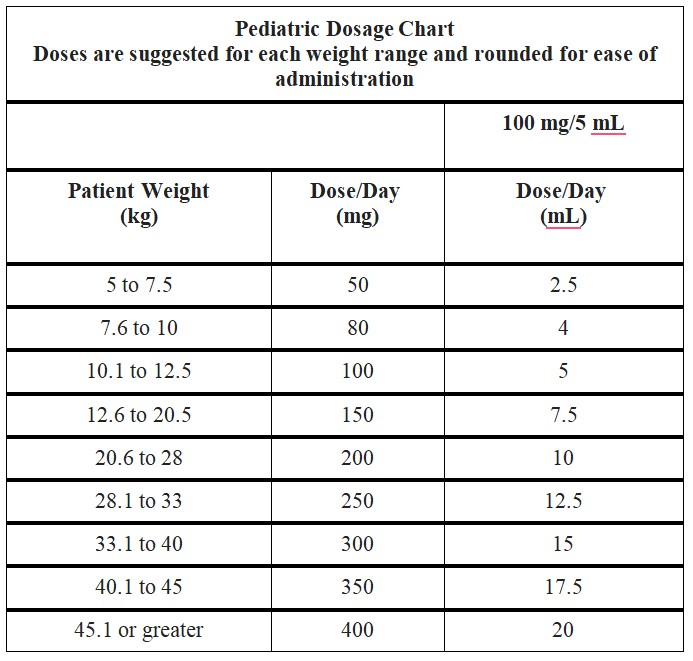
Safety and effectiveness of cefixime in children aged less than six months old have not been established.
Children weighing more than 45 kg or older than 12 years should be treated with the recommended adult dose.
In the treatment of infections due to Streptococcus pyogenes, a therapeutic dosage of cefixime should be administered for at least 10 days.
Renal impairment:
| Creatinine Clearance (mL/min) | 100 mg/5 mL | 200 mg Tablet |
| 20 ml/min or greater. | Normal dose | Normal dose |
| 20 or less OR continuous peritoneal dialysis | 8.6 ml | 200 mg once daily should not be exceeded |
Method for administration:
4.3.Contraindications
Hypersensitivity to cephalosporin antibiotics or to any of the excipients.
4.4. Special warnings and precautions for use
Encephalopathy
Beta-lactams, including cefixime, predispose the patient to encephalopathy risk (which may include convulsions, confusion, impairment of consciousness, movement disorders), particularly in case of overdose or renal impairment.
Severe cutaneous adverse reactions
Severe cutaneous adverse reactions (SCARS) including toxic epidermal necrolysis (TEN), Stevens-Johnson syndrome (SJS) drug rash with eosinophilia and systemic symptoms (DRESS), and acute generalised exanthematous pustulosis (AGEP) have been reported in association with cefixime. Patients should be informed about the signs and symptoms of serious skin manifestations and monitored closely. Treatment should be discontinued at the first appearance of skin rash, mucosal lesions, or any other sign of skin hypersensitivity.
Cefixime should be given with caution to patients who have shown hypersensitivity to other drugs.
Hypersensitivity to penicillins
As with other cephalosporins, cefixime should be given with caution to patients with a history of hypersensitivity to penicillin, as there is some evidence of partial cross-allergenicity between the penicillins and cephalosporins.
Patients have had severe reactions (including anaphylaxis) to both classes of drugs. If an allergic effect occurs with Cefixime, the drug should be discontinued and the patient treated with appropriate agents if necessary.
Haemolytic anaemia
Drug-induced haemolytic anaemia, including severe cases with a fatal outcome, has been described for cephalosporins (as a class). The recurrence of haemolytic anaemia after re-administration of cephalosporins in a patient with a history of cephalosporin (including cefixime) – associated haemolytic anaemia has also been reported.
Acute renal failure
As with other cephalosporins, cefixime may cause acute renal failure including tubulointerstitial nephritis as an underlying pathological condition. When acute renal failure occurs, cefixime should be discontinued and appropriate therapy and/or measures should be taken.
Renal impairment
Cefixime should be administered with caution in patients with markedly impaired renal function.
Paediatric use
Safety of cefixime in premature or new-born infant has not been established.
Antibiotic-associated colitis
Treatment with broad spectrum antibiotics alters the normal flora of the colon and may permit overgrowth of clostridia. Studies indicate that a toxin produced by Clostridium difficile is a primary cause of antibiotic-associated diarrhoea. Pseudomembranous colitis is associated with the use of broad-spectrum antibiotics (including macrolides, semi-synthetic penicillins, lincosamides and cephalosporins); it is therefore important to consider its diagnosis in patients who develop diarrhoea in association with the use of antibiotics. Symptoms of pseudomembranous colitis may occur during or after antibiotic treatment. Management of pseudomembranous colitis should include sigmoidoscopy, appropriate bacteriologic studies, fluids, electrolytes and protein supplementation. If the colitis does not improve after the drug has been discontinued, or if the symptoms are severe, oral vancomycin is the drug of choice for antibiotic-associated pseudomembranous colitis produced by C. difficile. Other causes of colitis should be excluded.
4.5. Interaction with other medicinal products and other forms of interaction
Anticoagulants
In common with other cephalosporins, increases in prothrombin times have been noted in a few patients. Care should therefore be taken in patients receiving anticoagulation therapy.
Cefixime should be administered with caution to patients receiving coumarin-type anticoagulants, e.g. warfarin potassium. Since cefixime may enhance effects of the anticoagulants, prolonged prothrombin time with or without bleeding may occur.
Other forms of interaction
A false positive reaction for glucose in the urine may occur with Benedict's or Fehling's solutions or with copper sulphate test tablets, but not with tests based on enzymatic glucose oxidase reactions.
A false positive direct Coombs test has been reported during treatment with cephalosporin antibiotics, therefore it should be recognised that a positive Coombs test may be due to the drug.
4.6. Fertility, pregnancy and lactation
Pregnancy
Pregnancy Category B
Reproduction studies have been performed in mice and rats at doses up to 40 times the human dose and have revealed no evidence of harm to the fetus due to cefixime. There are no adequate and well-controlled studies in pregnant women. Because animal reproduction studies are not always predictive of human response, this drug should be used during pregnancy only if clearly needed.
Labor and Delivery
Cefixime has not been studied for use during labor and delivery. Treatment should only be given if clearly needed.
Nursing Mothers
It is not known whether cefixime is excreted in human milk. Consideration should be given to discontinuing nursing temporarily during treatment with this drug.
4.7. Effects on ability to drive and use machines
In the case of side effects such as encephalopathy (which may include convulsion, confusion, impairment of consciousness, movement disorders), the patient should not operate machines or drive a vehicle.
4.8. Undesirable effects
The most commonly seen adverse reactions were gastrointestinal events, which were reported in 30% of adult patients on either the twice-daily or the once-daily regimen. Clinically mild gastrointestinal side effects occurred in 20% of all patients, moderate events occurred in 9% of all patients and severe adverse reactions occurred in 2% of all patients.
Individual adverse reactions included diarrhoea (16%), loose or frequent stools (6%), abdominal pain (3%), nausea (7%), dyspepsia (3%), and flatulence (4%). Diarrhoea has been more commonly associated with higher doses. Other gastrointestinal side effects seen less frequently are vomiting and flatulence. Pseudomembranous colitis has been reported.
Acute generalized exanthematous pustulosis has been reported with Cefixime use in India.
The following adverse reactions have been reported following the post-approval use of cefixime. Incidence rates were less than 1 in 50 (less than 2%).
Gastrointestinal: Diarrhea, loose stools, abdominal pain, dyspepsia, nausea, and vomiting, pseudomembranous colitis
Hypersensitivity Reactions: Anaphylactic/anaphylactoid reactions (including shock and fatalities), skin rashes, urticaria, drug fever, pruritus, angioedema, and facial edema. Erythema multiforme, Stevens-Johnson syndrome, and serum sickness-like reactions have been reported;
Hepatic: Transient elevations in SGPT, SGOT, alkaline phosphatase, hepatitis, jaundice; Renal : Transient elevations in BUN or creatinine, acute renal failure; Central Nervous System : Headaches, dizziness, seizures;
Hemic and Lymphatic Systems: Transient thrombocytopenia, leukopenia, neutropenia, and eosinophilia. Prolongation in prothrombin time was seen rarely;
Abnormal Laboratory Tests: Hyperbilirubinemia;
Other: Genital pruritus, vaginitis, candidiasis, toxic epidermal necrolysis. In addition to the adverse reactions listed above which have been observed in patients treated with cefixime, the following adverse reactions and altered laboratory tests have been reported for cephalosporin-class antibiotics:
Adverse reactions: Allergic reactions, superinfection, renal dysfunction, toxic nephropathy, hepatic dysfunction including cholestasis, aplastic anemia, hemolytic anemia, haemorrhage and colitis. Several cephalosporins have been implicated in triggering seizures, particularly in patients with renal impairment when the dosage was not reduced. If seizures associated with drug therapy occur, the drug should be discontinued. Anticonvulsant therapy can be given if clinically indicated.
Abnormal Laboratory Tests: Positive direct Coombs test, elevated LDH, pancytopenia, agranulocytosis.
Reporting of suspected adverse reactions
Reporting suspected adverse reactions after authorisation of the medicinal product is important. It allows continued monitoring of the benefit/risk balance of the medicinal product. Healthcare professionals are asked to report any suspected adverse reactions via email to:medico@zuventus.com
Website: https://www.zuventus.com/drug-safety-reporting
By reporting side effects, you can help provide more information on the safety of this medicine.
4.9.Overdose
There is a risk of encephalopathy in cases of administration of beta-lactam antibiotics, including cefixime, particularly in case of overdose or renal impairment.
Adverse reactions seen at dose levels up to 2 g cefixime in normal subjects did not differ from the profile seen in patients treated at the recommended doses. Cefixime is not removed from the circulation in significant quantities by dialysis.
No specific antidote exists. General supportive measures are recommended.
5.1 Pharmacodynamic properties
Mechanism of Action
Pharmacotherapeutic group: third generation cephalosporin, ATC code: J01DD08
Cefixime is an oral third generation cephalosporin which has marked in vitro bactericidal activity against a wide variety of Gram-positive and Gram-negative organisms.
Clinical efficacy has been demonstrated in infections caused by commonly occurring pathogens including Streptococcus pneumoniae, Streptococcus pyogenes, Escherichia coli, Proteus mirabilis, Klebsiella species, Haemophilus influenzae (beta-lactamase positive and negative), Branhamella catarrhalis (beta-lactamase positive and negative) and Enterobacter species. It is highly stable in the presence of beta-lactamase enzymes.
Most strains of enterococci (Streptococcus faecalis, group D Streptococci) and Staphylococci (including coagulase positive and negative strains and methicillin-resistant strains) are resistant to cefixime. In addition, most strains of Pseudomonas, Bacteroides fragilis, Listeria monocytogenes and Clostridia are resistant to cefixime.
5.2 Pharmacokinetic properties
Absorption
The absolute oral bioavailability of cefixime is in the range of 22 to 54%. Cefixime tablets and suspension, given orally, are about 40 to 50% absorbed whether administered with or without food; however, time to maximal absorption is increased approximately 0.8 hours when administered with food. Typically, the peak serum levels following the recommended adult or paediatric doses are between 1.5 and 3 mcg/ml. A single 200 mg tablet of cefixime produces an average peak serum concentration of approximately 2 mcg/mL(range: 1 to 4 mcg/mL). The oral suspension produces average peak concentrations approximately 25 to 50% higher than the tablets, when tested in normal adultvolunteers. Oral suspension 200 mg doses produce average peak concentrations of 3 mcg/mL (range: 1 to 4.5 mcg/mL), when tested in normal adult volunteers. The area under the time versus concentration curve (AUC) is greater by approximately 10 to 25% with the oral suspension than with the tablet after doses of 100 to 400 mg, when tested in normal adult volunteers. This increased absorption should be taken into consideration if the oral suspension is to be substituted for the tablet. Because of the lack of bioequivalence, tablets should not be substituted for oral suspension in the treatment
of otitis media. Crossover studies of tablet versus suspension have not been performed in children.
Absorption is not significantly modified by the presence of food. Cefixime may, therefore, be given without regard to meals. Peak serum concentrations occur between 2 and 6 hours following oral administration of a single 200 mg tablet, a single 400 mg tablet, or 400 mg of cefixime suspension. Peak serum concentrations occur between 2 and 5 hours following a single administration of 200 mg of suspension.
From in vitro studies, serum or urine concentrations of 1 mcg/ml or greater were considered to be adequate for most common pathogens against which cefixime is active.
Distribution
Cefixime is almost exclusively bound to the albumin fraction, the mean free fraction being approximately 30%. Serum protein binding is concentration independent, with a bound fraction of approximately 65%. Protein binding of cefixime is only concentration-dependent in human serum at very high concentrations, which are not seen following clinical dosing. In a multiple-dose study conducted with a research formulation, which is less bioavailable than the tablet or suspension, there was little accumulation of drug in serum or urine after dosing for 14 days.
Metabolism and Excretion
There is no evidence of metabolism of cefixime in vivo. Approximately 50% of the absorbed dose is excreted unchanged in the urine in 24 hours. Glomerular filtration is considered the predominant mechanism. Metabolites of cefixime have not been isolated from human serum or urine. In animal studies, it was noted that cefixime is also excreted in the bile in excess of 10% of the administered dose. The serum half-life of cefixime in healthy subjects is independent of dosage form and averages 3 to 4 hours, but may range up to 9 hours in some normal volunteers.
Special Populations
Geriatrics
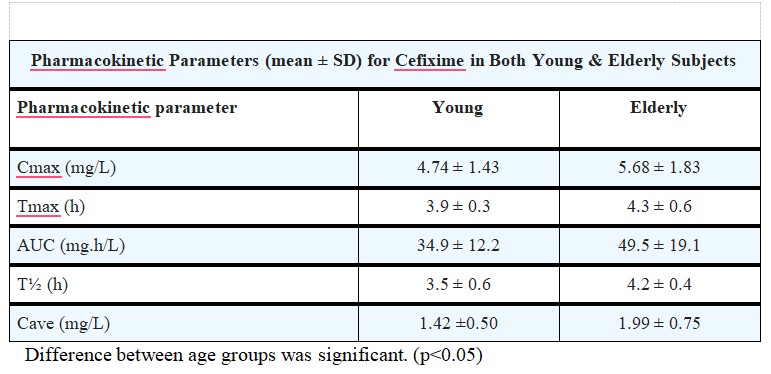
Average AUCs at steady state in elderly patients are approximately 40% higher than average AUCs in other healthy adults. Differences in the pharmacokinetic parameters between 12 young and 12 elderly subjects who received 400 mg of cefixime once daily for 5 days are summarized as follows: Pharmacokinetic Parameters (mean ± SD) for Cefixime in Both Young & Elderly Subjects
Renal Impairment:
In subjects with moderate impairment of renal function (20 to 40 mL/min creatinine clearance), the average serum half-life of cefixime is prolonged to 6.4 hours. In severe renal impairment (5 to 20 mL/min creatinine clearance), the half-life increased to an average of 11.5 hours. The drug is not cleared significantly from the blood by hemodialysis or peritoneal dialysis. However, a study indicated that with doses of 400 mg, patients undergoing hemodialysis have similar blood profiles as subjects with creatinine clearances of 21 to 60 mL/min.
There are no pre-clinical data of relevance to the prescriber which are additional to that already included in other sections of the Summary of Product Characteristics.
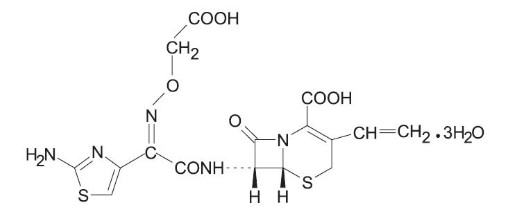
Cefixime is a semisynthetic, cephalosporin antibacterial for oral administration. Chemically, it is (6R,7R)-7-[2-(2-Amino-4-thiazolyl)glyoxylamido]-8-oxo-3-vinyl-5-thia-1-azabicyclo [4.2.0] oct-2-ene-2-carboxylic acid, 72-(Z)-[O-(carboxy methyl) oxime] trihydrate.
Molecular weight = 507.50 as the Trihydrate.
Chemical Formula is C16H15N5O7S2.3H2O
The structural formula for cefixime is:
1.Incompatibilities
Not applicable.
2.Shelf-life
Refer on the pack.
3.Packaging information
C Tax-O 100 DT: A Strip of 10 tablets.
C Tax-O 200: A Strip of 10 tablets.
4.Storage and handing instructions
C Tax-O 100 DT: Store protected from moisture at a temperature not
exceeding 25°C. C Tax-O 200: Store in a cool & dry place. Protect from light. Keep out of reach of children.
Counsel patients that antibacterial drugs, including cefixime, should only be used to treat bacterial infections. They do not treat viral infections (e.g., the common cold). When cefixime is prescribed to treat a bacterial infection, patients should be told that although it is common to feel better early in the course of therapy, the medication should be taken exactly as directed. Skipping doses or not completing the full course of therapy may: (1) decrease the effectiveness of the immediate treatment and (2) increase the likelihood that bacteria will develop resistance and will not be treatable by cefixime tablets or other antibacterial drugs in the future.
Advise patients that diarrhea is a common problem caused by antibacterial drugs which usually ends when the antibacterial drug is discontinued. Sometimes after starting treatment with antibacterial drugs, patients can develop watery and bloody stools (with or without stomach cramps and fever) even as late as two or more months after having taken the last dose of the antibacterial drug. If this occurs, patients should contact their physician as soon as possible.
18th Sept. 2024
Read all of this leaflet carefully before you are given this medicine because it contains important information for you.
Keep this leaflet. You may need to read it again. If you have any further questions, ask your doctor, pharmacist or nurse. This medicine has been prescribed for you only. Do not pass it on to others. It may harm them, even if their signs of illness are the same as yours. If you get any side effects, talk to your doctor, pharmacist or nurse. This includes any possible side effects not listed in this leaflet. See section 4.
What is in this leaflet
C Tax-O tablets contains a medicine called Cefixime. This belongs to a group of antibiotics called ‘cephalosporins’.
C Tax-O tablets is used to treat infections caused by bacteria. These include infections of the:
Do not take C Tax-O tablets if:
If you are not sure, talk to your doctor or pharmacist before taking C Tax-O tablets.
Warnings and precautions
Talk to your doctor or pharmacist or nurse before you are given C Tax-O tablets if:
If you are not sure if any of the above apply to you, talk to your doctor or pharmacist before taking this medicine. Severe skin problems such as Toxic Epidermal Necrolysis (TEN), Stevens-Johnson Syndrome (SJS), Drug Rash with Eosinophilia and Systemic Symptoms (DRESS), and Acute Generalised Exanthematous Pustulosis (AGEP) have been reported with cefixime (see section 4). If you develop severe skin reactions or any of the reactions listed in section 4, stop treatment immediately and contact your doctor or healthcare professional.
Other medicines and C Tax-O tablets
Pregnancy and breast-feeding
If you are pregnant or breast-feeding, think you may be pregnant or are planning to have a baby, ask your doctor or pharmacist for advice before taking this medicine.
Driving and using machines
This medicine can cause symptoms including fits (convulsions), feeling confused, feeling less alert or aware of things than usual, unusual muscle movements or stiffness. If you experience any of these effects don’t drive or use machinery.
Medical Tests
If you require any tests (such as blood or urine tests) while taking this medicine, please make sure your doctor knows that you are taking C Tax-O tablets.
Always use this medicine exactly as your doctor has told you. Check with your doctor or pharmacist if you are not sure.
C Tax-O tablets 200 mg Tablets:
C Tax-O tablets 100 mg Dispersible tablets:
If you feel the effect of the medicine is too weak or too strong, do not change the dose yourself, but ask your doctor. Carefully read the label from the pharmacist. Ask your pharmacist if you are not sure about the dose to take. The medicine should be taken for the prescribed number of days. The recommended dose is:
Adults, Elderly and Children over 10 years or weighing more than 50kg
People with kidney problems
Pediatric population (6 months or older)
If you take more C Tax-O tablets than you should
If you forget to take C Tax-O tablets
If you stop taking C Tax-O tablets
Like all medicines, this medicine can cause side effects, although not everybody gets them. Tell your doctor straight away or go to the nearest hospital casualty department if you notice any of the following serious side effects – you may need urgent medical treatment:
You have an allergic reaction. The signs may include: a rash, joint pain, swallowing or breathing problems, swelling of your lips, face, throat or tongue.
SJS/TEN symptoms may include blistering, peeling or bleeding on any part of the skin (including the lips, eyes, mouth, nose, genitals, hands or feet). Also, flu-like symptoms such as fever, chills or aching muscles.
DRESS symptoms may include flu-like symptoms and a widespread rash with a high body temperature and enlarged lymph nodes. Abnormal blood test results may include increased levels of liver enzymes and an increase in a type of white blood cell (eosinophilia) and enlarged lymph nodes.
AGEP symptoms may include a red, scaly, widespread rash with bumps under the skin (including your skin folds, chest, abdomen (including stomach), back and arms) and blisters accompanied by fever.
Erythema multiforme symptoms include skin rash or skin lesions with a pink/red ring and a pale centre which may be itchy, scaly or filled with fluid. The rash may appear especially on the palms or soles of your feet.
You get infections more easily than usual. This could be because of a blood disorder. This normally gets better after stopping the medicine.
You bruise or bleed more easily than normal. This could be because of a blood disorder. This normally gets better after stopping the medicine.
If your child gets nose bleeds, bleeding gums, chills, tiredness, pale skin (often with a yellow tinge), shortness of breath. This may be due to haemolytic anaemia.
Changes in the way the kidneys are working or blood in your child’s urine. Fits (convulsions)
A brain condition with symptoms including fits (convulsions), feeling confused, feeling less alert or aware of things than usual, unusual muscle movements or stiffness. This may be something called encephalopathy. This side effect is more likely if you have taken an overdose or you already have a problem with your kidneys.
Stop taking this medicine and contact your doctor without delay if you get:
Tell your doctor or pharmacist if any of the following side effects get serious or lasts longer than a few days:
Feeling sick (nausea) or being sick (vomiting)
Stomach pains, indigestion or wind
Headaches
Feeling dizzy
Feeling itchy in the genital or vaginal area
Blood tests
C Tax-O tablets can cause blood clots or small changes to the way the liver and kidney work. This would be shown up in blood tests. This is not common and goes back to normal after stopping this medicine.
Reporting of side effects
If you get any side effects, talk to your doctor. This includes any possible side effects not listed in this leaflet. You can also report side effects directly: Website: www.zuventus.co.in and click the tab “Safety Reporting” located on the top of the home page. By reporting side effects, you can help provide more information on the safety of this medicine.
Keep this medicine out of the sight and reach of children. Do not use this medicine after the expiry date which is stated on the label and blister pack after EXP. Store below 25°C. Do not throw away medicines via wastewater or household waste. Ask your pharmacist how to throw away medicines you no longer use. These measures will help protect the environment.
What C Tax-O tablets contains
Each film coated C Tax-O tablets 200 mg tablet contains:
Cefixime IP (as Trihydrate) equivalent to
Cefixime (Anhydrous) 200 mg
Excipients q.s.
Colour: Titanium Dioxide IP
Each uncoated C Tax-O tablets 100 mg dispersible tablet contains:
Cefixime IP (as Trihydrate) equivalent to
Cefixime (Anhydrous) 100 mg
Excipients q.s.
Colour: Lake of Quinoline Yellow
Flavour added
Packing information:
C Tax-O tablets 100 DT: A strip of 10 tablets.
C Tax-O tablets 200: A strip of 10 tablets.
Marketing Authorisation Holder
Zuventus Healthcare Limited
Zuventus House, Plot Y2, CTS No.: 358/A2,
Near Nahur Railway Station,
Nahur (W), Mumbai, 400078 Maharashtra, India
Cefotaxime Sodium Injection IP 250 mg / 500 mg / 1 gm
C-Tax 250
Each vial contains:
Cefotaxime Sodium IP
equivalent to Cefotaxime 250 mg
This pack contains Sterile Water for Injections IP 5 ml.
C-Tax 500
Each vial contains:
Cefotaxime Sodium IP
equivalent to Cefotaxime 500 mg
This pack contains Sterile Water for Injections IP 5 ml.
C-Tax 1.0 g
Each vial contains:
Cefotaxime Sodium IP
equivalent to Cefotaxime 1.0 g
This pack contains Sterile Water for Injections IP 5 ml.
Powder for solution for injection/infusion
250 mg / 500 mg / 1 gm
4.1.Therapeutic indication
Indicated in the treatment of patients with serious infections.
1. Cefotaxime is indicated in the treatment of serious infections, either before the infecting organism has been identified or when caused by bacteria of established sensitivity, including
2. Cefotaxime may be used for pre-operative prophylaxis in patients undergoing surgical procedures, that may be classified as contaminated or potentially so.
4.2.Posology and method of administration
Cefotaxime may be administered intravenously by bolus injection or by infusion, or by intramuscular injection. The dosage, route and frequency of administration should be determined by the severity of infection, the sensitivity of causative organisms and condition of the patient. Therapy may be initiated before the results of sensitivity tests are known.
Adults:
The recommended dosage for mild to moderate infections is 1g 12 hourly. However, dosage may be varied according to the severity of the infection, sensitivity of causative organisms and condition of the patient. Therapy may be initiated before the results of sensitivity tests are known.
In severe infections dosage may be increased up to 12g daily given in three or four divided doses. For infections caused by sensitive Pseudomonas species daily doses of greater than 6g will usually be required.
Children:
The usual dosage range is 100-150mg/kg/day in two to four divided doses. However, in very severe infection doses of up to 200mg/kg/day may be required.
Neonates: The recommended dosage is 50mg/kg/day in two to four divided doses. In severe infections 150-200mg/kg/day, in divided doses, have been given.
Dosage in renal impairment: Because of extra-renal elimination, it is only necessary to reduce the dosage of cefotaxime in severe renal failure (GFR <5ml/min = serum creatinine approximately 751 micromol/litre). After an initial loading dose of 1g, daily dose should be halved without change in the frequency of dosing, i.e. 1g twelve hourly becomes 0.5g twelve hourly, 1g eight hourly becomes 0.5g eight hourly, 2g eight hourly becomes 1g eight hourly etc. As in all other patients, dosage may require further adjustment according to the course of the infection and the general condition of the patient.
Dosage in hepatic impairment: No dosage adjustment is required.
Intravenous and Intramuscular Administration
Dissolve the contents in 3 ml (for 250 mg / 500 mg) or 5 ml (for 1 gm) of Sterile Water for Injections IP, provided with this pack. Use immediately after reconstitution. Any unused portion must be discarded. After reconstitution, do not use in case any foreign particulate matter is observed inside the vial.
Intravenous Administration (Injection or Infusion): For intermittent I.V. injections, the solution must be injected over a period of 3 to 5 minutes.
Intravenous Infusion: 1-2 gm cefotaxime are dissolved in 40-100 ml of infusion fluid. After 24 hours any unused solution should be discarded. The prepared infusion may be administered over 20-60 minutes. Cefotaxime and aminoglycosides should not be mixed in the same syringe or perfusion fluid.
Compatible Infusion Solutions:
Intramuscular Administration: Cefotaxime should be injected well within the body of a relatively large muscle such as the upper outer quadrant of the buttock; aspiration is necessary to avoid inadvertent injection into a blood vessel.
4.3.Contraindications
4.4.Special warnings and precautions for use
As with other antibiotics, the use of cefotaxime, especially if prolonged, may result in overgrowth of non-susceptible organisms, such as Enterococcus spp, candida, Pseudomonas aeruginosa. Repeated evaluation of the condition of the patient is essential. If superinfection occurs during treatment with cefotaxime, appropriate measures should be taken and specific anti-microbial therapy should be instituted if considered clinically necessary.
Anaphylactic reactions: Preliminary enquiry about hypersensitivity to penicillin and other β -Lactam antibiotics is necessary before prescribing cephalosporins since cross allergy occurs in 5– 10% of cases. The use of cefotaxime is strictly contra-indicated in subjects with a previous history of immediate-type hypersensitivity to cephalosporins. Since cross allergy exists between penicillins and cephalosporins, use of the latter should be undertaken with extreme caution in penicillin sensitive subjects. Serious, including fatal hypersensitivity reactions have been reported in patients receiving cefotaxime (see sections 4.3 and 4.8). If a hypersensitivity reaction occurs, treatment must be stopped.
Severe skin reactions: Severe cutaneous adverse reactions (SCARs) including acute generalized exanthematous pustulosis (AGEP), Stevens-Johnson syndrome (SJS), toxic epidermal necrolysis (TEN), drug reaction with eosinophilia and systemic symptoms (DRESS), which can be life-threatening or fatal, have been reported post-marketing in association with cefotaxime treatment.
At the time of prescription patients should be advised of the signs and symptoms for skin reactions.
If signs and symptoms suggestive of these reactions appear, cefotaxime should be withdrawn immediately. If the patient has developed AGEP, SJS, TEN or DRESS with the use of cefotaxime, treatment with cefotaxime must not be restarted and should be permanently discontinued.
In children, the presentation of a rash can be mistaken for the underlying infection or an alternative infectious process, and physicians should consider the possibility of a reaction to cefotaxime in children that develop symptoms of rash and fever during therapy with cefotaxime.
Patients with renal insufficiency: The dosage should be modified according to the creatinine clearance calculated. Patients with severe renal dysfunction should be placed on the dosage schedule recommended under “Posology and Method of Administration”.
Caution should be exercised if cefotaxime is administered together with aminoglycosides, probenecid or other nephrotoxic drugs (see section 4.5). Renal function must be monitored in these patients, the elderly, and those with pre-existing renal impairment.
Haematological reactions: Leukopenia, neutropenia, and more rarely, agranulocytosis may develop during treatment with cefotaxime, particularly if given over long periods. For treatment courses lasting longer than 7-10 days, the blood white cell count should be monitored and treatment stopped in the event of neutropenia.
Some cases of eosinophilia and thrombocytopenia, rapidly reversible on stopping treatment, have been reported. Cases of haemolytic anaemia have also been reported (see section 4.8).
Sodium intake: The sodium content of cefotaxime (2.09mmol/g) should be taken into account when prescribing to patients requiring sodium restriction.
Clostridium difficile associated disease (e.g. pseudomembranous colitis): Cefotaxime may predispose patients to pseudomembranous colitis. Although any antibiotic may predispose to pseudomembranous colitis, the risk is higher with broad spectrum drugs, such as cephalosporins. This side effect, which may occur more frequently in patients receiving higher doses for prolonged periods, should be considered as potentially serious.
Diarrhoea, particularly if severe and/or persistent, occurring during treatment or in the initial weeks following treatment, may be symptomatic of Clostridium difficile associated disease (CDAD). CDAD may range in severity from mild to life threatening, the most severe form of which is pseudo-membranous colitis.
The diagnosis of this rare but possibly fatal condition can be confirmed by endoscopy and/or histology.
It is important to consider this diagnosis in patients who present with diarrhoea during or subsequent to the administration of cefotaxime.
If a diagnosis of pseudomembranous colitis is suspected, cefotaxime should be stopped immediately and appropriate specific antibody therapy should be started without delay.
Clostridium difficile associated disease can be favoured by faecal stasis.
Medicinal products that inhibit peristalsis should not be given.
Neurotoxicity: High doses of beta-lactam antibiotics, including cefotaxime, particularly in patients with renal insufficiency, may result in encephalopathy (e.g. impairment of consciousness, abnormal movements and convulsions).
Patients should be advised to contact their doctor immediately prior to continuing treatment if such reactions occur.
Precautions for administration: During post-marketing surveillance, potentially life-threatening arrhythmia has been reported in a very few patients who received rapid intravenous administration of cefotaxime through a central venous catheter. The recommended time for injection or infusion should be followed.
Effects on Laboratory Tests: As with other cephalosporins a positive Coombs' test has been found in some patients treated with cefotaxime. This phenomenon can interfere with the cross-matching of blood.
Urinary glucose testing with non-specific reducing agents may yield false-positive results. This phenomenon is not seen when a glucose-oxydase specific method is used.
4.5.Interaction with other medicinal products and other forms of interaction
Aminoglycoside antibiotics and diuretics: As with other cephalosporins, cefotaxime may potentiate the nephrotoxic effects of nephrotoxic drugs such as aminoglycosides or potent diuretics (e.g. furosemide). Renal function must be monitored.
Uricosurics: Probenecid interferes with renal tubular transfer of cefotaxime, thereby increasing cefotaxime exposure about 2-fold and reducing renal clearance to about half at therapeutic doses. Due to the large therapeutic index of cefotaxime, no dosage adjustment is needed in patients with normal renal function. Dosage adjustment may be needed in patients with renal impairment.
Interference with Laboratory Tests: A false positive Coombs test may be seen during treatment with cephalosporins. This phenomenon may occur during treatment with cefotaxime and can interfere with blood cross-matching.
A false positive reaction to urinary glucose may occur with copper reduction methods (Benedict's, Fehling's or Clinitest) but not with the use of specific glucose oxidase methods.
There is a potential for mezlocillin and azlocillin to reduce the clearance of cefotaxime.
4.6. Fertility, pregnancy and lactation
Pregnancy: Teratogenic Effects: Pregnancy Category B:
Reproduction studies have been performed in pregnant mice given C TAX injection intravenously at doses up to 1200 mg/kg/day (0.4 times the recommended human dose based on mg/m2) or in pregnant rats when administered intravenously at doses up to 1200 mg/kg/day (0.8 times the recommended human dose based on mg/m2). No evidence of embryotoxicity or teratogenicity was seen in these studies. Although cefotaxime has been reported to cross the placental barrier and appear in cord blood, the effect on the human fetus is not known. There are no well-controlled studies in pregnant women. Because animal reproductive studies are not always predictive of human response, this drug should be used during pregnancy only if clearly needed.
Lactation: Cefotaxime passes into human breast milk in small amounts and is usually compatible with breast feeding, but careful monitoring of the infant is recommended. Effects on the physiological intestinal flora of the breast-fed infant leading to diarrhoea, colonisation by yeast-like fungi, and sensitisation of the infant cannot be excluded.
Therefore, a decision must be made whether to discontinue breast-feeding or to discontinue therapy taking into account the benefit of breast-feeding for the child and the benefit of therapy for the woman.
4.7. Effects on ability to drive and use machines
Cefotaxime has been associated with dizziness, which may affect the ability to drive or operate machinery. There is no evidence that cefotaxime directly impairs the ability to drive or to operate machines. High doses of cefotaxime, particularly in patients with renal insufficiency, may cause encephalopathy (e.g. impairment of consciousness, abnormal movements and convulsions). Patients should be advised not to drive or operate machinery if any such symptoms occur.
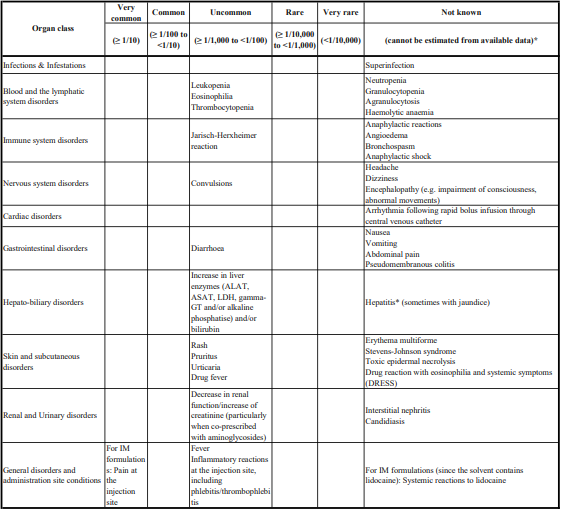
4.8.Undesirable effects
Jarisch-Herxheimer reaction
For the treatment of borreliosis, a Jarisch-Herxheimer reaction may develop during the first days of treatment.
The occurrence of one or more of the following symptoms has been reported after several week's treatment of borreliosis: skin rash, itching, fever, leucopenia, increase in liver enzymes, difficulty of breathing, joint discomfort.
Hepatobiliary disorders
Increase in liver enzymes (ALAT, ASAT, LDH, gamma-GT and/or alkaline phosphatase) and/or bilirubin have been observed. These laboratory abnormalities may rarely exceed twice the upper limit of the normal range and elicit a pattern of liver injury, usually cholestatic and most often asymptomatic.
Reporting of suspected adverse reactions
Reporting suspected adverse reactions after authorisation of the medicinal product is important. It allows continued monitoring of the benefit/risk balance of the medicinal product. Healthcare professionals are asked to report any suspected adverse reactions
via email to: medico@zuventus.com
Website: Website: https://www.zuventus.com/drug-safety-reporting
By reporting side effects, you can help provide more information on the safety of this medicine.
4.9.Overdose
Symptoms of overdose may largely correspond to the profile of side effects. There is a risk of reversible encephalopathy in cases of administration of high doses of β – lactam antibiotics including cefotaxime.
In case of overdose, cefotaxime must be discontinued, and supportive treatment initiated, which includes measures to accelerate elimination, and symptomatic treatment of adverse reactions (e.g. convulsions). No specific antidote exists. Serum levels of cefotaxime may be reduced by peritoneal dialysis or haemodialysis.
5.1 Pharmacodynamic properties
Pharmacotherapeutic group: Beta-lactam antibiotics, cephalosporins.
ATC Code: J01D A10
Mode of action
Cefotaxime is a third generation broad spectrum bactericidal cephalosporin antibiotic. The bactericidal properties are due to the inhibitory effect of cefotaxime on bacterial cell wall synthesis.
Mechanisms of resistance
Resistance to Cefotaxime may be due to production of extended-spectrum beta-lactamases that can efficiently hydrolyse the drug, to the induction and/or constitutive expression of AmpC enzymes, to impermeability or to efflux pump mechanisms. More than one of these possible mechanisms may co-exist in a single bacterium.
Breakpoints:
Current MIC breakpoints used to interpret cefotaxime susceptibility data are shown below.
European Committee on Antimicrobial Susceptibility Testing (EUCAST) Clinical MIC Breakpoints (V1.1, 31/03/2006)
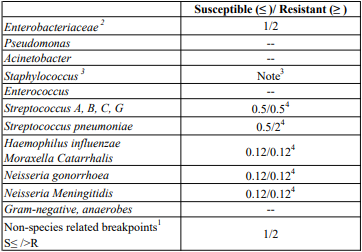
1. Non-species related breakpoints have been determined mainly on the basis of PK/PD data and are independent of MIC distributions of specific species. They are for use only for species that have not been given a species-specific breakpoint and not for those species where susceptibility testing is not recommended (marked with -- or IE in the table).
2. The cephalosporin breakpoints for Enterobacteriaceae will detect resistance mediated by most ESBLs and other clinically important beta-lactamases in Enterobacteriaceae. However, some ESBL-producing strains may appear susceptible or intermediate with these breakpoints. Laboratories may want to use a test which specifically screens for the presence of ESBL.
3. Susceptibility of staphylococci to cephalosporins is inferred from the methicillin susceptibility (except ceftazidime which should not be used for staphylococcal infections).
4. Strains with MIC values above the S/I breakpoint are very rare or not yet reported. The identification and antimicrobial susceptibility tests on any such isolate must be repeated and if the result is confirmed the isolate sent to a reference laboratory. Until there is evidence regarding clinical response for confirmed isolates with MIC above the current resistant breakpoint (in italics) they should be reported resistant.-- = Susceptibility testing not recommended as the species is a poor target for therapy with the drug.
IE = There is insufficient evidence that the species in question is a good target for therapy with the drug.
RD = rationale document listing data used by EUCAST for determining breakpoints.
Susceptibility
The prevalence of resistance may vary geographically and with time for selected species and local information on resistance is desirable, particularly when treating severe infections. This information gives only an approximate guidance on the probabilities whether micro-organisms will be susceptible to cefotaxime or not.
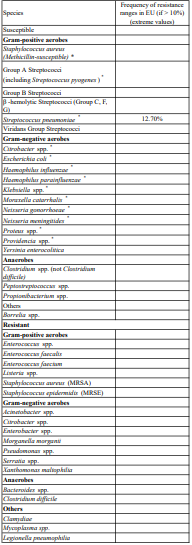
Methicillin-(oxacillin) resistant staphylococci (MRSA) are resistant to all currently available β -lactam antibiotics including cefotaxime.
Penicillin-resistant Streptococcus pneumoniae show a variable degree of cross-resistance to cephalosporins such as cefotaxime.
5.2 Pharmacokinetic properties
After a 1000mg intravenous bolus, mean peak plasma concentrations of cefotaxime usually range between 81 and 102 microgram/ml. Doses of 500mg and 2000mg produce plasma concentrations of 38 and 200 micrograms/ml, respectively. There is no accumulation following administration of 1000mg intravenously or 500mg intramuscularly for 10 or 14 days.
The apparent volume of distribution at steady-state of cefotaxime is 21.6 litres/1.73m2 after 1g intravenous 30-minute infusion.
Concentrations of cefotaxime (usually determined by non-selective assay) have been studied in a wide range of human body tissues and fluids. Cerebrospinal fluid concentrations are low when the meninges are not inflamed, but are between 3 and 30 microgram/ml in children with meningitis. Cefotaxime usually passes the blood-brain barrier in levels above the minimum inhibitory concentration of common sensitive pathogens when the meninges are inflamed. Concentrations (0.2-5.4 microgram/ml), inhibitory for most Gram-negative bacteria, are attained in purulent sputum, bronchial secretions and pleural fluid after doses of 1 or 2g. Concentrations likely to be effective against most sensitive organisms are similarly attained in female reproductive organs, otitis media effusions, prostatic tissue, interstitial fluid, renal tissue, peritoneal fluid and gall bladder wall, after usual therapeutic doses. High concentrations of cefotaxime and desacetyl-cefotaxime are attained in bile.
Cefotaxime is partially metabolised prior to excretion. The principal metabolite is the microbiologically active product, desacetyl-cefotaxime. Most of a dose of cefotaxime is excreted in the urine - about 60% as unchanged drug and a further 24% as desacetyl-cefotaxime. Plasma clearance is reported to be between 260 and 390ml/minute and renal clearance 145 to 217 ml/minute.
After intravenous administration of cefotaxime to healthy adults, the elimination half-life of the parent compound is 0.9 to 1.14 hours and that of the desacetyl metabolite, about 1.3 hours.
In neonates the pharmacokinetics are influenced by gestational and chronological age, the half-life being prolonged in premature and low birth weight neonates of the same age.
In severe renal dysfunction the elimination half-life of cefotaxime itself is increased minimally to about 2.5 hours, whereas that of desacetyl-cefotaxime is increased to about 10 hours. Total urinary recovery of cefotaxime and its principal metabolite decreases with reduction in renal function.
Carcinogenesis, Mutagenesis
Lifetime studies in animals to evaluate carcinogenic potential have not been conducted. C TAX injection was not mutagenic in the mouse micronucleus test or in the Ames test. C TAX injection did not impair fertility to rats when administered subcutaneously at doses up to 250 mg/kg/day (0.2 times the maximum recommended human dose based on mg/m2) or in mice when administered intravenously at doses up to 2000 mg/kg/day (0.7 times the recommended human dose based on mg/m2).
Nonteratogenic Effects
Use of the drug in women of child-bearing potential requires that the anticipated benefit be weighed against the possible risks. In perinatal and postnatal studies with rats, the pups in the group given 1200 mg/kg/day of C TAX injection were significantly lighter in weight at birth and remained smaller than pups in the control group during the 21 days of nursing.
C TAX injection (cefotaxime sodium) is a semisynthetic, broad spectrum cephalosporin antibiotic for parenteral administration.
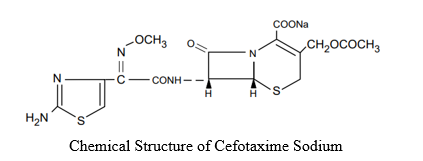
IUPAC Name:
It is the sodium salt of 7-[2-(2-amino-4-thiazolyl) glyoxylamido]-3- (hydroxymethyl)-8-oxo-5-thia-1-azabicyclo [4.2.0] oct-2-ene-2-carboxylate 72 (Z)-(o-methyloxime), acetate (ester).
The molecular formula of cefotaxime is C16H16N5NaO7S2 Molecular weight is 477.442 g/mol.
1.Incompatibilities
Cefotaxime sodium should not be mixed with alkaline solutions such as sodium bicarbonate injection or solutions containing aminophylline.
Cefotaxime should not be admixed with aminoglycosides. If they are used concurrently they should be administered in separate sites.
2.Shelf-life
Refer on the pack.
3. Packaging information
C-Tax 250: A vial of 250 mg with SWFI IP 5 ml.
C-Tax 500: A vial of 500 mg with SWFI IP 5 ml.
C-Tax 1.0 g: A vial of 1 g with SWFI IP 5 ml.
4. Storage and handing instructions
Store in a cool & dry place. Protect from light.
Keep out of reach of children.
After reconstitution, do not use in case any foreign particulate matter is observed inside the vial.
Patients should be counseled that antibacterial drugs including C-Tax injection should only be used to treat bacterial infections. They do not treat viral infections (e.g., the common cold). When C-Tax injection is prescribed to treat a bacterial infection, patients should be told that although it is common to feel better early in the course of therapy, the medication should be taken exactly as directed.
Skipping doses or not completing the full course of therapy may (1) decrease the effectiveness of the immediate treatment and (2) increase the likelihood that bacteria will develop resistance and will not be treatable by C-Tax injection or other antibacterial drugs in the future.
Diarrhea is a common problem caused by antibiotics which usually ends when the antibiotic is discontinued. Sometimes after starting treatment with antibiotics, patients can develop watery and bloody stools (with or without stomach cramps and fever) even as late as two or more months after having taken the last dose of the antibiotic. If this occurs, patients should contact their physician as soon as possible.
17th Sept. 2024
Read all of this leaflet carefully before you start taking this medicine.
In this leaflet:
The name of your medicine is “Cefotaxime sodium for injection” (referred to as C-Tax Injection throughout this leaflet).
Cefotaxime is an antibiotic. It belongs to a group of antibiotics that are called cephalosporins. These types of antibiotic are similar to penicillin.
Cefotaxime kills bacteria and it can be used to treat infections of the:
It can also be used to prevent and treat infections following surgical operations.
You should not be given Cefotaxime injection if:
Tell your doctor or nurse if any of the above apply to you.
Before you are given C-Tax injection
You must tell the doctor or nurse if any of the following apply to you:
you have a history of allergies or asthma
you are on a low sodium diet
you have a heart or kidney disorder
you are having any blood or urine tests
you have a history of gastro-intestinal problems e.g. colitis, which causes diarrhoea containing blood.
Taking other medicines
Tell the doctor or nurse if you are taking any of the following medicines:
Please tell your doctor if you are taking, or have recently taken, any other medicines including any that you may have bought without a prescription.
Pregnancy and breast-feeding
If you are pregnant, think you might be pregnant or are breastfeeding, you must tell your doctor before you are given this medicine.
Driving and using machines
If you are given high doses of cefotaxime, you may feel dizzy/drowsy or fall asleep or experience convulsions (fits) or unusual body movements. If this happens, you should not drive or operate machinery.
Important information about some of the ingredients of Cefotaxime injection
C-Tax Injection contains approximately 50 mg (2.09 mmol) of sodium per 1g dose. This should be taken into consideration by patients on a controlled sodium diet. Tell your doctor or nurse if you are on a low sodium diet.
C-Tax Injection is supplied as a powder so before it can be given it must be diluted and made into a solution. Your doctor or nurse normally does this. They will inject this directly into a vein (intravenous) or muscle (intramuscular). It may also be given by an intravenous infusion (“drip”).
Your doctor will decide how much you need and how often the injections should be given. The usual doses are given below but doctors may prescribe different doses depending on the severity and type of your infection, your weight, your age and how well your kidneys are working.
Treatment with C-Tax injection is usually continued for 2-3 days after you start to recover from your illness or after your operation.
Adults and children over 12 years old:
The usual dose is 1 g every twelve hours. In some patients where infections are severe, the doctor may give a higher dose up to 12 g every day. For the treatment of gonorrhoea, a single 500mg dose is usually given. To prevent an infection after surgery, 1 -2 g is given before the operation. A second dose may be needed after the operation.
Infants and children up to 12 years old:
The usual daily dose is 50 mg to 100 mg Cefotaxime per kilogram of their bodyweight. This is usually split into 2 doses each day. Severely ill children may receive up to 200 mg per kg bodyweight daily (to a maximum of 6 g daily), split into 3 separate doses.
Young babies (new-born):
The daily dose should not normally exceed 50 mg Cefotaxime per kg of their bodyweight.
Patients with kidney problems:
Lower doses may be given if you have severe kidney problems. Patients on dialysis machines will be monitored for the correct dose.
If you think you have missed an injection
This is unlikely as you will probably receive this medicine in hospital. If you think you have missed a dose, speak to your doctor or nurse.
If you have been given more of this medicine than you should
This is unlikely to happen but if it does, the doctor will treat any symptoms that follow.
Like all medicines, C-Tax Injection can cause side effects, although not everybody gets them.
As with other antibiotics, some people find they have an allergy to it. Tell your doctor immediately if any of the following rare symptoms occur:
Antibiotic treatment can affect the normal bacteria in the gut, causing new infection (colitis). You should tell your doctor immediately if you develop diarrhoea.
The following side effects may occur in some patients treated with C-Tax injection. Tell your doctor if any become troublesome:
Very common side effects (probably affecting more than 1 in 10 people)
Uncommon side effects (probably affecting less than 1 in 100 patients)
Side effects occurring with unknown frequency
Treatment with high doses of Cefotaxime, particularly in patients with kidney problems, has been known to cause loss of consciousness, abnormal movements and convulsions (“fits”).
Reporting of side effects
If you get any side effects, talk to your doctor. This includes any possible side effects not listed in this leaflet. You can also report side effects directly: Website: www.zuventus.com and click the tab “Safety Reporting” located on the top of the home page. By reporting side effects, you can help provide more information on the safety of this medicine.
Keep out of the reach and sight of children. Do not use C-Tax injection after the expiry date which is printed on the label and carton. Do not store above 25°C. Keep the vial in the outer carton. Your doctor, pharmacist or nurse will know how to store C-Tax injection properly.
What C-Tax injection contains:
Each vial contains 250 mg, 500mg or 1g Cefotaxime (as Cefotaxime sodium).
There are no other ingredients.
C-Tax 250:
A vial of 250 mg with Sterile Water for Injection -5 ml.
C-Tax 500:
A vial of 500 mg with Sterile Water for Injection-- 5 ml. C-Tax 1.0 g:
A vial of 1 g with Sterile Water for Injection- 5 ml.
Marketing Authorisation Holder
Zuventus Healthcare Ltd.
Zuventus House, Plot Y2, CTS No.: 358/A2,
Near Nahur Railway Station,
Nahur (W), Mumbai, 400078 Maharashtra, India
Cefotaxime Sodium Injection IP 250 mg / 500 mg / 1 gm
C-Tax 250
Each vial contains:
Cefotaxime Sodium IP
equivalent to Cefotaxime 250 mg
This pack contains Sterile Water for Injections IP 5 ml.
C-Tax 500
Each vial contains:
Cefotaxime Sodium IP
equivalent to Cefotaxime 500 mg
This pack contains Sterile Water for Injections IP 5 ml.
C-Tax 1.0 g
Each vial contains:
Cefotaxime Sodium IP
equivalent to Cefotaxime 1.0 g
This pack contains Sterile Water for Injections IP 5 ml.
Powder for solution for injection/infusion
250 mg / 500 mg / 1 gm
4.1.Therapeutic indication
Indicated in the treatment of patients with serious infections.
1. Cefotaxime is indicated in the treatment of serious infections, either before the infecting organism has been identified or when caused by bacteria of established sensitivity, including
2. Cefotaxime may be used for pre-operative prophylaxis in patients undergoing surgical procedures, that may be classified as contaminated or potentially so.
4.2.Posology and method of administration
Cefotaxime may be administered intravenously by bolus injection or by infusion, or by intramuscular injection. The dosage, route and frequency of administration should be determined by the severity of infection, the sensitivity of causative organisms and condition of the patient. Therapy may be initiated before the results of sensitivity tests are known.
Adults:
The recommended dosage for mild to moderate infections is 1g 12 hourly. However, dosage may be varied according to the severity of the infection, sensitivity of causative organisms and condition of the patient. Therapy may be initiated before the results of sensitivity tests are known.
In severe infections dosage may be increased up to 12g daily given in three or four divided doses. For infections caused by sensitive Pseudomonas species daily doses of greater than 6g will usually be required.
Children:
The usual dosage range is 100-150mg/kg/day in two to four divided doses. However, in very severe infection doses of up to 200mg/kg/day may be required.
Neonates: The recommended dosage is 50mg/kg/day in two to four divided doses. In severe infections 150-200mg/kg/day, in divided doses, have been given.
Dosage in renal impairment: Because of extra-renal elimination, it is only necessary to reduce the dosage of cefotaxime in severe renal failure (GFR <5ml/min = serum creatinine approximately 751 micromol/litre). After an initial loading dose of 1g, daily dose should be halved without change in the frequency of dosing, i.e. 1g twelve hourly becomes 0.5g twelve hourly, 1g eight hourly becomes 0.5g eight hourly, 2g eight hourly becomes 1g eight hourly etc. As in all other patients, dosage may require further adjustment according to the course of the infection and the general condition of the patient.
Dosage in hepatic impairment: No dosage adjustment is required.
Intravenous and Intramuscular Administration
Dissolve the contents in 3 ml (for 250 mg / 500 mg) or 5 ml (for 1 gm) of Sterile Water for Injections IP, provided with this pack. Use immediately after reconstitution. Any unused portion must be discarded. After reconstitution, do not use in case any foreign particulate matter is observed inside the vial.
Intravenous Administration (Injection or Infusion): For intermittent I.V. injections, the solution must be injected over a period of 3 to 5 minutes.
Intravenous Infusion: 1-2 gm cefotaxime are dissolved in 40-100 ml of infusion fluid. After 24 hours any unused solution should be discarded. The prepared infusion may be administered over 20-60 minutes. Cefotaxime and aminoglycosides should not be mixed in the same syringe or perfusion fluid.
Compatible Infusion Solutions:
Intramuscular Administration: Cefotaxime should be injected well within the body of a relatively large muscle such as the upper outer quadrant of the buttock; aspiration is necessary to avoid inadvertent injection into a blood vessel.
4.3.Contraindications
4.4.Special warnings and precautions for use
As with other antibiotics, the use of cefotaxime, especially if prolonged, may result in overgrowth of non-susceptible organisms, such as Enterococcus spp, candida, Pseudomonas aeruginosa. Repeated evaluation of the condition of the patient is essential. If superinfection occurs during treatment with cefotaxime, appropriate measures should be taken and specific anti-microbial therapy should be instituted if considered clinically necessary.
Anaphylactic reactions: Preliminary enquiry about hypersensitivity to penicillin and other β -Lactam antibiotics is necessary before prescribing cephalosporins since cross allergy occurs in 5– 10% of cases. The use of cefotaxime is strictly contra-indicated in subjects with a previous history of immediate-type hypersensitivity to cephalosporins. Since cross allergy exists between penicillins and cephalosporins, use of the latter should be undertaken with extreme caution in penicillin sensitive subjects. Serious, including fatal hypersensitivity reactions have been reported in patients receiving cefotaxime (see sections 4.3 and 4.8). If a hypersensitivity reaction occurs, treatment must be stopped.
Severe skin reactions: Severe cutaneous adverse reactions (SCARs) including acute generalized exanthematous pustulosis (AGEP), Stevens-Johnson syndrome (SJS), toxic epidermal necrolysis (TEN), drug reaction with eosinophilia and systemic symptoms (DRESS), which can be life-threatening or fatal, have been reported post-marketing in association with cefotaxime treatment.
At the time of prescription patients should be advised of the signs and symptoms for skin reactions.
If signs and symptoms suggestive of these reactions appear, cefotaxime should be withdrawn immediately. If the patient has developed AGEP, SJS, TEN or DRESS with the use of cefotaxime, treatment with cefotaxime must not be restarted and should be permanently discontinued.
In children, the presentation of a rash can be mistaken for the underlying infection or an alternative infectious process, and physicians should consider the possibility of a reaction to cefotaxime in children that develop symptoms of rash and fever during therapy with cefotaxime.
Patients with renal insufficiency: The dosage should be modified according to the creatinine clearance calculated. Patients with severe renal dysfunction should be placed on the dosage schedule recommended under “Posology and Method of Administration”.
Caution should be exercised if cefotaxime is administered together with aminoglycosides, probenecid or other nephrotoxic drugs (see section 4.5). Renal function must be monitored in these patients, the elderly, and those with pre-existing renal impairment.
Haematological reactions: Leukopenia, neutropenia, and more rarely, agranulocytosis may develop during treatment with cefotaxime, particularly if given over long periods. For treatment courses lasting longer than 7-10 days, the blood white cell count should be monitored and treatment stopped in the event of neutropenia.
Some cases of eosinophilia and thrombocytopenia, rapidly reversible on stopping treatment, have been reported. Cases of haemolytic anaemia have also been reported (see section 4.8).
Sodium intake: The sodium content of cefotaxime (2.09mmol/g) should be taken into account when prescribing to patients requiring sodium restriction.
Clostridium difficile associated disease (e.g. pseudomembranous colitis): Cefotaxime may predispose patients to pseudomembranous colitis. Although any antibiotic may predispose to pseudomembranous colitis, the risk is higher with broad spectrum drugs, such as cephalosporins. This side effect, which may occur more frequently in patients receiving higher doses for prolonged periods, should be considered as potentially serious.
Diarrhoea, particularly if severe and/or persistent, occurring during treatment or in the initial weeks following treatment, may be symptomatic of Clostridium difficile associated disease (CDAD). CDAD may range in severity from mild to life threatening, the most severe form of which is pseudo-membranous colitis.
The diagnosis of this rare but possibly fatal condition can be confirmed by endoscopy and/or histology.
It is important to consider this diagnosis in patients who present with diarrhoea during or subsequent to the administration of cefotaxime.
If a diagnosis of pseudomembranous colitis is suspected, cefotaxime should be stopped immediately and appropriate specific antibody therapy should be started without delay.
Clostridium difficile associated disease can be favoured by faecal stasis.
Medicinal products that inhibit peristalsis should not be given.
Neurotoxicity: High doses of beta-lactam antibiotics, including cefotaxime, particularly in patients with renal insufficiency, may result in encephalopathy (e.g. impairment of consciousness, abnormal movements and convulsions).
Patients should be advised to contact their doctor immediately prior to continuing treatment if such reactions occur.
Precautions for administration: During post-marketing surveillance, potentially life-threatening arrhythmia has been reported in a very few patients who received rapid intravenous administration of cefotaxime through a central venous catheter. The recommended time for injection or infusion should be followed.
Effects on Laboratory Tests: As with other cephalosporins a positive Coombs' test has been found in some patients treated with cefotaxime. This phenomenon can interfere with the cross-matching of blood.
Urinary glucose testing with non-specific reducing agents may yield false-positive results. This phenomenon is not seen when a glucose-oxydase specific method is used.
4.5.Interaction with other medicinal products and other forms of interaction
Aminoglycoside antibiotics and diuretics: As with other cephalosporins, cefotaxime may potentiate the nephrotoxic effects of nephrotoxic drugs such as aminoglycosides or potent diuretics (e.g. furosemide). Renal function must be monitored.
Uricosurics: Probenecid interferes with renal tubular transfer of cefotaxime, thereby increasing cefotaxime exposure about 2-fold and reducing renal clearance to about half at therapeutic doses. Due to the large therapeutic index of cefotaxime, no dosage adjustment is needed in patients with normal renal function. Dosage adjustment may be needed in patients with renal impairment.
Interference with Laboratory Tests: A false positive Coombs test may be seen during treatment with cephalosporins. This phenomenon may occur during treatment with cefotaxime and can interfere with blood cross-matching.
A false positive reaction to urinary glucose may occur with copper reduction methods (Benedict's, Fehling's or Clinitest) but not with the use of specific glucose oxidase methods.
There is a potential for mezlocillin and azlocillin to reduce the clearance of cefotaxime.
4.6. Fertility, pregnancy and lactation
Pregnancy: Teratogenic Effects: Pregnancy Category B:
Reproduction studies have been performed in pregnant mice given C TAX injection intravenously at doses up to 1200 mg/kg/day (0.4 times the recommended human dose based on mg/m2) or in pregnant rats when administered intravenously at doses up to 1200 mg/kg/day (0.8 times the recommended human dose based on mg/m2). No evidence of embryotoxicity or teratogenicity was seen in these studies. Although cefotaxime has been reported to cross the placental barrier and appear in cord blood, the effect on the human fetus is not known. There are no well-controlled studies in pregnant women. Because animal reproductive studies are not always predictive of human response, this drug should be used during pregnancy only if clearly needed.
Lactation: Cefotaxime passes into human breast milk in small amounts and is usually compatible with breast feeding, but careful monitoring of the infant is recommended. Effects on the physiological intestinal flora of the breast-fed infant leading to diarrhoea, colonisation by yeast-like fungi, and sensitisation of the infant cannot be excluded.
Therefore, a decision must be made whether to discontinue breast-feeding or to discontinue therapy taking into account the benefit of breast-feeding for the child and the benefit of therapy for the woman.
4.7. Effects on ability to drive and use machines
Cefotaxime has been associated with dizziness, which may affect the ability to drive or operate machinery. There is no evidence that cefotaxime directly impairs the ability to drive or to operate machines. High doses of cefotaxime, particularly in patients with renal insufficiency, may cause encephalopathy (e.g. impairment of consciousness, abnormal movements and convulsions). Patients should be advised not to drive or operate machinery if any such symptoms occur.
4.8.Undesirable effects
Jarisch-Herxheimer reaction
For the treatment of borreliosis, a Jarisch-Herxheimer reaction may develop during the first days of treatment.
The occurrence of one or more of the following symptoms has been reported after several week's treatment of borreliosis: skin rash, itching, fever, leucopenia, increase in liver enzymes, difficulty of breathing, joint discomfort.
Hepatobiliary disorders
Increase in liver enzymes (ALAT, ASAT, LDH, gamma-GT and/or alkaline phosphatase) and/or bilirubin have been observed. These laboratory abnormalities may rarely exceed twice the upper limit of the normal range and elicit a pattern of liver injury, usually cholestatic and most often asymptomatic.
Reporting of suspected adverse reactions
Reporting suspected adverse reactions after authorisation of the medicinal product is important. It allows continued monitoring of the benefit/risk balance of the medicinal product. Healthcare professionals are asked to report any suspected adverse reactions
via email to: medico@zuventus.com
Website: Website: https://www.zuventus.com/drug-safety-reporting
By reporting side effects, you can help provide more information on the safety of this medicine.
4.9.Overdose
Symptoms of overdose may largely correspond to the profile of side effects. There is a risk of reversible encephalopathy in cases of administration of high doses of β – lactam antibiotics including cefotaxime.
In case of overdose, cefotaxime must be discontinued, and supportive treatment initiated, which includes measures to accelerate elimination, and symptomatic treatment of adverse reactions (e.g. convulsions). No specific antidote exists. Serum levels of cefotaxime may be reduced by peritoneal dialysis or haemodialysis.
5.1 Pharmacodynamic properties
Pharmacotherapeutic group: Beta-lactam antibiotics, cephalosporins.
ATC Code: J01D A10
Mode of action
Cefotaxime is a third generation broad spectrum bactericidal cephalosporin antibiotic. The bactericidal properties are due to the inhibitory effect of cefotaxime on bacterial cell wall synthesis.
Mechanisms of resistance
Resistance to Cefotaxime may be due to production of extended-spectrum beta-lactamases that can efficiently hydrolyse the drug, to the induction and/or constitutive expression of AmpC enzymes, to impermeability or to efflux pump mechanisms. More than one of these possible mechanisms may co-exist in a single bacterium.
Breakpoints:
Current MIC breakpoints used to interpret cefotaxime susceptibility data are shown below.
European Committee on Antimicrobial Susceptibility Testing (EUCAST) Clinical MIC Breakpoints (V1.1, 31/03/2006)
1. Non-species related breakpoints have been determined mainly on the basis of PK/PD data and are independent of MIC distributions of specific species. They are for use only for species that have not been given a species-specific breakpoint and not for those species where susceptibility testing is not recommended (marked with -- or IE in the table).
2. The cephalosporin breakpoints for Enterobacteriaceae will detect resistance mediated by most ESBLs and other clinically important beta-lactamases in Enterobacteriaceae. However, some ESBL-producing strains may appear susceptible or intermediate with these breakpoints. Laboratories may want to use a test which specifically screens for the presence of ESBL.
3. Susceptibility of staphylococci to cephalosporins is inferred from the methicillin susceptibility (except ceftazidime which should not be used for staphylococcal infections).
4. Strains with MIC values above the S/I breakpoint are very rare or not yet reported. The identification and antimicrobial susceptibility tests on any such isolate must be repeated and if the result is confirmed the isolate sent to a reference laboratory. Until there is evidence regarding clinical response for confirmed isolates with MIC above the current resistant breakpoint (in italics) they should be reported resistant.-- = Susceptibility testing not recommended as the species is a poor target for therapy with the drug.
IE = There is insufficient evidence that the species in question is a good target for therapy with the drug.
RD = rationale document listing data used by EUCAST for determining breakpoints.
Susceptibility
The prevalence of resistance may vary geographically and with time for selected species and local information on resistance is desirable, particularly when treating severe infections. This information gives only an approximate guidance on the probabilities whether micro-organisms will be susceptible to cefotaxime or not.
Methicillin-(oxacillin) resistant staphylococci (MRSA) are resistant to all currently available β -lactam antibiotics including cefotaxime.
Penicillin-resistant Streptococcus pneumoniae show a variable degree of cross-resistance to cephalosporins such as cefotaxime.
5.2 Pharmacokinetic properties
After a 1000mg intravenous bolus, mean peak plasma concentrations of cefotaxime usually range between 81 and 102 microgram/ml. Doses of 500mg and 2000mg produce plasma concentrations of 38 and 200 micrograms/ml, respectively. There is no accumulation following administration of 1000mg intravenously or 500mg intramuscularly for 10 or 14 days.
The apparent volume of distribution at steady-state of cefotaxime is 21.6 litres/1.73m2 after 1g intravenous 30-minute infusion.
Concentrations of cefotaxime (usually determined by non-selective assay) have been studied in a wide range of human body tissues and fluids. Cerebrospinal fluid concentrations are low when the meninges are not inflamed, but are between 3 and 30 microgram/ml in children with meningitis. Cefotaxime usually passes the blood-brain barrier in levels above the minimum inhibitory concentration of common sensitive pathogens when the meninges are inflamed. Concentrations (0.2-5.4 microgram/ml), inhibitory for most Gram-negative bacteria, are attained in purulent sputum, bronchial secretions and pleural fluid after doses of 1 or 2g. Concentrations likely to be effective against most sensitive organisms are similarly attained in female reproductive organs, otitis media effusions, prostatic tissue, interstitial fluid, renal tissue, peritoneal fluid and gall bladder wall, after usual therapeutic doses. High concentrations of cefotaxime and desacetyl-cefotaxime are attained in bile.
Cefotaxime is partially metabolised prior to excretion. The principal metabolite is the microbiologically active product, desacetyl-cefotaxime. Most of a dose of cefotaxime is excreted in the urine - about 60% as unchanged drug and a further 24% as desacetyl-cefotaxime. Plasma clearance is reported to be between 260 and 390ml/minute and renal clearance 145 to 217 ml/minute.
After intravenous administration of cefotaxime to healthy adults, the elimination half-life of the parent compound is 0.9 to 1.14 hours and that of the desacetyl metabolite, about 1.3 hours.
In neonates the pharmacokinetics are influenced by gestational and chronological age, the half-life being prolonged in premature and low birth weight neonates of the same age.
In severe renal dysfunction the elimination half-life of cefotaxime itself is increased minimally to about 2.5 hours, whereas that of desacetyl-cefotaxime is increased to about 10 hours. Total urinary recovery of cefotaxime and its principal metabolite decreases with reduction in renal function.
Carcinogenesis, Mutagenesis
Lifetime studies in animals to evaluate carcinogenic potential have not been conducted. C TAX injection was not mutagenic in the mouse micronucleus test or in the Ames test. C TAX injection did not impair fertility to rats when administered subcutaneously at doses up to 250 mg/kg/day (0.2 times the maximum recommended human dose based on mg/m2) or in mice when administered intravenously at doses up to 2000 mg/kg/day (0.7 times the recommended human dose based on mg/m2).
Nonteratogenic Effects
Use of the drug in women of child-bearing potential requires that the anticipated benefit be weighed against the possible risks. In perinatal and postnatal studies with rats, the pups in the group given 1200 mg/kg/day of C TAX injection were significantly lighter in weight at birth and remained smaller than pups in the control group during the 21 days of nursing.
C TAX injection (cefotaxime sodium) is a semisynthetic, broad spectrum cephalosporin antibiotic for parenteral administration.
IUPAC Name:
It is the sodium salt of 7-[2-(2-amino-4-thiazolyl) glyoxylamido]-3- (hydroxymethyl)-8-oxo-5-thia-1-azabicyclo [4.2.0] oct-2-ene-2-carboxylate 72 (Z)-(o-methyloxime), acetate (ester).
The molecular formula of cefotaxime is C16H16N5NaO7S2 Molecular weight is 477.442 g/mol.
1.Incompatibilities
Cefotaxime sodium should not be mixed with alkaline solutions such as sodium bicarbonate injection or solutions containing aminophylline.
Cefotaxime should not be admixed with aminoglycosides. If they are used concurrently they should be administered in separate sites.
2.Shelf-life
Refer on the pack.
3. Packaging information
C-Tax 250: A vial of 250 mg with SWFI IP 5 ml.
C-Tax 500: A vial of 500 mg with SWFI IP 5 ml.
C-Tax 1.0 g: A vial of 1 g with SWFI IP 5 ml.
4. Storage and handing instructions
Store in a cool & dry place. Protect from light.
Keep out of reach of children.
After reconstitution, do not use in case any foreign particulate matter is observed inside the vial.
Patients should be counseled that antibacterial drugs including C-Tax injection should only be used to treat bacterial infections. They do not treat viral infections (e.g., the common cold). When C-Tax injection is prescribed to treat a bacterial infection, patients should be told that although it is common to feel better early in the course of therapy, the medication should be taken exactly as directed.
Skipping doses or not completing the full course of therapy may (1) decrease the effectiveness of the immediate treatment and (2) increase the likelihood that bacteria will develop resistance and will not be treatable by C-Tax injection or other antibacterial drugs in the future.
Diarrhea is a common problem caused by antibiotics which usually ends when the antibiotic is discontinued. Sometimes after starting treatment with antibiotics, patients can develop watery and bloody stools (with or without stomach cramps and fever) even as late as two or more months after having taken the last dose of the antibiotic. If this occurs, patients should contact their physician as soon as possible.
17th Sept. 2024
Read all of this leaflet carefully before you start taking this medicine.
In this leaflet:
The name of your medicine is “Cefotaxime sodium for injection” (referred to as C-Tax Injection throughout this leaflet).
Cefotaxime is an antibiotic. It belongs to a group of antibiotics that are called cephalosporins. These types of antibiotic are similar to penicillin.
Cefotaxime kills bacteria and it can be used to treat infections of the:
It can also be used to prevent and treat infections following surgical operations.
You should not be given Cefotaxime injection if:
Tell your doctor or nurse if any of the above apply to you.
Before you are given C-Tax injection
You must tell the doctor or nurse if any of the following apply to you:
you have a history of allergies or asthma
you are on a low sodium diet
you have a heart or kidney disorder
you are having any blood or urine tests
you have a history of gastro-intestinal problems e.g. colitis, which causes diarrhoea containing blood.
Taking other medicines
Tell the doctor or nurse if you are taking any of the following medicines:
Please tell your doctor if you are taking, or have recently taken, any other medicines including any that you may have bought without a prescription.
Pregnancy and breast-feeding
If you are pregnant, think you might be pregnant or are breastfeeding, you must tell your doctor before you are given this medicine.
Driving and using machines
If you are given high doses of cefotaxime, you may feel dizzy/drowsy or fall asleep or experience convulsions (fits) or unusual body movements. If this happens, you should not drive or operate machinery.
Important information about some of the ingredients of Cefotaxime injection
C-Tax Injection contains approximately 50 mg (2.09 mmol) of sodium per 1g dose. This should be taken into consideration by patients on a controlled sodium diet. Tell your doctor or nurse if you are on a low sodium diet.
C-Tax Injection is supplied as a powder so before it can be given it must be diluted and made into a solution. Your doctor or nurse normally does this. They will inject this directly into a vein (intravenous) or muscle (intramuscular). It may also be given by an intravenous infusion (“drip”).
Your doctor will decide how much you need and how often the injections should be given. The usual doses are given below but doctors may prescribe different doses depending on the severity and type of your infection, your weight, your age and how well your kidneys are working.
Treatment with C-Tax injection is usually continued for 2-3 days after you start to recover from your illness or after your operation.
Adults and children over 12 years old:
The usual dose is 1 g every twelve hours. In some patients where infections are severe, the doctor may give a higher dose up to 12 g every day. For the treatment of gonorrhoea, a single 500mg dose is usually given. To prevent an infection after surgery, 1 -2 g is given before the operation. A second dose may be needed after the operation.
Infants and children up to 12 years old:
The usual daily dose is 50 mg to 100 mg Cefotaxime per kilogram of their bodyweight. This is usually split into 2 doses each day. Severely ill children may receive up to 200 mg per kg bodyweight daily (to a maximum of 6 g daily), split into 3 separate doses.
Young babies (new-born):
The daily dose should not normally exceed 50 mg Cefotaxime per kg of their bodyweight.
Patients with kidney problems:
Lower doses may be given if you have severe kidney problems. Patients on dialysis machines will be monitored for the correct dose.
If you think you have missed an injection
This is unlikely as you will probably receive this medicine in hospital. If you think you have missed a dose, speak to your doctor or nurse.
If you have been given more of this medicine than you should
This is unlikely to happen but if it does, the doctor will treat any symptoms that follow.
Like all medicines, C-Tax Injection can cause side effects, although not everybody gets them.
As with other antibiotics, some people find they have an allergy to it. Tell your doctor immediately if any of the following rare symptoms occur:
Antibiotic treatment can affect the normal bacteria in the gut, causing new infection (colitis). You should tell your doctor immediately if you develop diarrhoea.
The following side effects may occur in some patients treated with C-Tax injection. Tell your doctor if any become troublesome:
Very common side effects (probably affecting more than 1 in 10 people)
Uncommon side effects (probably affecting less than 1 in 100 patients)
Side effects occurring with unknown frequency
Treatment with high doses of Cefotaxime, particularly in patients with kidney problems, has been known to cause loss of consciousness, abnormal movements and convulsions (“fits”).
Reporting of side effects
If you get any side effects, talk to your doctor. This includes any possible side effects not listed in this leaflet. You can also report side effects directly: Website: www.zuventus.com and click the tab “Safety Reporting” located on the top of the home page. By reporting side effects, you can help provide more information on the safety of this medicine.
Keep out of the reach and sight of children. Do not use C-Tax injection after the expiry date which is printed on the label and carton. Do not store above 25°C. Keep the vial in the outer carton. Your doctor, pharmacist or nurse will know how to store C-Tax injection properly.
What C-Tax injection contains:
Each vial contains 250 mg, 500mg or 1g Cefotaxime (as Cefotaxime sodium).
There are no other ingredients.
C-Tax 250:
A vial of 250 mg with Sterile Water for Injection -5 ml.
C-Tax 500:
A vial of 500 mg with Sterile Water for Injection-- 5 ml. C-Tax 1.0 g:
A vial of 1 g with Sterile Water for Injection- 5 ml.
Marketing Authorisation Holder
Zuventus Healthcare Ltd.
Zuventus House, Plot Y2, CTS No.: 358/A2,
Near Nahur Railway Station,
Nahur (W), Mumbai, 400078 Maharashtra, India
Buprenorphine Transdermal Patch
BuprePLAST 5 mcg/hr
Each 6.25 cm2 transdermal patch contains :
Buprenorphine Ph. Eur. 5 mg
Excipients q.s.
Each patch delivers 5 mcg/hr Buprenorphine
BuprePLAST 10 mcg/hr
Each 12.5 cm2 transdermal patch contains :
Buprenorphine Ph. Eur. 10 mg
Excipients q.s.
Each patch delivers 10 mcg/hr Buprenorphine
Transdermal Patch
4.1 Therapeutic indication
For the treatment of severe opioid responsive pain conditions which are not adequately responding to nonopioid analgesics.
4.2 Posology and method of administration
Bupreplast patch should be administered every 7th day. Bupreplast patch is not suitable for the treatment of acute pain.
Patients aged 18 years and over
The lowest Bupreplast patch dose (Bupreplast 5 mcg/hr transdermal patch) should be used as the initial dose. Consideration should be given to the previous opioid history of the patient as well as to the current general condition and medical status of the patient.
Titration
During initiation and titration with Bupreplast, patients should use the usual recommended doses of short acting supplemental analgesics as needed until analgesic efficacy with Bupreplast patch is attained. The dose should not be increased before 3 days, when the maximum effect of a given dose is established. Subsequent dosage increases may then be titrated based on the need for supplemental pain relief and the patient's analgesic response to the patch.
To increase the dose, a larger patch should replace the patch that is currently being worn, or a combination of patches should be applied in different places to achieve the desired dose. It is recommended that no more than two patches are applied at the same time, regardless of the patch strength. A new patch should not be applied to the same skin site for the subsequent 3-4 weeks. Patients should be carefully and regularly monitored to assess the optimum dose and duration of treatment.
Conversion from opioids
Patch can be used as an alternative to treatment with other opioids. Such patients should be started on the lowest available dose (Bupreplast 5 mcg/hr transdermal patch) and continue taking short-acting supplemental analgesics during titration as required.
Patients under 18 years of age
As buprenorphine patch has not been studied in patients under 18 years of age,the use of Bupreplast patch in patients below this age is not recommended.
Elderly
No dosage adjustment of Bupreplast patch is required in elderly patients.
Renal impairment
No special dose adjustment of Bupreplast patch is necessary in patients with renal impairment.
Hepatic impairment
Buprenorphine is metabolised in the liver. The intensity and duration of its action may be affected in patients with impaired liver function. Therefore patients with hepatic insufficiency should be carefully monitored during treatment with Bupreplast patch. Patients with severe hepatic impairment may accumulate buprenorphine during Bupreplast patch treatment. Consideration of alternate therapy should be considered, and Bupreplast should be used with caution, if at all, in such patients.
Patch application
Bupreplast should be applied to non-lrritated, Intact skin of the upper outer arm, upper chest, upper back or side of the chest, but not to any parts of the skin with large scars. Bupreplast patch should be applied to a relatively hairless or nearly hairless skin site. If none are available, the hair at the site should be cut with scissors, not shaven.
If the application site must be cleaned, It should be done with clean water only. Soaps, alcohol, oil, lotions of abrasive devices must not be used. The skin must be dry before the patch is applied. Bupreplast should be applied immediately after removal from the sealed sachet. Following removal of the protective layer, the transdermal patch should be pressed firmly in place with the palm of the hand for approximately 30 seconds, making sure the contact is complete, especially around the edges. If the edges of the patch begin to peel off, the edges may be taped down with suitable skin tape.
The patch should be worn continuously for 7 days.
Bathing, showering, or swimming should not affect the patch. If a patch falls off, a new one should be applied.
Duration of administration
Bupreplast should under no circumstances be administered for longer than absolutely necessary. If long-term pain treatment with Bupreplast is necessary in view of the nature and severity to the illness, then careful and regular monitoring should be carried out (If necessary with breaks in treatment) to establish whether and to what extent further treatment is necessary.
Discontinuation
After removal of the patch, buprenorphine serum concentrations decrease gradually and thus the analgesic effect is maintained for a certain amount of time. This should be considered when therapy with Bupreplast is to be followed by other opioids. As a general rule, a subsequent opioid should not be administered within 24 hours after removal of the patch. At present, only limited information is available on the starting dose of other opioids administered after discontinuation of the transdermal patch.
Patients with fever or exposed to external heat
While wearing the patch, patients should be advised to avoid exposing the application site to external heat sources, such as heating pads, electric blankets, heat lamps, sauna, hot tubs, and heated water beds, etc., as an increase in absorption of buprenorphine may occur. When treating febrile patients, one should be aware that fever may also increase absorption resulting in increased plasma concentrations of buprenorphine and thereby increased risk of opioid reactions.
4.3 Contraindications
Buprenorphine patch is contraindicated in :
4.4 Special warnings and precautions for use
Serotonin syndrome
Concomitant administration of Buprenorphine and other serotonergic agents, such as MAO inhibitors, selective serotonin re-uptake inhibitors (SSRIs), serotonin norepinephrine re-uptake inhibitors (SNRIs) or tricyclic antidepressants may result in serotonin syndrome, a potentially life-threatening condition.
If concomitant treatment with other serotonergic agents is clinically warranted, careful observation of the patient is advised, particularly during treatment initiation and dose increases.
Symptoms of serotonin syndrome may include mental-status changes, autonomic instability, neuromuscular abnormalities, and/or gastrointestinal symptoms.
If serotonin syndrome is suspected, a dose reduction or discontinuation of therapy should be considered depending on the severity of the symptoms.
4.5 Drugs interactions
Buprenorphine must not be used concomitantly with MAOIs or in patients who have received MAOIs within the previous two weeks. Effect of other active substances on the pharmacokinetics of buprenorphine :
Pharmacodynamic interactions
Buprenorphine should be used cautiously with :
4.6 Use in special populations
Pregnancy
There are no or limited amount of data from the use of buprenorphine in pregnant women. Studies in animals have shown reproductive toxicity. The potential risk for humans is unknown. Towards the end of pregnancy high doses of buprenorphine may induce respiratory depression in the neonate even after a short period of administration. Prolonged use of buprenorphine during pregnancy can result in neonatal opioid withdrawal. Therefore, buprenorphine should not be used during pregnancy and in women of childbearing potential who are not using effective contraception.
Nursing Mothers
Buprenorphine is excreted in human milk. Studies in rats have shown that buprenorphine may inhibit lactation. Available pharmacodynamic / toxicological data in animals has shown excretion of buprenorphine in milk. Therefore, the use of buprenorphine during lactation should be avoided.
Fertility
No human data on the effect of buprenorphine on fertility are available. In a fertility and early embryonic development study, no effects on reproductive parameters were observed in male or female rats
4.7 Effects on ability to drive and use machines
Buprenorphine has major influence on the ability to drive and use machines. Even when used according to instructions, buprenorphine patch may affect the patient's reactions to such an extent that road safety and the ability to operate machinery may be impaired. This applies particularly in the beginning of treatment and in conjunction with other centrally acting substances including alcohol, tranquillisers, sedatives and hypnotics. An individual recommendation should be given by the physician. A general restriction is not necessary in cases where a stable
dose is used.
In patients who are affected, such as during treatment initiation or titration to a higher dose, these patients should not drive or use machines, nor for at least 24 hours after the patch has been removed.
This medicine can impair cognitive function and can affect a patient's ability to drive safely. When prescribing this medicine, patients should be told :
4.8 Undesirable effects
Serious adverse reactions that may be associated with buprenorphine patch therapy in clinical use are similar to those observed with other opioid analgesics, including respiratory depression (especially when used with other CNS depressants) and hypotension. The following undesirable effects have occurred :
Very common (> 1/10, common (> 1/100, <1/10, uncommon (>/1000, < 1/100), rare (> 1/10,000 < 1/1000), very rare (< 1/10,000 including isolated reports).
Immune system disorders
Uncommon : hypersensitivity
Very rare : anaphylactic reaction, anaphylactoid reaction
Metabolism and nutrition disorders
Common : anorexia
Uncommon : dehydration
Psychiatric disorders
Common : confusion, depression, insomnia, nervousness
Uncommon : sleep disorder, restlessness, agitation, depersonalization, euphoric mood, affect lability, anxiety, hallucinations, nightmares
Rare : psychotic disorder, decreased libido
Very rare : drug dependence, mood swings
Nervous system disorders
Very common : headache, dizziness, somnolence Common: paresthesia Uncommon : sedation, dysgeusia, dysarthria, hypoaesthesia, memory impairment, migraine, syncope, tremor, abnormal coordination, disturbance in attention
Rare : balance disorder, speech disorder Very rare: involuntary muscle contractions
Eye disorders
Uncommon : dry eye, blurred vision
Rare : visual disturbance, eyelid oedema, miosis
Ear and labyrinth disorders
Uncommon : tinnitus, vertigo
Very rare : ear pain
Cardiac disorders
Uncommon : angina pectoris, palpitations, tachycardia
Vascular disorders
Common : vasodilation
Uncommon : hypotension, circulatory collapse, hypertension, flushing
Respiratory, thoracic and mediastinal disorders
Common : dyspnoea
Uncommon : asthma aggravated, cough, hypoxia, rhinitis, wheezing, hyperventilation, hiccups Rare: respirator y depression, respirator y failure
Gastrointestinal disorders
Very common : constipation, dry mouth, nausea, vomiting
Common : abdominal pain, diarrhoea, dyspepsia
Uncommon : flatulence
Rare : diverticulitis, dysphagia, ileus
Hepatobiliary disorders
Rare : Biliary colic
Skin and subcutaneous tissue disorders
Very common : pruritus, erythema
Common : rash, sweating, exanthema
Uncommon : dry skin, face oedema, urticaria Very rare : pustules, vesicles
Musculoskeletal and connective tissue disorders
Uncommon : Muscle cramp, myalgia, muscular weakness, muscle spasms
Renal and urinary disorders
Uncommon : urinary retention, micturition disorders
Reproductive system and breast disorders
Rare : erectile dysfunction, sexual dysfunction
General disorders and administration site conditions
Very common : application site pruritus, application site reaction
Common : tiredness, asthenia pain, peripheral oedema, application site reaction, erythema at site, rash at site, oedema, chest pain
Uncommon : fatigue, influenza like illness, pyrexia, rigors, malaise, oedema, drug withdrawal syndrome
Rare : application site inflammation
Investigations
Uncommon : alanine aminotransferase increased, weight decreased
Injury, poisoning and procedural complications
Uncommon : Accidental injury fall
* In some cases delayed local allergic reactions occurred with marked signs of inflammation. In such cases treatment with buprenorphine patch should be terminated.
Buprenorphine has a low risk of physical dependence. After discontinuation of buprenorphine patch, withdrawal symptoms are unlikely. This may be due to the very slow dissociation of buprenorphine from the opioid receptors and to the gradual decrease of buprenorphine plasma concentrations (usually over a period of 30 hours after removal of the last patch). However, after long-term use of buprenorphine patch, withdrawal symptoms similar to those occurring during opioid withdrawal, cannot be entirely excluded. These symptoms include agitation, anxiety, nervousness, insomnia, hyperkinesia tremor and gastrointestinal disorders.
Reporting of suspected adverse reactions
Reporting suspected adverse reactions after authorisation of the medicinal product is important. It allows continued monitoring of the benefit / risk balance of the medicinal product. Healthcare professionals are asked to report any suspected adverse reactions via email to :medico@zuventus.com
Website : https://www.zuventus.com/drug-safety-reporting
Very common : headache, dizziness, somnolence Common: paresthesia Uncommon : sedation, dysgeusia, dysarthria, hypoaesthesia, memory impairment, migraine, syncope, tremor, abnormal coordination, disturbance in attention Rare : balance disorder, speech disorder Very rare: involuntary muscle contractions
4.9 Overdose
Symptoms : Symptoms similar to those of other centrally acting analgesics are to be expected. These include respiratory depression, sedation, drowsiness, nausea, vomiting, cardiovascular collapse and marked miosis.
Treatment : Remove any patches from the patient's skin. Establish and maintain a patent airway, assist or control respiration as indicated and maintain adequate body temperature and fluid balance. Oxygen, intravenous fluids, vasopressors and other supportive measures should be employed as indicated.
A specific opioid antagonist such as naloxone may reverse the effects of buprenorphine. The dose of naloxone may be in the range 5 to 12 mg intravenously.
5.1 Mechanism of action
Buprenorphine is a partial agonist opioid, acting at the mu opioid receptor. It also has antagonistic activity at the kappa opioid receptor.
5.2 Pharmacodynamic properties
Buprenorphine can displace or block morphine binding to µ-receptor thus contributes to reduced opioid dependence. Buprenorphine agonist activity on µ receptor is the primary contributing factor to its analgesic signaling events. Buprenorphine interacts with nociceptin / ORL1 with much lower affinity and thus is unlikely to contribute to analgesic effects at therapeutic doses. Buprenorphine is a potent antagonist of κ-opioid receptor and this interaction could contribute to reduced tolerance and antidepressant like activity.
5.3 Pharmacokinetic properties
There is evidence of enterohepatic recirculation.
Studies in non-pregnant and pregnant rats have shown that buprenorphine passes the blood-brain and placental barriers. Concentrations in the brain (which contained only unchanged buprenorphine) after parenteral administration were 2-3 times higher than after oral administration. After intramuscular or oral administration buprenorphine apparently accumulates in the foetal gastrointestinal lumen - presumably due to biliary excretion, as enterohepatic circulation has not fully developed. Each patch provides a steady delivery of buprenorphine for up to seven days. Steady state is achieved during the first application. After removal of buprenorphine, buprenorphine concentrations decline, decreasing approximately 50% in 12 hours (range 10 - 24 h).
Absorption
Following buprenorphine application, buprenorphine diffuses from the patch through the skin. In clinical pharmacology studies, the median time for “buprenorphine 10 microgram/hour” to deliver detectable buprenorphine concentrations (25 picograms/ml) was approximately 17 hours. Analysis of residual buprenorphine in patches after 7-day use shows 15% of the original load delivered. A study of bioavailability, relative to intravenous administration, confirms that this amount is systemically absorbed. Buprenorphine concentrations remain relatively constant during the 7-day patch application.
Application site
A study in healthy subjects demonstrated that the pharmacokinetic profile of buprenorphine delivered by buprenorphine is similar when applied to upper outer arm, upper chest, upper back or the side of the chest (midaxillary line, 5th intercostal space). The absorption varies to some extent depending on the application site and the exposure is at the most approximately 26 % higher when applied to the upper back compared to the side of the chest.
In a study of healthy subjects receiving buprenorphine repeatedly to the same site, an almost doubled exposure was seen with a 14-day rest period. For this reason, rotation of application sites is recommended, and a new patch should not be applied to the same skin site for 3-4 weeks. In a study of healthy subjects, application of a heating pad directly on the transdermal patch caused a transient 26 - 55% increase in blood concentrations of buprenorphine. Concentrations returned to normal within 5 hours after the heat was removed. For this reason, applying direct heat sources such as hot water bottles, heat pads or electric blankets directly to the patch is not recommended. A heating pad applied to a buprenorphine site immediately after patch removal did not alter absorption from the skin depot.
Distribution
Buprenorphine is approximately 96% bound to plasma proteins. Studies of intravenous buprenorphine have shown a large volume of distribution, implying extensive distribution of buprenorphine. In a study of intravenous buprenorphine in healthy subjects, the volume of distribution at steady state was 430 l, reflecting the large volume of distribution and lipophilicity of the active substance.
Following intravenous administration, buprenorphine and its metabolites are secreted into bile, and within several minutes, distributed into the cerebrospinal fluid. Buprenorphine concentrations in the cerebrospinal fluid appear to be approximately 15% to 25% of concurrent plasma concentrations.
Biotransformation and elimination
Buprenorphine metabolism in the skin following buprenorphine application is negligible. Following transdermal application, buprenorphine is eliminated via hepatic metabolism, with subsequent biliary excretion and renal excretion of soluble metabolites. Hepatic metabolism, through CYP3A4 and UGT1A1/1A3 enzymes, results in two primary metabolites, norbuprenorphine and buprenorphine 3-O-glucuronide, respectively. Norbuprenorphine is glucuronidated before elimination. Buprenorphine is also eliminated in the faeces. In a study in post-operative patients, the total elimination of buprenorphine was shown to be approximately 551/h. Norbuprenorphine is the only known active metabolite of buprenorphine.
Effect of buprenorphine on the pharmacokinetics of other active substances
Based on in vitro studies in human microsomes and hepatocytes, buprenorphine does not have the potential to inhibit metabolism catalysed by the CYP450 enzymes CYP1A2, CYP2A6 and CYP3A4 at concentrations obtained with use of buprenorphine 20μg/h transdermal patch. The effect on metabolism catalysed by CYP2C8, CYP2C9 and CYP2C19 has not been studied.
6.1 Animal toxicology or pharmacology
Systemic toxicity and dermal toxicity
In single- and repeat-dose toxicity studies in rats, rabbits, guinea pigs, dogs and minipigs, buprenorphine caused minimal or no adverse systemic events, whereas skin irritation was observed in all species examined. Toxicological data available did not indicate a sensitising potential of the additives of the transdermal patches.
Reproductive and developmental toxicity
No effect on fertility or general reproductive performance was observed in rats treated with buprenorphine. In embryofoetal developmental toxicity studies conducted in rats and rabbits using buprenorphine, no embryofoetal toxicity effects were observed. In a rat pre- and post-natal developmental toxicity study with buprenorphine there was pup mortality, decreased pup body weight and concomitant maternal reduced food consumption and clinical signs.
Genotoxicity
A standard battery of genotoxicity tests indicated that buprenorphine is non-genotoxic.
Carcinogenicity
In long-term studies in rats and mice there was no evidence of any carcinogenic potential relevant for humans.
Buprenorphine is a semi synthetic derivative of an opiate alkaloid thebaine that is isolated from the poppy Papaver somniferum. Buprenorphine is a hydrophobic molecule and carries a complex chemical structure with multiple chiral centers.
8.1 Incompatibilities
Not applicable
8.2 Shelf-life
Refer on the pack.
8.3 Packaging information
A pouch of 1 patch.
8.4 Storage and handling instructions
Store in a cool & dry place. Protect from light & moisture.
Keep out of reach of children.
21 August 2024
Read all of this leaflet carefully before you start taking this medicine because it contains important information for you.
What is in this leaflet
BUPREPLAST contain the active ingredient buprenorphine which belongs to a group of medicines called strong analgesics or ‘painkillers’. They have been prescribed for you by your doctor to relieve moderate, long-lasting pain that requires the use of a strong painkiller. BUPREPLAST should not be used to relieve acute pain.
Do not use BUPREPLAST
if you are allergic to buprenorphine or any of the other ingredients of this medicine
if you have breathing problems;
if you are addicted to drugs;
if you are taking a type of medicine known as a monoamine oxidase inhibitor (examples include tranylcypromide, phenelzine, isocarboxazid, moclobemide and linezolid), or you have taken this type of medicine in the last two weeks;
if you suffer from myasthenia gravis (a condition in which the muscles become weak);
if you have previously suffered from withdrawal symptoms such as agitation, anxiety, shaking or sweating upon stopping taking alcohol.
BUPREPLAST must not be used to treat symptoms associated with drug withdrawal.
Warnings and precautions
Talk to your doctor or pharmacist before using BUPREPLAST:
If you have recently had an operation, please speak to your doctor before using these patches.
Athletes should be aware that this medicine may cause a positive reaction to sports doping control tests.
Children and adolescents
Do not give this medicine to children and adolescents below 18 years.
Other medicines and BUPREPLAST
Tell your doctor or pharmacist if you are taking, have recently taken or might take any other medicines.
Concomitant use of BUPREPLAST and sedative medicines such as benzodiazepines or related drugs increases the risk of drowsiness, difficulties in breathing (respiratory depression), coma and may be life threatening. Because of this, concomitant use should only be considered when other treatment options are not possible.
However, if your doctor does prescribe BUPREPLAST together with sedative medicines the dose and duration of concomitant treatment should be limited by your doctor.
Please tell your doctor about all sedative medicines you are taking, and follow your doctor’s dose recommendation closely. It could be helpful to inform friends or relatives to be aware of the signs and symptoms stated above. Contact your doctor when experiencing such symptoms.
BUPREPLAST with alcohol
Alcohol may make some of the side effects worse and you may feel unwell if you drink alcohol whilst wearing BUPREPLAST. Drinking alcohol whilst using BUPREPLAST may also affect your reaction time.
Pregnancy, breast-feeding and fertility
If you are pregnant or breast-feeding, think you may be pregnant or are planning to have a baby, ask your doctor or pharmacist for advice before using this medicine.
Pregnancy
There is not sufficient experience regarding the use of buprenorphine in pregnant women. Therefore you should not use BUPREPLAST if you are pregnant or if you could become pregnant during treatment.
Breast-feeding
Buprenorphine, the active substance contained in the transdermal patch, may inhibit milk formation and passes into the breast milk. Therefore, you should not use BUPREPLAST if you are breast-feeding.
Driving and using machines
BUPREPLAST may affect your reactions to such an extent that you may not react adequately or quickly enough in the event of unexpected or sudden occurrences. This applies particularly:
at the beginning of treatment;
if you are taking medicines to treat anxiety or help you sleep;
if your dose is increased.
BUPREPLAST can affect your ability to drive as it may make you sleepy or dizzy.
Do not drive while taking this medicine until you know how it affects you.
It is an offence to drive if this medicine affects your ability to drive.
However, you would not be committing an offence if:
Talk to your doctor or pharmacist if you are not sure whether it is safe for you to drive while taking this medicine.
If you are affected (e.g. feel dizzy, drowsy or have blurred vision), you should not drive or operate machinery whilst using BUPREPLAST, or for 24 hours after removing the patch.
Always use this medicine exactly as your doctor or pharmacist has told you. Check with your doctor or pharmacist if you are not sure.
Different strengths of BUPREPLAST are available. Your doctor will decide which strength of BUPREPLAST will suit you best.
During treatment, your doctor may change the patch you use to a smaller or larger one if necessary. Do not cut or divide the patch or use a higher dose than recommended. You should not apply more than two patches at the same time.
If you feel that the effect of the BUPREPLAST is too weak or too strong, talk to your doctor or pharmacist.
Adults and elderly patients
Unless your doctor has told you differently, attach one BUPREPLAST patch (as described in detail below) and change it every seventh day, preferably at the same time of day.
Your doctor may wish to adjust the dose after 3-7 days until the correct level of pain control has been found. If your doctor has advised you to take other painkillers in addition to the patch, strictly follow the doctor’s instructions, otherwise you will not fully benefit from treatment with BUPREPLAST. The patch should be worn for 3 full days before increasing the dose, this is when the maximum effect of a given dose is established.
Patients with kidney disease/dialysis patients
In patients with kidney disease, no change in dose is necessary.
Patients with liver disease
In patients with liver disease, the effects and period of action of the BUPREPLAST may be affected and your doctor will therefore check on you more closely.
Patients under 18 years of age
BUPREPLAST should not be used in patients below the age of 18 years.
Method of administration
BUPREPLAST transdermal patch is for transdermal use.
BUPREPLAST act through the skin. After application, buprenorphine passes through the skin into the blood.
Before applying the transdermal patch
Apply immediately upon removal from the protective pack.
Choose an area of nonirritated, intact skin on your upper outer arm, upper chest, upper back and side of the chest (See illustrations below). Ask for assistance if you cannot apply the patch yourself.
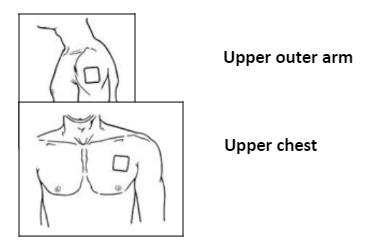
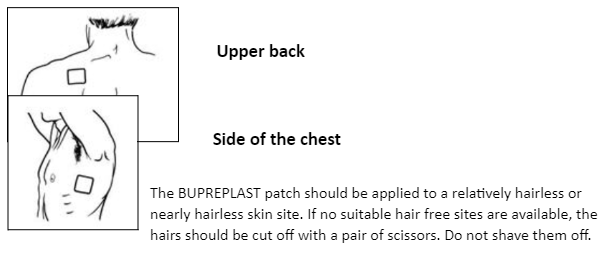
Avoid skin which is red, irritated or has any other blemishes, for instance large scars.
The area of skin you choose must be dry and clean. If necessary, wash it with cold or lukewarm water. Do not use soap, alcohol, oil, lotions or other detergents. After a hot bath or shower, wait until your skin is completely dry and cool. Do not apply lotion, cream or ointment to the chosen area. This might prevent your patch from sticking properly.
Wearing the transdermal patch
You should wear the patch for seven days. Provided that you have applied the patch correctly, there is little risk of it coming off. If the edges of the patch begin to peel off, they may be taped down with a suitable skin tape. You may shower, bathe or swim whilst wearing it.
Do not expose the patch to extreme heat (e.g. heating pads, electric blanket, heat lamps, sauna, hot tubs, heated water beds, hot water bottle, etc) as this may lead to larger quantities of the active ingredient being absorbed into the blood than normal. External heat may also prevent the patch from sticking properly. If you have a high temperature this may alter the effects of BUPREPLAST (see “Warnings and precautions” section above).
In the unlikely event that your patch falls off before it needs changing, do not use the same patch again. Stick a new one on straight away (see “Changing the transdermal patch” below).
Changing the transdermal patch
Take the old transdermal patch off.
Fold it in half with the sticky side inwards.
Open and take out a new patch. Use the empty sachet to dispose of the old patch. Now discard the sachet safely.
Stick a new transdermal patch on a different appropriate skin site (as described above). You should not apply a new patch to the same site for 3-4 weeks.
Remember to change your patch at the same time of day. It is important that you make a note of the time of day.
Duration of treatment
Your doctor will tell you how long you should be treated with the BUPREPLAST. Do not stop treatment without consulting a doctor, because your pain may return and you may feel unwell (see also “If you stop using BUPREPLAST” below).
If you use more BUPREPLAST than you should
As soon as you discover that you have used more patches than you should, remove all patches and call your doctor or hospital straight away. People who have taken an overdose may feel very sleepy and sick. They may also have breathing difficulties or lose consciousness and may need emergency treatment in hospital. When seeking medical attention make sure that you take this leaflet and any remaining patches with you to show to the doctor.
Do not apply additional patches to make up for the forgotten application.
If you stop using BUPREPLAST
If you stop using BUPREPLAST too soon or you interrupt your treatment your pain may return. If you wish to stop treatment, please consult your doctor. They will tell you what can be done and whether you can be treated with other medicines.
Some people may have side effects when they have used strong painkillers for a long time and stop using them. The risk of having effects after stopping BUPREPLAST is very low. However, if you feel agitated, anxious, nervous or shaky, if you are overactive, have difficulty sleeping or digestive problems, tell your doctor.
The pain relieving effect of BUPREPLAST is maintained for some time after removal of the patch. You should not start another opioid analgesic (strong painkiller) within 24 hours after removal of the patch.
If you have any further questions on the use of this medicine, ask your doctor or pharmacist.
Like all medicines, this medicine can cause side effects, although not everybody gets them. Serious side effects that may be associated with BUPREPLAST are similar to those seen with other strong painkillers and include difficulty in breathing and low blood pressure. This medicine can cause allergic reactions, although serious allergic reactions are rare. Remove the patch and tell your doctor immediately if you get any sudden wheeziness, difficulties in breathing, swelling of the eyelids, face or lips, rash or itching especially those covering your whole body. There is a risk that you may become addicted or reliant on BUPREPLAST. In patients treated with buprenorphines, the following other side effects have been reported:
Very common (may affect more than 1 in 10 people):
Common (may affect up to 1 in 10 people):
Uncommon (may affect up to 1 in 100 people):
If you need to have blood tests remind your doctor that you are using BUPREPLAST. This is important because BUPREPLAST may change the way your liver works and this could affect the results of some blood tests.
Rare (may affect up to 1 in 1,000 people):
Very rare (may affect up to 1 in 10,000 people):
Not known (frequency cannot be estimated from the available data):
Reporting of side effects
If you get any side effects, talk to your doctor, pharmacist or nurse. This includes any possible side effects not listed in this leaflet. You can also report side effects directly:
Website: www.zuventus.com and click the tab “Safety Reporting” located on the top right end of the home page.
By reporting side effects, you can help provide more information on the safety of this medicine.
You can also report the side effect with the help of your treating physician.
What BUPREPLAST contains
BuprePLAST 5 mcg/hr
Each 6.25 cm2 transdermal patch contains :
Buprenorphine Ph. Eur. 5 mg
Excipients q.s.
Each patch delivers 5 mcg/hr Buprenorphine
BuprePLAST 10 mcg/hr
Each 6.25 cm2 transdermal patch contains :
Buprenorphine Ph. Eur. 10 mg
Excipients q.s.
Each patch delivers 10 mcg/hr Buprenorphine
© Zuventus Healthcare Ltd., 2020. All rights reserved.
Sultamicillin Tablets
Bactomin 375
Each film coated tablet contains:
Sultamicillin Tosilate Dihydrate BP
equivalent to Sultamicillin………………………………………. 375 mg
Bactomin 750
Each film coated tablet contains:
Sultamicillin Tosilate Dihydrate BP
equivalent to Sultamicillin………………………………………. 750 mg
Tablet 375 mg/750 mg
4.1 Therapeutic indication
4.2 Posology and method of administration
The recommended dose of sultamicillin in adults (including elderly patients) is 375-750 mg orally twice daily.
In both adults and children, treatment is usually continued until 48 hours after pyrexia and other abnormal signs have resolved. Treatment is normally given for 5-14 days but the treatment period may be extended if necessary.
In the treatment of uncomplicated gonorrhea, sultamicillin can be given as a single oral dose of 2.25 g (six 375 mg tablets or three 750 mg tablets). Concomitant probenecid 1.0 g should be administered in order to prolong plasma concentrations of sulbactam and ampicillin.
Cases of gonorrhea with a suspected lesion of syphilis should have dark field examinations before receiving sultamicillin and monthly serological tests for a minimum of four months.
It is recommended that there be at least 10 days’ treatment for any infection caused by hemolytic streptococci to prevent the occurrence of acute rheumatic fever or glomerulonephritis.
Use in Children and Infants
The dosage for most infections in children weighing less than 30 kg is sultamicillin 25-50 mg/kg/day orally in two divided doses, depending on the severity of the infection and the physician's judgment. For children weighing 30 kg or more, the usual adult dose should be given.
Use in Patients with Renal Impairment
In patients with severe impairment of renal function (creatinine clearance ≤30 mL/min), the elimination kinetics of sulbactam and ampicillin are similarly affected and hence the plasma ratio of one to the other will remain constant. The dose of sultamicillin in such patients should be administered less frequently in accordance with usual practice for ampicillin.
4.3 Contraindications
Individuals with a history of an allergic reaction to any of the penicillins.
4.4 Special warnings and precautions for use
Serious and occasionally fatal hypersensitivity (anaphylactic) reactions have been reported in patients on penicillin therapy including sultamicillin. These reactions are more apt to occur in individuals with a history of penicillin hypersensitivity and/or hypersensitivity reactions to multiple allergens. There have been reports of individuals with a history of penicillin hypersensitivity who have experienced severe reactions when treated with cephalosporins. Before therapy with penicillin, careful inquiry should be made concerning previous hypersensitivity reactions to penicillins, cephalosporins, and other allergens. If an allergic reaction occurs, the drug should be discontinued and the appropriate therapy instituted.
Serious anaphylactic reactions require immediate emergency treatment with adrenaline. Oxygen, intravenous steroids, and airway management, including intubation, should be administered as indicated.
Severe skin reactions, such as toxic epidermal necrolysis (TEN), Stevens-Johnson syndrome (SJS), dermatitis exfoliative, and erythema multiforme have been reported in patients on ampicillin/sulbactam therapy. If a severe skin reaction occurs, use of the product should be discontinued and appropriate therapy should be initiated. As with any antibiotic preparation, constant observation for signs of overgrowth of non-susceptible organisms, including fungi, is essential. Should super-infection occur, the drug should be discontinued and/or appropriate therapy instituted.
Clostridium difficile-associated diarrhea (CDAD) has been reported with use of nearly all antibacterial agents, including sultamicillin, and may range in severity from mild diarrhea to fatal colitis. Treatment with antibacterial agents alters the normal flora of the colon, leading to overgrowth of C. difficile.
C. difficile produces toxins A and B, which contribute to the development of CDAD. Hypertoxin-producing strains of C. difficile cause increased morbidity and mortality, as these infections can be refractory to antimicrobial therapy and may require colectomy. CDAD must be considered in all patients who present with diarrhea following antibiotic use. Careful medical history is necessary since CDAD has been reported to occur over two months after the administration of antibacterial agents.
Drug induced liver injury such as cholestatic hepatitis and jaundice have been associated with the use of ampicillin/sulbactam. Patients should be advised to contact their doctor if signs and symptoms of hepatic disease develop.
Since infectious mononucleosis is viral in origin, ampicillin should not be used in the treatment. A high percentage of patients with mononucleosis who receive ampicillin develop a skin rash. It is advisable to check periodically for organ system dysfunction during prolonged therapy; this includes renal, hepatic and hematopoietic systems. The principal route of excretion of sulbactam and ampicillin following oral administration of sultamicillin is via the urine. Because renal function is not fully developed in neonates, this should be considered when using sultamicillin in neonates.
4.5 Drugs interactions
Allopurinol
The concurrent administration of allopurinol and ampicillin increases substantially the incidence of rashes in patients receiving both drugs as compared to patients receiving ampicillin alone.
Anticoagulants
Penicillins can produce alterations in platelet aggregation and coagulation tests. These effects may be additive with anticoagulants.
Bacteriostatic drugs (chloramphenicol, erythromycin, sulfonamides and tetracyclines)
Bacteriostatic drugs may interfere with the bactericidal effect of penicillins; it is best to avoid concurrent therapy.
Estrogen-containing oral contraceptives
There have been case reports of reduced oral contraceptive effectiveness in women taking ampicillin, resulting in unplanned pregnancy. Although the association is weak, patients should be given the option to use an alternate or additional method of contraception while taking ampicillin.
Methotrexate
Concurrent use with penicillins has resulted in decreased clearance of methotrexate and a corresponding increase in methotrexate toxicity. Patients should be closely monitored. Leucovorin dosages may need to be increased and administered for longer periods of time.
Probenecid
Probenecid decreases renal tubular secretion of ampicillin and sulbactam when used concurrently; this effect results in increased and prolonged serum concentrations, prolonged elimination half-life, and increased risk of toxicity.
4.6 Use in special populations
Pregnancy
Animal reproduction studies have revealed no evidence of impaired fertility or harm to the fetus due to sultamicillin. Sulbactam and ampicillin cross the placental barrier. However, safety for use in human pregnancy has not been established. Therefore, sultamicillin should be used during pregnancy only if the potential benefits outweigh the potential risk.
Lactation
The use of sultamicillin during lactation is not recommended. Low concentrations of ampicillin and sulbactam are excreted in the milk. This should be considered as the neonate may be exposed, particularly since renal function is not fully developed in neonates.
4.7 Effects on ability to drive and use machines
No studies on the effect on the ability to drive and use machines have been performed.
4.8 Undesirable effects
Sultamicillin is generally well tolerated. The majority of side effects observed were of mild or moderate severity and were normally tolerated with continued treatment.
Infections and Infestations: Pseudomembranous colitis, Candida infection.
Blood and Lymphatic System Disorders: Thrombocytopenia.
Immune System Disorders: Anaphylactic shock, Anaphylactic reaction, Kounis syndrome, Hypersensitivity.
Nervous System Disorders: Dizziness, Somnolence, Sedation, Headache.
Respiratory, Thoracic and Mediastinal Disorders: Dyspnea.
Gastrointestinal Disorders: Enterocolitis, Melena, Diarrhea, Vomiting, Abdominal pain, Dyspepsia, Nausea, Stomatitis, Dysgeusia, Tongue discoloration.
Hepatobiliary Disorders: Jaundice, Hepatic function abnormal
Skin and Subcutaneous Tissue Disorders: Toxic epidermal necrolysis, Stevens-Johnson syndrome, Erythema multiforme, Angioedema, Urticaria, Dermatitis, Rash, Pruritus.
Musculoskeletal and Connective Tissue Disorders: Arthralgia.
General Disorders and Administration Site Conditions: Fatigue, Malaise.
Investigations: Alanine aminotransferase increased, Aspartate aminotransferase increased
Reporting of suspected adverse reactions
Reporting suspected adverse reactions after authorisation of the medicinal product is important. It allows continued monitoring of the benefit/risk balance of the medicinal product. Healthcare professionals are asked to report any suspected adverse reactions via email to: medico@zuventus.com
Website: https://www.zuventus.com/drug-safety-reporting
By reporting side effects, you can help provide more information on the safety of this medicine.
4.9 Overdose
Limited information is available on the acute toxicity of ampicillin sodium and sulbactam sodium in humans. Overdosage of the drug would be expected to produce manifestations that are principally extensions of the adverse reactions reported with the drug. The fact that high cerebrospinal fluid (CSF) concentrations of beta-lactam antibiotics may cause neurologic effects, including seizures, should be considered. Because ampicillin and sulbactam are both removed from the circulation by hemodialysis, these procedures may enhance elimination of the drug from the body if overdosage occurs in patients with impaired renal function.
5.1 Mechanism of Action / Pharmacodynamic Properties
Biochemical studies with cell-free bacterial systems have shown sulbactam to be an irreversible inhibitor of most important beta-lactamases that occur in penicillin-resistant organisms. While sulbactam antibacterial activity is mainly limited to Neisseriaceae, the potential for sulbactam sodium in preventing the destruction of penicillins and cephalosporins by resistant organisms was confirmed in whole-organism studies using resistant strains, in which sulbactam sodium exhibited marked synergistic effects with penicillins and cephalosporins. Since sulbactam also binds to some penicillin-binding proteins, some sensitive strains are rendered more susceptible to the combination than to the beta-lactam antibiotic alone. The bactericidal component of this product is ampicillin, which, like benzyl penicillin, acts against sensitive organisms during the stage of active multiplication by the inhibition of biosynthesis of cell wall mucopeptide.
Sultamicillin is effective against a wide range of gram-positive and gram-negative bacteria including: Staphylococcus aureus and Staphylococcus epidermidis (including penicillin-resistant and some methicillin-resistant strains); Streptococcus pneumoniae, Streptococcus faecalis and other Streptococcus species; Haemophilus influenzae and Haemophilus parainfluenzae (both beta-lactamase-positive and -negative strains); Moraxella catarrhalis; anaerobes including Bacteroides fragilis and related species; Escherichia coli; Klebsiella species; Proteus species (both indole-positive and indole-negative); Enterobacter species; Morganella morganii; Citrobacter species; Neisseria meningitidis and Neisseria gonorrhoeae.
5.2 Pharmacokinetic properties
Following oral administration in humans, sultamicillin is hydrolyzed during absorption to provide sulbactam and ampicillin in a 1:1 molar ratio in the systemic circulation. The bioavailability of an oral dose is 80% of an equal intravenous dose of sulbactam and ampicillin. Administration following food does not affect the systemic bioavailability of sultamicillin. Peak serum levels of ampicillin, following administration of sultamicillin, are approximately twice those of an equal dose of oral ampicillin. Elimination half-lives are approximately 0.75 and 1 hour for sulbactam and ampicillin, respectively, in healthy volunteers, with 50%-75% of each agent being excreted unchanged in the urine. Elimination half-lives are increased in the elderly and in patients with renal dysfunction. Probenecid decreases the renal tubular secretion of both ampicillin and sulbactam. Concurrent use of probenecid with sultamicillin results in increased and prolonged blood levels of ampicillin and sulbactam.
While reversible glycogenosis was observed in laboratory animals, this phenomenon was dose- and time-dependent and is not expected to develop at the therapeutic doses and corresponding plasma levels attained during the relatively short periods of combined ampicillin/sulbactam therapy in humans. Long-term studies in animals have not been performed to evaluate the carcinogenic potential. The individual components of sultamicillin (ampicillin/sulbactam) tested negative for mutagenicity. Reproduction studies have been performed in mice and rats at doses in excess of the human dose and have revealed no evidence of impaired fertility or harm to the fetus due to sultamicillin.
Sultamicillin is a double ester in which Ampicillin and the beta-lactamase inhibitor sulbactam are linked via a methylene group.
Chemical name: Oxymethylpenicillinate Sulphone ester of Ampicillin
Molecular weight: 594.7

8.1 Incompatibilities
Not applicable
8.2 Shelf-life
8.3 Packaging information
8.4 Storage and handing instructions
Store in a cool & dry place. Protect from light.
Keep out of reach of children.
16.09.2022
Please read this leaflet carefully before you start using this medicine because it contains important information for you.
What is in this leaflet
1. What Bactomin is and what it is used for
2. What you need to know before you use Bactomin
3. How to use Bactomin
4. Possible side effects
5. How to store Bactomin
6. Contents of the pack and other information
Bactomin contains the active substance sultamicillin, which is a combination of ampicillin and sulbactam. It is used to treat various infections caused by bacteria, including:
Do not take Bactomin if:
Warnings and precautions:
Other medicines and Bactomin:
Pregnancy and breastfeeding:
Driving and using machines:
Always use Bactomin exactly as your doctor has told you. You should check with your doctor or pharmacist if you are not sure.
Dosage:
Method of administration:
If you use more Bactomin than you should
Tell your doctor if you accidentally use more than you were told.
If you forget to use Bactomin
If you forget to take at the right time, use it as soon as you remember, then carry on as before. Do not take a double dose to make up for a forgotten dose.
If you stop using Bactomin
Do not stop your treatment even if you feel better unless told to do so by your doctor. If you have any further questions on the use of this product, ask your doctor or pharmacist.
Common side effects:
Serious side effects:
Reporting of side effects
If you get any side effects, talk to your doctor, pharmacist or nurse. This includes any possible side effects not listed in this leaflet. You can also report side effects directly: Website: www.zuventus.com in and click the tab “Safety Reporting” located on the top end of the home page. Website link: https://www.zuventus.com/drug-safety-reporting. By reporting side effects, you can help provide more information on the safety of this medicine. You can also report the side effect with the help of your treating physician.
Do not throw away any medicines via wastewater or household waste. Ask your pharmacist how to throw away medicines you no longer use. These measures will help protect the environment.
What Bactomin contains:
Esomeprazole (GR) & Levosulpiride (PR) Capsules
Each Hard Gelatin Capsule Contains:
Esomeprazole Magnesium USP (Trihydrate)
equivalent to Esomeprazole ……. ….. 40 mg
(as gastro-resistant pellets)
Levosulpiride ………………………… 75 mg
(as prolonged release pellets)
Capsule Esomeprazole (40 mg) & Levosulpiride (75 mg)
4.1 Therapeutic indications
For the treatment of gastro-esophageal reflux disease (GERD) in patients who do not respond to PPI (proton-pump inhibitor) alone.
4.2 Posology and method of administration
1 capsule to be administered once daily. Zosa L Capsules should be administered on empty stomach, preferably in the morning or at least 1 hour prior to meal. The capsules should be swallowed whole with water and not to be opened, chewed or crushed. Or, as prescribed by the physician
Pediatric Patients
Safety and efficacy of esomeprazole with levosulpiride combination therapy has not been established in paediatric patients. Thus, Zosa L Capsules are not recommended for use in children and adolescents below 18 years of age.
Geriatric Patients
No dosage adjustment is generally necessary in the elderly patients with normal renal function, but dose should be reduced if there is evidence of renal impairment. Elderly patients are more susceptible to postural hypotension, sedation, and extrapyramidal side effects. Thus, caution should be exercised in the elderly population while on Zosa L therapy.
Renal Impairment Patients
Zosa L Capsules should be used with caution and dose/dosage frequency may need to be reduced depending on the severity of the renal dysfunction. Zosa L Capsules are contraindicated in patients with severe renal impairment.
Hepatic Impairment Patients
With esomeprazole, dose adjustment is not required in patients with mild to moderate liver impairment. For patients with severe liver impairment, a maximum dose of 20 mg esomeprazole should not be exceeded. There is no information available on use of levosulpiride in patients with hepatic dysfunction. Thus, as a precautionary measure, Zosa L Capsules should be avoided in patients with hepatic impairment.
4.3 Contraindications
4.4 Special warnings and precautions for use
Esomeprazole
Gastric Malignancy: In the presence of any alarm symptom (e.g., significant unintentional weight loss, recurrent vomiting, dysphagia, haematemesis or melaena) and when gastric ulcer is suspected or present, malignancy should be excluded, as treatment with esomeprazole may alleviate symptoms and delay diagnosis.
Helicobacter Pylori Eradication: When prescribing esomeprazole for eradication of Helicobacter pylori, possible drug interactions for all components in the triple therapy should be considered. Clarithromycin is a potent inhibitor of CYP3A4 and hence contraindications and interactions for clarithromycin should be considered when the triple therapy is used in patients concurrently taking other drugs metabolised via CYP3A4, such as cisapride.
Gastrointestinal Infections/Gastritis: Treatment with proton pump inhibitors (PPIs) may lead to a slightly increased risk of gastrointestinal infections such as Salmonella and Campylobacter. Atrophic gastritis has been noted occasionally in gastric corpus biopsies from patients treated long-term with omeprazole, of which esomeprazole is an enantiomer.
Clostridium Difficile-Associated Diarrhea (CDAD): Published observational studies suggest that PPI therapy like esomeprazole may be associated with an increased risk of Clostridium difficile-associated diarrhea, especially in hospitalized patients. This diagnosis should be considered for diarrhea that does not improve. Patients should use the lowest dose and shortest duration of PPI therapy appropriate to the condition being treated.
Absorption of Vitamin B12: Esomeprazole, like all acid-blocking medicines, may reduce the absorption of vitamin B12 (cyanocobalamin) due to hypo- or achlorhydria. This should be considered in patients with reduced body stores or risk factors for reduced vitamin B12 absorption on long-term therapy.
Risk of Bone Fracture: Several published observational studies suggest that PPI therapy may be associated with an increased risk for osteoporosis-related fractures of the hip, wrist, or spine. The risk of fracture was increased in patients who received high-dose (defined as multiple daily doses), and long-term PPI therapy (a year or longer). Patients should use the lowest dose and shortest duration of PPI therapy appropriate to the condition being treated. Patients at risk for osteoporosis-related fractures should be managed according to established treatment guidelines and they should have an adequate intake of vitamin D and calcium.
Subacute Cutaneous Lupus Erythematosus (SCLE): PPIs have been associated with cases of SCLE, although very infrequently. If lesions occur, especially in sun-exposed areas of the skin, and if accompanied by arthralgia, the patient should seek medical help promptly and esomeprazole therapy should be stopped immediately. The occurrence of SCLE with previous PPI treatment may increase the risk of SCLE with other PPIs.
Hypomagnesemia: Hypomagnesemia (symptomatic/asymptomatic), has been reported rarely in patients treated with PPIs for at least three months, in most cases after a year of therapy. Serious adverse events include tetany, arrhythmias, and seizures. In most patients, treatment of hypomagnesemia required magnesium replacement and discontinuation of the PPI. For patients expected to be on prolonged treatment or who take PPIs with medications such as digoxin or drugs that may cause hypomagnesemia (e.g., diuretics), it is recommended to monitor magnesium levels prior to initiation of PPI treatment, and periodically thereafter.
Levosulpiride
History of Breast Cancer: Levosulpiride may increase prolactin levels. Therefore, caution should be exercised and patients with a history or a family history of breast cancer should be closely monitored during levosulpiride therapy.
Prolongation of the QT Interval: Levosulpiride induces a prolongation of the QT interval. This effect is known to potentiate the risk of serious ventricular arrhythmias such as torsade de pointes. Levosulpiride should be used with caution in patients with cardiovascular disease or with a family history of QT prolongation.
Gastrointestinal Disorders: Levosulpiride should not be used when gastrointestinal stimulation of motility can be harmful e.g., in presence of gastrointestinal hemorrhage, mechanical obstructions or perforations.
Drugs Acting on CNS: Caution is advised when levosulpiride is administered concomitantly with other centrally acting drugs.
Alcohol: Concomitant intake of alcohol should be avoided during levosulpiride therapy as there is an increased chance of sedation.
Smoking: Smoking increases metabolism of the drug and thus, require higher dose of levosulpiride.
Parkinson’s Disease: In patient with Parkinson's disease, levosulpiride use should be avoided and an alternative drug therapy should be considered.
Convulsions: Cases of convulsions, sometimes in patients with no previous history, have been reported. In patients requiring levosulpiride who are receiving anticonvulsant therapy, the dose of the anticonvulsant should not be changed.
Anticholinergic Effects: Levosulpiride has an anticholinergic effect and, therefore, should be used with caution in patients with a history of glaucoma, ileus, congenital digestive stenosis, urine retention or hyperplasia of the prostate.
Hypertensive Patients: Levosulpiride should be used with caution in hypertensive patients, especially in the elderly population, due to the risk of hypertensive crisis. Patients should be adequately monitored.
4.5 Interaction with other medicinal products and other forms of interaction Esomeprazole
1) Interference with Antiretroviral Therapy Reduced Concentrations of Atazanavir and Nelfinavir: Concomitant use of atazanavir and nelfinavir with PPIs is not recommended. Co-administration of atazanavir with PPIs is expected to substantially decrease atazanavir plasma concentrations and may result in a loss of therapeutic effect and the development of drug resistance. If the combination of atazanavir with a PPI is unavoidable, close clinical monitoring is recommended in combination with an increase in the dose of atazanavir to 400 mg with 100 mg of ritonavir; esomeprazole 20 mg should not be exceeded.
Increased Concentrations of Saquinavir: Co-administration of saquinavir with PPIs is expected to increase saquinavir concentrations, which may increase toxicity and require dose reduction. Omeprazole, of which esomeprazole is an enantiomer, has been reported to interact with other antiretroviral drugs, too. The clinical importance and the mechanisms behind these interactions are not always known. Increased gastric pH during omeprazole treatment may change the absorption of the antiretroviral drug. Other possible interaction mechanisms are via CYP 2C19.
2) Drugs for Which Gastric PH Can Affect Bioavailability (ketoconazole, atazanavir, iron salts, erlotinib, mycophenolate mofetil, digoxin) Esomeprazole inhibits gastric acid secretion. Therefore, esomeprazole may interfere with the absorption of drugs where gastric pH is an important determinant of bioavailability. Like with other drugs that decrease intragastric acidity, the absorption of drugs such as ketoconazole, atazanavir, iron salts, erlotinib, and mycophenolate mofetil (MMF) can decrease, while the absorption of drugs such as digoxin can increase during treatment with esomeprazole. Digoxin: Concomitant treatment with omeprazole (20 mg daily), of which esomeprazole is an enantiomer, and digoxin in healthy subjects increased the bioavailability of digoxin by 10%. Co-administration of digoxin with esomeprazole is expected to increase the systemic exposure of digoxin. Therefore, patients may need to be monitored when digoxin is taken concomitantly with esomeprazole.
Mycophenolate Mofetil (MMF): Co-administration of omeprazole in healthy subjects and in transplant patients receiving MMF has been reported to reduce the exposure to the active metabolite, mycophenolic acid (MPA), possibly due to a decrease in MMF solubility at an increased gastric pH. The clinical relevance of reduced MPA exposure on organ rejection has not been established in transplant patients receiving esomeprazole and MMF. Use esomeprazole with caution in transplant patients receiving MMF.
3) Effects on Hepatic Metabolism/Cytochrome P-450 Pathways Esomeprazole is extensively metabolized in the liver by CYP 2C19 and CYP 3A4. In-vitro and in-vivo studies have shown that esomeprazole is not likely to inhibit CYPs 1A2, 2A6, 2C9, 2D6, 2E1, and 3A4. No clinically relevant interactions with drugs metabolized by these CYP enzymes would be expected. Drug interaction studies have shown that esomeprazole does not have any clinically significant interactions with quinidine, clarithromycin, or amoxicillin.
Warfarin: Patients treated with PPIs and warfarin concomitantly may need to be monitored for increases in INR (International Normalized Ratio) and prothrombin time. Increases in INR and prothrombin time may lead to abnormal bleeding.
Clopidogrel: Avoid concomitant use of esomeprazole with clopidogrel. Clopidogrel is a prodrug. Inhibition of platelet aggregation by clopidogrel is entirely due to an active metabolite. The metabolism of clopidogrel to its active metabolite can be impaired by use of concomitant medications, such as esomeprazole, that inhibit CYP2C19 activity. Concomitant use of clopidogrel with esomeprazole 40 mg reduces the pharmacological activity of clopidogrel. As a precaution, concomitant use of esomeprazole and clopidogrel should be discouraged or when using esomeprazole consider alternative anti-platelet therapy.
Diazepam: Esomeprazole may potentially interfere with CYP2C19, the major esomeprazole metabolizing enzyme. Co-administration of esomeprazole and diazepam, a CYP2C19 substrate, resulted in a 45% decrease in clearance of diazepam.
Phenytoin: Concomitant administration of esomeprazole 40 mg resulted in a 13% increase in trough plasma levels of phenytoin in epileptic patients. It is recommended to monitor the plasma concentrations of phenytoin when treatment with esomeprazole is introduced or withdrawn.
Cilostazol: Omeprazole as well as esomeprazole act as inhibitors of CYP2C19. Omeprazole, of which esomeprazole is an enantiomer, given in doses of 40 mg to healthy subjects in a cross-over study, increased Cmax and AUC for cilostazol by 18% and 26% respectively, and one of its active metabolites by 29% and 69%, respectively. Cisapride: In healthy volunteers, concomitant administration of esomeprazole 40 mg resulted in a 32% increase in area under the plasma concentration-time curve (AUC) and a 31% prolongation of elimination half-life (t½), but no significant increase in peak plasma levels of cisapride. The slightly prolonged QTc interval observed after administration of cisapride alone, was not further prolonged when cisapride was given in combination with esomeprazole. Voriconazole: Concomitant administration of esomeprazole and a combined inhibitor of CYP 2C19 and CYP3A4, such as voriconazole, may result in a more than doubling of the esomeprazole exposure. Dose adjustment of esomeprazole is not normally required. However, in patients with Zollinger-Ellison's Syndrome, who may require higher doses (up to 240 mg/day), dose adjustment may be considered. Rifampicin: Drugs known to induce CYP2C19 or CYP3A4 or both (such as rifampin) may lead to decreased esomeprazole serum levels. Avoid concomitant use of rifampin with esomeprazole. St. John's Wort: Omeprazole, of which esomeprazole is an enantiomer, has been reported to interact with St. John's wort, an inducer of CYP3A4. Avoid concomitant use of St. John's wort with esomeprazole.
4) Concomitant Administration with Other Drugs
Tacrolimus: Concomitant administration of esomeprazole and tacrolimus may increase the serum levels of tacrolimus.
Combination Therapy with Clarithromycin: Co-administration of esomeprazole, clarithromycin, and amoxicillin has resulted in an increase in plasma levels of esomeprazole and 14-hydroxyclarithromycin.
Methotrexate: Concomitant administration of PPIs and methotrexate (primarily at high dose) may elevate and prolong serum levels of methotrexate and/or its metabolite hydroxymethotrexate, leading to a risk of methotrexate toxicity. In high-dose methotrexate administration, a temporary withdrawal of the PPI may be considered in some patients.
5) Drug / Laboratory Tests Interactions
Interactions with Investigations of Neuroendocrine Tumors: Serum chromogranin A (CgA) levels increase secondary to drug-induced decreases in gastric acidity. The increased CgA level may cause false positive results in diagnostic investigations for neuroendocrine tumors. To avoid this interference, esomeprazole treatment should be stopped for at least 5 days before CgA measurements; consider repeating the test if initial CgA levels are high. Levosulpiride
Antacids and Sucralfate: Bioavailability of levosulpiride is reduced if it is taken concomitantly with sucralfate and aluminum/magnesium-containing antacids. So, these medicines should not be taken along with levosulpiride. There should be a minimum 2 hour time lag between the two medicines. Anticholinergic Drugs, Narcotics and
Analgesic Drugs: The effect of levosulpiride on gastrointestinal motility can be antagonized by these drugs. Antihypertensive Drugs: Concomitant use of levosulpiride may enhance the hypotensive effects of these drugs.
Anticholinergic Drugs: Concomitant administration may cause increase in incidence of anticholinergic side effects.
Levodopa/Antiparkinson Drugs (including ropinirole): There is reciprocal antagonism of effects between levodopa or antiparkinson drugs (including ropinirole) and levosulpiride. Levodopa reduces effects of levosulpiride; conversely, levosulpiride may decrease the efficacy of levodopa in the management of Parkinson’s disease. Thus, concomitant use of these drugs are contraindicated.
Atomoxetine, Antiarrhythmics, Terfenadine, Chloroquine, Quinine, Cisapride, and Drugs Causing Hypokalemia (corticosteroids, laxatives, and diuretics like furosemide): Concurrent use of levosulpiride with these drugs may cause arrhythmia, especially prolonged QT interval.
Alcohol: Levosulpiride can potentiate the cognitive and motor effects of alcohol. Thus, concurrent use should be avoided.
Lithium: Increased risk of extrapyramidal effects. Discontinuation of both drugs is recommended at first signs of neurotoxicity.
4.6 Use in special populations
Pregnancy Zosa L capsules are not recommended for use in pregnant women. Breast-feeding Zosa L capsules should not be used during breast feeding. Accordingly, a decision should be made whether to discontinue nursing or to discontinue/abstain from drug therapy, taking into account the benefit of the drug to the mother.
4.7 Effects on ability to drive and use machines
Patients should avoid driving or operating machinery or not to engage in activities that require full mental alertness.
4.8 Undesirable effects
Esomeprazole
Acute kidney injury as an adverse drug reaction reported with the use of proton pump inhibitors.
The most frequently reported (≥ 1%) adverse reactions with esomeprazole were headache, diarrhea, nausea, flatulence, abdominal pain, constipation, and dry mouth. Additional adverse reactions that were reported as possibly or probably related to esomeprazole with an incidence < 1% are as follows:
Body as a Whole: Enlarged abdomen, allergic reaction, asthenia, back pain, chest pain, substernal chest pain, facial edema, peripheral edema, hot flushes, fatigue, fever, flu-like symptoms, generalized edema, leg edema, malaise, pain, rigors.
Cardiovascular: Flushing, hypertension, tachycardia.
Endocrine: Goiter.
Gastrointestinal (GI): Bowel irregularity, constipation aggravated, dyspepsia, dysphagia, GI dysplasia, epigastric pain, eructation, esophageal disorders, frequent stools, gastroenteritis, GI hemorrhage, GI symptoms not otherwise specified, hiccup, melena, mouth disorders, pharyngeal disorders, rectal disorders, increase in serum gastrin, tongue disorders, tongue edema, ulcerative stomatitis, vomiting.
Hearing: Earache, tinnitus.
Hematologic: Anemia, cervical lymphadenopathy, epistaxis, leukocytosis, leukopenia, thrombocytopenia.
Hepatic: Abnormalities in hepatic function, including bilirubinemia, increase in AST (aspartate aminotransferase) and ALT (alanine aminotransferase).
Metabolic/Nutritional: Glycosuria, hyperuricemia, hyponatremia, increased alkaline phosphatase, thirst, vitamin B12 deficiency, weight increase/decrease.
Musculoskeletal: Arthropathy, cramps, fibromyalgia syndrome, hernia, polymyalgia rheumatica.
Nervous System/Psychiatric: Anorexia, apathy, increased appetite, confusion, depression aggravated, dizziness, hypertonia, nervousness, hypoesthesia, impotence, insomnia, migraine, paresthesia, sleep disorder, somnolence, tremor, vertigo, visual field defect.
Reproductive: Dysmenorrhea, menstrual disorders, vaginitis.
Respiratory: Aggravated asthma, coughing, dyspnea, laryngeal edema, pharyngitis, rhinitis, sinusitis.
Skin and Appendages: Acne, angioedema, dermatitis, pruritus, rash, urticaria, sweating.
Special Senses: Otitis media, parosmia, taste loss, taste perversion.
Urogenital: Albuminuria, cystitis, dysuria, fungal infection, hematuria, frequent micturition, moniliasis, polyuria.
Visual: Conjunctivitis, abnormal vision.
Laboratory Abnormalities
The following clinically significant laboratory changes in clinical trials, irrespective of relationship to esomeprazole, were reported in ≤ 1% of patients: Increased creatinine, uric acid, total bilirubin, alkaline phosphatase, ALT, AST, hemoglobin, white blood cell count, platelets, serum gastrin, potassium, sodium, thyroxine and thyroid stimulating hormone. Decreased levels of hemoglobin, white blood cell count, platelets, potassium, sodium, and thyroxine.
Post-Marketing Experience The following adverse reactions have been identified during post-marketing use of esomeprazole. Because these reactions are reported voluntarily from a population of uncertain size, it is not always possible to reliably estimate their frequency or establish a causal relationship to drug exposure.
Blood and Lymphatic: Agranulocytosis, pancytopenia.
Eye: Blurred vision.
Gastrointestinal: Pancreatitis, stomatitis, microscopic colitis.
Hepatobiliary: Hepatitis with or without jaundice, hepatic failure.
Immune System: Anaphylactic reaction/shock.
Infections and Infestations: GI candidiasis, Clostridium difficile-associated diarrhea.
Metabolism and Nutritional Disorders: Hypomagnesemia.
Musculoskeletal and Connective Tissue: Muscular weakness, myalgia, fractures.
Nervous System: Hepatic encephalopathy, taste disturbance.
Psychiatric: Aggression, agitation, depression, hallucination.
Renal and Urinary: Interstitial nephritis.
Reproductive System and Breast: Gynecomastia.
Respiratory, Thoracic, and Mediastinal: Bronchospasm.
Skin and Subcutaneous Tissue: Alopecia, erythema multiforme, hyperhidrosis, photosensitivity, Stevens-Johnson syndrome, toxic epidermal necrolysis (sometime fatal), cutaneous lupus erythematosus.
Levosulpiride
The following side effects may occur with the use of levosulpiride: Acute muscular dystonia characterized by abnormal movements (twitching, tremor, etc.) of the hands, leg, tongue and facial muscles.
Sedation or drowsiness (because of decrease in sensory inputs to reticular activating system).
Increase in plasma prolactin levels manifested by breast enlargement (gynecomastia), production of milk (galactorrhea) and stopping of menstrual periods (amenorrhea).
Neuroleptic malignant syndrome (characterized by hyperpyrexia, muscle rigidity, increased myoglobin and creatine kinase).
Akathisia (uncontrollable desire to move about without any anxiety).
Tardive dyskinesia, it occurs late in the therapy and its features include involuntary rhythmical movements of face, mouth and jaw. The reason for tardive dyskinesia is synthesis of newer dopamine receptors which are supersensitive to even a small amount of dopamine. This causes a decrease in cholinergic activity in the striatum followed by decrease in gamma-amino butyric acid (GABA) release. This decreased in inhibitory GABA is responsible for increased involuntary motor activity.
Postural hypotension (because of autonomic blockade), tolerance develops to this effect after some time.
Weight gain. Elevated liver transaminases.
Reporting of suspected adverse reactions Reporting suspected adverse reactions after authorization of the medicinal product is important. It allows continued monitoring of the benefit/risk balance of the medicinal product.
Healthcare professionals are asked to report any suspected adverse reactions via
email to: medico@zuventus.com
Website: https://www.zuventus.com/drug-safety-reporting
By reporting side effects, you can help provide more information on the safety of this medicine.
4.9 Overdose
Experience with overdose is limited. There is no specific antidote. Treatment is only symptomatic. Appropriate supportive measures should therefore be instituted, close supervision of vital functions and cardiac monitoring (risk of QT interval prolongation and subsequent ventricular arrhythmias) is recommended until the patient recovers. If severe extrapyramidal symptoms occur anticholinergic drugs should be administrated. Overdose may be treated with alkaline osmotic diuresis and, if necessary, anti-parkinson drugs. Coma needs appropriate nursing, and cardiac monitoring is recommended until the patient recovers.
5.1 Mechanism of action
Esomeprazole
Esomeprazole is a proton pump inhibitor (PPI) that suppresses gastric acid (hydrochloric acid - HCl) secretion by specific inhibition of the H+/K+-ATPase enzyme system at the secretory surface of the gastric parietal cell. Esomeprazole is a weak base and is concentrated and converted to the active form (i.e., the achiral sulphenamide) in the highly acidic environment of the secretory canaliculi of the parietal cell, where it inhibits the enzyme H+K+-ATPase (the acid/proton pump), and inhibits both basal and stimulated acid secretion. By acting specifically on the proton pump, esomeprazole blocks the final step in acid production, thereby reducing gastric acidity.
Levosulpiride
Prokinetic Effect: Levosulpiride is principally a dopamine D2 antagonist. Dopamine has a direct relaxant effect on the gut by activating muscular D2 receptors. Levosulpiride stimulates gut motility by blocking D2 receptors in lower esophageal sphincter (LES) and stomach. Levosulpiride also acts as an agonist on serotonin 5-HT4 receptors and thus, increases acetylcholine level which leads to increase in GI motility. Antiemetic Effect: Levosulpiride exerts a selective antagonist activity on the D2 receptors on neurons in the CNS (postrema area of 4th ventricle) and thus, produces antiemetic effect. Levosulpiride is also a weak inhibitor of 5-HT3 receptors. Levosulpiride also acts as a moderate agonist at the serotonergic (5-HT4) receptor. This enhances its therapeutic efficacy in gastrointestinal disorders (reduction of nausea and vomiting).
5.2 Pharmacodynamic properties
Esomeprazole
Esomeprazole is the S-isomer of omeprazole. Esomeprazole reduces gastric acid secretion through a specific targeted mechanism of action i.e., inhibition of the acid pump in the gastric parietal cell. Both the R- and S-isomer of omeprazole have similar pharmacodynamic activity.
After oral dosing with esomeprazole 20 mg and 40 mg the onset of effect occurs within one hour. After repeated administration with 20 mg esomeprazole once daily for 5 days, mean peak acid output decreases by 90% when measured 6 to 7 hours after dosing on day five.
After 5 days of oral dosing with 20 mg and 40 mg of esomeprazole, intragastric pH above 4 was maintained for a mean time of 13 hours and 17 hours, respectively over 24 hours in symptomatic GERD patients. The proportion of patients maintaining an intragastric pH above 4 for at least 8, 12 and 16 hours respectively were 76%, 54% and 24% for esomeprazole 20 mg. Corresponding proportions for esomeprazole 40 mg were 97%, 92% and 56%.
Esomeprazole increases the mean fasting gastrin level in a dose-related manner. This increase reached a plateau within two to three months of therapy and returned to baseline levels within four weeks after discontinuation of therapy.
Levosulpiride
Levosulpiride, levo-enantiomer (biologically active form) of sulpiride, is a benzamide derivative. The levo-enantiomer shows better/similar pharmacological actions and lower incidence of toxic effects than both dextro as well as the racemic forms of the drug. Due to its peripheral anti-dopaminergic action, levosulpiride exhibits gastrokinetic/prokinetic, antiemetic, and anti-dyspeptic effects. Levosulpiride act as a modulator of the motor activity of the upper digestive tract. Levosulpiride accelerates gastric emptying and improves gastrointestinal (GI) symptoms such as heart burn, regurgitation, etc. by selectively inhibitingdopaminergic receptors (D2) in the submucosal and myoenteric plexus of the gastrointestinal tract (GIT) and chemoreceptor trigger zone (CTZ) of the central nervous system (CNS).
5.3 Pharmacokinetic Properties
Esomeprazole
Absorption: Zosa L Capsules contains esomeprazole as a gastro-resistant tablet. This is necessary because, like other PPIs, esomeprazole is acid-labile drug. Absorption of esomeprazole therefore, begins only after the tablet leaves the stomach. Esomeprazole is rapidly absorbed after oral administration. Onset of effect occurs within one hour after oral dosing with esomeprazole 20 mg and 40 mg. Peak plasma levels (Cmax) occur approximately 1 to 2 hours (Tmax) after oral dose. The Cmax increases proportionally when the dose is increased, and there is a three-fold increase in the area under the plasma concentration-time curve (AUC) from 20 to 40 mg. At repeated once daily dosing with 40 mg, the systemic bioavailability is approximately 90% compared to 64% after a single dose of 40 mg. Effect of Food: Food intake both delays and decreases the absorption of esomeprazole. Thus, esomeprazole should be administered at least one hour before meal. Distribution: Esomeprazole is 97% bound to plasma proteins. Plasma protein binding is constant over the concentration range of 2 to 20 μmol/l. The apparent volume of distribution at steady state in healthy volunteers is approximately 16 liters. Metabolism: Esomeprazole is extensively metabolized in the liver by the cytochrome P450 (CYP) enzyme system. The metabolites of esomeprazole lack antisecretory activity. The major part of esomeprazole's metabolism is dependent upon the CYP2C19 isoenzyme, which forms the hydroxy and desmethyl metabolites. The remaining amount is dependent on CYP3A4 which forms the sulphone metabolite. Excretion: Total plasma clearance is about 17 l/h after a single dose and about 9 l/h after repeated administration. The plasma elimination half-life is about 1.3 hours after repeated once daily dosing. Esomeprazole is completely eliminated from plasma with no tendency for accumulation during once-daily administration. Approximately 80% of an oral dose of esomeprazole is excreted as inactive metabolites in the urine, and the remainder is found as inactive metabolites in the feces. Less than 1% of parent drug is excreted in the urine.
Levosulpiride
Pharmacokinetics of levosulpiride in sustained release formulation is not available. Conventional formulation of levosulpiride (i.e., immediate release) has following pharmacokinetic properties: Levosulpiride when administered orally exhibited linear pharmacokinetic properties over the dose range of 25 to 100 mg. The bioavailability of levosulpiride when given orally is about 30%. Sulpiride is slowly absorbed from the gastrointestinal tract with peak plasma concentrations are attained 3 to 6 hours after oral dose. After repeated administration, steady state was reached on day 4 of multiple dosing. Sulpiride is about 40% bound to plasma proteins and is reported to have a plasma half-life of about 8 to 9 hours. Levosulpiride is mainly excreted through the renal route.
6.1 Animal Toxicology or Pharmacology
Esomeprazole
Carcinogenicity: The carcinogenic potential of esomeprazole magnesium was assessed using studies of omeprazole, of which esomeprazole is an enantiomer. In two 24-month oral carcinogenicity studies in rats, omeprazole at daily doses of 1.7 mg/kg/day, 3.4 mg/kg/day, 13.8 mg/kg/day, 44 mg/kg/day, and 140.8 mg/kg/day (about 0.4 to 34 times the human dose of 40 mg/day expressed on a body surface area basis) produced gastric ECL cell carcinoids in a dose-related manner in both male and female rats; the incidence of this effect was markedly higher in female rats, which had higher blood levels of omeprazole. In addition, ECL cell hyperplasia was present in all treated groups of both sexes. In one of these studies, female rats were treated with 13.8 mg omeprazole/kg/day (about 3.4 times the human dose of 40 mg/day on a body surface area basis) for 1 year, then followed for an additional year without the drug. No carcinoids were seen in these rats. An increased incidence of treatment-related ECL cell hyperplasia was observed at the end of 1 year (94% treated vs. 10% controls). By the second year the difference between treated and control rats was much smaller (46% vs. 26%) but still showed more hyperplasia in the treated group. Mutagenesis: Esomeprazole was negative in the Ames mutation test, in the in vivo rat bone marrow cell chromosome aberration test, and the in vivo mouse micronucleus test. Esomeprazole, however, was positive in the in vitro human lymphocyte chromosome aberration test. Impairment of Fertility: The potential effects of esomeprazole on fertility and reproductive performance were assessed using omeprazole studies. Omeprazole at oral doses up to 138 mg/kg/day in rats (about 34 times the human dose of 40 mg/day on a body surface area basis) was found to have no effect on reproductive performance of parental animals. Reproduction Studies: Reproduction studies have been performed in rats at oral doses up to 280 mg/kg/day (about 68 times an oral human dose of 40 mg on a body surface area basis) and in rabbits at oral doses up to 86 mg/kg/day (about 42 times an oral human dose of 40 mg on a body surface area basis) and have revealed no evidence of impaired fertility or harm to the fetus due to esomeprazole.
Levosulpiride
The values expressed as LD50 acute toxicity after oral administration in mice, rats and rabbits were 2450 mg / kg, 2600 mg / kg and greater than 1500 mg / kg. Subacute toxicity tests were conducted by administering the active ingredient in rat, rabbit and dog, daily, for 12-13 weeks. The appearance of any toxic symptoms was not observed at doses of: 25 mg / kg s.c. and 300 mg / kg p.o. in the rat; 250 mg / kg p.o. and 12.5 mg / kg i.m. in rabbits; and 50 and 100 mg / kg p.o. in the dog. To evidentiate the chronic toxicity after administration of the drug for 180-190 days, the following doses were well tolerated: 100 mg / kg p.o. and 20 mg / kg s.c. in the rat; 10 mg / kg i.m. in rabbits; and 20 mg / kg p.o. in the dog. Studies performed in rats and mice, administering the medicine at a dose higher than that expected for man, have shown that levosulpiride do not possess carcinogenic properties. Studies carried out in rats and rabbits have shown that the medicine is not teratogenic. In vitro tests have ruled out that levosulpiride possesses mutagenic properties.
Each capsule of Zosa L contains 40 mg of esomeprazole (in a gastro-resistant form) and 75 mg of levosulpiride (in a prolonged release form) for oral administration in adults.
Esomeprazole Magnesium
Esomeprazole magnesium is the magnesium salt of esomeprazole, the S-isomer of omeprazole, with gastric proton pump inhibitor activity. Esomeprazole magnesium salt is off-white to pale cream colored powder. It is slightly soluble in water.
Molecular Weight: 713.12 g/mol.
Molecular Formula: C34H36MgN6O6S2.
Chemical Name: 5-methoxy-2-[(S)-[(4-methoxy-3,5-dimethyl-2-pyridyl)methyl] sulfinyl]benzimidazole, magnesium salt (2:1).
Levosulpiride
Levosulpiride is the active levorotatory enantiomer of the racemic drug sulpiride, a substituted benzamide. Levosulpiride is a dopaminergic antagonist with prokinetic, antiemetic, antidepressant, and antipsychotic properties. Molecular Weight: 341.4 g/mol.
Molecular Formula: C15H23N3O4S.
Chemical Name: N-[[(2S)-1-ethylpyrrolidin-2-yl]methyl]-2-methoxy-5-
sulfamoylbenzamide.
8.1 Incompatibilities
Not applicable
8.2 Shelf Life
Refer on pack
8.3 Packaging Information
1 Blister strip of 15 capsules
8.4 Storage and handing Instructions
Store protected from light & moisture at a temperature not exceeding 30°.
Keep out of reach of children.
28.08.2024
Read all of this leaflet carefully before you start taking this medicine because it contains important information for you.
What is in this leaflet
The active ingredients of Zosa-L capsules are Esomeprazole and Levosulpiride.
Esomeprazole belongs to a group of medicines called Proton Pump Inhibitors (PPIs). It acts by reducing the amount of acid made by the stomach.
Levosulpiride belongs to the class of antipsychotic medicines. However, it is primarily used for its gut motility properties i.e., to improve food movement and treats disorders of the stomach and intestines. This medicine works by inhibiting the action of certain specific neurotransmitters in the brain and specific regions of the stomach and the intestine.
Zosa-L capsules are used to treat:
Do not take Zosa-L if you:
Warnings and precautions
Talk to your doctor or pharmacist before taking Zosa-L if you:
Zosa-L may hide the symptoms of other diseases. Therefore, if any of the following happen to you before you start taking Zosa-L or while you are taking it, talk to your doctor straight away:
If you have been prescribed Zosa-L “on demand” you should contact your doctor if your symptoms continue or change in character.
Taking a proton pump inhibitor like Zosa-L, especially over a period of more than one year, may slightly increase your risk of fracture in the hip, wrist or spine. Tell your doctor if you have osteoporosis or if you are taking corticosteroids (which can increase the risk of osteoporosis).
Rash and skin symptoms
If you get a rash on your skin, especially in areas exposed to the sun tell your doctor as soon as you can, as you may need to stop your treatment with Zosa-L. Remember to also mention any other ill-effects like pain in your joints.
Serious skin rashes have occurred in patients taking Zosa-L. The rash can involve ulcers of the mouth, throat, nose, genitals and conjunctivitis (red and swollen eyes). These serious skin rashes often come after flu-like symptoms such as fever, headache, body ache. The rash may cover large parts of the body with blistering and peeling of the skin. If at any time during the treatment (even after several weeks) you develop a rash or any of these skin symptoms, stop taking this medicine and contact your doctor immediately.
Children under the age of 12 years
Zosa-L is not recommended for children less than 12 years old.
Other medicines and Zosa-L
Tell your doctor or pharmacist if you are taking, have recently taken or might take any other medicines.
This is because Zosa-L can affect the way some medicines
work and some medicines can have an effect on Zosa-L. Do not take Zosa-L if you are taking a medicine containing Nelfinavir (used to treat HIV infection). Tell your doctor or pharmacist if you are taking any of the following medicines:
If your doctor has prescribed the antibiotics amoxicillin and clarithromycin as well as Zosa-L to treat ulcers caused by Helicobacter pylori infection, it is very important that you tell your doctor about any other medicines you are taking.
Zosa-L with food and drink
You can take the capsules with food or on an empty stomach.
Pregnancy, breast-feeding and fertility If you are pregnant, think you may be pregnant or are planning to have a baby, ask your doctor or pharmacist for advice before taking this medicine.
Your doctor will decide whether you can take Zosa-L during this time.
Levosulpiride may be distributed into breast milk. Therefore, you should not take Zosa-L if you are breast-feeding.
Driving and using machines Zosa-L may have an influence on the ability to drive and use machines.
under treatment may experience numbness, dizziness or involuntary movements (dyskinesia); therefore, they should be advised to avoid driving or operating machines
Always take this medicine exactly as your doctor or pharmacist has told you. Check with your doctor or pharmacist if you are not sure.
How much to take
The recommended dose is: Once capsule once daily in adults
Use in children
Zosa-L capsules are not recommended for children below 12 years of age.
Elderly
Dose adjustment is not required in the elderly.
If you take more Zosa-L than you should
If you take more Zosa-L than prescribed by your doctor, talk to your doctor or pharmacist straight away.
If you forget to take Zosa-L
If you have any further questions on the use of this medicine, ask your doctor or pharmacist.
Like all medicines, this medicine can cause side effects, although not everybody gets them.
If you notice any of the following serious side effects, stop taking Zosa-L and contact a doctor immediately:
Other side effects include:
Common (may affect up to 1 in 10 people)
Uncommon (may affect up to 1 in 100 people)
Rare (may affect up to 1 in 1,000 people)
Very rare (may affect up to 1 in 10,000 people)
Not known (frequency cannot be estimated from the available data)
Levosulpiride
Major & minor side effects of Levosulpiride
Reporting of side effects
If you get any side effects, talk to your doctor, pharmacist or nurse. This includes any possible side effects not listed in this leaflet. You can also report side effects directly: Website: www.zuventus.com and click the tab “Drug Safety Reporting” located on the top end of the home page. Website link: https://www.zuventus.com/drug-safety-reporting By reporting side effects, you can help provide more information on the safety of this medicine. You can also report the side effect with the help of your treating physician.
Each hard gelatin capsule contains:
Esomeprazole Magnesium Trihydrate IP
equivalent to Esomeprazole…………………………………. 40 mg
(As Gastro-resistant tablet)
Colour: Ferric Oxide (Red) USP-NF
Levosulpiride ……………………………………………..75 mg
(As Prolonged-release uncoated tablet)
Approved colours used in hard gelatin capsule shells.
Presentation/pack size
10 Blister strips of 15 capsules each
Esomeprazole Tablets 40 mg (with Sodium Bicarbonate as buffer)
Each fllm coated tablet contains :
Esomeprazole Magnesium Trihydrate IP
equivalent to Esomeprazole 40 mg
Excipients q.s.
Colour : Titanium Dioxide IP
Tablet 40 mg
4.1 Therapeutic indication
Gastroesophageal Reflux Disease (GERD), erosive reux esophagitis, prevention of relapse of esophagitis and helps in eradication of H.Pylori associated peptic ulcer. It is also indicated for pathological hypersecretory conditions including Zollinger-Ellison syndrome ulcer, risk reduction of NSAID-associated gastric ulcer, and prolonged treatment after I.V. induced prevention of rebleeding of peptic ulcer.
4.2 Posology and method of administration
Adults
Gastroesophageal reflux disease (GERD)
Treatment of erosive reflux esophagitis
40 mg once daily for 4 weeks.
An additional 4 weeks treatment is recommended for patients in whom esophagitis has not healed or who have persistent symptoms.
Long-term management of patients with healed esophagitis to prevent relapse
20 mg once daily
Symptomatic treatment of gastro-oesophageal reux disease (GERD)
20 mg once daily in patients without esophagitis. If symptom control has not been achieved after 4 weeks, the patient should be further investigated. Once symptoms have resolved, subsequent symptom control can be achieved using 20 mg once daily. An on demand regimen taking 20 mg once daily, when needed, can be used. In NSAID treated patients at risk of developing gastric and duodenal ulcers, subsequent symptom control using an on demand regimen is not recommended.
In combination with appropriate antibacterial therapeutic regimens for the eradication of Helicobacter pylori
Healing of Helicobacter pylori associated duodenal ulcer. Prevention of relapse of peptic ulcers in patients with Helicobacter pylori associated ulcers. 20 mg Esomeprazole tablet with 1 g amoxicillin and 500 mg clarithromycin, all twice daily for 7 days.
Patients requiring continued NSAID therapy
Healing of gastric ulcers associated with NSAID therapy : The usual dose is 20 mg once daily. The treatment duration is 4 - 8 weeks. Prevention of gastric and duodenal ulcers associated with NSAID therapy in patients at risk : 20 mg once daily.
Prolonged treatment after I.V. induced prevention of rebleeding of peptic ulcers
40 mg once daily for 4 weeks after I.V. induced prevention of rebleeding of peptic ulcers.
Treatment of Zollinger Ellison syndrome
The recommended initial dosage is Esomeprazole 40 mg twice daily. The dosage should then be individually adjusted and treatment continued as long as clinically indicated. Based on the clinical data available, the majority of patients can be controlled on doses between 80 to 160 mg Esomeprazole daily. With doses above 80 mg daily, the dose should be divided and given twice daily.
Special populations
Renal impairment
Dose adjustment is not required in patients with impaired renal function. Due to limited experience in patients with severe renal insufficiency, such patients should be treated with caution.
Hepatic impairment
Dose adjustment is not required in patients with mild to moderate liver impairment. For patients with severe liver impairment, a maximum dose of 20 mg Esomeprazole tablet should not be exceeded.
Elderly
Dose adjustment is not required in the elderly.
Paediatric population
Adolescents from the age of 12 years
Gastroesophageal reflux disease (GERD)
Treatment of erosive reflux esophagitis
40 mg once daily for 4 weeks.
An additional 4 weeks treatment is recommended for patients in whom esophagitis has not healed or who have persistent symptoms.
Long-term management of patients with healed esophagitis to prevent relapse
20 mg once daily.
Symptomatic treatment of gastroesophageal reflux disease (GERD)
20 mg once daily in patients without esophagitis. If symptom control has not been achieved after 4 weeks, the patient should be further investigated. Once symptoms have resolved, subsequent symptom control can be achieved using 20 mg once daily
Treatment of duodenal ulcer caused by Helicobacter pylori
When selecting appropriate combination therapy, consideration should be given to ofcial national, regional and local guidance regarding bacterial resistance, duration of treatment (most commonly 7 days but sometimes up to 14 days), and appropriate use of antibacterial agents. The treatment should be supervised by a specialist.
The posology recommendation is :
| Weight | Posology |
| 30 - 40 kg | Combination with two antibiotics : Esomeprazole Tablet 20 mg, Amoxicillin 750 mg and Clarithromycin 7.5 mg/kg body weight are all administered together twice daily for one week. |
| > 40 kg | Combination with two antibiotics : Esomeprazole Tablet 20 mg, Amoxicillin 1 g and Clarithromycin 500 mg are all administered together twice daily for one week. |
Children below the age of 12 years
For posology in patients aged 1 to 11 other pharmaceutical forms e.g. sachet should be used.
Method of administration
The tablets should be swallowed whole with liquid. The tablets should not be chewed or crushed. For patients who have difficulty in swallowing the tablets can also be dispersed in half a glass of non-carbonated water. No other liquids should be used as the enteric coating may be dissolved. Stir until the tablets disintegrate and drink the liquid with the pellets immediately or within 30 minutes. Rinse the glass with half a glass of water and drink. The pellets must not be chewed or crushed.
For patients who cannot swallow, the tablets can be dispersed in non-carbonated water and administered through a gastric tube.
4.3 Contraindications
Zosa FAST must not be used in the following conditions :
Hypersensitivity to the active substance, to substituted Benzimidazole or to any of the excipients.
Esomeprazole should not be used concomitantly with Nelfinavir.
4.4 Special warnings and precautions for use
In the presence of any alarm symptom (e.g. signicant unintentional weight loss, recurrent vomiting, dysphagia, haematemesis or melaena) and when gastric ulcer is suspected or present, malignancy should be excluded, as treatment with Esomeprazole may alleviate symptoms and delay diagnosis.
Long term use
Patients on long-term treatment (particularly those treated for more than a year) should be kept under regular surveillance.
On demand treatment
Patients on on-demand treatment should be instructed to contact their physician if their symptoms change in character.
Helicobacter pylori eradication
When prescribing Esomeprazole for eradication of Helicobacter pylori possible drug interactions for all components in the triple therapy should be considered. Clarithromycin is a potent inhibitor of CYP3A4 and hence contraindications and interactions for Clarithromycin should be considered when the triple therapy is used in patients concurrently taking other medicinal products metabolised via CYP3A4 such as Cisapride.
Gastrointestinal infections
Treatment with proton pump inhibitors may lead to slightly increased risk of gastrointestinal infections such as Salmonella and Campylobacter.
Absorption of Vitamin B12
Esomeprazole, as all acid-blocking medicines, may reduce the absorption of Vitamin B12 (Cyanocobalamin) due to hypo- or achlorhydria. This should be considered in patients with reduced body stores or risk factors for reduced Vitamin B12 absorption on long-term therapy.
Hypomagnesaemia
Severe hypomagnesaemia has been reported in patients treated with proton pump inhibitors (PPIs) like Esomeprazole for at least three months, and in most cases for a year. Serious manifestations of hypomagnesaemia such as fatigue, tetany, delirium, convulsions, dizziness and ventricular arrhythmia can occur but they may begin insidiously and be overlooked. In most affected patients, hypomagnesaemia improved after Magnesium replacement and discontinuation of the PPI.
For patients expected to be on prolonged treatment or who take PPIs with Digoxin or medicinal products that may cause hypomagnesaemia (e.g. diuretics), health care professionals should consider measuring magnesium levels before starting PPI treatment and periodically during treatment.
Risk of fracture
Proton pump inhibitors, especially if used in high doses and over long durations (> 1 year), may modestly increase the risk of hip, wrist and spine fracture, predominantly in the elderly or in presence of other recognised risk factors. Observational studies suggest that proton pump inhibitors may increase the overall risk of fracture by 10 - 40%. Some of this increase may be due to other risk factors. Patients at risk of osteoporosis should receive care according to current clinical guidelines and they should have an adequate intake of Vitamin D and Calcium.
Subacute cutaneous lupus erythematosus (SCLE)
Proton pump inhibitors are associated with very infrequent cases of SCLE. If lesions occur, especially in sunexposed areas of the skin, and if accompanied by arthralgia, the patient should seek medical help promptly and the health care professional should consider stopping Esomeprazole. SCLE after previous treatment with a proton pump inhibitor may increase the risk of SCLE with other proton pump inhibitors.
Combination with other medicinal products
Co-administration of Esomeprazole with Atazanavir is not recommended. If the combination of Atazanavir with a proton pump inhibitor is judged unavoidable, close clinical monitoring is recommended in combination with an increase in the dose of Atazanavir to 400 mg with 100 mg of Ritonavir; Esomeprazole 20 mg should not be exceeded. Esomeprazole is a CYP2C19 inhibitor. When starting or ending treatment with Esomeprazole, the potential for interactions with medicinal products metabolised through CYP2C19 should be considered. An interaction is observed between Clopidogrel and Esomeprazole. The clinical relevance of this interaction is uncertain. As a precaution, concomitant use of Esomeprazole and Clopidogrel should be discouraged.
When prescribing Esomeprazole for on demand therapy, the implications for interactions with other pharmaceuticals, due to fluctuating plasma concentrations of Esomeprazole should be considered.
Interference with laboratory tests
Increased Chromogranin A (CgA) level may interfere with investigations for neuroendocrine tumours. To avoid this interference, Esomeprazole treatment should be stopped for at least 5 days before CgA measurements. If CgA and gastrin levels have not returned to reference range after initial measurement, measurements should be repeated 14 days after cessation of proton pump inhibitor treatment.
4.6 Drugs interactions
Effects of Esomeprazole on the pharmacokinetics of other medicinal products
Medicinal products with pH dependent absorption
Gastric acid suppression during treatment with Esomeprazole and other PPIs might decrease or increase the absorption of medicinal products with a gastric pH dependent absorption. As with other medicinal products that decrease intra-gastric acidity, the absorption of medicinal products such as Ketoconazole, Itraconazole and Erlotinib can decrease and the absorption of Digoxin can increase during treatment with Esomeprazole. Concomitant treatment with Omeprazole (20 mg daily) and Digoxin in healthy subjects increased the bioavailability of Digoxin by 10% (up to 30% in two out of ten subjects). Digoxin toxicity has been rarely reported. However, caution should be exercised when Esomeprazole is given at high doses in elderly patients. Therapeutic drug monitoring of Digoxin should then be reinforced.
Protease inhibitors
Omeprazole has been reported to interact with some protease inhibitors. The clinical importance and the mechanisms behind these reported interactions are not always known. Increased gastric pH during Omeprazole treatment may change the absorption of the protease inhibitors. Other possible interaction mechanisms are via inhibition of CYP 2C19.
For Atazanavir and Nelfinavir, decreased serum levels have been reported when given together with Omeprazole and concomitant administration is not recommended. Co-administration of Omeprazole (40 mg once daily) with Atazanavir 300 mg / Ritonavir 100 mg to healthy volunteers resulted in a substantial reduction in Atazanavir exposure (approximately 75% decrease in AUC, Cmax and Cmin). Increasing the Atazanavir dose to 400 mg did not compensate for the impact of Omeprazole on Atazanavir exposure. The co-administration of Omeprazole (20 mg qd) with Atazanavir 400 mg / Ritonavir 100 mg to healthy volunteers resulted in a decrease of approximately 30% in the Atazanavir exposure as compared with the exposure observed with Atazanavir 300 mg / Ritonavir 100 mg qd without Omeprazole 20 mg qd. Co-administration of Omeprazole (40 mg qd) reduced mean Nelnavir AUC, Cmax and Cmin by 36 - 39% and mean AUC, Cmax and Cmin for the pharmacologically active metabolite M8 was reduced by 75 - 92%. Due to the similar pharmacodynamic effects and pharmacokinetic properties of Omeprazole and Esomeprazole, concomitant administration with Esomeprazole and Atazanavir is not recommended and concomitant administration with Esomeprazole and Nelnavir is contraindicated.
For Saquinavir (with concomitant Ritonavir), increased serum levels (80 - 100%) have been reported during concomitant Omeprazole treatment (40 mg qd). Treatment with Omeprazole 20 mg qd had no effect on the exposure of Darunavir (with concomitant Ritonavir) and Amprenavir (with concomitant Ritonavir). Treatment with Esomeprazole 20 mg qd had no effect on the exposure of Amprenavir (with and without concomitant Ritonavir). Treatment with Omeprazole 40 mg qd had no effect on the exposure of Lopinavir (with concomitant Ritonavir).
Methotrexate
When given together with PPIs, Methotrexate levels have been reported to increase in some patients. In high-dose Methotrexate administration, a temporary withdrawal of Esomeprazole may need to be considered.
Tacrolimus
Concomitant administration of Esomeprazole has been reported to increase the serum levels of Tacrolimus. A reinforced monitoring of tacrolimus concentrations as well as renal function (creatinine clearance) should be performed, and dosage of tacrolimus adjusted, if needed.
Medicinal products metabolised by CYP2C19
Esomeprazole inhibits CYP2C19, the major Esomeprazole-metabolising enzyme. Thus, when Esomeprazole is combined with medicinal products metabolised by CYP2C19, such as Diazepam, Citalopram, Imipramine, Clomipramine, Phenytoin, etc., the plasma concentrations of these medicinal products may be increased and a dose reduction could be needed. This should be considered especially when prescribing Esomeprazole for on-demand therapy.
Diazepam
Concomitant administration of 30 mg Esomeprazole resulted in a 45% decrease in clearance of the CYP2C19 substrate Diazepam.
Phenytoin
Concomitant administration of 40 mg Esomeprazole resulted in a 13% increase in trough plasma levels of Phenytoin in epileptic patients. It is recommended to monitor the plasma concentrations of phenytoin when treatment with Esomeprazole is introduced or withdrawn.
Voriconazole
Omeprazole (40 mg once daily) increased Voriconazole (a CYP2C19 substrate) Cmax and AUC by 15% and 41% respectively.
Warfarin
Concomitant administration of 40 mg Esomeprazole to Warfarin-treated patients in a clinical trial showed that coagulation times were within the accepted range. However, post-marketing, a few isolated cases of elevated INR of clinical significance have been reported during concomitant treatment. Monitoring is recommended when initiating and ending concomitant Esomeprazole treatment during treatment with warfarin or other Coumarine derivatives.
Cilostazol
Omeprazole as well as Esomeprazole act as inhibitors of CYP2C19. Omeprazole, given in doses of 40 mg to healthy subjects in a cross-over study, increased Cmax and AUC for Cilostazol by 18% and 26% respectively and one of its active metabolites by 29% and 69% respectively.
Cisapride
In healthy volunteers, concomitant administration of 40 mg Esomeprazole resulted in a 32% increase in area under the plasma concentration-time curve (AUC) and a 31% prolongation of elimination half-life (t½) but no significant increase in peak plasma levels of Cisapride. The slightly prolonged QTc interval observed after administration of Cisapride alone, was not further prolonged when Cisapride was given in combination with Esomeprazole.
Clopidogrel
Results from studies in healthy subjects have shown a pharmacokinetic (PK) / pharmacodynamic (PD) interaction between Clopidogrel (300 mg loading dose / 75 mg daily maintenance dose) and Esomeprazole (40 mg p.o. daily) resulting in decreased exposure to the active metabolite of Clopidogrel by an average of 40% and resulting in decreased maximum inhibition of (ADP induced) platelet aggregation by an average of 14%.
Investigated medicinal products with no clinically relevant interaction
Amoxicillin and Quinidine
Esomeprazole has been shown to have no clinically relevant effects on the pharmacokinetics of amoxicillin or Quinidine.
Naproxen or Rofecoxib
Studies evaluating concomitant administration of Esomeprazole and either naproxen or Rofecoxib did not identify any clinically relevant pharmacokinetic interactions during short-term studies.
Effects of other medicinal products on the pharmacokinetics of Esomeprazole
Medicinal products which inhibit CYP2C19 and/or CYP3A4
Esomeprazole is metabolised by CYP2C19 and CYP3A4. Concomitant administration of Esomeprazole and a CYP3A4 inhibitor, Clarithromycin (500 mg b.i.d.), resulted in a doubling of the exposure (AUC) to Esomeprazole. Concomitant administration of Esomeprazole and a combined inhibitor of CYP2C19 and CYP3A4 may result in more than doubling of the Esomeprazole exposure. The CYP2C19 and CYP3A4 inhibitor Voriconazole increased
Omeprazole AUC by 280 %. A dose adjustment of Esomeprazole is not regularly required in either of these situations. However, dose adjustment should be considered in patients with severe hepatic impairment and if long-term treatment is indicated.
Medicinal products which induce CYP2C19 and/or CYP3A4
Medicinal products known to induce CYP2C19 or CYP3A4 or both (such as Rifampicin and St John's wort) may lead to decreased Esomeprazole serum levels by increasing the Esomeprazole metabolism.
Paediatric population
Interaction studies have only been performed in adults.
4.7 Fertility, pregnancy and lactation
Fertility
Animal studies with the racemic mixture Omeprazole, given by oral administration do not indicate effects with respect to fertility.
Pregnancy
Clinical data on exposed pregnancies with Esomeprazole are insufficient. With the racemic mixture, Omeprazole, data on a larger number of exposed pregnancies stemmed from epidemiological studies indicate no malformative nor foeto-toxic effects. Animal studies with Esomeprazole do not indicate direct or indirect harmful effects with respect to embryonal / foetal development. Animal studies with the racemic mixture do not indicate direct or indirect harmful effects with respect to pregnancy, parturition or postnatal development. Caution should be exercised when prescribing to pregnant women.
A moderate amount of data on pregnant women (between 300 - 1000 pregnancy outcomes) indicates no malformative or foeto/neonatal toxicity of Esomeprazole.
Animal studies do not indicate direct or indirect harmful effects with respect to reproductive toxicity.
Breast-feeding
It is not known whether Esomeprazole is excreted in human breast milk. There is insufficient information on the effects of Esomeprazole in new-borns / infants. Esomeprazole should not be used during breast-feeding.
4.7 Effects on ability to drive and use machines
(uncommon) and blurred vision (rare) has been reported. If affected patients should not drive or use machines. Undesirable effects
Summary of the safety profile
Headache, abdominal pain, diarrhoea and nausea are among those adverse reactions that have been most commonly reported in clinical trials (and also from post-marketing use). In addition, the safety profile is similar for different formulations, treatment indications, age groups and patient populations. No dose-related adverse reactions have been identified.
Tabulated list of adverse reactions
The following adverse drug reactions have been identified or suspected in the clinical trials programme for Esomeprazole and post-marketing. None was found to be dose-related. The reactions are classified according to frequency Very common ≥ 1/10; Common ≥ 1/100 to < 1/10; Uncommon ≥ 1/1,000 to < 1/100; Rare ≥ 1/10,000 to < 1/1,000; Very rare < 1/10,000; Not known (cannot be estimated from the available data).
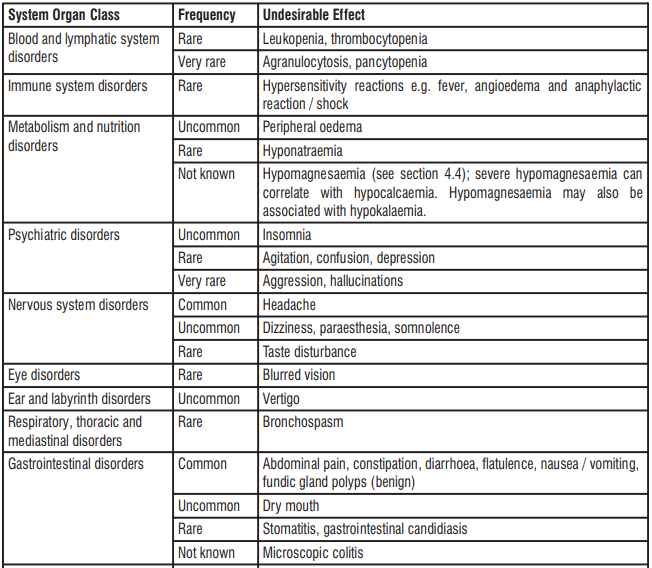
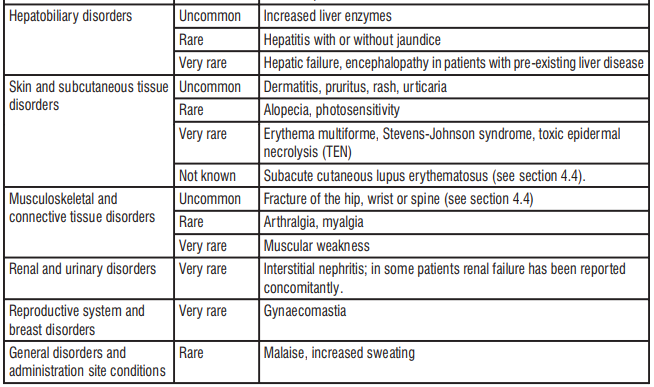
Reporting of suspected adverse reactions
Reporting suspected adverse reactions after authorisation of the medicinal product is important. It allows continued monitoring of the benefit / risk balance of the medicinal product. Healthcare professionals are asked to report any suspected adverse reactions via email to :medico@zuventus.com
Website : https://www.zuventus.com/drug-safety-reporting
By reporting side effects, you can help provide more information on the safety of this medicine.
4.9 Overdose
There is very limited experience to date with deliberate overdose.
Symptoms
The symptoms described in connection with 280 mg were gastrointestinal symptoms and weakness. Single doses of 80 mg Esomeprazole were uneventful.
Management
No specific antidote is known. Esomeprazole is extensively plasma protein bound and is therefore not readily dialyzable. As in any case of overdose, treatment should be symptomatic and general supportive measures should be utilised.
5.1 Mechanism of action
Esomeprazole is a weak base and is concentrated and converted to the active form in the highly acidic environment of the secretory canaliculi of the parietal cell, where it inhibits the enzyme H+/K+-ATPase – the acid pump and inhibits both basal and stimulated acid secretion.
5.2 Pharmacodynamic properties
Esomeprazole is the S-isomer of Omeprazole and reduces gastric acid secretion through a specific targeted mechanism of action. It is a specific inhibitor of the acid pump in the parietal cell. Both the R- and S-isomer of Omeprazole have similar pharmacodynamic activity.
Pharmacodynamic effects
After oral dosing with Esomeprazole 20 mg and 40 mg the onset of effect occurs within one hour. After repeated administration with 20 mg Esomeprazole once daily for five days, mean peak acid output after pentagastrin stimulation is decreased 90% when measured 6 - 7 hours after dosing on day five. After five days of oral dosing with 20 mg and 40 mg of Esomeprazole, intragastric pH above 4 was maintained for a mean time of 13 hours and 17 hours, respectively over 24 hours in symptomatic GERD patients. The proportion of patients maintaining an intragastric pH above 4 for at least 8, 12 and 16 hours respectively were for Esomeprazole 20 mg 76%, 54% and 24%. Corresponding proportions for Esomeprazole 40 mg were 97%, 92% and 56%. Using AUC as a surrogate parameter for plasma concentration, a relationship between inhibition of acid secretion and exposure has been shown.
Healing of reflux esophagitis with Esomeprazole 40 mg occurs in approximately 78% of patients after four weeks, and in 93% after eight weeks. One-week treatment with Esomeprazole 20 mg b.i.d. and appropriate antibiotics, results in successful eradication of H. pylori in approximately 90% of patients. After eradication treatment for one week there is no need for subsequent monotherapy with antisecretory medicinal products for effective ulcer healing and symptom resolution in uncomplicated duodenal ulcers. During treatment with antisecretory medicinal products serum gastrin increases in response to the decreased acid secretion. Also CgA increases due to decreased gastric acidity. The increased CgA level may interfere with investigations for neuroendocrine tumours. Available published evidence suggests that proton pump inhibitors should be discontinued between 5 days and 2 weeks prior to CgA measurements. This is to allow CgA levels that might be spuriously elevated following PPI treatment to return to reference range. An increased number of ECL cells possibly related to the increased serum gastrin levels, have been observed in both children and adults during long term treatment with Esomeprazole. The findings are considered to be of no clinical significance.
5.3 Pharmacokinetic properties
Absorption
Esomeprazole is acid labile and is administered orally as gastro-resistant granules. In vivo conversion to the R-isomer is negligible. Absorption of Esomeprazole is rapid, with peak plasma levels occurring approximately 1 - 2 hours after dose. The absolute bioavailability is 64% after a single dose of 40 mg and increases to 89% after repeated once daily administration. For 20 mg Esomeprazole, the corresponding values are 50% and 68%, respectively
Food intake both delays and decreases the absorption of Esomeprazole although this has no significant influence on the effect of Esomeprazole on intragastric acidity.
Distribution
The apparent volume of distribution at steady state in healthy subjects is approximately 0.22 l/kg body weight. Esomeprazole is 97% plasma protein bound.
Biotransformation
Esomeprazole is completely metabolised by the cytochrome P450 system (CYP). The major part of the metabolism of Esomeprazole is dependent on the polymorphic CYP2C19, responsible for the formation of the hydroxy- and desmethyl metabolites of Esomeprazole. The remaining part is dependent on another specific isoform, CYP3A4, responsible for the formation of Esomeprazole sulphone, the main metabolite in plasma.
Elimination
The parameters below reflect mainly the pharmacokinetics in individuals with a functional CYP2C19 enzyme, extensive metabolisers.
Total plasma clearance is about 17 l/h after a single dose and about 9 l/h after repeated administration. The plasma elimination half-life is about 1.3 hours after repeated once daily dosing. Esomeprazole is completely eliminated from plasma between doses with no tendency for accumulation during once-daily administration. The major metabolites of Esomeprazole have no effect on gastric acid secretion. Almost 80% of an oral dose of Esomeprazole is excreted as metabolites in the urine, the remainder in the faeces. Less than 1% of the parent drug is found in urine.
6.1 Animal toxicology or pharmacology
Non-clinical data reveal no special hazard for humans based on conventional studies of safety pharmacology, repeated dose toxicity, genotoxicity, carcinogenic potential, toxicity to reproduction and development. Adverse reactions not observed in clinical studies, but seen in animals at exposure levels similar to clinical exposure levels and with possible relevance to clinical use were as follows : No new or unexpected toxicity findings were observed in juvenile rats and dogs, after administration of Esomeprazole for up to 3 months, as compared to adult animals. Carcinogenicity studies in the rat with the racemic mixture have shown gastric ECL-cell hyperplasia and carcinoids. These gastric effects in the rat are the result of sustained, pronounced hypergastrinaemia secondary to reduced production of gastric acid and are observed after long-term treatment in the rat with inhibitors of gastric acid secretion.
No new or unexpected toxicity ndings were observed in juvenile rats and dogs, after administration of Esomeprazole for up to 3 months, as compared to adult animals.
Zosa FAST contains Esomeprazole Magnesium Trihydrate (with Sodium Bicarbonate as buffer). It is a proton pump inhibitor and decreases gastric acid secretion.
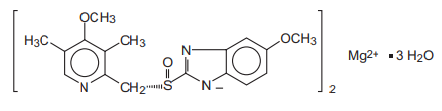
8.1 Incompatibilities
Not applicable
8.2 Shelf-life
Refer on the pack.
8.3 Packaging information
Alu-Alu blister strip of 10 tablets.
8.4 Storage and handing instructions Store protected from moisture, at a temperature not exceeding 30°C.
Keep out of reach of children.
Acute tubulointerstitial nephritis
Advise the patient or caregiver to call the patient’s healthcare provider immediately if they experience signs and/or symptoms associated with suspected acute TIN.
Clostridium difficile-associated diarrhea
Advise the patient or caregiver to immediately call the patient’s healthcare provider if they experience diarrhea that does not improve.
Bone fracture
Advise the patient or caregiver to report any fractures, especially of the hip, wrist or spine, to the patient’s healthcare provider.
Severe cutaneous adverse reactions
Advise the patient or caregiver to discontinue Zosa FAST and immediately call the patient’s healthcare provider for at first appearance of a severe cutaneous adverse reaction or other sign of hypersensitivity signs or symptoms associated with Severe Cutaneous Adverse Reactions.
Cutaneous and systemic lupus erythematosus
Advise the patient or caregiver to immediately call the patient’s healthcare provider for any new or worsening of symptoms associated with cutaneous or systemic lupus erythematosus.
Cyanocobalamin (Vitamin B12) deficiency
Advise the patient or caregiver to report any clinical symptoms that may be associated with Cyanocobalamin deficiency to the patient’s healthcare provider if they have been receiving Zosa FAST for longer than 3 years.
Hypomagnesemia and mineral metabolism
Advise the patient or caregiver to report any clinical symptoms that may be associated with hypomagnesemia, hypocalcemia, and/or hypokalemia to the patient’s healthcare provider, if they have been receiving Zosa FAST for at least 3 months.
Drug interactions
Advise the patient or caregiver to report to their healthcare provider if starting treatment with Rilpivirine-containing products, Clopidogrel, St. John’s Wort or Rifampin or if they take high-dose Methotrexate.
Administration
16 November 2023
Read all of this leaflet carefully before you start taking this medicine because it contains important information for you.
What is in this leaflet
1. What Esomeprazole is and what it is used for
2. What you need to know before you take Esomeprazole
3. How to take Esomeprazole
4. Possible side effects
5. How to store Esomeprazole
6. Contents of the pack and other information
Esomeprazole contains a medicine called esomeprazole. This belongs to a group of medicines called ‘proton pump inhibitors’. They work by reducing the amount of acid that your stomach produces.
Esomeprazole is used to treat the following conditions:
Adults
Adolescents aged 12 years and above
Do not take Esomeprazole
Do not take Esomeprazole if any of the above applies to you. If you are not sure, talk to your doctor or pharmacist before taking Esomeprazole.
Warnings and precautions
Talk to your doctor or pharmacist before taking Esomeprazole:
Esomeprazole may hide the symptoms of other diseases. Therefore, if any of the following happen to you before you start taking Esomeprazole or while you are taking it, talk to your doctor straight away:
If you have been prescribed Esomeprazole “on demand” you should contact your doctor if your symptoms continue or change in character.
Taking a proton pump inhibitor like Esomeprazole, especially over a period of more than one year, may slightly increase your risk of fracture in the hip, wrist or spine. Tell your doctor if you have osteoporosis or if you are taking corticosteroids (which can increase the risk of osteoporosis).
Rash and skin symptoms
If you get a rash on your skin, especially in areas exposed to the sun tell your doctor as soon as you can, as you may need to stop your treatment with Esomeprazole. Remember to also mention any other ill-effects like pain in your joints.
Serious skin rashes have occurred in patients taking esomeprazole. The rash can involve ulcers of the mouth, throat, nose, genitals and conjunctivitis (red and swollen eyes). These serious skin rashes often come after flu-like symptoms such as fever, headache, body ache. The rash may cover large parts of the body with blistering and peeling of the skin. If at any time during the treatment (even after several weeks) you develop a rash or any of these skin symptoms, stop taking this medicine and contact your doctor immediately.
Children under the age of 12 years
Information on dosing for children aged 1 to 11 years is provided in the product information of other dosage forms e.g. sachet (ask your doctor or pharmacist if you require further information).
Other medicines and Esomeprazole
Tell your doctor or pharmacist if you are taking, have recently taken or might take any other medicines. This is because Esomeprazole can affect the way some medicines work and some medicines can have an effect on Esomeprazole.
Do not take Esomeprazole if you are taking a medicine containing nelfinavir (used to treat HIV infection).
Tell your doctor or pharmacist if you are taking any of the following medicines:
If your doctor has prescribed the antibiotics amoxicillin and clarithromycin as well as Esomeprazole to treat ulcers caused by Helicobacter pylori infection, it is very important that you tell your doctor about any other medicines you are taking.
Esomeprazole with food and drink
You can take the tablets with food or on an empty stomach.
Pregnancy, breast-feeding and fertility
If you are pregnant or breast-feeding, think you may be pregnant or are planning to have a baby, ask your doctor or pharmacist for advice before taking this medicine.
Your doctor will decide whether you can take Esomeprazole during this time. It is not known if Esomeprazole passes into breast milk.
Therefore, you should not take Esomeprazole if you are breast-feeding. Driving and using machines Esomeprazole is not likely to affect you being able to drive or use any tools or machines.
However, side effects such as dizziness and blurred vision may uncommonly or rarely occur. If affected, you should not drive or use machines.
Always take this medicine exactly as your doctor or pharmacist has told you. Check with your doctor or pharmacist if you are not sure.
How much to take
Use in adults aged 18 and above
To treat heartburn caused by gastroesophageal reflux disease (GERD):
To treat ulcers caused by Helicobacter pylori infection and to stop them coming back
Prolonged treatment after prevention of rebleeding of ulcers with intravenous esomeprazole
The recommended dose is one Esomeprazole 40 mg tablet once a day for 4 weeks.
Use in adolescents aged 12 or above
To treat heartburn caused by gastroesophageal reflux disease (GERD)
What to do if you have trouble swallowing the tablets
Use in children under the age of 12 years
Esomeprazole gastro-resistant tablets are not recommended for children less than 12 years old.
Elderly
Dose adjustment is not required in the elderly. If you take more Esomeprazole than you should If you take more Esomeprazole than prescribed by your doctor, talk to your doctor or pharmacist straight away.
If you forget to take Esomeprazole
If you have any further questions on the use of this medicine, ask your doctor or pharmacist.
Like all medicines, this medicine can cause side effects, although not everybody gets them.
If you notice any of the following serious side effects, stop taking Esomeprazole and contact a doctor immediately:
Other side effects include:
Common (may affect up to 1 in 10 people)
Uncommon (may affect up to 1 in 100 people)
Rare (may affect up to 1 in 1,000 people)
Very rare (may affect up to 1 in 10,000 people)
Not known (frequency cannot be estimated from the available data)
Esomeprazole may in very rare cases affect the white blood cells leading to immune deficiency. If you have an infection with symptoms such as fever with a severely reduced general condition or fever with symptoms of a local infection such as pain in the neck, throat or mouth or difficulties in urinating, you must consult your doctor as soon as possible so that a lack of white blood cells (agranulocytosis) can be ruled out by a blood test. It is important for you to give information about your medication at this time.
Reporting of side effects
If you get any side effects, talk to your doctor, pharmacist or nurse. This includes any possible side effects not listed in this leaflet. You can also report side effects directly: Website: www.zuventus.com and click the tab “Drug Safety Reporting” located on the top of the home page. By reporting side effects, you can help provide more information on the safety of this medicine. You can also report the side effect with the help of your treating physician.
Each film coated tablet contains:
Esomeprazole Magnesium Trihydrate IP equivalent to Esomeprazole 40 mg
(with Sodium Bicarbonate as buffer)
Revised on 09/24